
Am I a candidate for a hair transplant? A good candidate has stable, patterned hair loss, a healthy donor area at the back and sides, good general health, and realistic expectations about the outcome. Candidacy is never a simple yes or no from an article; it is always confirmed by a qualified surgeon at a personal, hands-on assessment.
This guide covers each factor in turn: age and stability, medical conditions, scalp health, hair-loss pattern, donor supply, hair type, and the situations where waiting, or treating something else first, beats booking surgery. Each section gives the reasoning a surgeon uses, not just the rule, so you can see roughly where you stand before a real assessment.
Worried a transplant would look fake? That was the old technique, see hair plugs vs modern hair transplants.
- Stability matters more than age; very young or still-progressing loss is usually stabilised medically first, then reassessed.
- Donor density, hair calibre and the size of the safe donor zone together form the single biggest factor in what is achievable.
- Diffuse, unpatterned loss (including DUPA) and active scarring alopecia are usually reasons to wait or treat first, not permanent disqualifiers.
- Most medical conditions, including diabetes, thyroid disease and blood-thinning medication, are reviewed individually rather than ruling anyone out.
- A transplant redistributes your own existing hair; it does not cure androgenetic alopecia or protect hair that was not transplanted.
Am I a candidate for a hair transplant if I'm very young or older?
Stability matters more than age. There is no strict age cutoff if general health and donor supply are good. Very young men, or anyone whose hair loss is still progressing quickly, are often treated medically first, so the pattern stabilises before any surgical plan is confirmed.
Age is the question almost everyone asks first, and it is almost never the deciding factor. Androgenetic hair loss is driven by genetics and DHT (dihydrotestosterone) sensitivity in specific follicles, not by the number of birthdays you have had. What actually decides candidacy is whether the loss has settled into a pattern that behaves predictably, because a transplant places grafts permanently into a scalp that, in a young or still-progressing case, may still be changing shape around them.
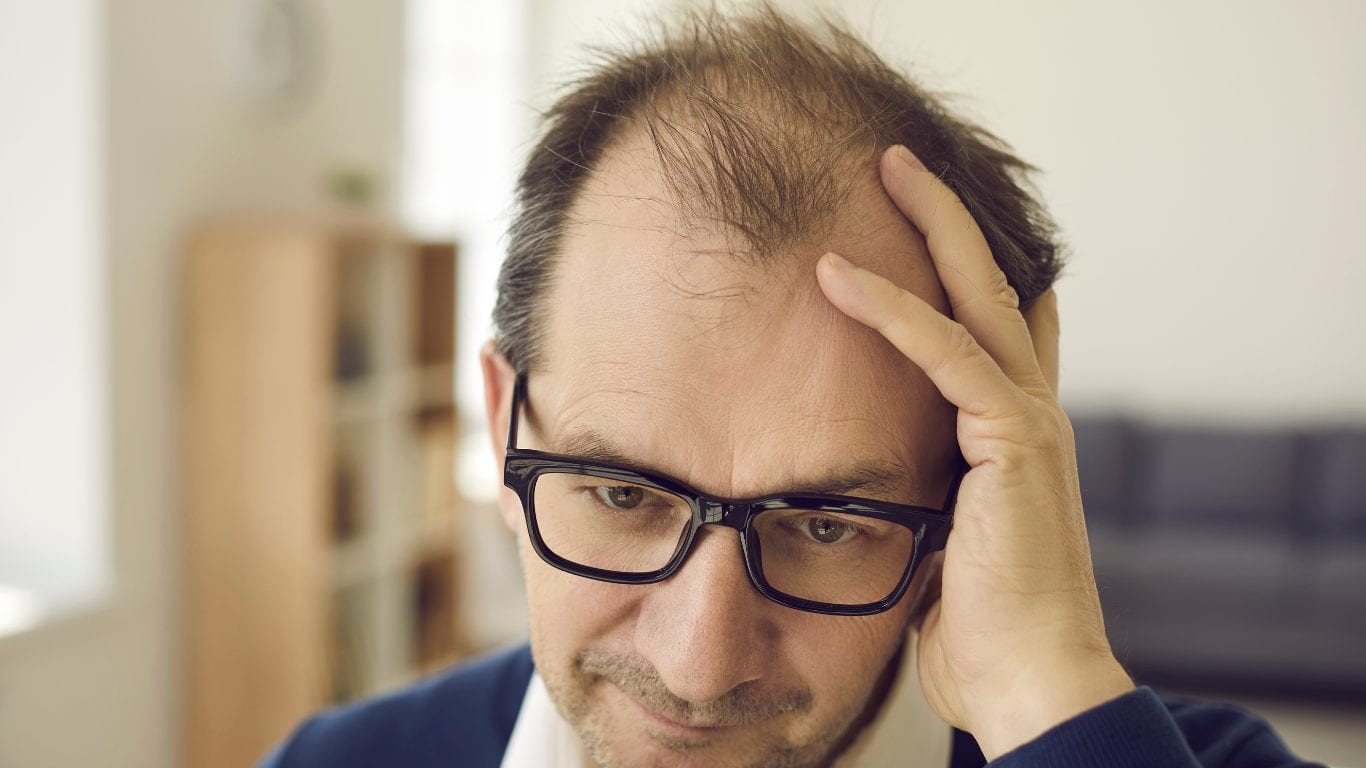
Why stability outranks the calendar
A transplant relocates hair that will typically resist DHT for good, into an area that sits beside native hair still exposed to ongoing miniaturisation. If the surrounding hair keeps thinning for several more years, a hairline or crown that looked well-integrated on day one can start to look isolated as untreated hair recedes around it. Waiting for stability protects the long-term appearance of the result as much as it protects the donor area.
What a surgeon actually checks
- Family history and the age loss began, which helps gauge how aggressively it may progress.
- Photo comparisons over roughly 12 to 24 months, where available, to see the rate and direction of change.
- Current Norwood or Ludwig stage measured against donor density, to judge how much safety margin exists.
- Response to any medical therapy already tried, since a good response is itself a stabilising sign.
What "stabilise first" means in practice
For a man in his early twenties with fast-moving recession, this usually means starting Finasteride and/or Minoxidil, then reassessing photographs every six to twelve months rather than booking surgery immediately. It is not a rejection, it is sequencing: treat first, confirm the pattern has genuinely slowed, then plan the transplant around a scalp that is not still moving underneath the plan. Many men in this position go on to have a transplant a few years later, once the picture is clear.
The common misconception
The idea that there is a hard cutoff, "you must be 25," is a myth repeated online rather than a clinical rule. Some 22-year-olds with slow, mild, clearly patterned recession are reasonable candidates; some 45-year-olds whose pattern only stabilised last year are asked to wait a little longer. What matters is how long the pattern has been stable, not how many years since you turned 18.
Older patients: different checks, not a different rulebook
There is no upper age limit built into the procedure. For older patients, the assessment shifts toward general health, skin healing capacity and donor quality, since donor density and hair calibre can decline gradually with age even in a genetically resistant zone. None of this rules candidacy out; it simply becomes part of what a surgeon weighs at your personal assessment.
Go deeper: Read the full guide: Am I too young or too old for a hair transplant? →
Can I get a hair transplant with diabetes or another medical condition?
Most medical conditions do not rule out a hair transplant. Well-controlled diabetes, thyroid disease and many chronic conditions are common and manageable with careful planning. Blood-thinning medication, uncontrolled diabetes and autoimmune conditions are reviewed individually at consultation, since they can affect healing or graft survival, not treated as a blanket disqualifier.
A hair transplant is minor surgery under local anaesthetic, but it is still surgery, so a surgeon asks the same questions any surgical team would: how well is a condition controlled, does it affect bleeding or clotting, and does it affect healing? Almost nothing on a typical medical history is an automatic disqualifier; most items simply change how the case is planned.
Diabetes
High blood sugar impairs microcirculation and slows wound healing, which matters because a transplanted graft survives on a tiny, fragile new blood supply in its first days. Well-controlled diabetes, generally meaning stable glucose and an HbA1c within the range your own doctor considers controlled, is routinely compatible with surgery. Poorly controlled diabetes is typically brought under control first, since it raises the risk of delayed healing, infection and weaker graft survival.
Thyroid disease
Both an underactive and an overactive thyroid can themselves cause diffuse shedding, so a surgeon wants levels stable before operating, partly for anaesthesia safety and partly because untreated thyroid disease can look like, or worsen, the hair loss being treated. Once levels are stable on medication, thyroid disease is one of the more common, and more manageable, items on a pre-operative form.
Blood-thinning medication and anticoagulants
Aspirin, warfarin, DOACs and similar medications increase bleeding during surgery, which can obscure the surgical field and affect precision. These are usually paused for a defined period beforehand, always under the guidance of the prescribing doctor, never self-directed, since stopping some anticoagulants carries its own medical risk that has to be weighed against the surgery.
Autoimmune conditions
Precision matters here. Alopecia areata is autoimmune but non-scarring, meaning the follicle itself usually survives and hair can regrow once disease activity settles; it is assessed on current activity and typically stabilised medically before surgery is even discussed. That is a different situation from the scarring autoimmune and inflammatory conditions covered later in this guide, where the follicle is permanently replaced by scar tissue. Conditions such as lupus or rheumatoid arthritis affecting other parts of the body do not automatically prevent a scalp procedure, but disease activity and any immunosuppressive medication are reviewed individually.
Keloid or excessive-scarring tendency
A personal or family history of keloid scarring is discussed carefully, since it affects both donor-area healing, particularly with strip (FUT) harvesting, and how visible any scarring may be. FUE, which leaves tiny, scattered puncture marks rather than a linear scar, is often preferred here, though a cautious, staged approach is still common.
The common misconception
Many people assume a chronic condition or a page of medication automatically closes the door. In reality, a pre-operative medical assessment, sometimes with a note from your own doctor, is the normal, responsible route to a clear yes, a clear not-yet, or a clear plan for what needs to change first, rather than a blanket no.
Go deeper: Read the full guide: Hair transplants with diabetes, heart conditions, blood pressure and other medical conditions →
Do scalp or skin conditions affect candidacy?
Yes, but usually only until they are settled. Active psoriasis, eczema, folliculitis or any scalp infection needs to be treated and calmed first, because inflamed or infected skin lowers graft survival and raises complication risk. A calm, healthy scalp on the day of surgery is required for transplanted follicles to take properly.
The scalp is the surgical field, so what is happening on its surface on the day of the procedure matters directly, not just as a comfort issue but as a factor in whether grafts actually survive.
Why an inflamed scalp is a real problem
Inflammation and infection disrupt the local blood supply and raise the risk of complications during and after surgery. A newly placed graft has no blood supply of its own for the first day or two; it depends entirely on healthy surrounding tissue while new vessels form. Operating into inflamed or infected skin measurably increases the risk of poor graft survival.
Psoriasis
Scalp psoriasis is common and, outside an active flare, does not usually prevent surgery. Thick, actively scaling plaques over the planned surgical area are typically treated and calmed first, since operating through them raises infection risk and can be genuinely uncomfortable during healing.
Eczema and seborrhoeic dermatitis
Both are manageable, often chronic conditions rather than barriers. Weeping or actively flaring eczema is treated first; well-controlled seborrhoeic dermatitis, the common dandruff-type flaking, rarely delays anything at all, though a very active flare may be asked to settle beforehand.
Folliculitis and scalp infection
Any active bacterial or fungal infection, including folliculitis, inflamed and sometimes pus-filled hair follicles, is treated and cleared before surgery, since introducing new grafts into infected tissue is one of the more direct routes to a poor outcome. A short course of topical or oral treatment, confirmed clear at a follow-up check, is usually all that stands between an active flare and a scheduled operation date.
What is checked at your consultation
- Is the scalp currently calm, or is there active redness, weeping, scaling or crusting anywhere in the planned surgical area?
- Is there any open sore, pustule or sign of infection that needs treating first?
- Has a flagged condition, for example psoriasis or eczema, been stable and well managed for a reasonable period, rather than mid-flare?
- Are there any areas of scarring from previous surgery, injury or a past scarring alopecia that change how the plan is designed?
The common misconception
People sometimes assume any scalp condition permanently rules them out. For the vast majority of common, non-scarring conditions, that is not the case. This is a sequencing issue: settle the flare-up, confirm calm, intact skin at consultation, then schedule. Scarring (cicatricial) alopecias are a genuinely different category, covered in full further down this page, because there the follicle itself, not just the surface, is affected.
Does my hair-loss pattern and Norwood/Ludwig stage matter?
Yes. Hair transplants work best for patterned hair loss with a preserved donor area, not diffuse thinning. In men, this is staged with the Norwood scale (grades I to VII); in women, with the Ludwig scale (grades I to III), which describes even thinning across the crown rather than a receding hairline.
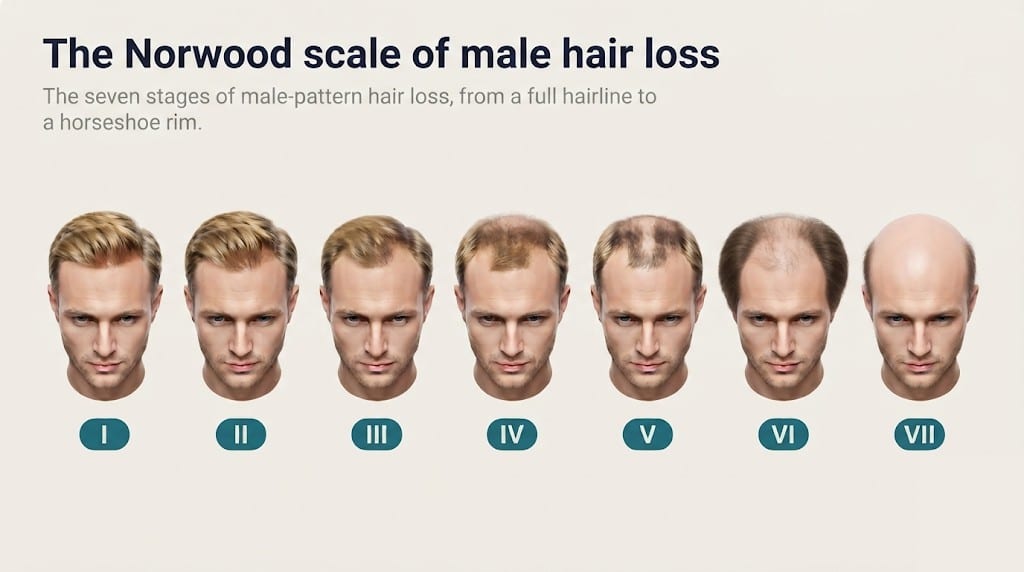
Pattern matters because of a phenomenon surgeons call donor dominance: in most people with androgenetic hair loss, follicles at the back and sides of the scalp are genetically insensitive to the DHT that miniaturises hair at the crown and hairline, and they broadly keep that resistance even after being moved. The entire logic of the surgery depends on there being a genetically distinct, stable donor supply to draw from. A recognisable pattern is simply the visible evidence that this split exists.
The Norwood scale, in practical terms
- Norwood I to II. Minimal to early temple recession; often not yet surgical, and worth monitoring rather than treating.
- Norwood III to IV. A clearly patterned, established recession or early crown thinning; this is where most surgical candidates first present.
- Norwood V to VI. Extensive frontal and crown loss meeting in the middle; still very treatable, with careful planning against a finite donor supply.
- Norwood VII. Only a narrow horseshoe of donor hair remains; often still possible, but donor supply becomes the limiting factor above almost everything else.
The Ludwig scale
Female pattern loss is usually staged with the three-grade Ludwig scale, describing progressively more visible thinning across the crown while the frontal hairline is typically preserved, unlike the receding hairline typical of male pattern loss. Because this thinning is often diffuse rather than sharply patterned, the Ludwig grade alone tells a surgeon less than the Norwood scale does for men; donor stability carries more of the weight in the assessment.
What "diffuse" changes
Diffuse unpatterned hair loss (DUPA), where thinning affects the donor area along with the rest of the scalp, breaks the logic above: if the donor area itself is miniaturising, moved grafts may not carry the resistance a transplant depends on. This is covered in more depth in the "not a good candidate" section below.
The common misconception
People often treat their Norwood or Ludwig number as a fixed grade to look up and act on. In practice it is a snapshot, and the trend over time, has it moved in the last year, is the donor area affected too, matters just as much as the number itself.
Do I have enough donor hair?
Donor density and quality at the back and sides of the scalp is the single biggest factor in what a hair transplant can achieve. A thick, dense donor area supports a larger, natural-looking result; a thin or already-thinning donor limits how many grafts can safely be taken without leaving that area visibly sparser.
Every single graft placed in the front or crown is a graft removed from the horseshoe-shaped band of hair at the back and sides that stays genetically resistant to pattern loss. That band is not an infinite resource. A responsible surgical plan treats the donor area as a budget to be spent carefully, potentially over an entire lifetime of treatment, not a supply to be drawn down in one sitting.
What actually gets measured at consultation
- Density. Hairs per square centimetre, assessed visually and, at better clinics, with a densitometer or trichoscope. A dense donor area, often ideally over 50 follicles per cm² in favourable cases, supports a more confident plan than a naturally thinner one.
- Hair calibre (thickness). Thicker individual hairs give more visual coverage per graft, so two donor areas with identical density can still support noticeably different-looking results.
- Scalp laxity. How loosely the scalp skin moves matters most for strip (FUT) harvesting and affects how comfortably a larger session can be planned, though FUE is less dependent on it.
- The size of the safe donor zone. The area genuinely resistant to loss varies by person and can narrow with age or an already-progressing pattern, which changes how far the plan can safely extend.
The maths of a finite resource
A favourable donor area might realistically support somewhere in the region of 6 000 to 8 000 grafts across a lifetime, sometimes more, sometimes considerably less, before density in the donor area itself starts to visibly thin. A single session commonly moves anywhere from around 1 500 to 4 500 grafts, depending on the case. Current loss, the plan for today, and any anticipated future loss all have to be weighed together, since overharvesting early can leave nothing in reserve for a second session years later, or for further natural progression.
The common misconception
The most persistent myth is that "enough grafts" is a fixed number you either have or do not, independent of the plan. The better question is not just how many grafts exist, but how many can be taken while keeping the donor area itself looking undisturbed, now and years from now. Our graft calculator gives a rough first estimate from your photos or self-reported density, but donor assessment in person, or from close-up photos at a free analysis, is what turns that estimate into an actual plan.
Go deeper: Read the full guide: Do I have enough donor hair? →
Does hair type or ethnicity matter?
Hair type and ethnicity mainly change technique and planning, not basic eligibility. Curly or Afro-textured hair follows a curved root under the skin and needs extra care to avoid transecting follicles during extraction. Fine, straight or Asian hair is planned differently for density and angle. Candidacy itself depends on pattern and donor supply, not hair type.
The two core requirements for candidacy, a patterned area of loss and a healthy donor supply, apply regardless of hair type or ethnicity. What genuinely changes is technique: how grafts are extracted, handled and angled. Curly and Afro-textured follicles curve under the skin, so they need a surgeon experienced with the right punches, yet that same curl covers more scalp per graft. Coarse, straight hair (common in Asian hair) gives strong density but is unforgiving on angle and spacing, and a low hair-to-skin colour contrast makes any hair type look fuller. The upshot: your hair type rarely decides whether you are a candidate, it shapes the plan and who should perform it.
Read the full guide: hair transplants for different hair types and textures →
Can women get a hair transplant?

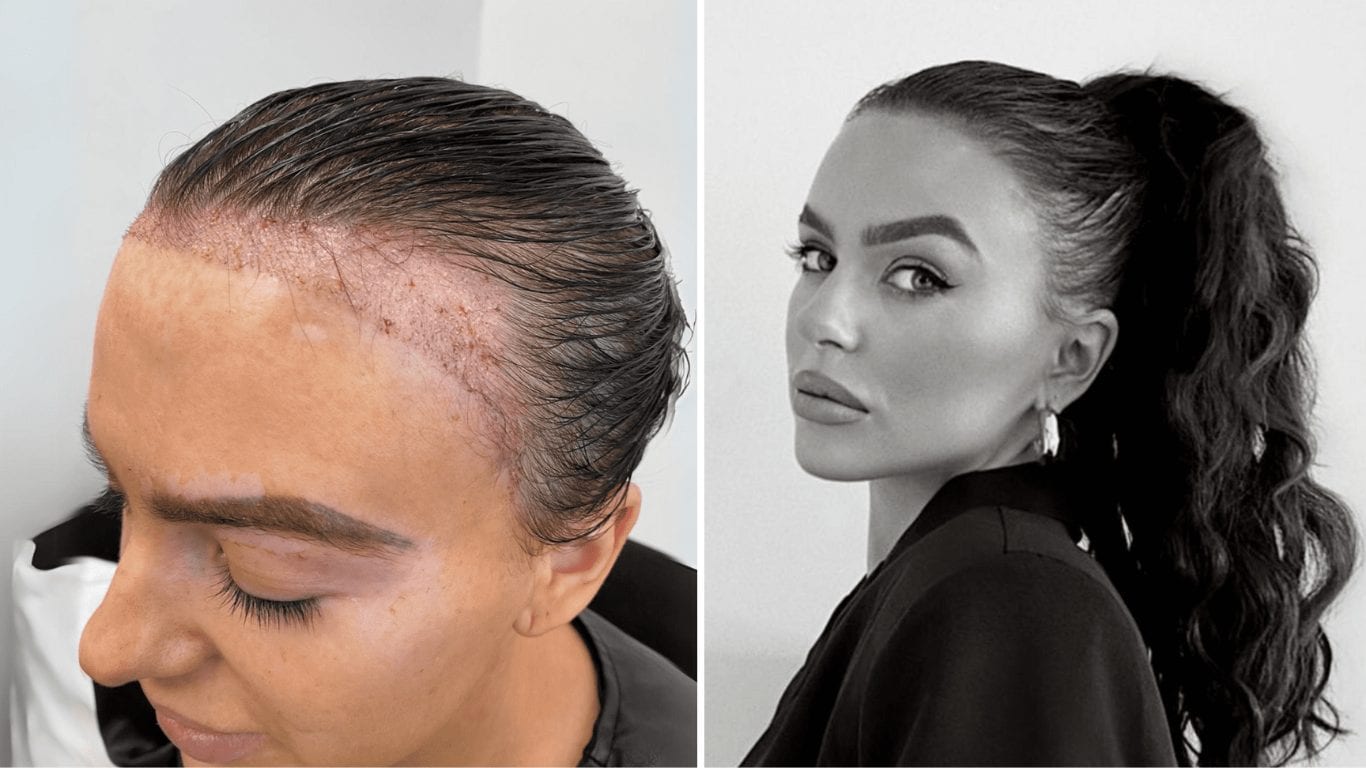
Yes, women can be excellent candidates for a hair transplant. The key extra step is ruling out reversible or medical causes first, such as thyroid disease, iron deficiency or telogen effluvium, since female pattern loss is often diffuse rather than clearly patterned, which needs a careful donor assessment before surgery is recommended.
Women can be excellent hair transplant candidates, but a good assessment for a woman typically starts one step earlier than it does for a man: ruling out a reversible, non-surgical cause before anyone talks about surgery at all.
Why this extra step exists
Female pattern (androgenetic) loss is real and common, but it sits alongside several other, treatable causes of shedding that are far more common in women than in men, and several can look similar to the naked eye. Operating before ruling these out risks moving hair into a scalp that is shedding for a reason surgery cannot fix.
Thyroid disease
Both an underactive and an overactive thyroid can cause diffuse shedding across the whole scalp. A simple blood test, typically TSH and often free T4, identifies this, and hair often recovers, at least partially, once thyroid levels are treated and stable, without any surgery.
Iron deficiency
Low ferritin, the body's iron store, is one of the most common and most overlooked causes of diffuse hair shedding in women, even when a standard haemoglobin blood count looks normal. Correcting iron deficiency, guided by your own doctor, resolves or improves the shedding in many cases.
Telogen effluvium
A physical or emotional shock, such as childbirth, a high fever, surgery, rapid weight loss or a period of severe stress, can push an unusually large share of hairs into the resting (telogen) phase at once. The shedding typically appears two to three months after the trigger and usually resolves on its own within roughly six to twelve months as the hair cycle resets.
The diffuse thinning caveat
Once reversible causes are ruled out or treated, the same core donor-based logic applies as for men, with one added layer of care: because female pattern loss is more often diffuse, an evenly thinning crown per the Ludwig scale, rather than sharply patterned, the donor area itself needs particularly careful assessment. If donor density is also affected by the same diffuse process, a transplant may be a poor use of a limited resource, and non-surgical treatment is usually the better next step. Where the loss is well defined instead, for example a widening parting, a receded or high hairline, traction alopecia from tight hairstyles, or scarring from previous surgery, and the donor area is stable, women are excellent candidates.
The common misconception
The misconception is that hair transplants "don't really work for women" as a category. They do, for the right pattern of loss; the real nuance is that more women's cases turn out to be reversible or diffuse than men's, which is why the assessment sequence looks different, not because results are less reliable. Read more in our guide to hair loss and transplants in women.
What are realistic expectations?
A hair transplant redistributes your own existing hair; it does not create new hair or add overall density. Realistic goals are a natural, appropriately framed hairline and thicker coverage in the transplanted area, not teenage-level density. It does not stop future loss elsewhere, so medical therapy often continues alongside it.
Setting expectations honestly before surgery is part of the procedure itself. Much of what gets called "a bad result" later is a mismatch between what was promised and what a transplant, by its nature, can deliver.
What a transplant can realistically do
It relocates a limited, finite number of your own follicles from a resistant donor area to where they will look most natural and useful, typically the hairline, temples and crown. Done well, this can meaningfully lower a hairline, fill a thinning crown, restore a natural frame to the face, and cover scars or gaps, with results that generally continue to look natural for years, since transplanted hairs typically keep the resistance they had at the donor site.
What it cannot do
It does not create new hair-producing follicles or add to your total lifetime hair count, and it does not cure androgenetic alopecia; it redistributes existing hair. It does not protect hair that was not transplanted, including native hair around the treated area or donor hair itself, from continuing to thin over the decades. Any specific, guaranteed percentage of "density" or a promised final look is a red flag rather than reassurance, since healing and individual graft survival vary from person to person.
Density versus coverage
A transplant is usually planned for coverage and shape, an even, well-framed hairline and a visually full crown, rather than matching the raw density you had at eighteen, because grafts are deliberately spread to preserve donor-area appearance and to work within a finite supply. Most people find that a lower density than their teenage self, placed thoughtfully, reads as full and natural; very few plans can, or should, aim to fully replicate original density.
The timeline, honestly
- Weeks two to three: the transplanted hairs typically shed. This is expected and not a sign of failure.
- Months three to four: new growth generally begins.
- Months six to twelve: density and texture continue to mature, with most people seeing close to the final look around the twelve-month mark.
Why medical therapy is often still part of the plan
Because native hair around the transplant is not protected, many surgeons recommend continuing or starting medical therapy, such as Finasteride or Minoxidil, alongside the transplant, to slow loss in the untreated hair around the new grafts. This is not a sign the surgery "didn't work"; it is standard practice for protecting the overall look over time.
When are you not a good candidate?
Poor candidates typically include diffuse unpatterned hair loss (DUPA) where the donor itself is thinning, insufficient or low-quality donor supply, active scarring (cicatricial) alopecia or active autoimmune scalp disease, and unstabilised, rapidly progressing loss. These are usually reasons to wait or treat the underlying cause first, not a permanent no, and a surgeon confirms the final answer.
An honest candidacy guide has to say plainly where a hair transplant usually is not the right next step, at least not yet. None of the categories below are used lightly; each is a genuine reason a responsible surgeon would pause, investigate further, or recommend a different path first.
Diffuse unpatterned hair loss (DUPA)
When thinning affects the donor area at the back and sides along with the rest of the scalp, the basic logic a transplant depends on, that donor follicles are genetically resistant, no longer holds cleanly. Moving hair from an area that is itself miniaturising can mean the moved grafts face a similar long-term trajectory as the hair around them. DUPA is identified through pattern, density mapping and sometimes trichoscopic assessment, and it is usually a reason to treat medically and monitor rather than operate.
Insufficient or poor-quality donor supply
Very low donor density from the outset, extensive scarring from earlier surgeries, including a poorly performed strip (FUT) procedure, or a donor area already heavily drawn down by previous transplants, limits what can be safely achieved. A responsible surgeon says plainly when the numbers do not support the result someone is hoping for, rather than operating anyway.
Active scarring (cicatricial) alopecia and active autoimmune scalp disease
This category is worth naming precisely, because the conditions involved are genuinely different from one another. Lichen planopilaris, frontal fibrosing alopecia and discoid lupus erythematosus are scarring (cicatricial) forms of alopecia: the inflammatory process permanently destroys the follicle and replaces it with scar tissue. If the disease is still active, transplanting into it risks poor survival of the new grafts and can trigger reactivation of the underlying condition in the surrounding skin. This is not the transplanted hair being "rejected", the grafts remain your own tissue throughout, but graft loss and disease flare driven by the underlying condition. Surgery is typically only considered once the disease is confirmed quiet, often for six months or more, under a dermatologist's supervision.
Alopecia areata sits in a different category entirely: it is autoimmune but non-scarring, meaning the follicle structure itself usually survives and hair can regrow once the immune attack settles. It is generally stabilised with medical treatment first and assessed on current activity, rather than treated the same way as a scarring condition.
Unstabilised, rapidly progressing loss
Operating into a pattern that has not settled risks a hairline or crown that looks well placed today and isolated within a few years, as surrounding native hair continues to recede around it. This is usually a "not yet", resolved by medical therapy and a period of monitoring, covered in more detail in the age and stability section above.
Reversible causes not yet addressed
Iron deficiency, thyroid disease and telogen effluvium can all cause shedding that a transplant does nothing to treat, since it is not hair loss driven by DHT sensitivity at all. Where a simple blood test or a few months of watchful waiting could resolve the shedding, that is almost always the right first step, not surgery.
Expectations no surgery could meet
Occasionally the limiting factor is not medical at all: someone hoping for maximum, teenage-level density everywhere, or a guarantee of one exact outcome, is describing something no transplant, anywhere, can promise. A good consultation addresses this directly and honestly, rather than agreeing to a plan that cannot realistically be delivered.
The honest bottom line
None of these are permanent verdicts written in stone. Most describe a reason to wait, treat an underlying cause, or investigate further, not a lifelong no; people who hear "not yet" at one assessment often go on to be good candidates a year or two later, once a condition is controlled or a pattern has settled. Only a qualified surgeon, examining your scalp directly, can confirm where you personally stand.
Candidacy at a glance
The table below gives a general, at-a-glance view of common candidacy factors. It is a simplified summary for orientation only; real candidacy always depends on how these factors interact together, assessed by a surgeon, rather than any single row read in isolation.
Six factors decide most of the picture: how patterned the loss is, how much donor hair remains, how stable the pattern has been over time, general health, scalp condition, and whether expectations are realistic. Landing mostly in the left-hand column across these six is a genuinely encouraging sign; landing in several amber or red columns is not a verdict, it is simply a prompt to get a real assessment before drawing conclusions either way. Use the table below only as a quick, general orientation.
| Factor | Good candidate | Needs assessment | Usually not suitable |
|---|---|---|---|
| Hair-loss pattern | Clearly patterned (Norwood/Ludwig) | Mixed pattern with some diffuseness | Fully diffuse, unpatterned loss (DUPA) |
| Donor area | Dense, thick, stable | Moderate density, some thinning | Sparse, thinning, or already heavily used |
| Age / stability | Loss has stabilised | Loss is slow and gradual | Loss is young, rapid and unstabilised |
| General health | Good health, conditions well controlled | Manageable conditions needing review | Uncontrolled conditions affecting healing |
| Scalp condition | Calm, healthy scalp | Treatable flare-up, not yet settled | Active scarring alopecia or infection |
| Expectations | Realistic, framed-density goals | Needs a fuller conversation about outcomes | Expects maximum density everywhere, permanently |
Real candidacy depends on how these factors interact with each other, not any single row read on its own. Two people with an identical donor area can be assessed very differently once age, stability and scalp condition are added in, which is exactly why a surgeon looks at the whole picture together rather than scoring each row in isolation. Landing in more than one amber or red column is exactly the situation a free assessment is designed to clarify, with no obligation to proceed.
Am I a candidate? Quick self-check
This is a quick self-check for general orientation only, not a diagnosis. It highlights the factors that matter most, pattern, donor area, stability, health and scalp condition, so you can see roughly where you stand. Only a qualified surgeon, at a personal assessment, can confirm whether you are a candidate.
Everything above comes down to five things a surgeon weighs together: pattern, donor area, stability, general health and scalp condition. The seven questions below turn that into a rough, two-minute self-check, so you can see, in general terms, roughly where you stand before you ever book anything.
This is a quick self-check for general guidance, not a diagnosis. Nothing you enter is stored. Answer all questions, then see your result.
Is your hair loss in a recognisable pattern (a receding hairline or thinning crown) rather than sudden or spread evenly all over?
Is the hair at the back and sides of your head (the donor area) still reasonably thick?
Are you in good general health, with any conditions (for example diabetes or thyroid) well controlled?
Is your scalp currently free of active problems such as flaking, sores, infection or redness?
Has your hair loss been fairly stable, or clearly slowed, over the last year or two?
Are you 25 or older, or, if younger, has your loss clearly stabilised?
Do you understand that a transplant redistributes your own hair, it won’t give teenage density or stop all future loss?
Please answer all questions to see your result.
You look like a strong candidate
Your answers point to stable, patterned loss with a healthy donor and realistic expectations, the profile a surgeon looks for. The next step is a personal assessment to confirm it and plan your grafts.
Book a free assessmentLikely a candidate, with a few checks
Most of your answers are encouraging, but one or two areas need a closer look before anyone can confirm. A free assessment will clarify exactly where you stand.
Book a free assessmentYou may not be a candidate just yet
Your answers suggest a transplant may not be the right step right now, often because loss is still progressing, the donor needs assessing, or a reversible cause should be treated first. That can change. A free assessment will tell you honestly, with no pressure.
Book a free assessmentFrequently asked questions
Am I too old for a hair transplant?
There is no strict upper age limit for a hair transplant. What matters most is your general health, whether any medical conditions are well controlled, how stable your hair loss pattern has been, and the density and quality of your donor area at the back and sides. Skin healing and scalp laxity are also reviewed, since these can change gradually with age even in a genetically resistant donor zone. Older patients are routinely good candidates once these factors check out; the assessment looks at them individually rather than applying an age cutoff, at a personal consultation with a qualified surgeon.
Am I too young for a hair transplant?
Very young age is not an automatic barrier on its own, but early, rapidly progressing hair loss is usually treated medically first, commonly with Finasteride and/or Minoxidil, so the pattern has a chance to settle before any surgical plan is made. Operating into hair loss that is still actively progressing risks a result that looks well placed today but isolated by continued recession around it within a few years. Many younger patients advised to wait go on to become good candidates later, once photos over six to twelve months confirm the pattern has genuinely stabilised.
Can I get a hair transplant with diabetes?
In most cases, yes. Well-controlled diabetes, meaning stable blood sugar and an HbA1c within the range your own doctor considers controlled, is generally compatible with a hair transplant, since the main concern is how sugar levels affect wound healing and graft survival. Poorly controlled diabetes can slow healing and raise infection risk, so it is reviewed individually at your pre-operative medical assessment and, where appropriate, confirmed with your own doctor before an operation date is booked. Diabetes on its own is not treated as an automatic disqualifier at a well-run clinic.
Do I have enough donor hair?
It depends on the density, thickness (calibre) and stability of the hair at the back and sides of your scalp, alongside the size of your genetically resistant safe donor zone. A dense, wide donor area can support several thousand grafts, sometimes across more than one session over the years; a thinner or already-miniaturising donor limits the realistic, safe yield. This is assessed visually, from close-up photos, or with a densitometer at a proper consultation. Our graft calculator gives a rough first estimate, but a real assessment of your specific donor area gives a genuinely reliable answer.
Can women get a hair transplant?
Yes. The extra step for women is ruling out reversible causes first, such as thyroid disease, low iron (ferritin) or telogen effluvium after childbirth, illness or stress, since these can all cause shedding that a transplant would do nothing to treat. Once these are ruled out or treated, candidacy depends on the same core factors as for men: a reasonably defined area of loss, such as a widening parting or receded hairline, and a stable, dense donor area. Because female pattern loss is often more diffuse, donor assessment is done with particular care before surgery is recommended.
Who is not a good candidate for a hair transplant?
People with fully diffuse, unpatterned hair loss (DUPA) affecting the donor area itself, insufficient or poor-quality donor hair, active scarring (cicatricial) alopecia such as lichen planopilaris or frontal fibrosing alopecia, active autoimmune scalp disease, or hair loss that is still rapidly progressing and unstabilised are usually asked to wait, treat the underlying cause, or investigate further first. Reversible causes such as iron deficiency or thyroid disease should also be addressed before surgery is considered. None of these are necessarily permanent; many people move from "not yet" to "good candidate" once a condition is controlled or a pattern has settled, confirmed at a follow-up assessment.
The clearest way to know whether you are a candidate is a real assessment of your own scalp, not a general article. Get a free hair analysis and hear back from our #1-ranked clinic with an honest view of your pattern, your donor area and what is realistic for you, with no obligation to go further.
General educational guidance, not medical advice. Candidacy is confirmed by a qualified surgeon at a personal assessment.
Last updated: July 2026 · Editorial standards