
Can a receding hairline be transplanted so that it looks like it was never gone? Yes. The hairline responds better to transplantation than any other zone of the scalp: it is a narrow band, it needs fewer grafts than the crown or mid-scalp, and modern follicular unit techniques can rebuild it one hair at a time. It is also the zone where the difference between an excellent clinic and a mediocre one is most visible, because every observer looks at it from a conversation's distance.
This guide covers what separates a natural transplanted hairline from an obvious one, when the temples belong in the plan, why the right target is your mature hairline rather than your teenage one, and how the front of the head competes with the crown for the same limited donor supply. If you are earlier in the process, start with whether you are a candidate at all or the broader guide to hair transplants for men.
Can a receding hairline be transplanted, and when is it the right move?
Yes. A receding hairline is the most common reason men seek a hair transplant, and the front line is the most rewarding zone to restore: it frames the face, it needs comparatively few grafts, and results are highly predictable when the loss has stabilised. The right moment is when the recession genuinely bothers you, your pattern has been stable, and medication or watchful waiting has answered the question of where the loss is heading.
Recession at the front happens in almost every adult male to some degree, which is exactly why timing matters more here than anywhere else. A hairline transplanted while the surrounding native hair is still retreating can end up standing alone within a few years. Surgeons therefore look for two things before agreeing to front-line work: a loss pattern that has settled, and expectations aimed at an age-appropriate frame rather than a return to adolescence.
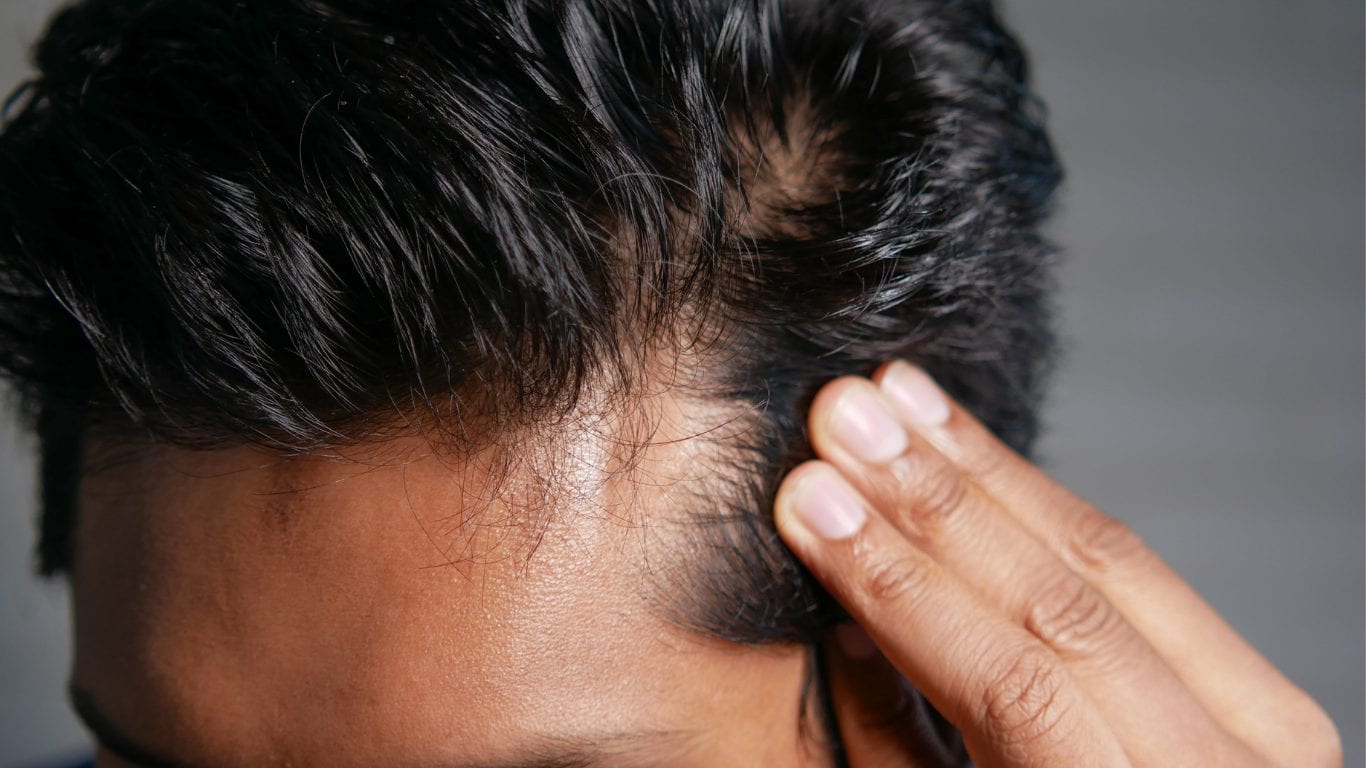
If your recession is early and still moving, the evidence-backed first step is usually to slow the loss without surgery and reassess once things are stable. If the corners have been quiet for years and simply sit deeper than you want them, you are the textbook hairline candidate.
What makes a transplanted hairline look natural, and what gives a bad one away?
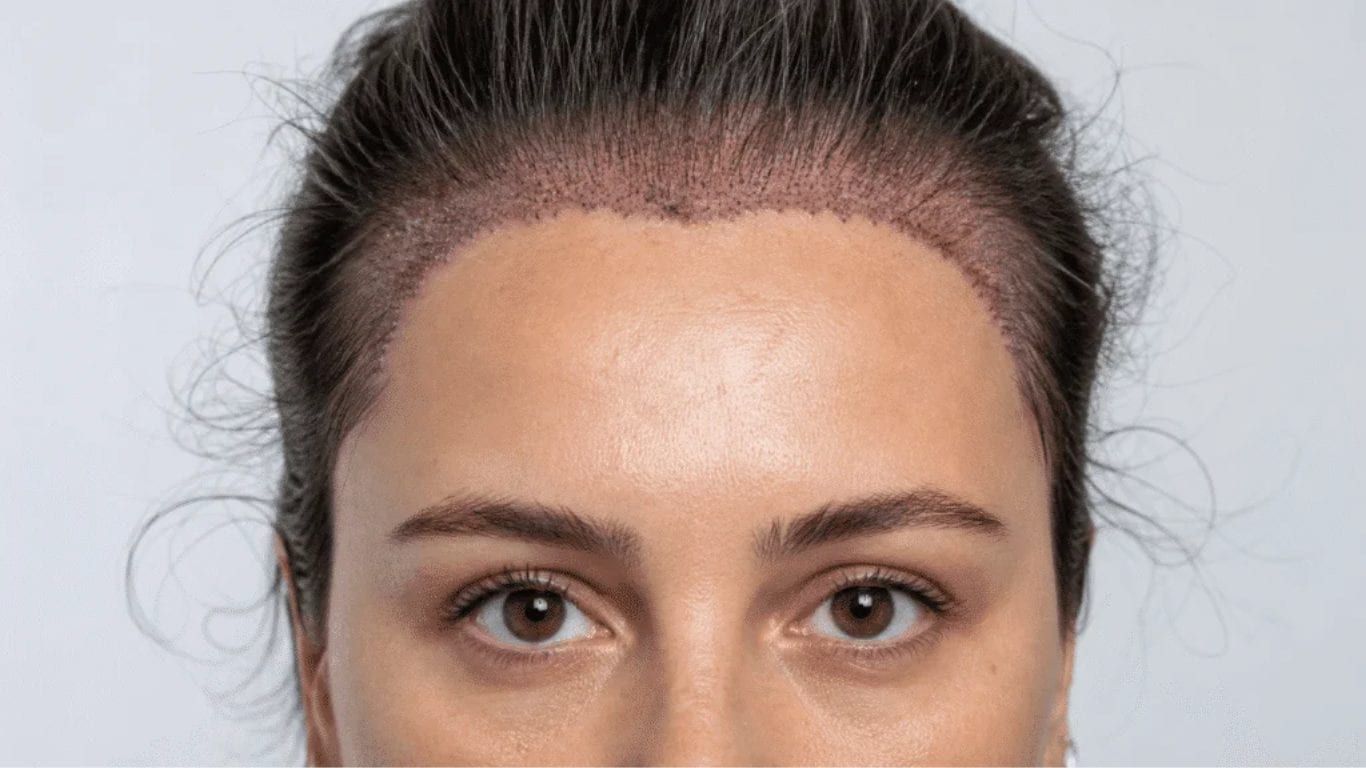
A natural hairline is built from single-hair grafts placed at the correct forward angle in a deliberately irregular line, with a soft transition zone that thickens gradually into multi-hair grafts behind it. Bad hairlines fail on exactly those points: multi-hair grafts at the very front, a ruler-straight or symmetrical line, wrong exit angles, or a shape that ignores how the face is built.
Nature does not draw straight lines. A real hairline is a zone, not an edge: fine single hairs scattered in front, small clusters behind them, full density only a centimetre or two back. Recreating that requires the clinic to dissect and reserve single-hair follicular units for the front row, place them at the shallow forward angle the zone naturally grows in, and vary the line with small triangular irregularities so light breaks against it the way it does on an untouched hairline.
The failures are recognisable across a room: the doll-like front row of thick multi-hair grafts, the symmetrical arc that no adult male naturally has, hairs exiting at ninety degrees. These are precisely the failures covered in our guide to clinic red flags, and they are the reason the hairline is the zone where surgeon and team quality shows first.
Should high temples be treated together with the hairline?
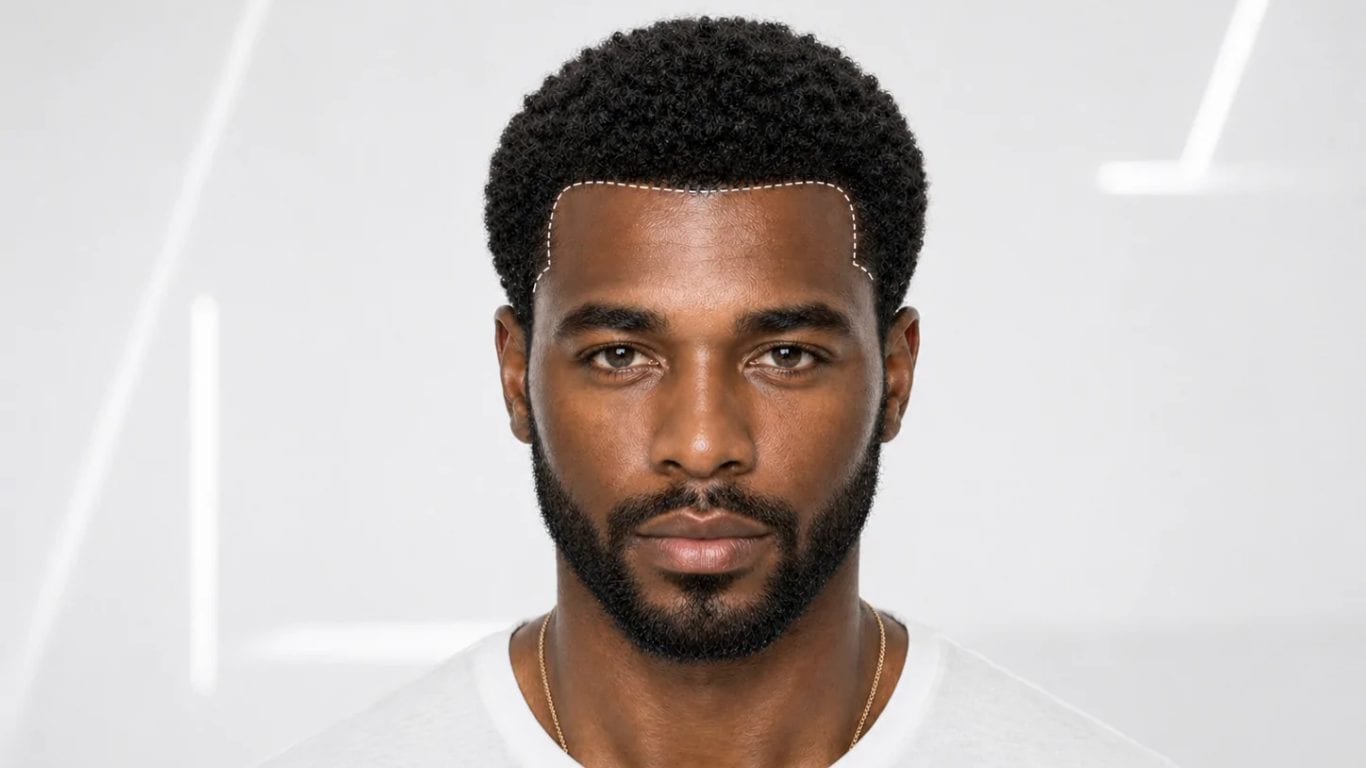
Often, yes. The temples and temple points frame the hairline from the sides, and deep temple recession can make even a good front line look artificial, as if the hairline floats on a too-open face. When the temples have retreated significantly, planning the front line and the temple areas as one composition gives a more convincing result than treating the line in isolation.
High temples are one of the most searched hairline concerns for good reason: the fronto-temporal corners are usually where recession begins, and they set the visual width of the forehead. Temple work is technically demanding, because temple hair is finer, grows at extremely flat angles and follows a downward direction that must be copied exactly. Not every clinic does it well, and a clinic that treats the temples as an afterthought is worth questioning.
The practical rule from experienced surgeons: rebuild the corners and the front line as one continuous design, and treat the pointed temple tufts in front of the ears as their own decision, only when they have genuinely thinned. Ask to see healed temple cases specifically, not just front-line photos, when you are choosing a clinic.
Why is rebuilding your teenage hairline a mistake?
Because your donor supply is finite and your loss usually is not. A low, straight adolescent hairline demands a large number of grafts, ignores the natural maturing of the male hairline, and leaves nothing in reserve for the loss that typically continues behind it. The professional target is a mature hairline: slightly higher, with soft corners, that will still make sense on your face at fifty.
Almost every man's hairline rises somewhat between the late teens and the late twenties. That change, the mature hairline, is not balding: it is the adult resting position. Chasing the teenage line instead means placing grafts where no adult frame belongs, spending donor reserves on the least durable part of the design and, if the pattern keeps evolving, financing future repair work in advance.
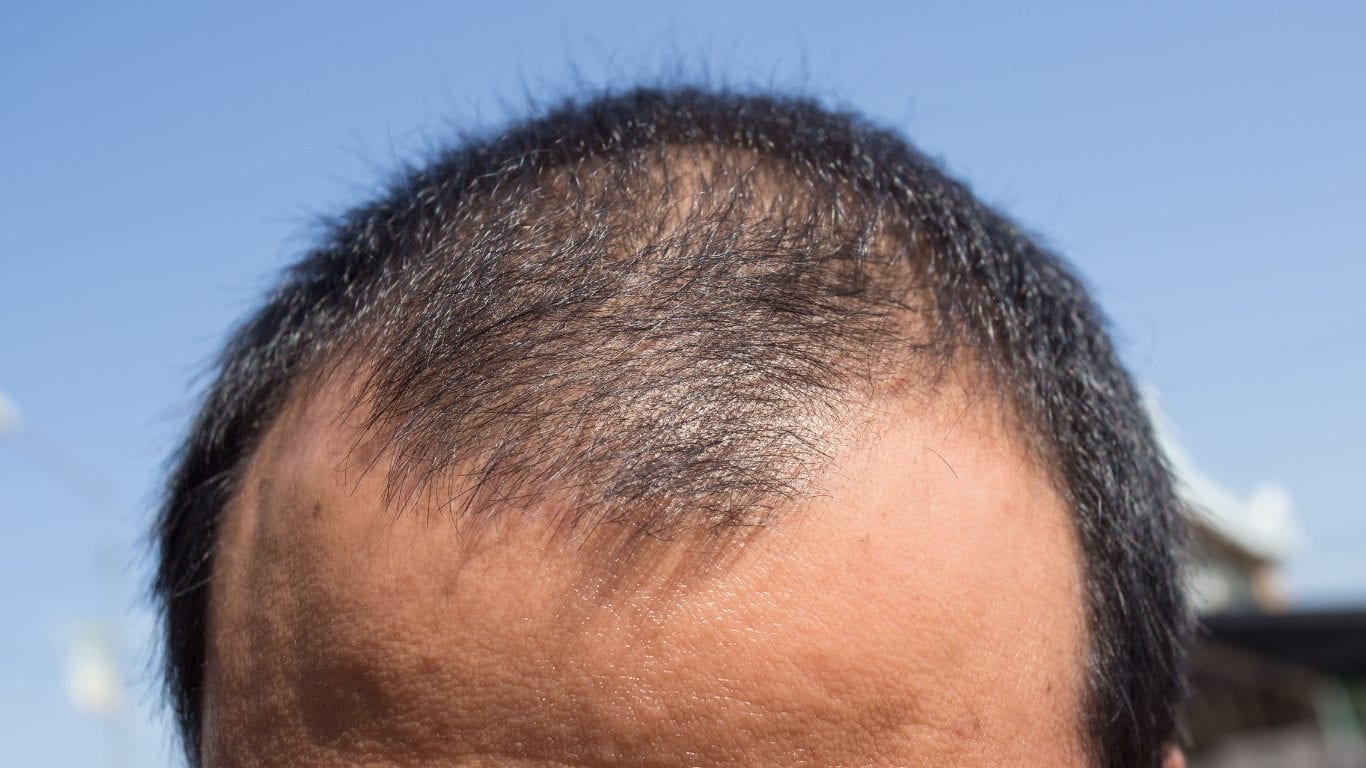
This is also why the site's general age guidance applies with extra force at the front: a transplant is normally considered from about 25, once the loss has stabilised, and hairline plans for younger patients should be conservative by design. Read more in too young or too old for a transplant? before you fall in love with a low line.
Hairline or crown: which should be restored first?
The hairline usually wins. It is the zone you and everyone else see in every interaction, it delivers the most visual change per graft, and it is the least forgiving of thin coverage. The crown, by contrast, is a graft-hungry spiral that many surgeons deliberately schedule second, once the front is secure and the donor budget for the rest is known.
Front and crown draw from the same limited pool: the DHT-resistant donor band at the back of the head. Every graft placed in one zone is permanently unavailable to the other, so the order of restoration is a real strategic decision, not a scheduling detail. The face-framing effect of the front line is why most plans start there; the crown's whorl geometry and higher graft appetite are why it often waits.
The full logic, including when the crown legitimately comes first, is covered in the dedicated guide to crown transplants, and the supply side of the equation in do I have enough donor hair?
How many grafts does a hairline transplant need?
Less than most people fear, and less than any other major zone. A limited refill of the fronto-temporal corners is a small session; a full rebuild of a deeply receded front line with temple work is a mid-sized one. The honest answer for your head depends on how far the line has retreated, how wide your forehead is and what density your donor area can fund. Against our graft calculator’s per-zone figures, front-line work spans roughly 400–1 000 grafts at Norwood 2 and 1 200–2 000 at Norwood 3, with temple work adding a further 100–800.
Because the hairline is a band rather than an area, its graft demand grows with the depth of recession rather than with square centimetres of bare skin, which keeps the numbers moderate compared with the crown or a full top-of-head restoration. Corner work, a full line, and a line plus temples represent three distinct budget levels, and a serious clinic will quote them separately rather than selling one round number.
For a personal estimate anchored to your Norwood stage, use the graft calculator, and see what a transplant costs for how graft counts translate into price across countries.
Which method actually matters for hairline work?
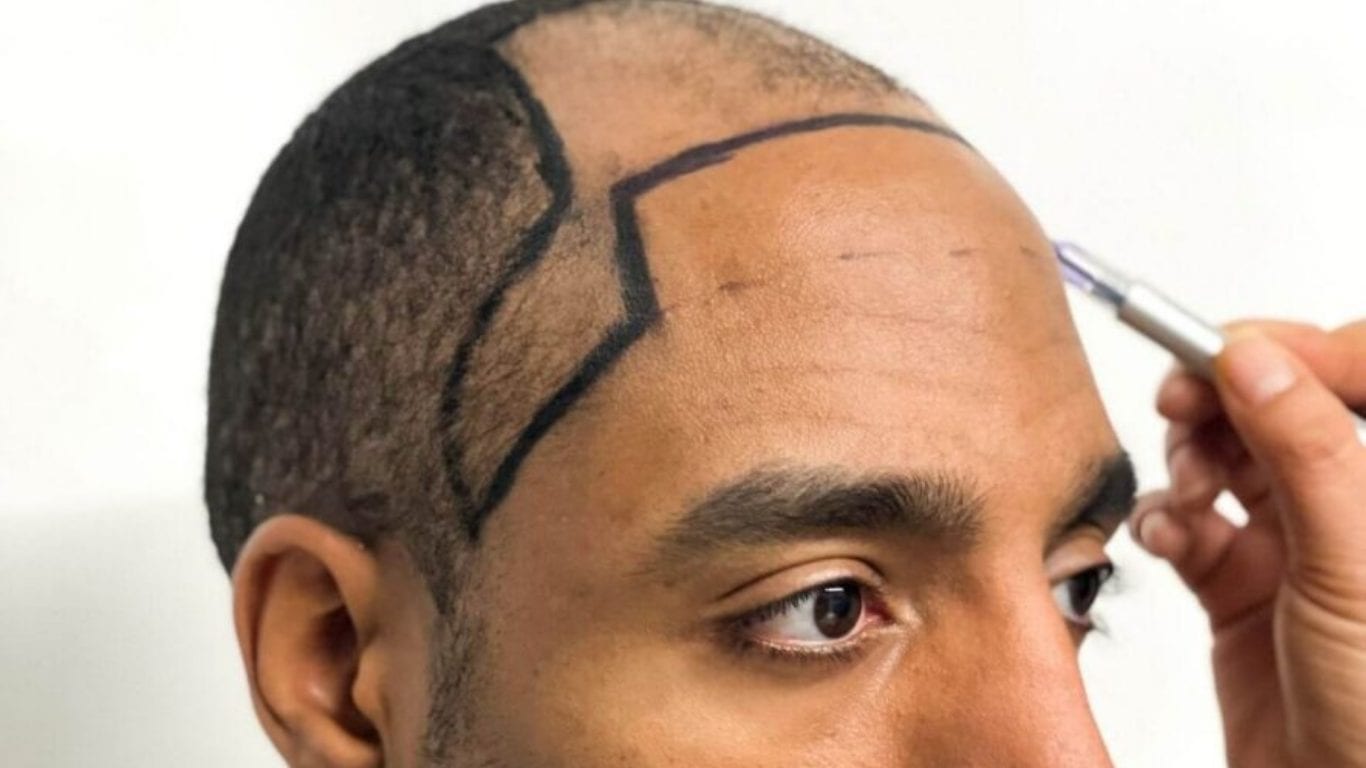
The placement stage matters more at the hairline than anywhere else, which is why implanter-pen techniques and fine sapphire-blade incisions earn their reputation in exactly this zone. Extraction is standard FUE in nearly all modern hairline work; the differences that show up in the mirror are angle control, incision size and how carefully single-hair grafts are reserved for the front row.
At the front line, each graft's exit angle and direction is individually visible, so techniques that give the surgeon per-graft control at placement have their strongest case here. That is the honest niche of DHI's implanter pen, which sets depth, angle and direction in one motion, and of Sapphire FUE, whose narrow blade incisions support dense, precisely angled packing in the transition zone.
For the back-to-back comparison of all methods, including where they genuinely differ and where marketing exaggerates, see the methods guide. And if showing up shaved is the obstacle, small front-line sessions are among the best candidates for a no-shave transplant.
What is a realistic hairline timeline and final result?
The transplanted hairs typically shed in weeks 2 to 3, new growth begins around months 3 to 4, and the final result is judged at about 12 months. A well-designed front line reaches convincing, comb-able density within that window, and because the grafts come from the DHT-resistant donor band, the result is long-lasting, though no follicle is completely immune to DHT.
The early weeks test patience most at the hairline, precisely because it is the zone you see every morning: the new line appears, sheds almost entirely, then rebuilds hair by hair through spring and summer of its first year. Photographic progress reviews at months 4, 8 and 12 are the honest way to track it; day-to-day mirror checks are not.
Density perception at the front also depends on styling length, hair calibre and contrast between hair and skin, which is why identical graft counts can look different on different heads. The full recovery playbook, including washing, sleeping and when normal styling resumes, is in the aftercare guide, and long-term expectations in how long results last.
Frequently asked questions
Will people be able to tell I had my hairline transplanted?
Not if it is designed and placed well. A natural result depends on single-hair grafts at the front, correct angles and an irregular line; when those are respected, even hairdressers routinely miss it. The giveaways are design failures, not the technique itself.
Do I have to shave my head for a hairline transplant?
Often not entirely. Hairline sessions are comparatively small, which makes them frequent candidates for partial-shave or no-shave approaches where the recipient area stays concealed by your existing hair. Whether you qualify depends on session size and your hair length.
Does a hairline transplant hurt?
The procedure itself is done under local anaesthetic and is generally described as undramatic; the anaesthetic injections are the least comfortable minutes of the day. Mild tightness and sensitivity at the front for some days afterwards is normal and manageable.
How much does a hairline transplant cost?
Less than a full restoration, because the graft count is moderate. The price is driven by the number of grafts and the country of treatment far more than by the zone itself; corner refills sit at the small end and full line-plus-temples designs at the middle of typical session pricing.
Can women have a hairline transplant?
Yes. Hairline lowering and rebuilding of thinned front corners are among the most common procedures for women, though the assessment differs because female hair loss follows different patterns. The dedicated guide to women's hair transplants covers when it is possible.
How long does a transplanted hairline last?
The grafts come from the donor band at the back of the head, which is largely resistant to DHT, so a transplanted hairline is a long-term result rather than a temporary fix. No follicle is completely immune to DHT, however, and the native hair behind the line can continue to thin, which is why stabilising the loss first matters.
Line height, corner depth, temple involvement and donor budget are individual measurements, not things an article can settle. Get a free hair analysis and receive an honest, no-obligation read on your hairline from our #1-ranked clinic's team. See also the full Top 30 ranking.
Last updated: August 2026 · Editorial standards