Aftercare after a hair transplant

Introduction: aftercare decides a large part of the result

The operation itself is only half the journey. What you do in the days and weeks afterwards is decisive for how many of the transplanted follicles survive and grow out. In the first period the newly placed grafts are fragile and dependent on the body establishing a blood supply to them. Carelessness in this phase can cost you grafts that cannot be replaced.
This guide works through the recovery step by step, from the first critical days to the final result after a year. Always follow the specific instructions given by your own clinic, since protocols can vary. This text is a general, informative framework and does not replace the clinic's individual guidance.
The first 24-72 hours: the most critical phase
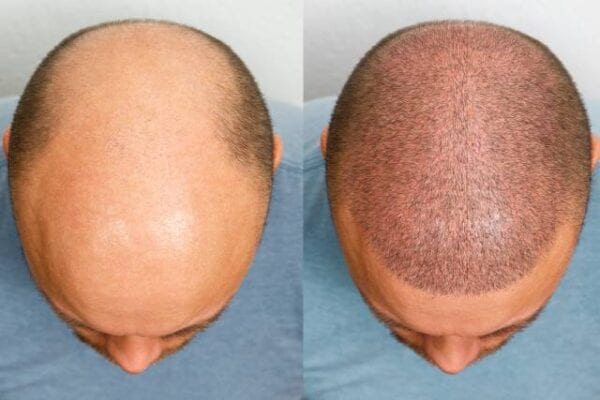
During the first three days the transplanted grafts sit only loosely and are not yet “anchored”. The aim is to protect them completely from pressure, rubbing and knocks.
- Do not touch the recipient area with your fingers, and do not scratch, even if it itches.
- Avoid any contact, hat or pillow against the new grafts.
- Keep your head elevated, including while you sleep, to reduce swelling.
- Avoid physical exertion, bending and sweating, which raise the blood pressure in the head.
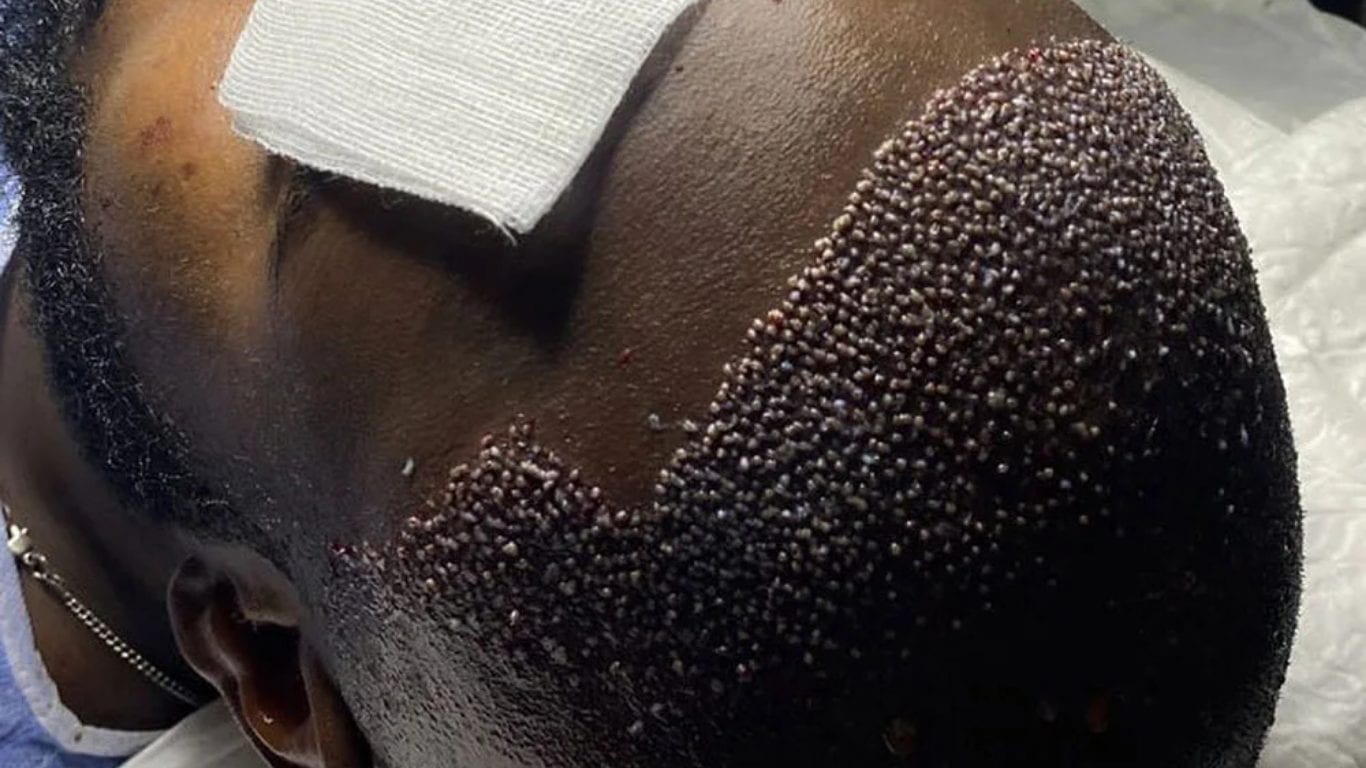
Slight oozing, tenderness and a tight sensation are normal. Swelling of the forehead can appear on day 2-4 and sometimes travels down towards the eyes; this is harmless and disappears on its own within a few days.
Sleep and head position in the first week
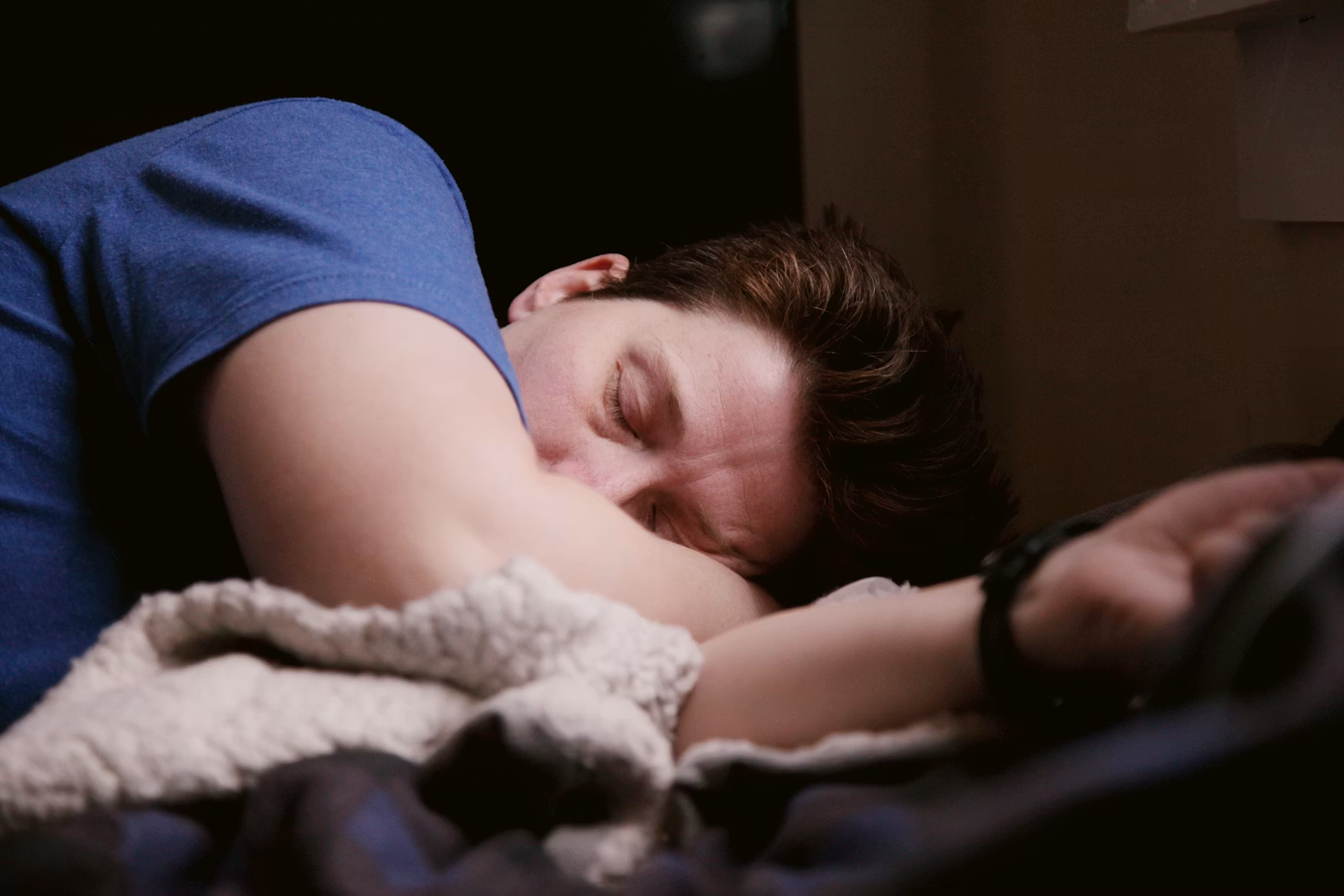
How you sleep matters more than most people think. During the first week you should sleep on your back with your head elevated at about 45 degrees, typically supported by a couple of pillows or a neck pillow. That reduces swelling and, most importantly, prevents you from rubbing the fragile grafts against the pillow.
Avoid sleeping on your stomach or your side, where the recipient area can come into contact with the bedding. Many people use a travel neck pillow to keep the back of the head clear. After roughly 7-10 days, once the grafts are firmly seated, you can gradually return to your normal sleeping position.
The first hair wash and daily care
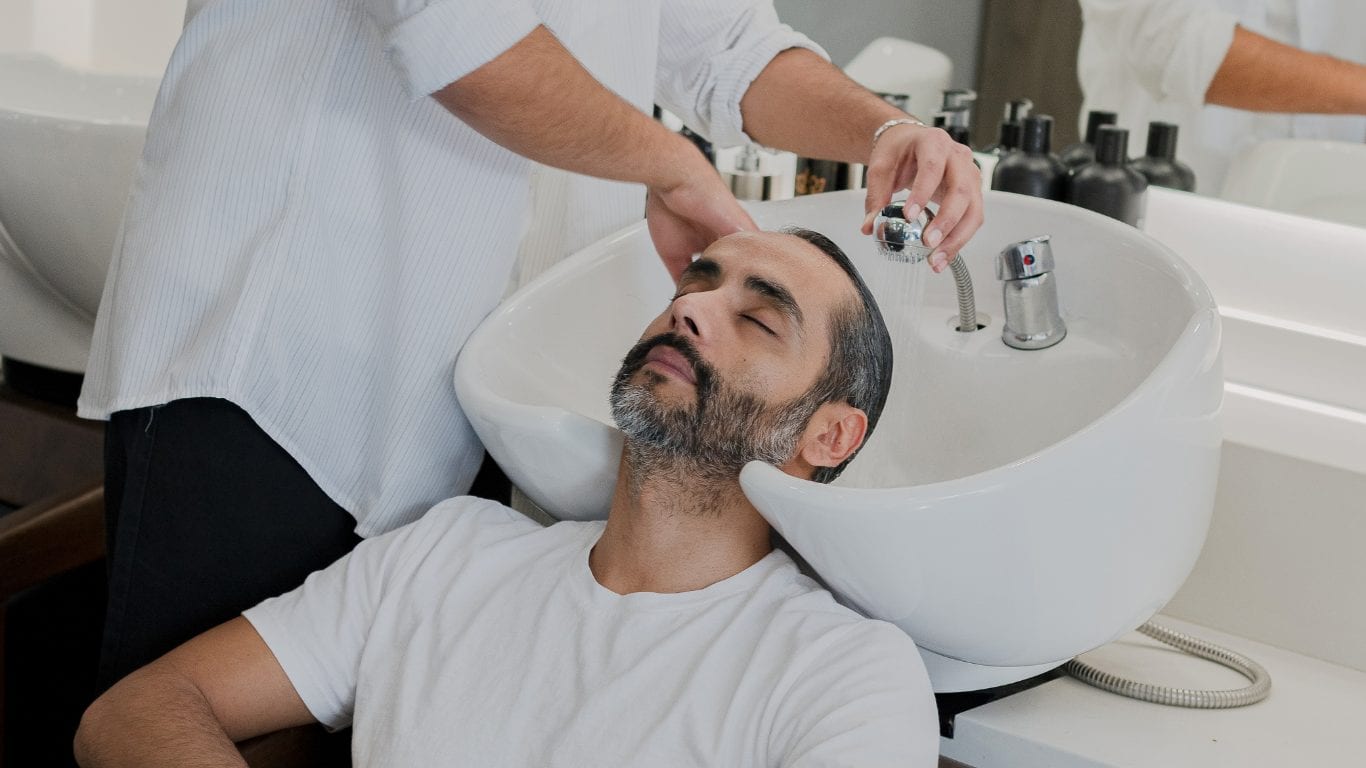
The first wash is typically carried out 1-3 days after the procedure according to the clinic's instructions, often demonstrated at the clinic. The purpose is to keep the area clean, reduce the risk of infection and soften the crusts so that they come away naturally.
- Be extremely gentle: No direct shower jet on the recipient area; instead pour lukewarm water gently over it.
- No rubbing: Lather the recommended mild shampoo in your hand, dab carefully, and rinse gently.
- Never scratch the crusts off: Let them fall off by themselves (typically within 7-14 days).
- Pat dry with a clean towel or let it air dry, never rub.
Follow the clinic's plan for when you can return to normal washing. A patient, gentle routine during these weeks protects your investment.
Crusts, itching and what is normal
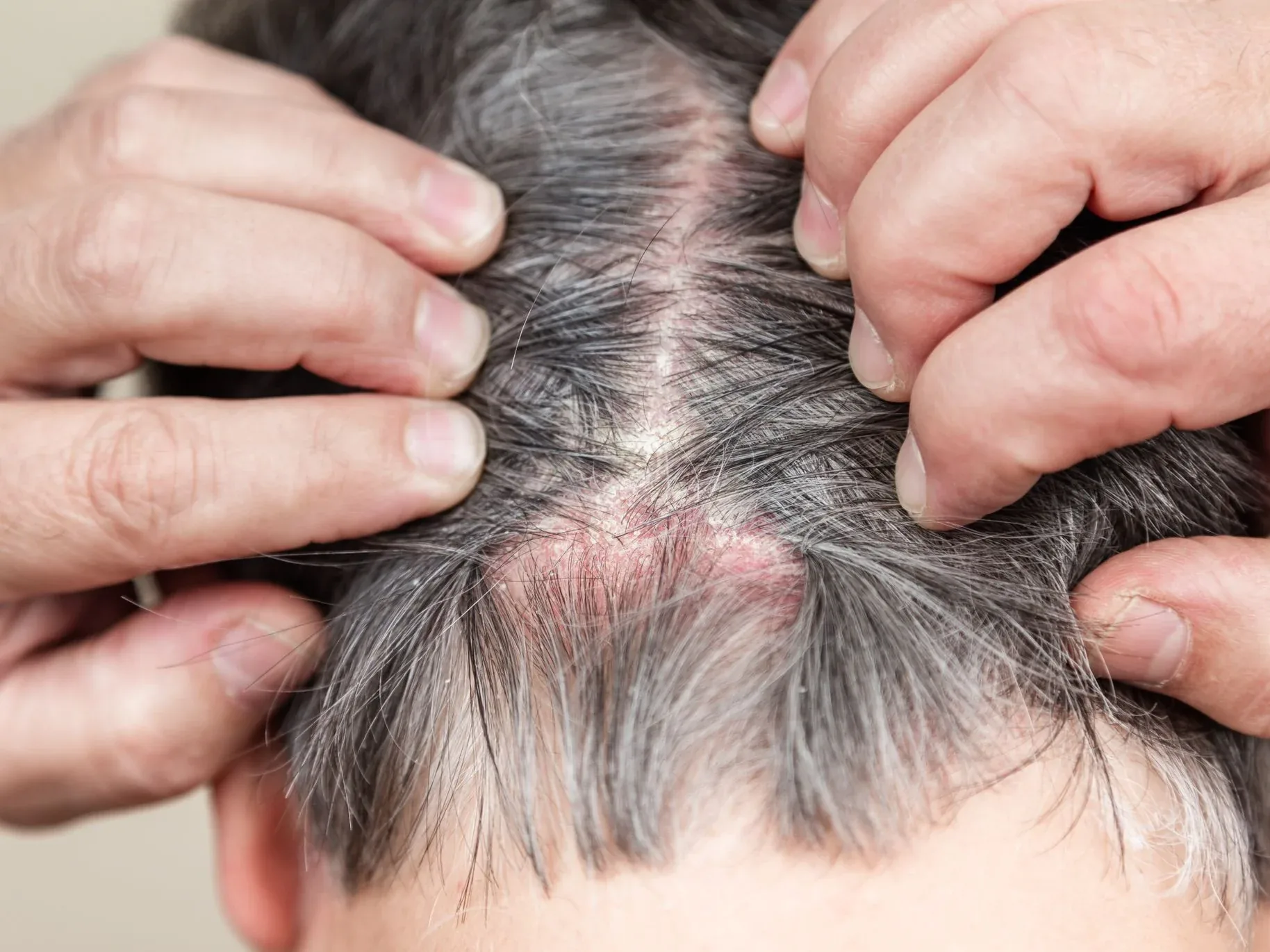
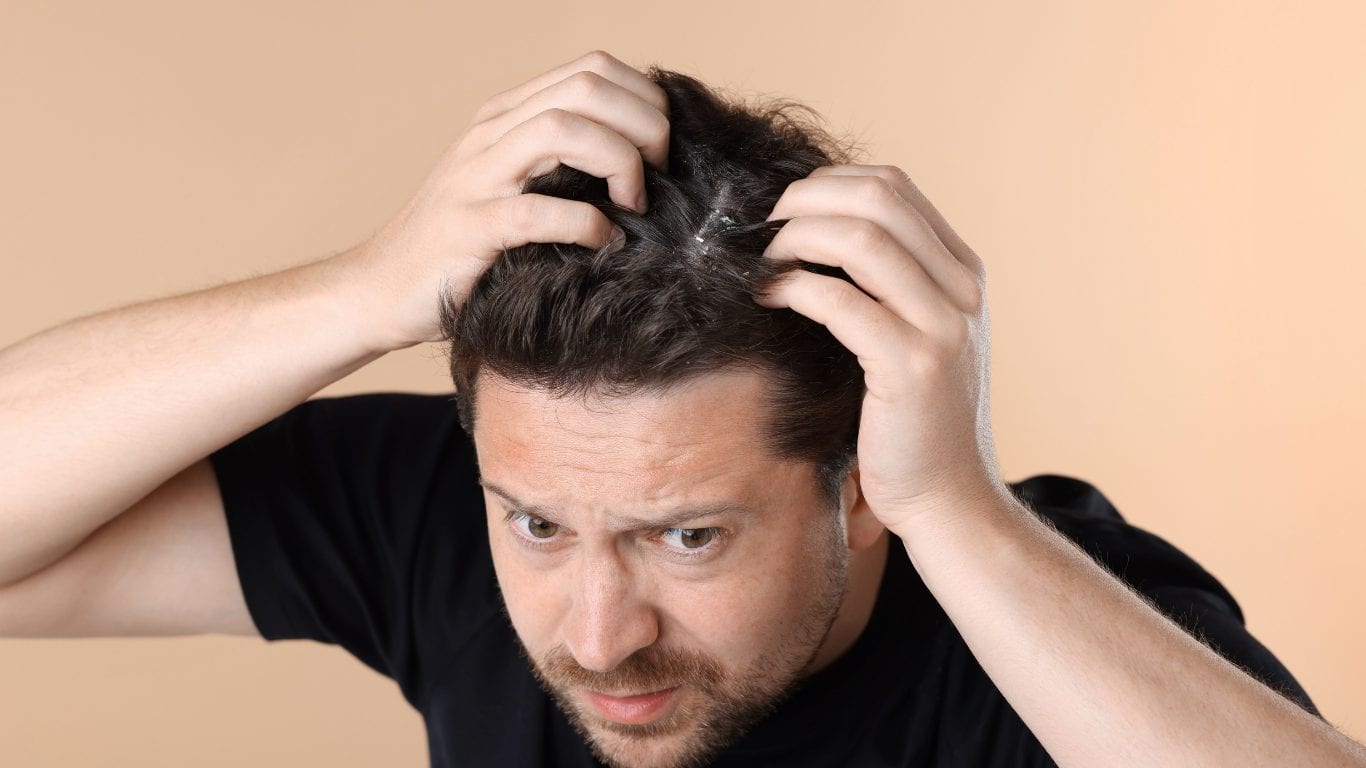
In the week after the operation small crusts form around each graft, which is a normal part of healing. They fall off over 1-2 weeks, and it is important not to pick or scrape them off, as you risk tearing grafts away with them. Itching is also common as the skin heals; resist the urge to scratch, and ask the clinic about a soothing, approved solution if it becomes troublesome.
Redness in the recipient area can last a couple of weeks, and longer in people with fair skin. Numbness or a tingling sensation in the donor or recipient area can occur and typically subsides over weeks to months.
Shock loss: when the new hair falls out (and why that is normal)
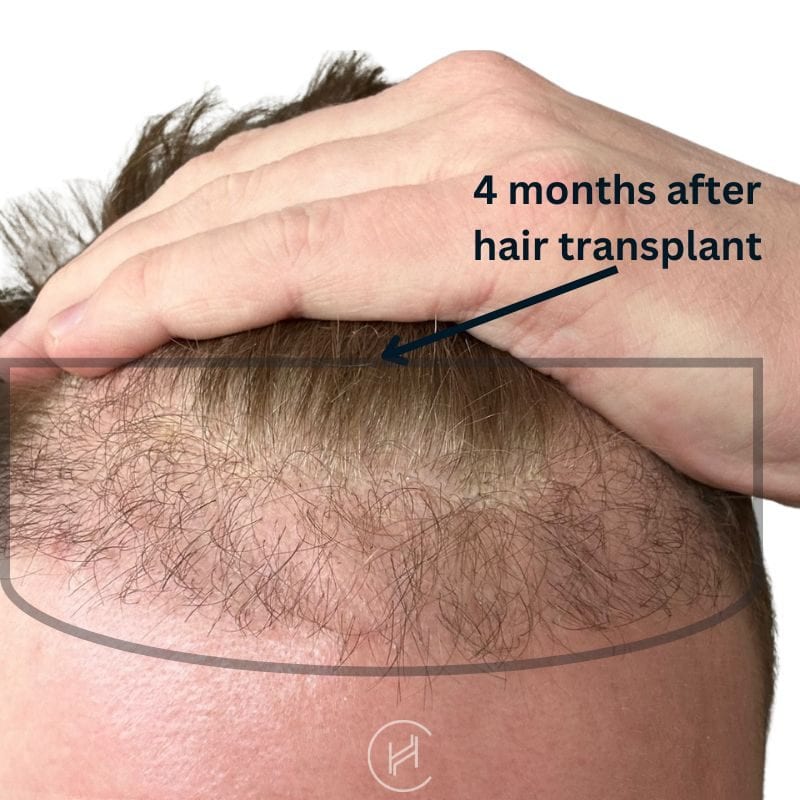
Around the 2nd to the 3rd week almost everyone experiences a phenomenon that can seem alarming: the transplanted hairs fall out. This is called shock loss and is an expected, temporary reaction. The hair shaft itself is shed, but the follicle remains in the skin and passes into a resting phase before it starts producing a new, near-permanent hair.
Some people also experience a temporary loss of some of the original hair around the recipient area because of the surgical stress; this too usually grows back. Shock loss is therefore not a sign that the operation has failed, on the contrary it is a normal part of the cycle. Patience is the key word: the real result only begins to show from the 3rd to the 4th month.
What you may and may not do, a timed overview
| Activity | Typically possible again |
|---|---|
| Gentle walk | Straight away, without exertion |
| Ordinary (gentle) hair wash | According to the clinic's instructions, often day 1-3 |
| Back at work (desk based) | Typically 2-5 days |
| Light exercise / sweating | About 2 weeks |
| Hard training, lifting, contact sport | About 3-4 weeks |
| Swimming (chlorine/sea) | About 4 weeks |
| Direct, strong sun on the head | Avoid for several weeks; use a hat/sunscreen once healed |
| Alcohol | Avoid for the first few days; limit during the first weeks |
| Smoking | Avoid for as long as possible, it impairs healing |
| Haircut (scissors) / colouring | Scissors by agreement; colour typically after several weeks |
Smoking and alcohol impair the circulation and the healing and should be limited as much as possible during the healing phase, this is one of the simplest ways to protect graft survival.
Get a free hair analysis
- 1Start
- 2Info
- 3Done
Supportive treatments after a hair transplant: medical and non-medical
The operation itself is only half the journey. Alongside the very basic aftercare, which is about protecting the grafts, there is a range of supportive treatments that can promote healing, growth and the final result. They are often divided into two groups: medical treatments, which act on the body's biology, and non-medical treatments, which support the environment around the new hairs. Here we go through the most important ones, so that you can understand what genuinely works, what is promising but uncertain, and what is mostly marketing.
1. Medical supportive treatments
Finasteride and Minoxidil
The most important medical treatments around a hair transplant are Finasteride and Minoxidil. A transplant moves hair, but it does not stop the hereditary loss of your own, non transplanted hair. Without protection, the years can leave a well preserved transplanted front standing in an otherwise thin landscape. Finasteride lowers the hormone DHT and slows the hereditary loss, while Minoxidil stimulates growth and prolongs the growth phase of the hair. Many clinics recommend continuing or starting this treatment in order to protect the original hair, so that the result remains natural over time. Some recommend a short pause with Minoxidil around the operation itself, which should always be clarified with the clinic. The decision about medication should be made together with a doctor who knows your situation and can discuss the benefits and any side effects. Read more in our guide to slowing hair loss without surgery.
PRP, platelet rich plasma
PRP is a treatment in which a small amount of your own blood is drawn, the platelets and their growth factors are concentrated, and the plasma is injected into the scalp. After a transplant, PRP is used by some clinics to support healing and promote an earlier, more vigorous start to growth in the transplanted grafts. The evidence is promising, but less clear cut than for Finasteride and Minoxidil, and the protocols vary between clinics. PRP requires repeated sessions to maintain the effect and should be seen as an add-on, not as a solution on its own. Because it uses your own blood, it is safe and well established. See our in depth review in the blog post about PRP and PRF, where we also compare it with the newer PRF variant.
What the medical treatments have in common is that they act on the body's biology and therefore require thought, correct dosing and, in several cases, a prescription and medical follow-up. They are the best documented supportive tools, and they form the foundation beneath a durable, natural result.
2. Non-medical supportive treatments
Hyperbaric oxygen therapy
Hyperbaric oxygen therapy, often abbreviated HBOT, is a treatment in which you stay in a pressure chamber and breathe pure oxygen at raised pressure. The idea is that the blood can take up far more oxygen, which can then reach tissue with a poor supply. In the context of a hair transplant, the thought is that extra oxygen in the critical window after the operation, when the grafts do not yet have an established blood supply, can support their survival and promote healing. The mechanism is biologically plausible, and HBOT has a well documented effect on general wound healing. The specific evidence for better graft survival in hair transplantation is limited, however, so the treatment should be seen as a possible add-on in selected cases, not as a necessity for a good result. HBOT is also expensive and time consuming and requires several sessions. It makes most sense in very large sessions or in patients with compromised circulation. Be sceptical if a clinic highlights HBOT as its big selling point while being vague about who performs the operation itself. Read the full review in our blog post about hyperbaric oxygen therapy and hair transplantation.
Red light therapy
Red light therapy, also called LLLT or photobiomodulation, uses low intensity red light to irradiate the scalp. The light is thought to stimulate the cells of the follicles, improve microcirculation and reduce inflammation, which in theory can support healing and growth after a transplant. Red light is among the better documented alternative treatments, with several approved devices behind it, but the effect is generally mild and varies from person to person. The treatment is painless and almost free of side effects, but it requires persistence over months. After a transplant it should only be used once the skin has healed enough for the device to rest against the scalp without disturbing the grafts, and always by agreement with the clinic. Regard it as a gentle add-on, not as the thing that decides the result. You can read more in our blog post about red light therapy.
Microneedling and other add-ons
Microneedling makes microscopic punctures in the scalp that trigger a healing response and improve the absorption of topical agents such as Minoxidil. Used well into the recovery, on a fully healed area and by agreement with your clinic, it can support both the transplanted and the surrounding hair. You must never microneedle a recently transplanted area, since the fragile grafts need plenty of time to anchor themselves. Other add-ons such as Ketoconazole shampoo can calm inflammation and dandruff and create a healthier environment for the hair. What the non-medical treatments have in common is that they support the environment around the hair, but do not in themselves stop hereditary hair loss. See more about technique and timing in our blog post about microneedling.
How to prioritise the supportive treatments
With so many options it is easy to become confused about what to choose. A simple way to prioritise is to think in layers. At the bottom lies the foundation: careful basic aftercare and the well documented medical treatments, Finasteride and Minoxidil, which do most of the work of preserving your hair. On top of that you can add cheap, sensible supplements such as microneedling and Ketoconazole. At the top lie the more expensive or less documented extras such as PRP, hyperbaric oxygen and red light, which can be considered by anyone who wants to make an extra effort and who understands that the evidence here is weaker.
| Treatment | Type | Evidence | Role |
|---|---|---|---|
| Finasteride | Medical | Strong | Foundation |
| Minoxidil | Medical | Strong | Foundation |
| PRP | Medical | Promising | Add-on |
| Microneedling | Non-medical | Moderate | Add-on |
| Red light (LLLT) | Non-medical | Mild | Add-on |
| Hyperbaric oxygen | Non-medical | Limited | Optional extra |
Always build from the bottom up. The cheapest and most effective thing you can do for your graft survival costs nothing: follow the aftercare closely, protect the grafts, and avoid smoking and alcohol during the critical phase. Any paid extra should be judged in the light of the fact that the foundation has to be in place first.
Realistic timeline: from surgery to final result
- Week 1-2: Crusts fall off, redness gradually subsides, swelling disappears.
- Week 2-3: Shock loss, most of the transplanted hairs fall out. Entirely normal.
- Month 3-4: The new, near-permanent hairs begin to sprout, often thin and fine at first.
- Month 6: Around half of the final result is typically visible; the hair becomes thicker.
- Month 9-12: The greater part of the result is in place.
- Month 12-18: The final result with full density and texture, in the crown in particular it can take up to 15-18 months.
Because the result develops slowly, it is wise to judge it no earlier than 12 months. See more about how the result holds up over the years under longevity.
Summary
Aftercare is an active part of the treatment, not merely a waiting period. The first 72 hours are the most critical: protect the grafts from contact, pressure and sweat, sleep with your head elevated, and be extremely gentle at the first wash. Let the crusts and the shock loss happen without panic; both are normal parts of the process.
From month 3-4 the near-permanent hair grows in, and the final result only shows itself after 12-18 months. Protect your investment by following the clinic's instructions closely, limiting smoking and alcohol, and continuing the medical treatment that preserves the rest of your hair. Patience and care in this phase are what turn a successful operation into a successful result.
Frequently asked questions
When may I wash my hair after a hair transplant?
Typically 1-3 days after the procedure, following your clinic's instructions. The first washes must be very gentle: pour lukewarm water gently over the area, use a mild shampoo lathered in your hand, never rub, and let the crusts fall off by themselves.
What is shock loss, and is it dangerous?
Shock loss is when the transplanted hairs fall out around the 2nd to the 3rd week. It is entirely normal and expected, the hair shaft itself is shed, but the follicle stays in the skin and produces a new, near-permanent hair after a resting phase. It is not a sign that the operation has failed.
When will I see the final result?
The new hairs begin to sprout from month 3-4, around half of the result is visible at month 6, and the final result with full density typically shows itself after 12-18 months, with the crown taking longest. Judge the result no earlier than 12 months.
How should I sleep after the operation?
Sleep on your back with your head elevated at about 45 degrees during the first week, to reduce swelling and avoid rubbing the fragile grafts against the pillow. After roughly 7-10 days you can gradually return to your normal sleeping position.
When may I exercise again?
Light exercise typically after about 2 weeks, and hard training, lifting or contact sport after about 3-4 weeks. Avoid sweating and exertion in the early phase, since it raises the blood pressure in the head and can affect the grafts.
May I smoke and drink alcohol after a hair transplant?
Both should be limited as much as possible during the healing phase, because they impair the circulation and the healing and can therefore lower graft survival. Avoid alcohol in particular for the first few days, and smoking for as long as you possibly can.
What do I do about the crusts and the itching?
Let the crusts fall off entirely on their own within 1-2 weeks, and never pick or scrape at them, as you can tear grafts away with them. Itching is normal during healing; resist the urge to scratch, and ask the clinic about an approved, soothing solution if it becomes troublesome.
Get a no-obligation assessment against fixed criteria, directly on WhatsApp.