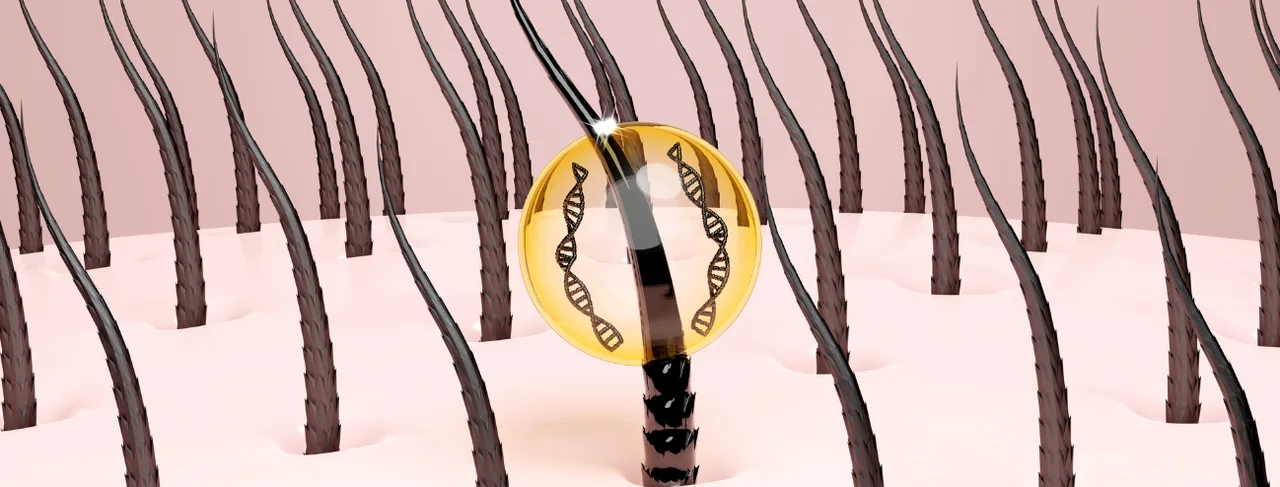
Stromal vascular fraction, abbreviated to SVF, is a mixed population of cells separated from a person's own fat and injected into the scalp as a treatment for hair loss. It is a regenerative-medicine approach: the material comes from the patient, is processed during the same visit, and is given back the same day.
The published evidence is small in volume but unusually consistent in direction. Two systematic reviews and several controlled trials all report increased hair density after treatment, and none reports a serious adverse event. What they do not yet provide is a standard protocol, long-term follow-up, or a clear answer on whether SVF adds anything to treatments that already work. This page reports both halves.
What is SVF – Stromal Vascular Fraction?
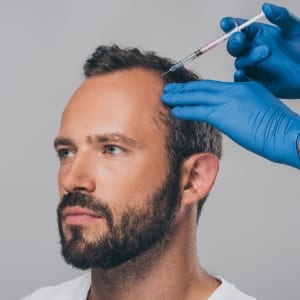
SVF is the mixture of cells left after fat tissue is processed to remove the fat cells themselves. It contains mesenchymal stromal cells, endothelial and blood-vessel-forming cells, pericytes and immune cells, and it is obtained from the patient's own body during the same appointment.
Fat is not simply an energy store. Alongside the fat cells sits a supporting population of cells involved in forming blood vessels and repairing tissue. Separating those from the fat cells produces the stromal vascular fraction.
Because the material is autologous, taken from and returned to the same person, it avoids the rejection and matching questions that apply to donor tissue. It is usually harvested from the abdomen or flank by a small liposuction under local anaesthetic, processed, and injected into the thinning area of the scalp.
SVF is not a single standardised product. How the fat is processed differs between clinics, and the reviews below identify that as the main obstacle to comparing results.
What is the thinking behind it?
That hair follicles depend on their blood supply and local signalling environment, and that the cells in SVF are involved in exactly those processes. The reasoning is about supporting the follicles that remain, not creating new ones.
A miniaturising follicle in hereditary hair loss is still present. The proposition behind SVF, as behind PRP and related approaches, is that improving the environment around such a follicle may slow or partly reverse that miniaturisation.
This is a plausible mechanism rather than a proven one. The trials measure whether hair density changes, not whether the proposed mechanism is what produced the change, and no published study has demonstrated the mechanism directly in human scalp.
What do the published trials actually report?
A 2023 systematic review in Acta Biomedica covering 9 studies and 236 patients, of which 3 were randomised controlled trials, found a statistically significant increase in hair density in every study. Reported gains at six months ranged from about 18 to 31 hairs per square centimetre in the controlled comparisons. A separate systematic review of SVF in non-scarring alopecia reached the same conclusion across 6 studies and 188 patients.
The individual figures are worth stating rather than averaging, because the studies measured different populations with different protocols:
- Fukuoka and colleagues: an increase of 18.4 ± 9.4 hairs/cm² in the SVF group, against 6.5 ± 11.7 in the saline control.
- Perez-Mesa and colleagues: 31.2 ± 17.7 hairs/cm².
- Stevens and colleagues: 30.7 ± 30.4 hairs/cm² — note the width of that standard deviation.
- Kadry and colleagues: 19.30 ± 13.65 hairs/cm², p<0.001.
The direction is consistent. The size of the effect is not, and the variation between studies is larger than the difference between some of them and their controls.
Does SVF add anything to PRP?
In the one randomised trial that tested this directly, no. Adding a single SVF injection to two PRP sessions produced no significant difference against three PRP sessions alone.

A 2024 randomised clinical trial published in Skin Research and Technology compared adding an SVF injection to a PRP course against PRP alone. Both groups improved significantly from baseline on hair count and hair diameter. Between the groups, the PRP-only arm showed a greater increase in mean hair count, and the SVF-PRP arm a marginally greater increase in hair diameter, with no significant difference overall.
This is a single trial and it tested one specific combination and schedule. It does not show SVF is ineffective; it shows that in that design, adding it to PRP did not measurably improve on PRP. Anyone being offered SVF as an upgrade to PRP should know this trial exists.
What is known about safety?
Across both systematic reviews, covering more than 400 treated patients between them, no serious adverse events were reported. The side effects described were injection-site pain and bruising at the puncture site.
That is a reassuring safety signal, with two qualifications. First, these are small studies with short follow-up, and small studies detect only common problems. Second, SVF involves a liposuction harvest, so the procedure carries the ordinary risks of that step in addition to the injection itself.
Autologous material avoids rejection, but it does not make a procedure risk-free, and the harvest is a surgical step that should be performed accordingly.
Where the evidence runs out
There is no standard protocol, no long-term follow-up, and no trial large enough to place SVF against established treatments. The 2023 review states plainly that a standardised protocol was not found across the literature.
Four gaps matter for anyone deciding:
- Protocol. How the fat is harvested and processed, how many cells are delivered and how often, differs between studies. Two treatments called SVF may not be comparable.
- Duration. Most outcomes are measured at six months. Whether the effect persists, and whether repeat treatment is needed, is unknown.
- Comparison. No trial compares SVF against finasteride or minoxidil, the treatments with the strongest evidence in hereditary hair loss.
- Scale. 236 patients across 9 studies is a small literature. The reviews' own authors caution against reading a favourable benefit-risk ratio as licence for indiscriminate use.
Who might it be relevant for?
People with non-scarring hair loss who still have miniaturising follicles, who have already addressed the treatments with stronger evidence, and who understand they are choosing something still under investigation.
SVF cannot restore a follicle that is gone. Where an area is genuinely bald rather than thinning, the question is transplantation, not injection.
It is also not a first step. Establishing the cause, correcting any measured deficiency, and considering the established medical treatments come first; SVF sits alongside those, as an adjunct being studied, not as a substitute for them.
SVF and hair transplantation
They address different problems. A transplant moves follicles into areas that have none; SVF is aimed at supporting follicles that are still present. Neither replaces the other.
Some clinics offer SVF around the time of surgery on the reasoning that it may support healing or graft survival. We could not find published trial evidence testing SVF specifically for graft survival after hair transplantation, so that use should be understood as extrapolation rather than something demonstrated.
If it is offered to you as part of a surgical package, ask what it adds, what it costs separately, and what evidence the clinic is relying on.
What to ask before you say yes
Ask how the SVF is processed, how many sessions are proposed and on what basis, what it costs separately from anything else, and what the clinic expects it to achieve that an established treatment would not.
Five questions worth asking:
- How is the fat harvested and processed, and by whom?
- How many treatments do you propose, and what is that schedule based on?
- What is the price for SVF alone, separate from any package?
- What have you seen it achieve in patients like me, and how did you measure that?
- Which established treatments have I been offered first, and why is this being added?
A clinic that cannot answer the last one is selling rather than treating.
Frequently asked questions about SVF
Is SVF an approved treatment for hair loss?
It is studied as a treatment for hair loss but is not an established standard of care, and regulatory status for this use differs between countries. Ask your clinic what applies where you are being treated.
Where does the material come from?
From your own fat, usually taken from the abdomen or flank by a small liposuction under local anaesthetic during the same appointment.
Does it hurt?
The reported side effects in the published studies were injection-site pain and bruising at the puncture site. Both the harvest and the injection are done under local anaesthetic.
How much hair does it add?
Controlled studies reported increases of roughly 18 to 31 hairs per square centimetre at six months, with wide variation between studies. Those are group averages from small trials, not a result any individual is promised.
How long does the effect last?
Unknown. Most published outcomes are measured at six months, and there is no long-term follow-up data.
Is it better than PRP?
The one randomised trial that tested adding SVF to a PRP course found no significant difference against PRP alone. No trial has shown SVF to be superior to PRP.
Will it work if I am already bald in that area?
No. SVF is aimed at follicles that are still present but miniaturising. Where follicles are gone, no injection brings them back.
Can it replace finasteride or minoxidil?
No trial has compared SVF against either. Treating it as a replacement for the best-evidenced treatments is not supported by anything published.
Is it safe?
No serious adverse events were reported across the published studies, which together cover several hundred patients. That is reassuring but comes from small studies with short follow-up, and the liposuction harvest carries its own ordinary risks.
Why do different clinics describe SVF differently?
Because there is no standardised protocol. Processing methods, cell yields and treatment schedules vary between providers, which is the main reason results are hard to compare.
Establish what is driving your hair loss first. SVF is an adjunct under investigation, not a replacement for the treatments with the strongest evidence behind them, and it does not restore follicles that are already gone. A free hair analysis will tell you which category you are in before you spend anything.
Sidst opdateret: September 2026 · Redaktionelle standarder