Supportive treatments

Supporting your recovery and long-term hair health
A successful hair transplant doesn't end when the last graft is placed. The weeks and months that follow are just as important, as this is when the transplanted follicles heal, establish a new blood supply, and begin their natural growth cycle. While careful aftercare forms the foundation of a good recovery, many patients today also choose supportive treatments that may further improve healing and create a healthier environment for both transplanted and existing hair.
Supportive therapies are designed to work alongside the body's natural healing process. Rather than replacing a hair transplant or acting as a cure for hair loss, these treatments aim to reduce inflammation, support tissue repair, improve scalp health, and stimulate the biological processes involved in hair growth. Some therapies focus primarily on helping newly transplanted grafts recover after surgery, while others may also benefit native hair by supporting stronger, healthier follicles and slowing the progression of thinning.
In recent years, regenerative medicine has introduced several promising options for hair restoration patients. Treatments such as exosome therapy, hair stem cell-based therapies, platelet-rich plasma (PRP), and other biologically active approaches have gained attention for their potential to support recovery and long-term hair health. Although each treatment works in a different way and scientific evidence continues to evolve, they all share the same goal: creating the best possible conditions for hair follicles to survive, recover, and thrive.
The following sections explore some of the most widely used supportive treatments available today, explaining how they work, who may benefit from them, and what current research tells us about their role in improving both post-transplant recovery and the long-term health of your hair.
Three of the treatments often considered alongside a hair transplant have their own page: SMP, scalp micropigmentation, SVP, Scalp Vitamin Protocol and LLLP, laser and light therapy.
Exosome therapy
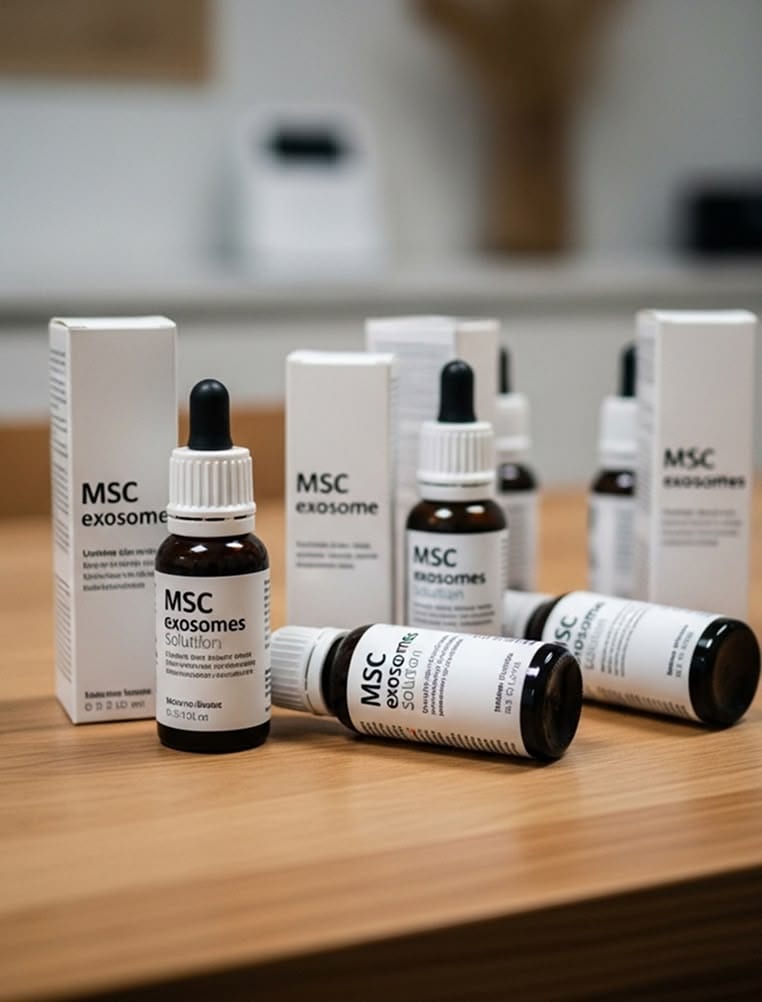
Hair transplantation has come a long way over the last decade. Modern techniques make it possible to achieve natural-looking results with minimal scarring, but the surgery itself is only one part of the journey. What happens during the healing process often has just as much influence on the final outcome as the procedure itself. This is why more patients are paying attention to post-operative treatments that may support recovery, and one of the most talked-about options today is exosome therapy.
What exosomes are
Exosomes are tiny extracellular vesicles released by cells that act as messengers throughout the body. They carry proteins, lipids, growth factors, and genetic material that help cells communicate with one another. In the context of hair transplantation, the goal of exosome treatment is not to replace transplanted follicles or magically create new hair, but rather to support the environment in which those newly transplanted grafts are healing. Since every graft depends on establishing a healthy blood supply and recovering from the stress of surgery, creating favorable healing conditions is an important part of the recovery process.
The scalp's healing phase
Immediately after a hair transplant, the scalp enters a natural healing phase. Tiny incisions begin closing, inflammation develops as part of the body's repair response, and the transplanted follicles temporarily experience a period of stress. During this time, patients often notice redness, swelling, crusting, and tenderness. These reactions are completely normal, but they can vary considerably from person to person. Exosome therapy has attracted attention because laboratory and early clinical research suggests that the biological signals carried by exosomes may help regulate inflammation, encourage tissue repair, and support the activity of cells involved in wound healing. While research is still evolving, these properties make exosomes an interesting addition to post-operative care.
Improving the healing experience
One of the biggest reasons patients choose exosome treatment is the hope of improving the overall healing experience. A scalp that recovers more efficiently may become comfortable sooner, redness may resolve faster, and the skin may return to its normal appearance earlier. Although individual results differ and no treatment can guarantee a specific outcome, many surgeons view healthy wound healing as an important foundation for successful hair restoration. When the scalp heals well, patients are generally able to return to their daily routines with greater confidence.
Potential effect on the transplanted follicles
Another area of growing interest is the potential effect of exosomes on the transplanted follicles themselves. Hair follicles are living structures that undergo significant stress during extraction and implantation. Researchers are investigating whether the signaling molecules contained within exosomes may help create a healthier biological environment around these follicles during the early stages of recovery. While it would be inaccurate to describe exosomes as a cure for hair loss or a guarantee of improved hair growth, the scientific interest surrounding their regenerative potential continues to grow, and new clinical studies are being published each year.
Part of a complete recovery plan
It is also worth remembering that exosome therapy should be viewed as part of a comprehensive recovery plan rather than a standalone solution. Following your surgeon's aftercare instructions, avoiding smoking, protecting the scalp from excessive sun exposure, taking prescribed medications, eating a balanced diet, and attending follow-up appointments all play essential roles in achieving the best possible outcome. Even the most advanced supportive treatments cannot compensate for poor post-operative care.
Keeping realistic expectations
As with any emerging medical treatment, patients should maintain realistic expectations. Exosome therapy is a promising field within regenerative medicine, but scientists are still working to determine the optimal preparation methods, treatment timing, dosage, and long-term benefits specifically for hair transplant patients. Clinics offering exosome treatment should be transparent about the evidence supporting their protocols and explain both the potential benefits and the current limitations of the available research.
For patients considering every aspect of their recovery, exosome therapy represents an exciting development rather than a miracle solution. The procedure aims to support the body's own healing mechanisms during one of the most important phases after hair transplantation. As scientific understanding continues to advance, exosomes may become an increasingly valuable component of post-operative care, helping patients recover more comfortably while supporting the environment in which newly transplanted hair follicles begin their journey toward long-term growth.
Hyperbaric oxygen therapy (HBOT)
Hyperbaric Oxygen Therapy (HBOT) is one of the most interesting supportive treatments available for hair transplant patients. Originally developed to treat conditions such as difficult-to-heal wounds, decompression sickness, and certain infections, HBOT has become increasingly popular in regenerative medicine because of its ability to increase the amount of oxygen delivered throughout the body. In recent years, many hair restoration clinics have begun offering HBOT as part of their post-operative care, with the goal of supporting faster recovery after surgery.
How a session works
During a hyperbaric oxygen session, patients relax inside a specially designed chamber while breathing nearly 100% oxygen under increased atmospheric pressure. This combination allows significantly more oxygen to dissolve into the bloodstream and reach tissues that are actively healing. Since transplanted hair follicles temporarily experience stress after being moved to a new location, improving oxygen delivery during the early healing phase may help create a healthier environment for recovery.
The critical first days
The first few days after a hair transplant are critical. Tiny blood vessels begin reconnecting with each transplanted follicle, while the scalp repairs thousands of microscopic incisions created during the procedure. During this period, patients commonly experience swelling, redness, crusting, and mild discomfort. HBOT is believed to support the body's natural healing response by increasing oxygen availability, which may promote tissue repair, encourage the formation of new blood vessels, and help reduce inflammation. Many patients report feeling more comfortable during recovery and notice that visible signs of healing resolve sooner.
What the research shows
Scientific interest in HBOT for hair transplantation has grown considerably in recent years. Early clinical studies suggest that patients receiving one or more HBOT sessions after surgery may experience faster healing, reduced scalp redness, less swelling, and improved overall recovery compared with patients who receive standard aftercare alone. While researchers continue to investigate the ideal treatment protocol and its long-term effects on hair growth, the available evidence indicates that HBOT can be a valuable addition to post-operative care, particularly during the first few days after transplantation.
Supporting the body's own healing
One of the greatest advantages of HBOT is that it supports the body's own healing mechanisms rather than directly acting on the hair follicles themselves. Better oxygen delivery benefits the scalp tissue surrounding the grafts, creating favorable conditions for newly transplanted follicles while also supporting the health of existing hair. For this reason, HBOT is often viewed as a complementary treatment rather than a replacement for good surgical technique or proper aftercare.
A complement, not a miracle
Like other supportive therapies, HBOT is not a miracle treatment, nor is it essential for every patient. The quality of the surgical procedure, the experience of the surgeon, and careful adherence to post-operative instructions remain the most important factors influencing the final outcome. However, for patients looking to optimize their recovery and support the healing process, Hyperbaric Oxygen Therapy represents one of the most scientifically established supportive treatments currently available in regenerative medicine.
Get a free hair analysis
- 1Start
- 2Info
- 3Done
Hair stem cell therapy
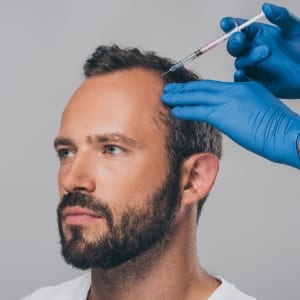
Hair Stem Cell Therapy is one of the newest developments in regenerative hair restoration and has generated significant interest among both patients and researchers. Unlike a traditional hair transplant, which physically relocates hair follicles from one part of the scalp to another, hair stem cell therapy aims to improve the health and function of existing follicles by using the body's own regenerative cells. Although the technology is still evolving, many specialists believe it has the potential to become an important supportive treatment for both hair transplant recovery and long-term hair maintenance.
What the treatment actually uses
Despite its name, most modern hair stem cell treatments do not involve embryonic stem cells. Instead, they typically use stem cell-derived products or regenerative cells obtained from the patient's own tissues, such as small scalp biopsies or adipose (fat) tissue, depending on the technique being used. These cells release growth factors and signaling molecules that help coordinate tissue repair, reduce inflammation, and stimulate the activity of surrounding cells. The goal is not to create entirely new hair follicles but to support the natural biological processes that allow existing follicles to function more effectively.
Supporting recovery after a transplant
Following a hair transplant, the scalp undergoes an intensive healing process. Thousands of tiny incisions must repair themselves while newly transplanted follicles establish a fresh blood supply and adapt to their new location. Hair stem cell therapy is being investigated as a way to support this recovery by encouraging tissue regeneration, improving the healing environment, and helping the scalp recover more efficiently. A healthier scalp may provide transplanted grafts with better conditions during the critical early weeks after surgery.
Benefits for native hair
Hair stem cell therapy may also benefit native hair that has not yet been transplanted. Many patients undergoing a hair transplant continue to have areas of thinning caused by androgenetic alopecia, where existing follicles gradually become smaller and produce finer hairs over time. By delivering regenerative signals to these follicles, stem cell-based treatments may help improve hair quality, increase hair shaft thickness, and support stronger, healthier growth. While these therapies cannot permanently stop genetic hair loss, they may become a valuable part of a comprehensive long-term treatment plan alongside medications and other supportive therapies.
Where the research stands
Research into hair stem cell therapy is expanding rapidly, and early clinical studies have reported encouraging results. However, treatment protocols vary considerably between clinics, and scientists are still working to determine the most effective sources of regenerative cells, preparation methods, treatment intervals, and patient selection criteria. As with other regenerative therapies, larger clinical trials are needed before definitive conclusions can be made about long-term effectiveness.
A promising part of a long-term plan
For patients interested in maximizing both healing and hair preservation, hair stem cell therapy represents an exciting area of regenerative medicine. While it should not be viewed as a replacement for a well-performed hair transplant or proven medical treatments, it offers another promising tool that may help create healthier conditions for transplanted grafts while supporting the long-term vitality of existing hair. As research continues to develop, stem cell-based therapies are expected to play an increasingly important role in the future of hair restoration.
Platelet-rich plasma (PRP)
Platelet-Rich Plasma (PRP) is one of the most widely used supportive treatments in hair restoration and has been part of many clinics' post-operative protocols for years. Because PRP uses the patient's own blood, it is considered a minimally invasive treatment with a well-established safety profile. While it is not a substitute for a hair transplant or a cure for hair loss, PRP is commonly used to support healing after surgery and to help maintain the health of existing hair follicles.
How PRP is prepared
The treatment begins with a small blood sample taken from the patient. This sample is placed in a centrifuge, where it is spun at high speed to separate the blood into different layers. The platelet-rich portion is then collected and injected into targeted areas of the scalp. Platelets are best known for their role in blood clotting, but they also contain a wide range of growth factors and signaling proteins that help regulate tissue repair, stimulate cell activity, and support the body's natural healing processes.
Supporting recovery after surgery
After a hair transplant, the scalp undergoes a period of recovery during which thousands of tiny incisions heal and newly transplanted follicles establish their blood supply. PRP is believed to assist this process by delivering a concentrated source of naturally occurring growth factors directly to the treated area. These biological signals may help reduce inflammation, encourage tissue regeneration, and support the recovery of transplanted grafts during the critical early stages of healing.
Helping thinning native hair
PRP is also frequently recommended for patients who still have thinning native hair. As androgenetic alopecia progresses, existing follicles gradually become weaker and produce finer, shorter hairs. Several clinical studies suggest that PRP may improve hair density, increase hair shaft thickness, and prolong the active growth phase of the hair cycle in some patients. Although results vary between individuals, PRP has become a popular non-surgical option for slowing the progression of hair thinning and supporting healthier hair growth.
A flexible part of any plan
One reason PRP remains so popular is that it can be combined with virtually every stage of hair restoration. Some patients receive PRP during their hair transplant procedure, while others undergo a series of treatments in the months that follow to support recovery and maintain long-term hair health. It is also commonly used alongside medical therapies such as Finasteride and Minoxidil, as well as regenerative treatments like exosome therapy or hyperbaric oxygen therapy, as part of a comprehensive treatment plan.
What to keep in mind
While PRP has been studied more extensively than many newer regenerative therapies, it is important to recognize that outcomes can vary depending on the patient's age, the severity of hair loss, the preparation method, and the treatment protocol used. Researchers continue to refine these techniques to better understand which patients are most likely to benefit and how PRP can be optimized for long-term results.
For many hair transplant patients, PRP represents a practical and evidence-supported way to enhance recovery while promoting the health of both transplanted and existing hair. When combined with an experienced surgeon, proper aftercare, and realistic expectations, it can serve as a valuable addition to a long-term hair restoration strategy.
Get a no-obligation assessment against fixed criteria, directly on WhatsApp.