
Does a hair transplant work differently on Asian hair? Yes, in planning and technique, not in whether it works: East, South and Southeast Asian hair is typically straight and notably coarse in calibre, which changes donor density per square centimetre, hairline shape, and how a surgeon avoids an artificial, "pluggy" look, but it does not change the basic rules of candidacy, which still come down to a stable pattern of loss and a genetically resistant donor area, exactly as for any other hair type.
"Asian hair" is not one texture. East Asian hair (Chinese, Japanese, Korean) is very often completely straight and uniformly coarse; South Asian hair (Indian, Pakistani, Bangladeshi, Sri Lankan) and Southeast Asian hair (Filipino, Vietnamese, Thai, Indonesian, Malaysian) are frequently straight too but can also run wavy or curly, with wider variation in skin tone that changes how much hair-to-skin contrast actually matters for a given patient. If your hair is naturally curly or tightly coiled rather than straight, our dedicated afro and curly hair transplant guide is the more relevant page; this guide focuses specifically on the straight-to-wavy, coarse-calibre pattern most often described as Asian hair. It goes through why donor density and coverage per graft trade off against each other; the hair-to-skin contrast problem and what it means for punch choice and scarring; hairline design for East, South and Southeast Asian face shapes; density and transection-risk planning for thicker follicles; how FUE, DHI and FUT compare for this hair type; beard, temple and body-hair donor notes; the realistic results timeline; and how to choose a clinic with documented experience in this hair type.
- Asian hair transplants work as well as any other hair type; what changes is planning, not basic eligibility, which still depends on a stable pattern of loss and a healthy donor area.
- East, South and Southeast Asian hair is typically straight and coarse-calibre, often with fewer follicles per square centimetre in the donor area than some other populations, but each thicker strand covers more visible scalp, which partly offsets the lower count.
- High contrast between very dark hair and lighter skin, most pronounced in East Asian patients, makes both thinning and scarring more visible, which raises the bar on punch choice, graft spacing and donor-scar closure.
- A natural Asian hairline is usually flatter and rounder at the fronto-temporal corners than the peaked, V-shaped template common in Western hairline design.
- Coarse, straight grafts are unforgiving of sloppy technique: placed at the wrong angle or spacing they can look "pluggy," so results depend heavily on the surgeon's specific experience with this hair type.
Does a hair transplant work differently on Asian hair?
Yes, mainly in planning rather than technique difficulty. East, South and Southeast Asian hair is typically straight, which extracts cleanly, and coarse in calibre, so each transplanted hair covers more visible scalp than a fine strand would. The trade-off is that Asian donor areas often carry somewhat fewer follicles per square centimetre than some other populations, so a plan has to balance a lower raw follicle count against higher coverage per graft rather than reading density alone.
The starting point for anyone asking whether Asian hair transplants well is the same starting point that applies to every hair type: outcome quality is not set by ethnicity as a label, it is set by pattern stability, donor supply and surgical skill. What genuinely differs for East, South and Southeast Asian hair is the combination of two measurable traits, curl and calibre, that change how a plan is built.
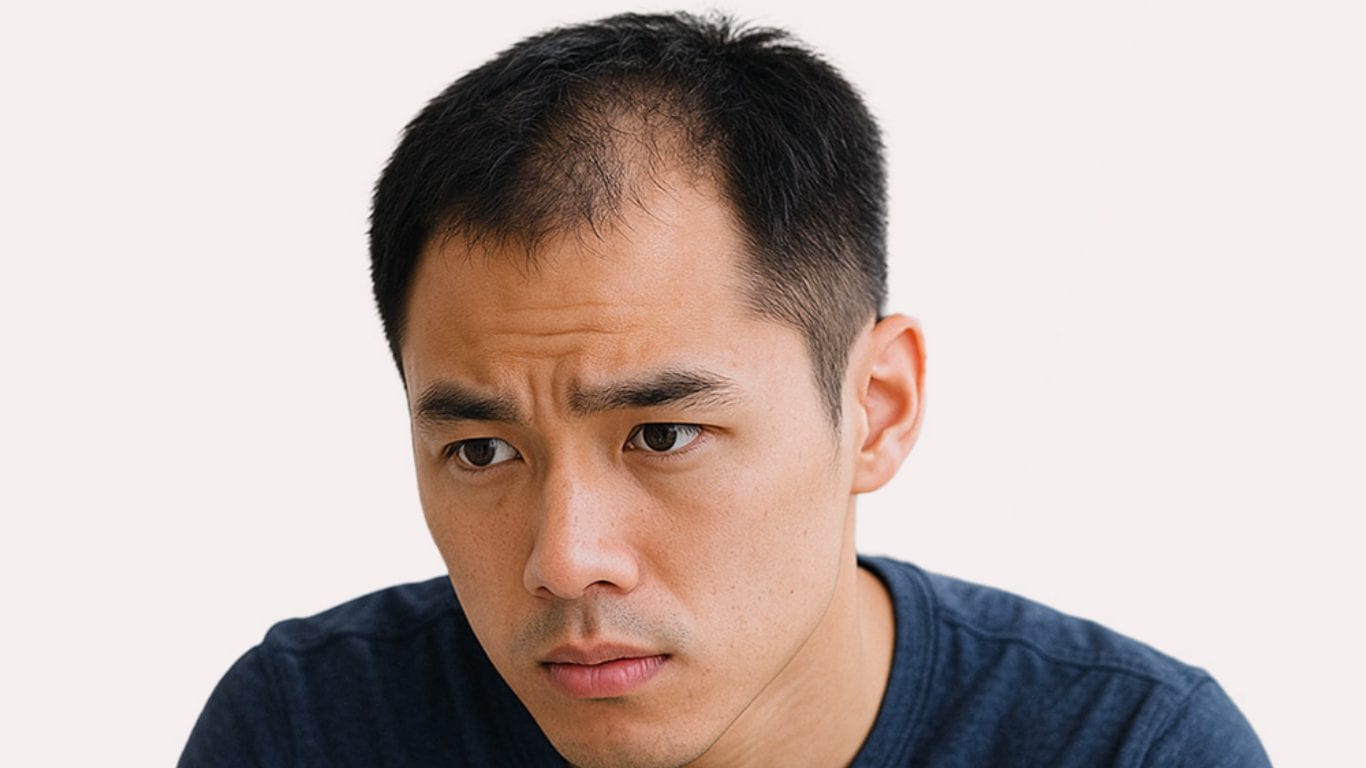
Straight and coarse: a favourable extraction, a demanding design job
Straight hair follows a direct, largely vertical path beneath the skin's surface, among the more forgiving follicle paths for a standard punch to follow cleanly during FUE, which keeps transection (accidental cutting of the follicle) risk low. Coarse calibre, a wider individual hair shaft, means each surviving graft casts a larger visual footprint once it grows in. Combined, these two traits are why sessions in straight, coarse Asian hair often achieve both a high proportion of viable grafts and strong apparent density from that graft count.
The other side of the ledger: follicles per square centimetre
Donor density, follicles per square centimetre in the "safe zone" at the back and sides, is assessed the same way for every hair type, and a favourable donor area is ideally over 50 follicles per cm², measured directly with a densitometer rather than judged by eye. Clinical guidance on Asian hair specifically observes that the donor area itself tends to be built from smaller follicular units to begin with: single- and double-hair groupings dominate, while three- and four-hair units are comparatively rare. Calibre does not erase that gap, but it meaningfully offsets it: a wider shaft diameter is a genuine, documented compensating factor for a lower unit count, which is why density and calibre have to be read together, never density alone, in a proper assessment.
What this means for planning
In practice, this combination pushes planning in two directions at once. A lower per-cm² count argues for realistic, conservative graft targets rather than assuming Asian hair can match the highest raw follicle counts seen in some other donor areas. Strong coverage per graft argues the opposite: that a given graft count can still look genuinely dense once placed, because each graft is doing more visual work. A surgeon experienced with this hair type plans around both facts together rather than quoting a generic graft number based on area of loss alone; our donor hair supply guide covers how density, calibre and yield are measured and combined in more depth.
What does not change
None of this changes basic eligibility. A stable, patterned area of loss and a genetically resistant donor area are still the two things that decide whether anyone is a candidate at all, exactly as covered in our full candidacy guide. Hair type shapes the plan; it does not gate who qualifies.
Why does hair-to-skin contrast matter so much for Asian hair transplants?

Very dark, straight hair against lighter skin is a high-contrast combination that makes both thinning and any scarring more visible than the same density or the same scar would be in lower-contrast hair-skin pairings. This matters most for fairer-skinned East Asian patients with jet-black hair; it matters less for many South and Southeast Asian patients, whose skin tone often sits closer to their hair colour. Either way, it pushes surgeons toward smaller, carefully sized FUE punches and, where FUT is used, meticulous scar-minimising closure.
Colour contrast between hair and scalp skin is a genuine planning variable for every hair type, covered in general in our hair type and texture guide, but it is worth a dedicated look for Asian hair because very dark, straight hair is one of the highest-contrast combinations a surgeon regularly plans around.
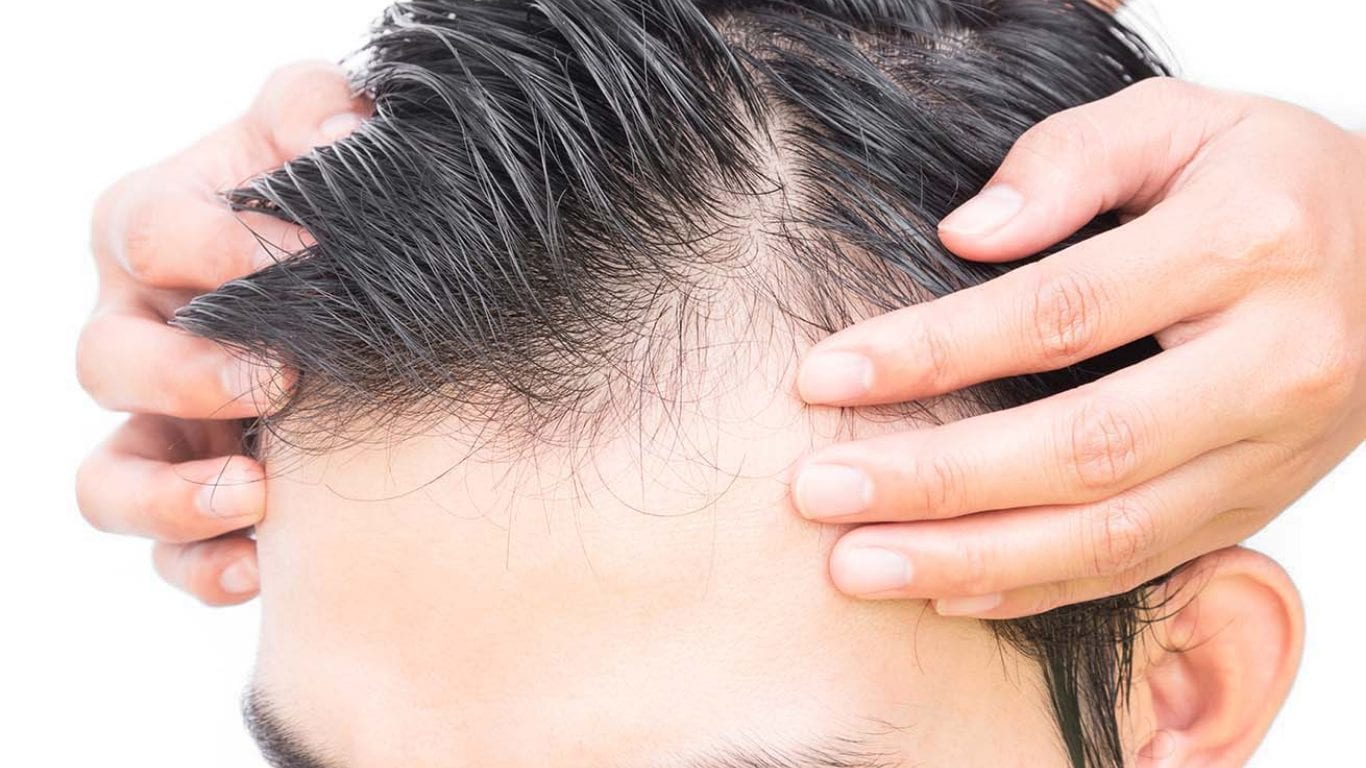
Why high contrast is unforgiving
The eye reads fullness partly from actual follicle count and partly from how much scalp skin shows between hairs. Against fair or medium skin, jet-black hair leaves very little room to hide a thin patch, an uneven graft or a scar; every gap is visually obvious in a way it simply is not against darker, lower-contrast skin tones. This is most pronounced in East Asian patients, who commonly combine very dark hair with fairer skin. Many South and Southeast Asian patients carry deeper, warmer skin tones that sit closer to their hair colour, which lowers the contrast and, if anything, can make a given density look fuller, the same effect our broader hair-type guide describes for any low-contrast pairing. Skin tone varies enormously within all three groups, so this is a spectrum a surgeon should assess in person, not a rule to assume from ethnicity alone.
What it means for FUE punch choice
High contrast raises the practical cost of a badly extracted graft or an oversized punch mark: scattered dot scars from FUE are normally inconspicuous, but on high-contrast skin they read more clearly if the punch is larger than necessary or if extraction is uneven. Combined with the coarser calibre of Asian hair, which itself needs a properly sized, not undersized, punch to avoid crushing or transecting a thicker follicle, this argues for a surgeon who selects punch diameter deliberately for the individual patient rather than using one setting for every case.
What it means for FUT scars
A strip (FUT) donor scar is a single linear line rather than scattered dots, and on high-contrast skin a poorly closed one is genuinely more visible, particularly for anyone who wears their hair very short at the back and sides. Meticulous, low-tension closure, including a technique surgeons call trichophytic closure, where the wound edge is trimmed so hair grows back directly through the fine scar line rather than around it, measurably reduces how visible that line ends up being. This is one reason FUE is often the default recommendation for patients most concerned about donor-area visibility, though a carefully closed FUT scar can still be inconspicuous in experienced hands.
The practical takeaway
Contrast does not change candidacy, and it is not something surgery can alter, but it changes how conservatively or generously a surgeon plans spacing and how much care goes into closing a donor incision. Ask directly at consultation how a clinic adapts technique for high-contrast hair and skin, rather than assuming a generic approach applies.
How should a hairline be designed for East, South and Southeast Asian patients?
Most East, South and Southeast Asian patients are best served by a flatter, straighter or gently rounded hairline with softened fronto-temporal corners, sitting a little lower and less peaked than the sharper, more V-shaped hairline template often used as a default in Western hair restoration. Copying a Western hairline onto an Asian face shape is a well-documented way to produce a result that looks subtly "off" even when the surgery itself is technically clean.
Hairline shape is proportional to skull and face shape, not a fixed template that transfers unchanged between populations. This is documented in the hair-restoration literature: research on East Asian hairline anatomy, published through ISHRS' Hair Transplant Forum International, found that East Asian patients typically have flatter, wider foreheads and more rounded fronto-temporal angles than the narrower face and hairline shape typical of Caucasian patients, and that most naturally occurring East Asian hairlines are straight or gently upsloping rather than sharply peaked.
Why a V-shaped, Western-style peak looks wrong
A pronounced, pointed V-shaped hairline, common as a default aesthetic in Western hairline design and often requested by patients who have only seen that template in before-and-after photos, sits naturally on a narrower, more angular face shape. Placed onto a rounder, flatter East Asian face and forehead, the same peaked shape frequently reads as unnatural rather than youthful, precisely the opposite of the intended effect. Surgeons experienced with this hair type instead favour a straighter or gently rounded line with a soft, rounded fronto-temporal corner rather than a sharp point.
South and Southeast Asian variation
South and Southeast Asian face and skull shapes vary more than East Asian shapes do, and hairline preference varies with them; some patients have a facial structure closer to the East Asian pattern above, others closer to patterns more familiar from Western hairline design. This is exactly why hairline design is planned from the individual's own face shape, forehead height and temple width at consultation, not assigned from a broad regional category.
Getting the whole shape right, not just the front edge
A natural-looking hairline is judged on the fronto-temporal corners and the temple points at least as much as the central front edge; a flat central line paired with corners that are too sharp or too high still looks constructed. This is one of the more skill-dependent parts of the whole procedure, because the hairline is the single most visually scrutinised part of any result, and a coarse, single-hair Asian graft placed even slightly wrong at the front edge is more visually obvious than the same error would be in fine hair, covered in more depth in our hair type and texture guide.
What to ask at consultation
Ask directly to see hairline results specifically in patients who share your face shape and background, not a generic before-and-after gallery, and ask how the surgeon adjusts hairline shape, not just position, for Asian face and skull proportions.
How does density planning change for thick, straight hair?
Because each coarse strand covers more visible scalp, a realistic graft target for a given area of loss is often somewhat lower in thick, straight Asian hair than the same area would need in fine hair, without looking any less full. The trade-off is technical, not visual: a thicker follicle needs a correctly sized, not undersized, extraction punch, and using too small a punch on a thick follicle raises the risk of crushing or transecting it rather than removing it intact.
Density planning for Asian hair is really two separate calculations that have to be solved together: how many grafts a given area of loss visually needs, and how many of the grafts extracted actually survive intact. Calibre changes both answers.
Fewer grafts, same fullness
A follicular unit carrying one or two coarse hairs can visually out-cover a unit carrying the same number of fine hairs by a meaningful margin, because each individual shaft is physically wider and casts a larger visual footprint. This is why a straightforward area-based graft estimate, without accounting for calibre, tends to overstate what thick, straight Asian hair actually needs for a full-looking result. Our graft calculator gives a rough starting figure, but calibre is exactly the kind of variable a generic, area-only estimate cannot capture; it is measured directly at a personal assessment.
Why bigger follicles need bigger, not smaller, punches
The trade-off working against a lower graft count is transection risk at extraction. A thicker follicle occupies more physical space beneath the skin, and an extraction punch sized for fine or average hair can compress or partially cut through a coarse follicle rather than releasing it cleanly, the opposite mistake to the undersized-punch risk sometimes discussed for curly hair, but with a similar result: a damaged graft that does not survive. Surgeons experienced with coarse, straight hair size the punch to the follicle rather than defaulting to a single diameter for every patient, and adjust as needed within a session if calibre varies across the donor area.
Reading density and calibre together, not density alone
Two donor areas with an identical follicles-per-cm² reading can need genuinely different graft plans if one is fine and straight and the other is coarse and straight, because the second delivers more visible coverage per unit extracted. A proper assessment always reads a densitometry count alongside a direct calibre check, never one number reported on its own; our donor hair supply guide covers how that measurement works and what it means for how many grafts are realistically available across a lifetime.
The practical number
None of this replaces a personal assessment with a realistic, individual target. What it means practically is that a lower graft-count quote is not automatically a worse plan for thick, straight hair, and a very high graft-count quote is not automatically the more generous or superior one; both need to be checked against your actual calibre and density, not treated as a simple more-is-better comparison.
FUE, DHI or FUT: which suits straight, thick Asian hair best?
FUE is the most common default for straight, coarse Asian hair because extraction is comparatively straightforward in a follicle that runs in a predictable, near-vertical line, provided the punch is correctly sized for a thicker shaft. DHI uses the same FUE-style extraction step but gives a surgeon finer control over the angle and direction of each graft, which matters for a flatter, more East Asian hairline shape. FUT remains a valid option, especially for larger sessions, at the cost of a single linear scar that is more visible against high-contrast hair and skin.
None of the three technique names guarantees a result on their own; each changes a different part of the process, extraction, placement or scarring, and the right choice depends on the individual's calibre, donor supply, contrast and priorities, not a blanket rule for every Asian patient.
FUE: usually the starting point
FUE extracts one follicular unit at a time through a small punch, leaving scattered, generally inconspicuous dot marks rather than a line. Because straight hair follows a predictable path beneath the skin, extraction itself is comparatively straightforward, provided the punch diameter is matched to the coarser calibre discussed in the previous section rather than left at a default fine-hair setting. This combination of clean extraction and low visual scarring is why FUE is the common starting recommendation for straight, coarse hair.
DHI: an advantage specifically for angle and direction
DHI most often uses the same FUE-style punch to extract follicles; the difference is placement, where an implanter pen opens a channel and sets the graft in a single motion, giving fine control over angle, depth and direction. For a flatter, straighter East, South or Southeast Asian hairline, where a slightly wrong angle on a coarse, highly visible single-hair graft is more obvious than the same error in fine hair, that placement precision is a genuine, relevant advantage. DHI does not change the extraction step itself, so it does not lower transection risk on its own; the punch and the surgeon's skill at extraction still do that work.
FUT: still a real option for larger sessions
FUT removes a strip of donor scalp and divides it into grafts under magnification, which can allow strong yield in a single, larger session. The cost is a single linear scar, and as covered in the section on contrast above, that scar is more visible against very dark, high-contrast hair and skin unless closure is meticulous. FUT is a reasonable choice for patients prioritising graft volume in one sitting over minimising donor-area visibility, and a poor choice for anyone planning to wear their hair very short.
Choosing between them
The technique name matters less than the team's actual, demonstrated experience extracting and placing coarse, straight hair specifically. Our broader guide to hair transplant methods compares FUE, DHI, FUT and Sapphire FUE in full depth for anyone weighing the general trade-offs beyond the points specific to Asian hair covered here.
What about beard, temple and body-hair donor considerations?
Temple points and corners are often the first area patients notice thinning and are judged by the same flatter, rounder design principles as the rest of an Asian hairline. Facial and body hair grows more sparsely and more slowly on average in many Asian men, which makes beard-to-scalp transplantation a less reliable donor option and pushes body hair further down the list of backup sources. The reverse procedure, transplanting scalp hair into a beard, remains a common and effective request for the same reason.
Two areas outside the main scalp hairline come up often enough for Asian patients to deserve a dedicated note: the temples specifically, and facial or body hair as either a target or a donor source.
Temple points and corners
The temple corners, where the hairline curves back toward the ear, are frequently where thinning first becomes visible and where hairline design is most technically demanding, because a corner that is too square, too high or too sharply pointed reads as unnatural far more readily than a flat central hairline does. As covered in the hairline design section above, East, South and Southeast Asian hairlines are generally rounder and softer at this corner than the sharper temple recession sometimes used as a Western default, so restoring or building a temple point on Asian hair is judged against that flatter, rounder standard, not a generic template.
Beard hair as a donor source
Beard hair is sometimes used as a supplementary donor source when scalp donor supply alone will not cover a large area of loss. Facial hair growth is, on average, slower and less dense in many Asian men than in some other populations, which means a beard capable of donating a meaningful number of grafts without leaving visible thinning is less common than it is for some other patients. Where a full, dense beard is present, it remains a legitimate backup donor source; where it is not, scalp donor supply carries more of the plan, which our donor hair supply guide covers in depth.
Scalp-to-beard transplants: the more common direction
The reverse procedure, using scalp donor hair to build density in a naturally sparse beard, is a frequent and separate request among Asian patients specifically because facial hair density is often lower to begin with. This is a genuinely different procedure with its own planning considerations, covered in full in our dedicated beard transplant guide; the point relevant here is simply that lower average facial hair density is a two-sided planning fact, it limits beard hair as a scalp donor and it is often the reason a beard transplant is being considered in the first place.
Body hair generally
Chest and other body hair can supplement scalp and beard donor supply in some repair or high-graft-count cases, but it grows in a different cycle and often a different texture to scalp hair, so it is generally reserved for filling in density rather than for a hairline. It is not a first-line donor source for most patients and is planned only where scalp, and where relevant beard, supply genuinely falls short.
What is the realistic results timeline for an Asian hair transplant?
The healing and growth timeline is the same as for any hair transplant, regardless of hair type: transplanted hairs shed around weeks 2 to 3, which is normal and expected, new growth begins from roughly month 3 to 4, and the final result, including how full it looks with Asian hair's characteristic coverage per graft, is judged at around 12 months. Nothing about straight or coarse hair speeds up or slows down this biological timeline.
Hair type changes planning and technique, covered throughout this guide, but it does not change how a graft actually heals, because that process is biological, not texture-dependent.
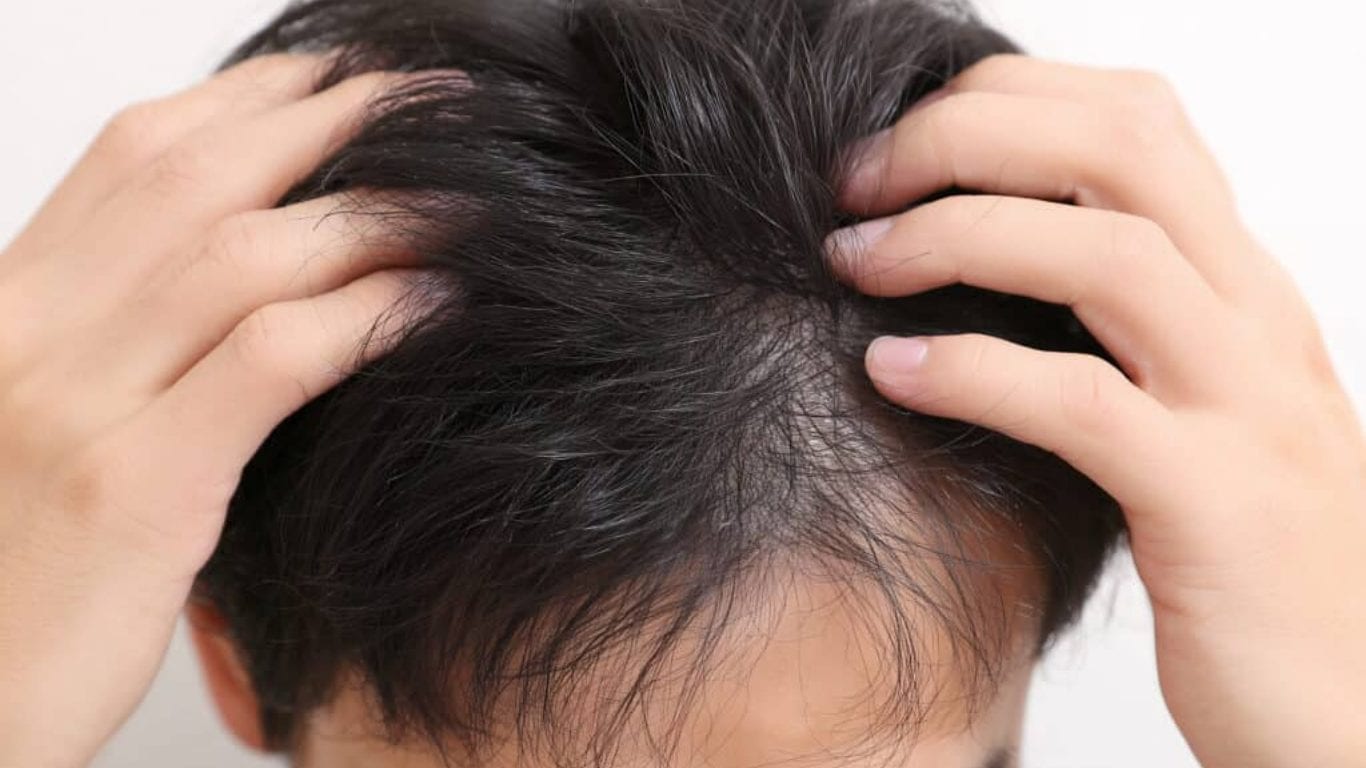
The same three milestones as any hair transplant
Shedding of the transplanted hairs around weeks 2 to 3 after surgery is a normal, expected part of the process, not a sign the graft has failed; the follicle itself stays in place beneath the skin. New growth begins from roughly month 3 to 4, gradually thickening from there. The final result, density, direction and how the hairline has settled, is assessed at around 12 months, once growth is essentially complete. Our full aftercare guide covers this timeline and the everyday routine around it in more depth.
Why coarse, straight hair can look further along sooner
Because each coarse strand covers more visible scalp once it is growing, results in thick, straight Asian hair can start to look meaningfully fuller earlier in the growth curve than the same graft count would in fine hair, simply because each new hair is doing more visual work. This is a perception effect on top of the same underlying timeline, not a faster biological process.
Does the result last?
Longevity works the same way as timeline: transplanted grafts come from the donor area at the back and sides, which is more resistant to DHT, the hormone that drives most pattern hair loss, than hair at the hairline or crown, in Asian hair exactly as in any other hair type. No follicle is completely immune to DHT, so no honest clinic promises a permanent or 100% result, but that relative resistance is what makes a transplant durable over time. Our guide to how long a hair transplant result lasts covers this in full, including how native, non-transplanted hair around the graft continues to change with age.
What can genuinely shift the timeline
Individual healing speed, general health and how closely aftercare instructions are followed all affect the details, but the broad milestones above are consistent enough across hair types that a clinic quoting a dramatically different timeline specifically for Asian hair is worth questioning rather than simply accepting.
How do I choose a clinic with real Asian-hair experience?
Ask for before-and-after results specifically in Asian hair, ideally in a face shape and skin tone similar to your own, not a clinic's general portfolio, and ask how many cases like yours the team performing your surgery has actually done. A clinic confident in its Asian-hair experience should discuss hairline shape, punch sizing for coarse hair and donor-scar management specifically, without hesitation or generic reassurance.
Every point covered in this guide, density-versus-coverage planning, contrast, hairline shape, punch sizing, technique choice, converges on the same practical question at consultation: does this specific team have real, demonstrable experience with straight, coarse Asian hair, not just hair transplants in general.
What to ask for
- Documented Asian-hair cases in the portfolio. Before-and-after results specifically in straight, coarse hair and, ideally, a face shape and skin tone similar to your own, not a gallery dominated by a different hair type.
- A clear answer on hairline philosophy. Whether the surgeon designs a flatter, rounder hairline for Asian face shapes by default, or defaults to one hairline template for every patient.
- A specific answer on punch sizing. How they size extraction punches for coarse-calibre hair, and whether that sizing changes case by case.
- A real number, not a marketing figure. How many cases with this specific hair type the team actually performing your surgery, not the clinic's headline case count, has done.
- A donor-scar plan if FUT is discussed. How the clinic manages closure and scar visibility given the hair-to-skin contrast covered earlier in this guide.
Why this matters more than a headline graft number
A large advertised graft count means little if the punch is wrong for the calibre and transection rates run high, since damaged grafts do not survive regardless of how many extractions were attempted. The number that actually matters is viable, well-placed grafts suited to your specific hair, which depends far more on hands-on experience with straight, coarse hair than on a clinic's general session size or price point. Our broader guide to clinic red flags covers the wider checklist, named surgeons, verifiable accreditation, transparent pricing, that applies to any hair transplant; the questions above are the layer specific to Asian hair on top of it.
Where to start
A close-up, well-lit set of photos of your hairline, donor area and, if relevant, beard lets an experienced team give a genuinely useful first read on your density, calibre and a realistic graft plan before you travel anywhere. See how you choose a clinic step by step, compare options in the clinic ranking, and check the best clinics; then bring the Asian-hair-specific questions above to whichever clinics you shortlist.
Frequently asked questions
Does a hair transplant work on Asian hair?
Yes. East, South and Southeast Asian hair is typically straight and coarse-calibre, which extracts cleanly with low transection risk and gives strong visual coverage per graft. Donor areas often carry somewhat fewer follicles per square centimetre than some other populations, but the thicker shaft largely offsets that, and the main technical demand shifts to hairline design and punch sizing rather than to whether the hair transplants successfully.
Why do some Asian hair transplants look "pluggy"?
A "pluggy" result comes down to spacing and angle, not the hair type itself: grafts set too far apart, angled too shallowly, or lined up in an obviously straight row create visible tufts instead of a soft edge, and coarse hair makes that mistake more obvious than fine hair would. The fix is well understood, dense single-hair placement at slightly varied, forward angles along the front edge, so a "pluggy" outcome reflects the surgeon's execution, not a limit of Asian hair.
Is FUE or FUT better for Asian hair?
Both can work well. FUE is the more common default because straight hair extracts cleanly and the resulting scattered dot marks are less visible against high-contrast dark hair and lighter skin than a linear scar. FUT can still deliver strong yield in a larger single session and remains a reasonable choice when donor-scar visibility is less of a priority than graft volume, provided closure is meticulous.
Do Asian patients need fewer grafts?
Often somewhat fewer than the same area would need in fine hair, because each coarse strand covers more visible scalp, but this is not a fixed rule. The realistic number depends on your own donor density, calibre and area of loss, confirmed at a personal assessment rather than a generic per-ethnicity estimate.
Is the hairline design different for Asian patients?
Usually, yes. Most East, South and Southeast Asian patients are better served by a flatter, straighter or gently rounded hairline with softened fronto-temporal corners than the sharper, more V-shaped, peaked hairline often used as a default in Western hairline design, though the right shape always depends on the individual's own face and skull proportions.
Can beard or body hair be used as a donor source for Asian patients?
Sometimes, but with a caveat. Facial and body hair grows more sparsely and more slowly on average in many Asian men, so a beard capable of donating a meaningful number of grafts without visible thinning is less common than in some other patients. Where a dense beard is present it remains a valid backup donor source; where it is not, planning relies more heavily on scalp donor supply.
How soon will I see results from an Asian hair transplant?
The timeline is the same as for any hair transplant: transplanted hairs shed around weeks 2 to 3, new growth begins from roughly month 3 to 4, and the final result is judged at about 12 months. Because coarse hair covers more scalp per strand, results can start to look fuller earlier in that growth curve than the same graft count would in fine hair, though the underlying biological timeline itself does not change.
The only reliable way to know your real donor density, your calibre, and the hairline shape that will genuinely suit your face is a proper look at your own hair, not a general article. Get a free hair analysis and hear back from our #1-ranked clinic with an honest read on your hair, your options and what they can realistically achieve, with no obligation to go further.
General educational guidance, not medical advice. What your specific hair type, density and hairline can realistically achieve is confirmed by a qualified surgeon at a personal assessment.
Last updated: August 2026 · Editorial standards