Hair transplant methods: FUE, DHI, FUT and FUE Sapphire explained in depth

Introduction: what a hair transplant is, and what the method means
A hair transplant is a surgical procedure in which follicles are moved from an area with durable hair to an area where the hair has become thin or has disappeared. The hairs are taken from the donor area at the back and sides of the head, where the follicles are resistant to the hormone DHT, which is the cause of hereditary hair loss. Because the relocated follicles retain that resistance, the transplanted hair will in principle stay in place near-permanently in its new position.
When people talk about different methods of hair transplantation, it comes down to two things above all: how the follicles are extracted from the donor area, and how they are placed in the recipient area. The names you come across, FUE, DHI, FUT and Sapphire, describe different techniques and instruments for these two steps. They are not four completely different operations, but variations on the same basic idea.
In this guide we work through each method thoroughly and in plain language, so that you can understand the differences and judge for yourself what a clinic is offering. We use drawings to make the differences clear, and we are honest about the advantages and disadvantages of each approach. The most important thing to take with you from the start is that the surgeon's experience and care matter more for your result than the name of the method.
The two basic principles: extraction and placement
Every hair transplant consists of two main steps, whatever the method is called. The first step is the extraction, that is how the follicles are harvested from the donor area. Here the two main methods are FUE, where the hairs are taken one by one, and FUT, where a strip of skin is taken. The second step is the placement, that is how the harvested follicles are set into the recipient area. Here the classic method, where channels are opened first and the hairs are placed afterwards, differs from DHI, where channel and placement happen in a single movement with a pen.
Once you understand these two steps, the whole discussion about methods becomes far easier to see through. Terms such as Sapphire FUE and DHI simply describe a particular variation on one of the two steps. The quality of the result depends far more on how skilfully and carefully each step is carried out than on which acronym the clinic uses in its marketing.
FUE explained: one by one extraction step by step
FUE stands for Follicular Unit Extraction and is today the most widely used method. In FUE the follicles are extracted one by one directly from the donor area with a small cylindrical micro punch, typically less than a millimetre in diameter. Each natural group of hairs, a follicular unit with 1 to 4 hairs, is harvested separately. No strip of skin is cut out, and no linear scar is left behind.
The process itself takes place in several steps. First the donor area is usually shaved, so that the surgeon can see and work precisely. The area is then anaesthetised locally. The surgeon or the trained team guides the micro punch down around each follicle at the correct angle, so that the follicle is released from the surrounding tissue without being damaged. The individual graft is then withdrawn carefully with fine forceps and placed in a chilled nutrient solution that keeps it alive until it is to be implanted.
The extraction can be done manually with a handheld punch, with a motorised punch, or with robotic assistance. Whatever the instrument, it is decisive that the punch has the right size and angle, and that the hand behind it is experienced. An extraction that is too aggressive or imprecise can damage the follicles, lower survival and leave a depleted donor area. That is precisely why FUE is as much a question of craftsmanship as of technology.
Advantages of FUE: No linear scar, only scattered dot shaped marks that are hard to see even with short hair. Faster healing and less discomfort in the donor area than with the strip method. Well suited to those who want to be able to cut their hair short. Disadvantages of FUE: More time consuming and typically more expensive per graft. Often requires the donor area to be shaved. A very large harvest over time can thin the donor area if it is not planned carefully.
FUT explained: the strip method step by step
FUT stands for Follicular Unit Transplantation and is also called the strip method. It is the older of the two extraction methods, but it is still used because it has genuine advantages in certain situations. In FUT the surgeon removes a thin strip of skin from the back of the head, where hair growth is densest and most stable. The wound is then sutured carefully.
Under a microscope the removed strip of skin is divided into hundreds or thousands of individual follicular units by a specialised team. These grafts are then placed in the recipient area in the same way as with FUE. Because the hairs are taken from a concentrated band rather than spread across the whole donor area, FUT can yield a very large number of grafts in a single session and often spares the overall density of the donor area better than an equally large FUE harvest.
The price of that advantage is the linear scar FUT leaves at the back of the head. The scar can usually be covered by the hair if it is kept long enough, but it rules out a very short cut at the back. Healing takes a little longer than with FUE, and there can be more tension in the wound during the first few days. FUT makes most sense in extensive hair loss where a maximum number of grafts is needed, and in patients who do not wish to cut the back of the head very short.
DHI explained: the Choi pen and direct placement
DHI stands for Direct Hair Implantation and is not an extraction method but a placement method. In DHI the follicles are typically extracted with FUE, but instead of first opening all the channels and then placing the hairs, each individual follicle is loaded directly into a special implanter pen, often called a Choi pen. The pen has a hollow, pointed needle that opens the channel and pushes the follicle into place in the same movement.
This approach gives the surgeon very precise control over the angle, direction and depth of every single hair. That control is exactly what matters for a natural result, especially in the frontal hairline, where the hairs have to point in the right direction and sit at a low, natural angle. Because channel and placement happen simultaneously, the follicles also spend less time outside the body, which in theory can benefit survival.
Advantages of DHI: High precision in the hairline, the possibility of high density, and in certain cases work without full shaving. Disadvantages of DHI: More time consuming and it requires a very highly trained team, which often makes it more expensive. The pen is only as good as the hand that guides it, so experience is everything. That is why the comparison between FUE and DHI is a little misleading: the real choice is between classic placement with channels and pen placement, and in both cases the hairs are often extracted with FUE.
Sapphire FUE: same method, different blade
Sapphire FUE, also written Saphir, refers to the blades used to open the recipient channels when a DHI pen is not used. Instead of steel blades, blades made of synthetic sapphire are used. The sharper and smoother edge can create more precise and smaller channels, which can reduce tissue trauma, limit crusting and support high density and a natural angling of the hairs.
It is important to understand that Sapphire is not a different operation from FUE. It is the same FUE extraction combined with a particular type of blade for opening channels. The advantages are real, but they are marginal compared with the importance of the surgeon's skill. So do not let the word Sapphire in itself decide your choice of clinic. Ask instead who opens the channels, and look at the clinic's documented results.
Get a free hair analysis
- 1Start
- 2Info
- 3Done
Manual, motorised and robot assisted extraction
Within FUE there are several ways of carrying out the extraction itself. In manual FUE the surgeon guides a handheld micro punch and has direct, tactile control over every movement. In motorised FUE the punch rotates or oscillates with the help of a motor, which can make the extraction faster, especially in large sessions. In robot assisted FUE a system such as ARTAS helps to identify and extract grafts using a camera and software.
None of these approaches is automatically better than the others. Manual extraction gives great control but is slower. Motorised extraction is efficient but requires experience if the follicles are not to be damaged. Robotic assistance can be precise, but it is expensive and still dependent on the human team around it. What is decisive is not the instrument, but the result: a high graft survival and a natural appearance, which only an experienced surgeon can ensure.
Comparison: which method suits whom?
| Method | How grafts are taken | Placement | Scarring | Recovery | Best suited to |
|---|---|---|---|---|---|
| FUE | Follicular units removed one by one with a micro-punch | Channels opened first, then grafts placed | Tiny scattered dots, not visible to the naked eye | Fast, dots fade within days | Short hairstyles, small-to-medium areas, most patients |
| Sapphire FUE | As FUE (one by one) | Channels opened with a sapphire blade | As FUE (scattered dots) | As FUE | Dense packing and natural channel angles |
| DHI | As FUE (one by one) | Implanter (Choi) pen places grafts directly, no pre-made channels | As FUE (scattered dots) | As FUE | Precise hairline design, high density, unshaven options |
| FUT | A strip of donor skin is removed and dissected into grafts | Channels opened first, then grafts placed | A single fine linear scar at the back | Longer, the line settles over weeks | Very large sessions or a limited FUE donor; long hair to cover the line |
There is no method that is best for everyone. The best method is the one that fits your particular situation. The choice depends on the extent of your hair loss, your donor capacity, the character of your hair, your preferred hair length and your budget. A skilled surgeon chooses the method on the basis of you and your goals, not on the basis of what the clinic would most like to sell. Be sceptical, therefore, of clinics that market one particular method as the answer to everything.
Note that not everything marketed as a "method" against hair loss moves hair follicles. SMP pigments the scalp and adds no hair, while LLLP and SVP are non-surgical treatments that try to support the hair you still have. Each has its own page.
Graft numbers and the donor area
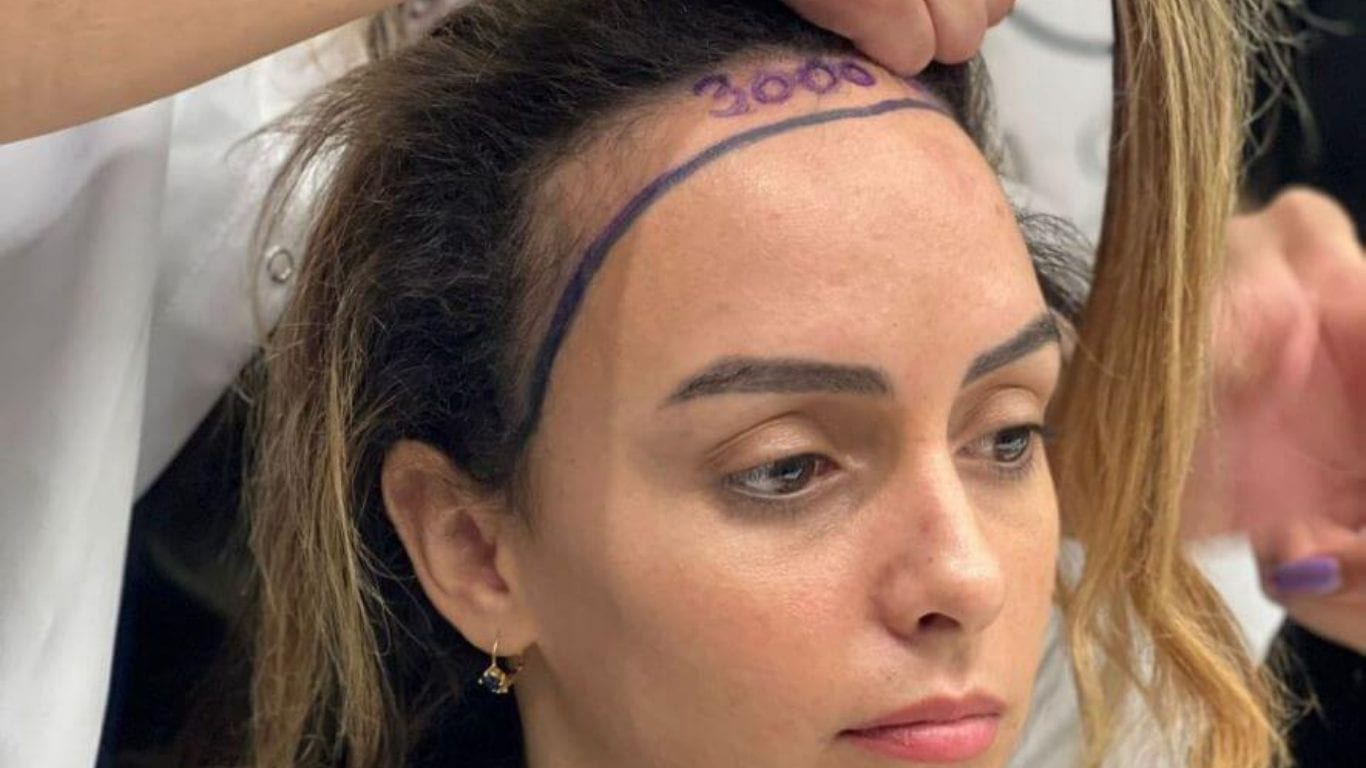
A central question with any method is how many grafts are needed. That depends on the stage of your hair loss on the Norwood scale and on the area to be covered. As a rough guide, a hairline and front often require 2 000 to 3 000 grafts, while covering both the front and the crown in advanced loss can require 4 000 grafts or more, sometimes spread over two sessions.
Your donor capacity is a limited resource, whichever method you choose. A responsible surgeon plans not only the current procedure, but also your future hair loss, so that the donor area is not emptied too early. Remember too that the number of grafts is not the same as the number of hairs: a graft typically contains 1 to 4 hairs, so 3 000 grafts can correspond to 6 000 hairs or more. Unrealistically high graft promises at very low prices are a warning sign, whatever the method.
Anaesthesia, the day itself and healing
Whatever the method, a hair transplant is carried out under local anaesthesia. You are awake throughout the procedure but feel no pain. A session typically lasts 6 to 8 hours depending on the number of grafts, and you can take breaks, eat and relax along the way. Many people find the day far less dramatic than they had feared.
Once the anaesthetic wears off there can be tenderness, swelling of the forehead during the first few days and small crusts in the recipient area, which fall off over 1 to 2 weeks. The transplanted hairs usually fall out in the following weeks in what is called shock loss, after which the follicles rest and begin to produce new, near-permanent hairs from the third to the fourth month. The final result shows itself after 10 to 18 months. Aftercare is decisive for graft survival, whichever method has been used.
Safety and risks of the different methods
As with all surgery, there are risks associated with a hair transplant, whatever the method. They include infection, bleeding, temporary numbness and, where the work is poorly done, unnatural results and visible scars. These risks are reduced markedly by a sterile, well equipped clinic and an experienced team. The real problems are rarely caused by the method itself, but by poor planning, over harvesting of the donor area and rushed work at clinics that treat many patients at the same time.
The most important safety question is therefore not which method the clinic uses, but who performs the critical steps, and how many patients are treated at once. A method can never compensate for a lack of experience or for a production line model. Read more about how to choose the right clinic in our guide to choosing a clinic, and about the course after the operation in our guide to aftercare.
Summary
The methods behind a hair transplant boil down to two steps: how the hairs are extracted, with FUE one by one or FUT as a strip of skin, and how they are placed, with a classic channel, a sapphire blade or a DHI pen. Each variant has genuine strengths. FUE leaves no linear scar, FUT maximises the volume, DHI gives precision in the hairline, and Sapphire supports dense, gentle channels.
But the single factor that matters most for your result is not the name of the method. It is the skill of the surgeon and the team, the thorough planning of your donor resource and the consideration given to your future hair loss. Use your knowledge of the methods to ask sharp questions, and let a documented, experienced team choose the technique that suits you specifically. You will then be far better placed than someone chasing a particular technical acronym.
Frequently asked questions
What is the best hair transplant method?
There is no universally best method, only the best one for your situation. FUE leaves no linear scar, FUT yields the most grafts in a single session, DHI gives great precision in the hairline, and Sapphire FUE supports dense, gentle channels. The choice depends on the extent of your hair loss, your donor capacity and your wishes, and should be made by an experienced surgeon.
Is FUE better than DHI?
The question is slightly misleading, because DHI most often uses FUE extraction. The difference lies in the placement: DHI implants the hairs directly with a pen for extra precision, while classic FUE opens the channels first. DHI can deliver high density and precise angling, but it is more time consuming and requires a very experienced team.
Does a hair transplant leave scars?
FUE and DHI leave only scattered, dot shaped marks that are hard to see even with short hair. FUT (the strip method) leaves a linear scar at the back of the head, which requires the hair to be kept long enough to cover it.
How many grafts do I need?
That depends on the stage of your hair loss and the area to be covered. A hairline and front often require 2 000-3 000 grafts, while extensive coverage of both the front and the crown can require 4 000 or more, sometimes over two sessions. A surgeon assesses this on the basis of your donor capacity and your future hair loss.
Does a hair transplant hurt?
The procedure itself is carried out under local anaesthesia, so you are awake but feel no pain during it. Once the anaesthetic wears off there can be tenderness, slight swelling of the forehead and small crusts for the first few days, which settle over 1-2 weeks.
Is the transplanted hair permanent?
Yes, in principle. The hairs are taken from the back and sides, where the follicles are genetically far more resistant to DHT (donor dominance). They therefore largely keep that resistance in their new position, though no follicle is completely immune and typically stay in place permanently, but your original hair can continue to thin, which is why medical treatment is often recommended alongside.
Can several methods be combined?
Yes, it is common. For example, the hairs are often extracted with FUE and placed with a DHI pen, possibly with sapphire blades for the channels in other areas. A skilled surgeon adapts the combination to your hair and your goals.
Get a no-obligation assessment against fixed criteria, directly on WhatsApp.