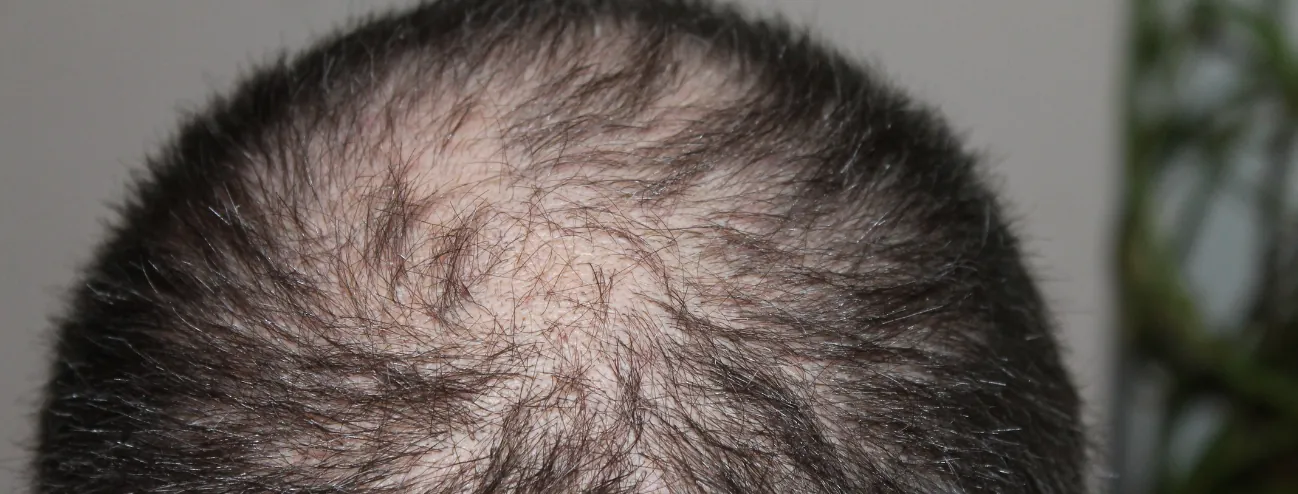
Can the crown, or vertex, actually be transplanted, and does it work as well as restoring a hairline? Yes, the crown can be transplanted with the same follicular unit techniques used everywhere else on the scalp, and a well-planned result can look completely natural. It is, however, a genuinely different planning problem: hair at the crown grows outward from a central whorl in a spiral, radiating in several directions rather than lying in one consistent line, which typically makes it more graft-hungry per visible unit of coverage than the hairline.
This guide goes through what actually makes the crown different: why its whorl pattern demands more grafts for the same visual result, why many surgeons treat the hairline first and what that has to do with a finite donor budget, the specific risk of transplanting a still-progressing crown too young, when medication is the right first move, roughly how graft needs scale with the size of the area, what technique and recovery look like at the back of the head, and why crown results are often the last to fully settle. It sits alongside our broader guide to whether you're a candidate overall, which covers the same core checks, pattern stability and donor supply, that apply to any area, including the crown.
- The crown can be transplanted successfully, but its whorled, multidirectional growth typically needs more grafts for the same visual coverage than the hairline.
- Because donor supply is finite, many plans treat the hairline and frontal third first, staging or scaling back crown work around what the donor budget can safely support.
- Transplanting an unstabilised, still-expanding crown in a young patient risks an isolated "island" of grafts, one reason the ~25/stabilised guideline applies with particular weight here.
- Early, isolated crown thinning is often better managed with medication first; a transplant can be premature while the pattern is still actively changing.
- The crown is commonly the last area to look fully finished, on the same overall timeline as everywhere else, just slower to visibly settle.
Can the crown be transplanted as well as the hairline?
Yes, the crown (vertex) can be transplanted using the same follicular unit techniques as the hairline, and a well-planned result can look completely natural. It is not, however, the same planning problem: the crown's spiral whorl pattern typically needs more grafts for the same visual coverage, and because it sits centrally, it is judged against a finite donor budget shared with every other area. "Can it be done" and "does it use grafts as efficiently as the hairline" are two different questions, and a surgeon should answer both.
Whether the crown can be transplanted is rarely the real question at a consultation; whether it can be transplanted efficiently, without quietly using up a disproportionate share of a limited donor supply, usually is. The short technical answer is straightforward. The planning answer is where the real difficulty sits.
What "the crown" actually means
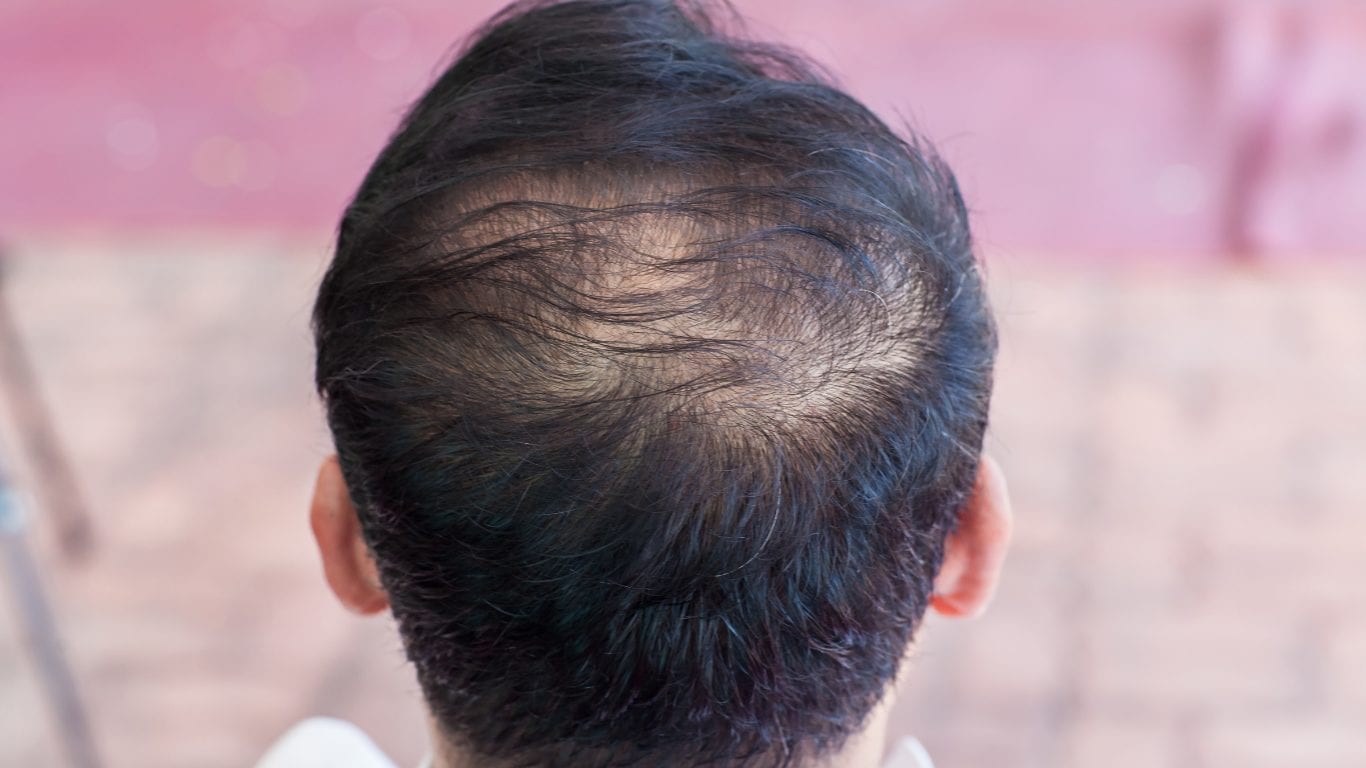
The crown, or vertex, is the area at the top-back of the scalp, roughly where a coin would sit if balanced on your head. It's a distinct zone from the hairline and mid-scalp, both anatomically and often in how hair loss reaches it: many men first notice a thinning patch or a widening whorl there, sometimes years before, after, or alongside hairline recession. Norwood-staged patterns that include the crown, roughly stage III vertex and up, are common, established territory for hair transplant surgery, not an edge case.
Technically, yes, the same principle applies
A crown transplant relies on the same donor-dominance principle as any other area: follicles moved from the genetically resistant back and sides keep growing once relocated, whatever their new position. There's nothing about the crown, as skin or as a surgical site, that makes a graft less likely to survive there than at the hairline. Extraction, handling and placement all use the same follicular unit technique throughout.
So why does the crown get a reputation for being harder?
Not because it fails more often, but because it's a harder area to plan well. The whorl's spiral growth, the round shape of most crown thinning, and its central, highly visible position combine to make it more demanding to cover convincingly, and more expensive in graft terms, than a comparable area at the front. It also tends to be the area surgeons are most cautious about in younger patients, for reasons covered further down this page. The first question has a straightforward yes; the second does not, which is exactly what makes it the more useful one to raise at a consultation.
What this means for you
If you're weighing a crown transplant, the real planning questions are about the whorl, your donor budget and your pattern's stability, not whether the area is somehow off-limits. The rest of this guide works through each of those in turn.
Why does the crown need so many grafts?
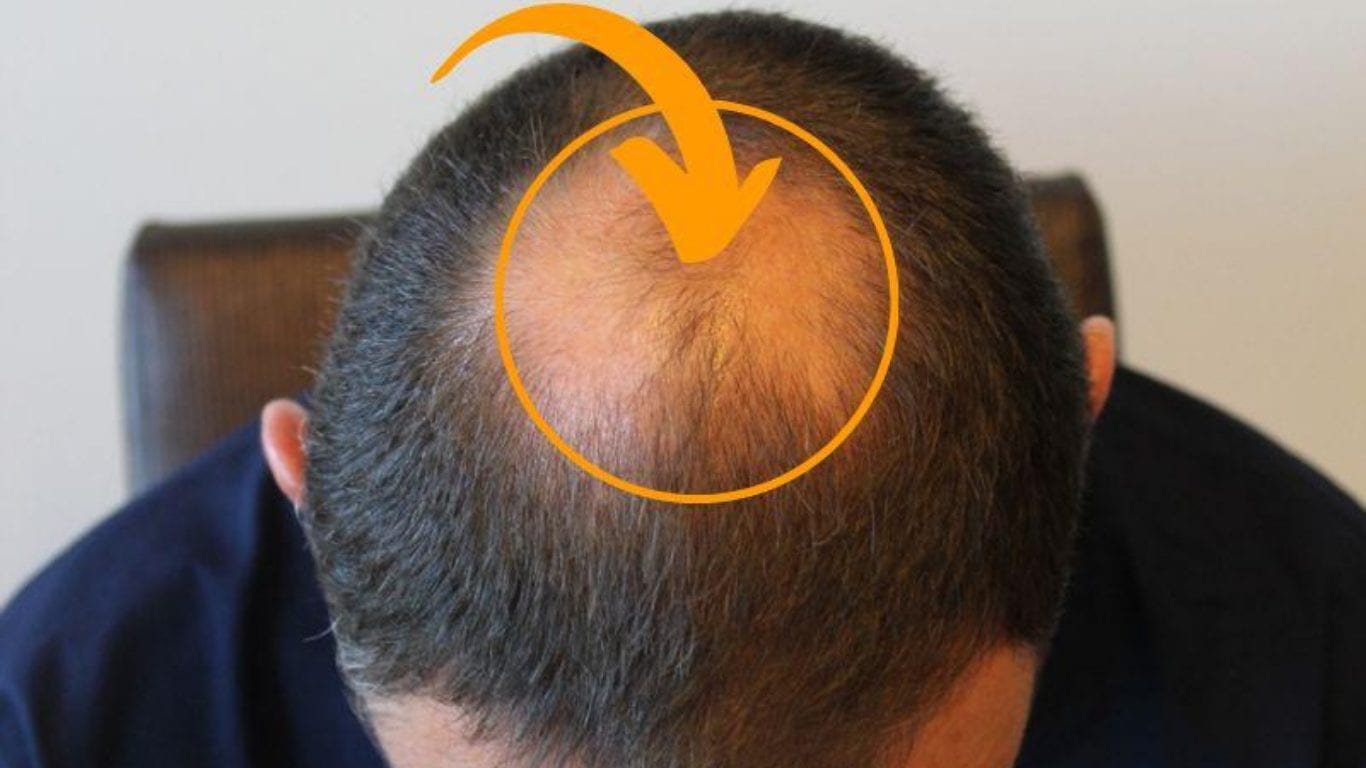
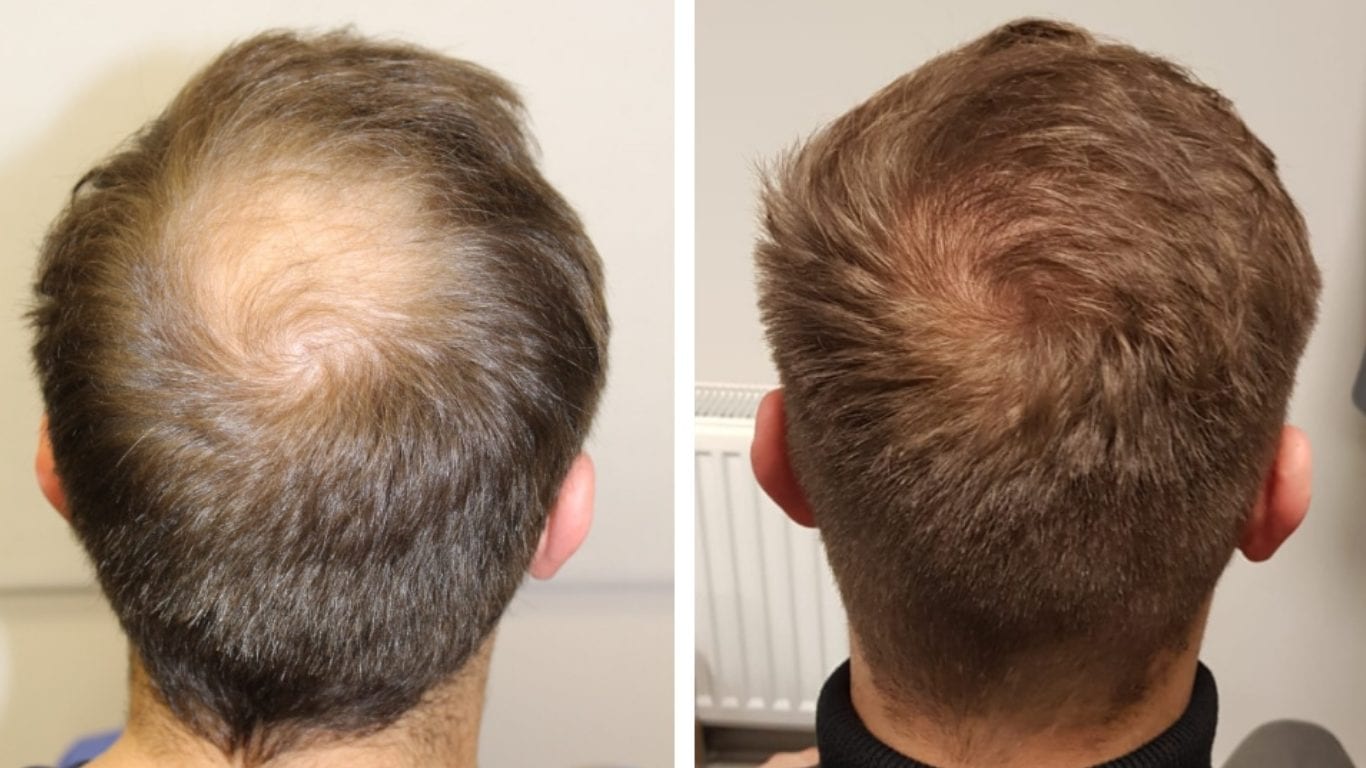
The crown is graft-hungry mainly because hair there grows outward from a central whorl in a spiral, radiating in several directions rather than lying in one consistent direction the way hairline hair generally does. That multidirectional growth, combined with the round shape of most crown thinning, means a given area of visible scalp there typically needs denser, more carefully angled placement to read as full than the same area at the front. It's a coverage-geometry problem as much as a hair-loss problem.
A crown session so often needs more grafts than a hairline session covering a similar visible area for reasons that are as much geometric as biological. Two features of the crown specifically work against efficient coverage.
The whorl: hair that grows in a spiral, not a line
Almost everyone's crown hair grows outward from a central point in a whorl, sometimes called a cowlick, spiralling clockwise or counter-clockwise rather than lying flat in one direction the way hairline hair generally does. A surgeon placing grafts there has to angle each one to follow that spiral at the exact point it sits, not a single, uniform direction, which is a more demanding placement task and takes noticeably longer per graft than working along a straight hairline edge.
Multidirectional growth changes how much coverage you get per graft
Hair covers more visible scalp when it lies flatter and more uniformly in one direction; where growth radiates outward in several directions at once, more gaps of visible scalp tend to show between hairs unless placement is denser. That's a geometry problem as much as a hair-loss one: the same number of grafts that would look reasonably full arranged along a hairline can look thinner arranged around a whorl, simply because the coverage pattern itself is less efficient.
The round shape works against you too
Most crown thinning starts and spreads roughly in a circle or oval, which means the area needing coverage grows with the square of its radius, not in a straight line, as it enlarges. A whorl that has doubled in visible diameter needs meaningfully more than double the grafts to cover, simply because of that geometry, which is part of why early intervention, or medication, covered further down this page, matters more here than it might elsewhere.
Why this is a planning fact, not a discouragement
None of this makes the crown a poor candidate area; it makes it a different budgeting problem that a good surgeon accounts for explicitly, rather than pricing or planning it the same way as an equivalent area of hairline. Understanding this is what separates a realistic crown plan from an oversold one.
Should you get your hairline or crown done first?
Many surgeons treat the hairline and frontal third first because that area does the most visual work in framing the face, while the crown, being graft-hungry and centrally placed, can consume a disproportionate share of a finite donor supply. This is a donor-budget decision, not a judgement that the crown matters less, see how that budget is actually calculated in do I have enough donor hair. Where donor supply is generous, both areas can often be planned together instead.
Both areas need work, so why does a consultation so often come back with "hairline first"? Less to do with which area matters more, and more to do with how a finite donor supply gets spent.
Why the hairline usually goes first
The frontal third of the scalp, hairline, temples and the leading edge of the crown, does most of the visual work in how full a head of hair reads at a glance, since it frames the face directly. Combined with the crown's higher graft cost per visible result, covered in the previous section, many surgical plans prioritise the hairline and frontal area in an initial session, treating the crown afterward, either in the same session if donor supply allows generously, or in a later, staged one.
The donor-budget logic behind that decision
A favourable donor area might realistically support something in the region of 6 000 to 8 000 grafts across an entire lifetime, with a single session commonly moving 2 000 to 4 000. Every graft placed anywhere, hairline or crown, is withdrawn from that same finite total, and nothing about a hair transplant creates new hair. A plan that spends heavily on a graft-hungry crown early can leave too little reserve for the hairline, for future loss, or for a second session years later, which is exactly the kind of imbalance a responsible surgeon plans against from the first consultation. The full mechanics of that budget, including how density, ideally over 50 follicles per cm² in a favourable donor area, and calibre set its real size, are covered in do I have enough donor hair.
It's sequencing, not a verdict on the crown
Prioritising the hairline first is not the same as saying the crown doesn't matter; it's a resource-allocation decision based on visual impact per graft and on keeping enough donor reserve in hand. Someone with a naturally dense, wide donor area may reasonably have both areas planned together from the outset; someone with a more limited donor supply is more likely to be advised to sequence them.
When crown-first genuinely makes sense
This isn't an absolute rule. Where the hairline is stable and only the crown is thinning, or where crown thinning is what's actually driving someone to seek treatment, starting there can be the right call. The point isn't a fixed order; it's that the order should be a deliberate, budget-aware decision, not a default.
Is a crown transplant too risky in your twenties?
It can be, yes, when the pattern is still visibly expanding: transplanting a still-progressing crown in a young man can leave a dense patch of grafts sitting inside a ring of native hair that keeps thinning outward for years, an isolated island rather than a blended result. It's one reason the general guideline of starting from around 25, once loss has stabilised, applies with particular weight to the crown specifically, see am I too young or too old for the full reasoning. A crown that hasn't finished revealing its final size is a common reason surgeons recommend waiting.
This is one of the more consequential mistakes in the whole field, and it happens for an understandable reason: a young man sees a defined, workable patch of thinning at the crown and wants it fixed now, before it gets worse. The problem is what "now" can look like a few years later if the surrounding pattern hasn't finished moving.
The specific failure mode: an island of hair
Picture a dense, well-grown patch of transplanted crown hair sitting inside a ring of native hair that keeps receding outward around it for several more years after surgery. That's the classic "island" result, a real, well-documented risk when grafts are placed into a crown pattern that hasn't finished revealing how large it will eventually get. Because crown thinning tends to expand roughly in a circle, an island there can look particularly disconnected: a defined patch surrounded by an equally defined, and widening, bald ring, rather than the softer, one-directional mismatch that can happen at a hairline.
Why this happens
Transplanted grafts are moved from the donor area at the back and sides, which is largely resistant to the DHT that drives most pattern hair loss, and which keeps that resistance in its new location, which is why it keeps growing after transplantation. No follicle is completely immune to DHT, so this should be understood as durable rather than an absolute, unconditional guarantee. The native hair surrounding a young, unstabilised crown has no such resistance to begin with, and if it's still actively miniaturising, it keeps thinning on its own separate timeline regardless of what was just transplanted next to it.
Why the ~25, once-stabilised guideline exists
This is the reasoning behind hair transplantation generally being advised from around 25 years of age, once loss has stabilised, a guideline, not a hard rule. It isn't about age itself; it's about giving a pattern time to reveal its real size before committing permanent grafts around it. A crown that has looked the same for a meaningful stretch, commonly assessed with photo comparisons over roughly 12 to 24 months, is a very different case from one still visibly widening month to month. The full reasoning, including what counts as evidence of stability at any age, is covered in am I too young or too old for a hair transplant.
What surgeons do instead
Rather than a flat refusal, the standard approach for a young, still-expanding crown is to stabilise first, commonly with medical therapy, covered in the next section, then reassess with photographs before committing to a surgical plan. Many men in this position go on to have a well-planned crown transplant a few years later, once the picture, and the whorl's real diameter, is actually known.
Should you try medication before a crown transplant?
Often, yes, early, isolated crown thinning without a clearly stable pattern is frequently better managed with medication first rather than surgery immediately. Finasteride and Minoxidil are the two most established options, and Minoxidil in particular is widely reported to work well at the crown, sometimes preserving enough native density that a later transplant becomes smaller or safer. See the full options in slowing hair loss without surgery; a transplant is premature while the underlying pattern is still actively changing.
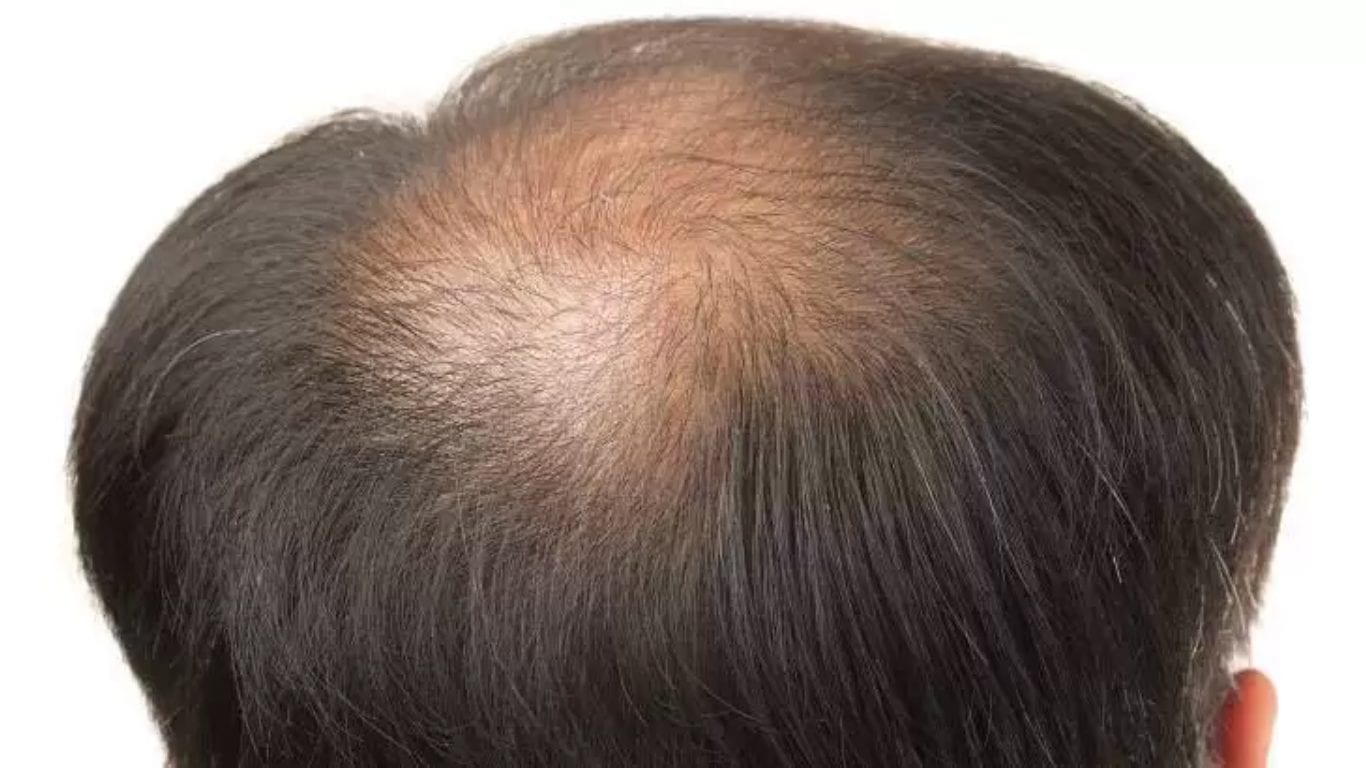
Not every thinning crown needs a scalpel, or even a firm decision, immediately. For a specific, common presentation, early and still-changing crown thinning, medication is frequently the more sensible starting point, not a consolation prize before "real" treatment.
Why medication is often the right first move at the crown specifically
Early, isolated crown thinning, before a hairline is meaningfully affected, is one of the clearer cases where medical therapy makes sense before surgery is even discussed. Minoxidil in particular is widely reported to work well at the crown, often more consistently than at the temples, and Finasteride can slow the underlying miniaturisation driving the thinning in the first place. Used together and given time, they can meaningfully change what a later transplant, if one is still needed, actually has to do.
What "premature" looks like in practice
A transplant is premature when the crown pattern is still visibly changing month to month, when medication hasn't yet been given a fair trial, typically several months before any real judgement is possible, or when a young patient is chasing a specific, current size of thinning that may simply keep growing around whatever is placed. None of these are permanent no's; they're reasons to sequence treatment sensibly rather than book surgery immediately.
How medication changes the later maths
If medication meaningfully slows or partially reverses early crown miniaturisation, the eventual transplant, if surgery is still wanted, can end up smaller, more conservative with the donor budget, and planned around a pattern that has genuinely settled rather than one still being guessed at. This is standard sequencing, not a sign surgery has been ruled out; the full range of documented non-surgical options is covered in slowing hair loss without surgery.
When medication alone isn't the answer
Medication is not a universal fix. Where crown thinning is already extensive, where medication has been tried and hasn't held the pattern, or where someone simply prefers not to stay on long-term treatment, a transplant remains a reasonable option, provided the pattern is stable enough to plan around confidently.
How many grafts does a crown transplant need?
There's no single figure: an early, contained patch of crown thinning needs a modest number of grafts, while a wide, advanced whorl can become one of the largest single-area graft requirements in an entire plan, sometimes rivalling or exceeding the hairline. The honest range depends on the diameter of the thinning, your density and calibre, and how much donor budget the rest of your plan needs. Use our graft calculator for an indicative estimate by Norwood stage, confirmed at a personal assessment. Against our graft calculator’s per-zone figures, an isolated crown typically needs about 1 500–2 000 grafts at Norwood 3 Vertex, 1 000–1 500 as part of a Norwood 4 plan, and 1 800–2 500 or more once a pattern reaches Norwood 5–6.
Anyone comparing quotes or researching before a consultation eventually asks for a number. For the crown specifically, the honest answer is that the number depends far more on how far the whorl has spread than on which Norwood label gets used.
Why there's no single crown number
Unlike a fairly straightforward hairline estimate, crown graft needs scale with the diameter of the whorl, not with a Norwood label alone, which is why any single figure quoted without seeing your actual thinning is close to meaningless. A coin-sized area of early thinning and a wide, several-inch whorl are both loosely described as "crown involvement," but they are entirely different graft-planning problems.
The qualitative shape of it
Broadly, a small, early, well-contained patch of crown thinning needs a correspondingly modest, manageable graft count. As the whorl widens, that number grows faster than the visible diameter does, for the geometric reasons covered earlier in this guide, and an advanced, wide crown pattern can become one of the largest single-area components of an entire plan, in some cases rivalling or exceeding what the hairline itself needs. This is also why crown work is so often staged into a later session: the requirement can be genuinely large, and a plan has to weigh it against donor reserve, not just against the visible gap.
Getting an actual number
Your own figure depends on the current size of the thinning, your density and hair calibre, and how much of your donor budget the rest of your plan, hairline, mid-scalp, temples, is already using. Our graft calculator gives an indicative range by Norwood stage and area as a starting point; it is not a personal prescription. Your real number is confirmed at an assessment that measures your donor area directly.
Why a low quoted number for a wide crown is a warning sign
Because coverage at the crown is genuinely less efficient per graft than at the hairline, a clinic offering to fill a wide, advanced whorl with a suspiciously small graft count, at a suspiciously low price, is one of the more reliable red flags specific to this area. A number that ignores the whorl's geometry is a number that isn't really planning for your crown at all.
How is crown surgery and recovery different?
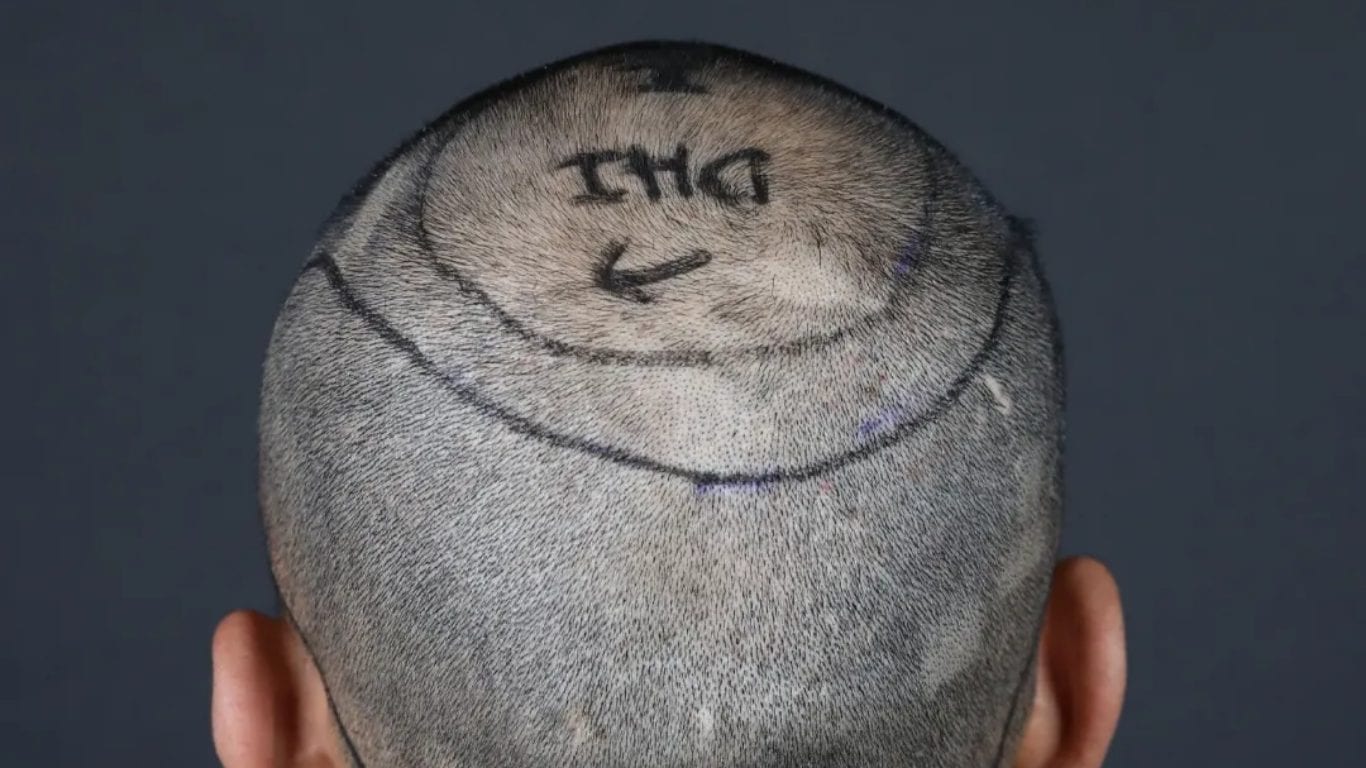
Crown surgery itself uses the same technique as elsewhere, but planning has to account for the whorl's changing angles, and recovery needs extra care because the crown is exactly the part of the scalp that rests against a pillow or headrest. Shock loss, the normal shedding of transplanted and some surrounding native hair, can look more noticeable at the crown simply because the area was already thinning before surgery. Sleeping elevated and avoiding pressure on the back of the head in the first week or so matters more here than at the hairline.
The surgery and the healing process both use the same fundamentals as anywhere else on the scalp, but two things about the crown's specific location and growth pattern change what actually matters in practice.
Technique: same tools, more variable angles
Crown extraction and placement use the same FUE or FUT approach as anywhere else on the scalp; what changes is that the surgeon is constantly adjusting graft angle to follow the whorl's spiral rather than repeating one direction, a more demanding, slower placement job per graft than working along a straight hairline edge. This is exactly the kind of detail worth asking about directly at a consultation: how the team plans for the whorl's changing angles, not just how many grafts they propose.
Shock loss can look more noticeable here
Shock loss, the normal, temporary shedding of hair in the weeks after surgery, happens everywhere grafts are placed, but it can be more visually obvious at the crown, because the area was often already thinning before surgery, with less surrounding density to soften the appearance of a temporary dip. This is expected, not a complication, and it resolves on the same general timeline as elsewhere as new growth establishes.
Why sitting and sleeping position matter more for the crown
The crown is, quite literally, the part of the head that rests against a pillow, headrest or car seat back, which makes basic aftercare instructions, sleeping elevated and avoiding direct pressure or rubbing in the first week or so, more consequential here than for a hairline graft that rarely touches anything while you sit or lie down. Practical care in the first days matters everywhere, but the margin for accidentally disturbing a fresh graft through ordinary contact is genuinely narrower at the back of the head.
Why surgeon-specific experience matters here
Because whorl planning and crown-specific graft economics are a distinct skill from hairline design, it's reasonable to ask directly how many crown cases a team has handled and to see results specifically in that area, not just a general portfolio. See our independent clinic ranking for how experience and technique are assessed as part of a wider set of objective criteria.
How long until crown results look finished?
The same overall timeline applies everywhere: shedding around weeks two to three, new growth from about month three to four, and a result generally judged from around twelve months. Within that timeline, the crown is commonly reported as the area that visibly finishes last, often still looking a little less dense or settled at twelve months than the hairline before catching up over the following months.
Patience is standard advice after any hair transplant, but it applies with a bit more force to the crown specifically, and it's worth knowing why in advance rather than being caught off guard at month ten.
The timeline itself doesn't change
The crown follows the same underlying biological timeline as any other transplanted area: shedding of the transplanted hairs around weeks two to three, new growth beginning from roughly month three to four, and a result generally judged from around the twelve-month mark, not earlier. Nothing about the crown changes that basic sequence.
But it's commonly the last area to look "finished"
Within that shared timeline, the crown is widely reported, by patients and clinics alike, as the area that visibly settles last. At twelve months, hairline results are often already reading as close to final, while crown density in the same patient can still look a little softer or less settled, typically continuing to thicken over the following months rather than stalling.
Why the crown tends to lag
Some of this likely comes back to the same whorl geometry covered earlier in this guide: multidirectional growth simply takes longer to visually knit together into an even-looking result than hair lying in one consistent direction does, even once every individual graft is growing normally. It isn't a sign anything has gone wrong; it's a pattern worth knowing about in advance, so month ten or eleven doesn't feel like a disappointing result rather than a still-maturing one.
Judge it on the same schedule, with a little more patience for the crown specifically
The practical takeaway is to apply the standard advice, don't judge the final result before twelve months, with an extra note for crown work specifically: give it a bit more room beyond that mark before comparing it unfavourably to how the hairline has settled. For how a result, crown included, tends to hold up over the years that follow, see longevity.
Frequently asked questions
Can the crown be transplanted as successfully as the hairline?
Yes, using the same follicular unit technique and donor-dominance principle as any other area. It's a different planning problem, though: the crown's whorl pattern typically needs more grafts for the same visual coverage, so a fair comparison is about planning and graft economics, not whether the area can be treated at all.
Why does the crown need more grafts than the hairline?
Because hair there grows outward from a central whorl in a spiral rather than lying in one direction, which covers less visible scalp per graft, and because most crown thinning spreads roughly in a circle, so the area needing coverage grows faster than its visible diameter as it enlarges.
Should I get my crown or my hairline done first?
Many surgeons treat the hairline and frontal third first, since it does the most visual work in framing the face and the crown is comparatively graft-hungry, which makes sequencing a donor-budget decision. Where the donor area is generous, or the crown is the main concern, both can be planned together or crown-first instead; there's no universal order, only a deliberate one.
I'm in my early twenties with a thinning crown, should I wait?
Often, yes, if the pattern is still visibly changing. Transplanting a crown that hasn't finished expanding risks an isolated island of grafts surrounded by hair that keeps thinning outward, which is why the general guideline of starting from around 25, once loss has stabilised, applies with particular weight to the crown. Many surgeons recommend medical therapy and photo monitoring first, then reassessment.
Can Minoxidil or Finasteride treat crown thinning instead of surgery?
Often, at least for a while. Minoxidil is widely reported to work well specifically at the crown, and Finasteride can slow the underlying process, so medication is frequently the right first step for early, isolated crown thinning. If a transplant is still wanted later, it's often smaller and more conservative once the pattern has settled on medication.
How many grafts does a crown transplant need?
It depends far more on the diameter of the thinning than on a Norwood label alone: a small, early patch needs a modest, contained number, while a wide, advanced whorl can need one of the largest single-area totals in an entire plan. Use a graft calculator for an indicative range and confirm the real number at a personal assessment.
Does a crown transplant cost more than a hairline transplant?
The whorl, your donor budget and how stable your pattern is are all things a general article can only describe, not measure. Get a free hair analysis and hear back from our #1-ranked clinic with an honest read on your crown specifically, whether medication, surgery or both make sense, and what to expect, with no obligation to go further.
General educational guidance, not medical advice. What your crown can realistically achieve is confirmed by a qualified surgeon at a personal assessment.
Last updated: August 2026 · Editorial standards