Evidence-based medicine

Research & rationale

We believe patients deserve evidence, not marketing. This library gathers clinical studies, original cohort research and structured reviews on hair transplantation, written to be readable by patients while keeping the underlying data transparent.

Topic
Year

Showing 270 of 270 research topics

Research 3

Original studies carried out by IdealofMeD Research Academy, which we have permission to publish here. Each one sets out its own method, its data and its limitations.

Hyperbaric oxygenHealingFUE

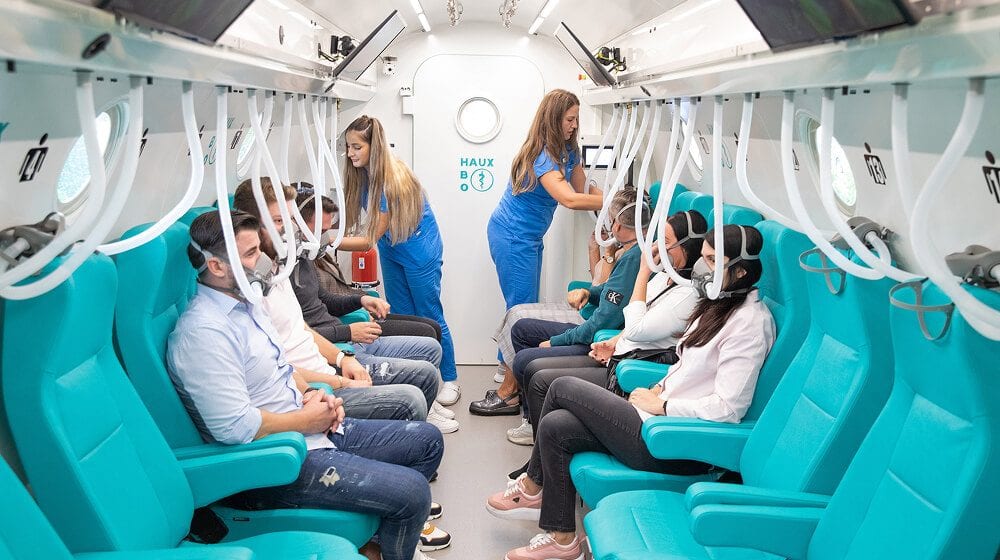
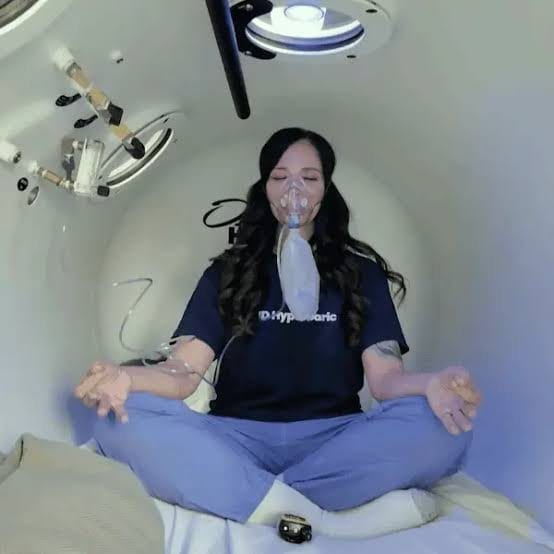
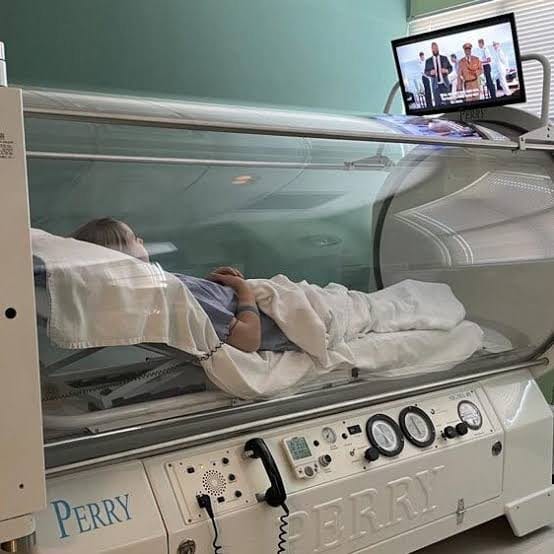
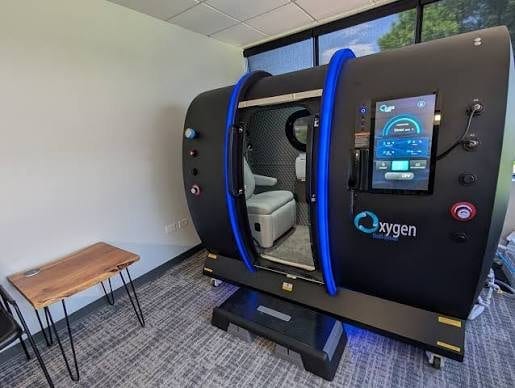
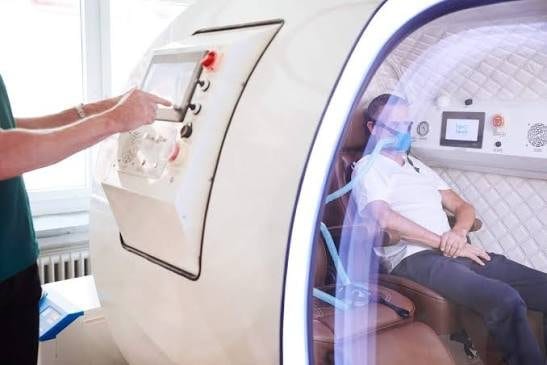
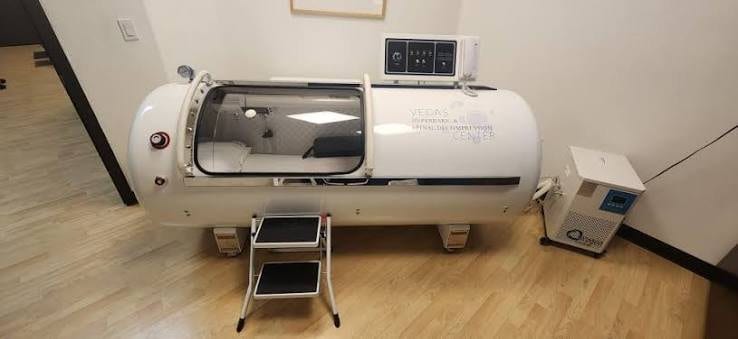
Hyperbaric oxygen therapy after hair transplant: a prospective cohort study of 220 FUE patients

June 2026 · IdealofMeD Research Academy · 11 min read

Does a hyperbaric oxygen chamber really improve hair transplant recovery, or is it simply an expensive add-on? In 220 FUE patients, HBOT was consistently associated with faster perceived healing, less pain, better sleep and quicker fading of redness, in both patient surveys and blinded medical review.

Main findings

  • Patients who received two HBOT sessions rated overall healing about 40% higher than those who did not; one session captured most, but not all, of that gain.
  • The largest single difference was sleep quality during the first postoperative days.

Read full research →
Long-term outcomesMedicationsHealing

How much hair can stress actually make you lose? A review of the scientific evidence

March 2026 · IdealofMeD Research Academy · 10 min read

Published medical literature shows strong evidence that significant stress can trigger certain types of hair loss, particularly telogen effluvium. But it is much weaker for male pattern baldness: stress appears to accelerate genetically predisposed hair loss rather than cause it on its own.

Main findings

  • Long-term stress may lead to noticeable shedding within 2 to 4 months.
  • Stress-related shedding is generally reversible once the stressor is resolved.
Read full research →
MedicationsHealing

Which vitamins actually help hair? A review of more than 100 hair transplant patients

September 2026 · IdealofMeD Research Academy · 9 min read

If you have ever searched for hair vitamins, everyone claims to have the answer. Rather than rely on marketing, our research team reviewed more than 100 hair transplant patients who continued taking vitamins, grouped by their blood test results. Vitamin D stood out most consistently; biotin's popularity runs well ahead of its evidence; and no single vitamin is worth taking by default.

Main findings

  • Vitamin D was the nutrient most consistently associated with hair loss: 63% of the studies examining it reported a statistically significant association, against 37% that did not.
  • Nearly 90% of the patients in the studies reporting a significant association had low vitamin D in blood tests taken before their hair transplant.
Read full research →

Rationale 267

Longer-form answers to the questions patients ask most. They gather the publicly available evidence and explain what it supports and what it does not.

Healing 50

HealingFUE

Day-by-day healing timeline, days 1-14

August 2026 · Hårtransplantation.dk research desk · 4 min read

The first fortnight after a transplant is the only period when a graft can still be physically lost. Research on graft anchoring found that pulling a hair dislodged the graft for the first two days, that adherent crusts could still take a graft through day five, that by day six pulling a hair no longer dislodged it, and that by day nine grafts were no longer at risk. Everything patients are told about washing, sleeping and exercise is built on that timetable.

Main findings

  • Grafts were fully anchored by day 9 in a study of 42 patients.
  • Pulling an adherent scab could still cost a graft through day 5, later than pulling a hair.
Read full research →
Healing

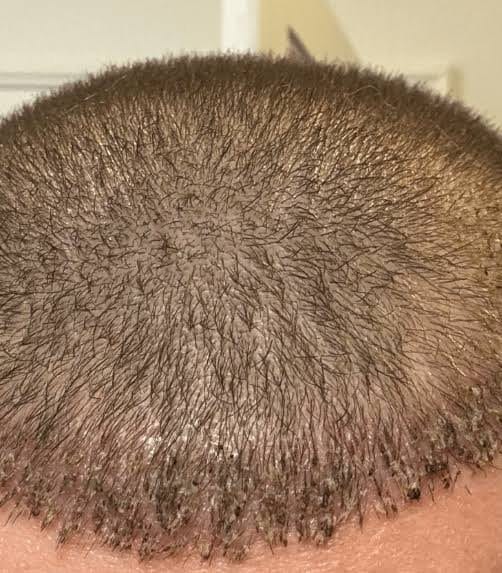
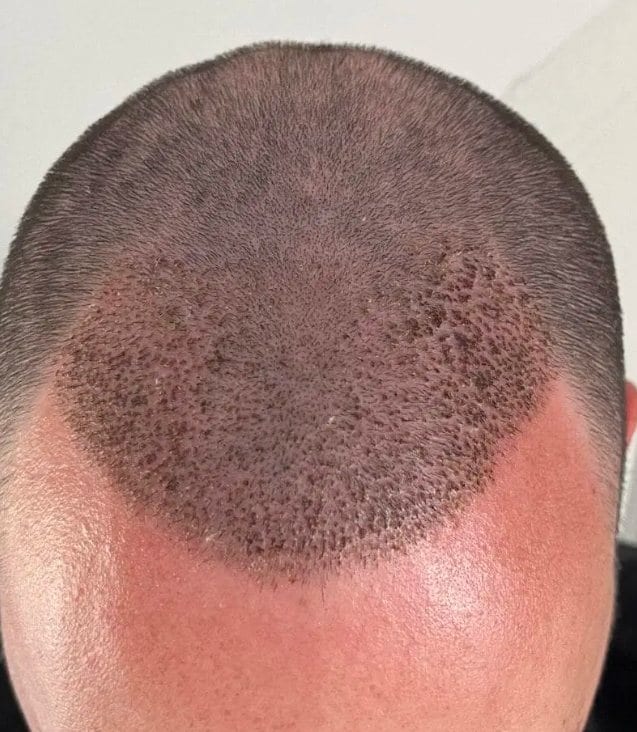
When scabs should fall off naturally

August 2026 · Hårtransplantation.dk research desk · 4 min read

Crusts form within the first day or so after surgery and normally shed between days seven and fourteen. They matter because they are bonded to the graft underneath: research on graft anchoring found that pulling an adherent scab cost a graft through day five, a longer risk window than pulling on a hair. Letting them soften and release on their own is the whole objective of early washing.

Main findings

  • Crusts typically shed on their own between days 7 and 14.
  • Pulling an adherent scab could dislodge a graft through day 5.
Read full research →
Healing

Signs a scab is being removed too early

August 2026 · Hårtransplantation.dk research desk · 4 min read

A crust that releases naturally comes away dry, painlessly and without bleeding. One removed too early resists, hurts, bleeds from a pinpoint, and may bring a small white bulb with it. Research on graft anchoring found that pulling an adherent scab cost a graft through day five, so the distinction matters most in the first week.

Main findings

  • Pinpoint bleeding after a crust comes away suggests the graft was disturbed.
  • A small white or translucent bulb attached to the crust is graft tissue, not scab.
Read full research →
Healing

Swelling timeline and why it moves to the forehead

August 2026 · Hårtransplantation.dk research desk · 4 min read

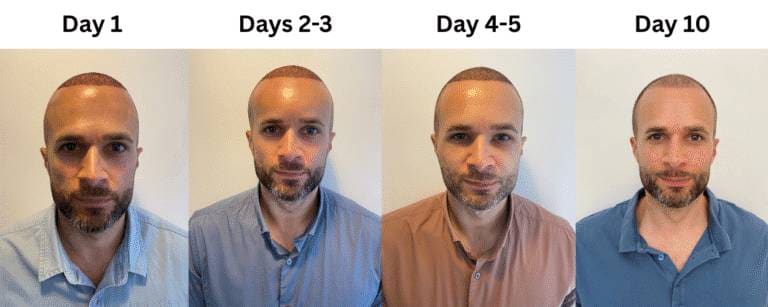
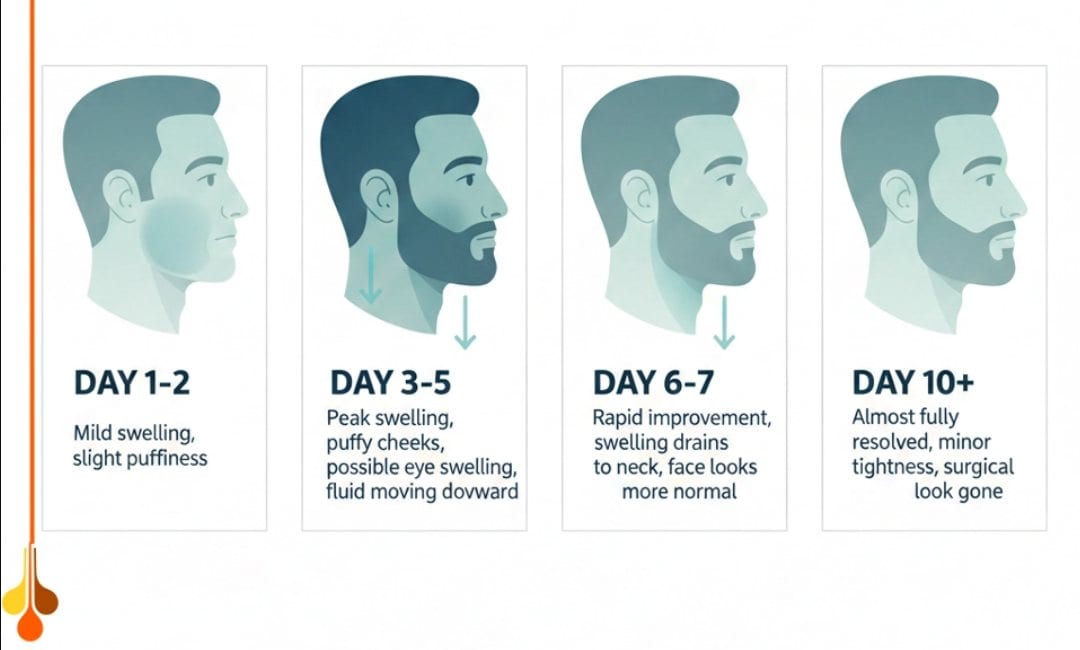
Swelling after a hair transplant is caused by fluid from anaesthetic and tissue response, and it tracks downward under gravity from the scalp to the forehead and sometimes the eyelids. It typically appears around days two to four, peaks over a day or two and then resolves. It looks dramatic and is almost always harmless, but late or one-sided swelling is a different matter.

Main findings

  • Swelling usually appears on days 2 to 4 rather than immediately after surgery.
  • It moves downward under gravity, which is why the forehead and eyes are affected rather than the scalp.
Read full research →
Healing

Week-by-week scalp recovery, weeks 1-8

August 2026 · Hårtransplantation.dk research desk · 3 min read

The first eight weeks after a transplant move through three distinct phases: a fortnight of physical vulnerability, a dormant middle stretch when the transplanted hairs shed, and, for some people, the first faint regrowth. Knowing which phase you are in stops you mistaking normal events for failure.

Main findings

  • Grafts are physically secure from around day 9, but the visible result gets worse before it gets better.
  • Shedding of transplanted hairs, usually in weeks 2 to 3, is expected and is not graft loss.
Read full research →
Healing

How to reduce post-op swelling

August 2026 · Hårtransplantation.dk research desk · 3 min read

Post-operative swelling is fluid tracking downward from the scalp under gravity, so the measures that reduce it are the ones that work with gravity: staying upright, sleeping elevated, and cooling the forehead rather than the grafts.

Main findings

  • Sleeping elevated for the first several nights is the single most effective measure.
  • Cold should be applied to the forehead only, never to the recipient area.
Read full research →
Healing

Redness in the recipient area: normal vs concerning

August 2026 · Hårtransplantation.dk research desk · 3 min read

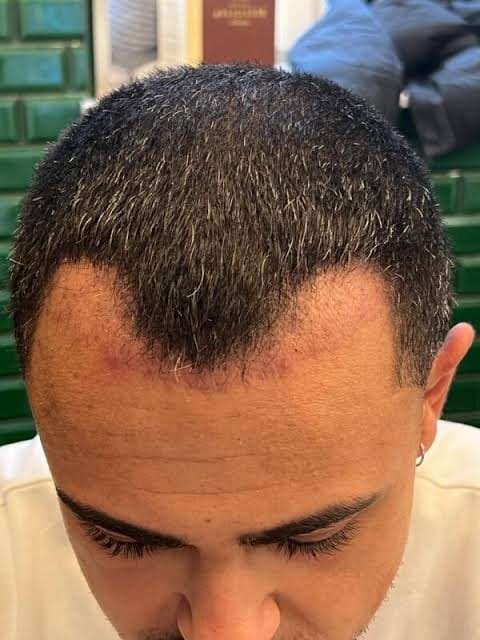
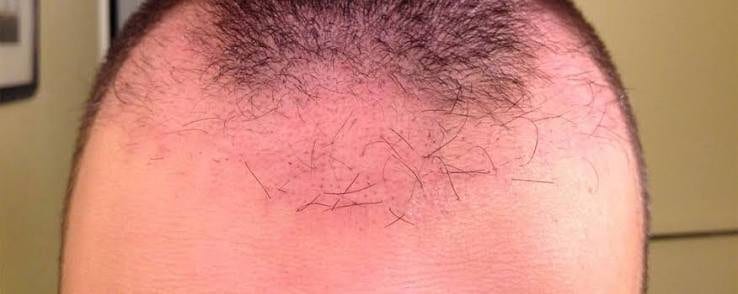
Redness after a transplant is the visible sign of thousands of small wounds healing and increased blood flow to the area. It normally fades over weeks to a few months, faster in lighter skin. Redness that increases, concentrates, or arrives with heat and pain is a different matter.

Main findings

  • Diffuse fading redness over weeks is expected; it typically lasts longer in darker skin tones.
  • Increasing rather than decreasing redness after the first days is the key warning sign.
Read full research →
Healing

Itching after FUE: causes and relief

August 2026 · Hårtransplantation.dk research desk · 3 min read

Itching in the second and third weeks after a transplant is common and is usually a sign of ordinary wound healing and dryness rather than a problem. The risk lies in the scratching, which can disturb grafts while they are still vulnerable.

Main findings

  • Itching typically peaks in weeks 2 to 3 as crusts release and the skin dries.
  • Scratching can dislodge grafts in the first days and invite infection later.
Read full research →
Healing

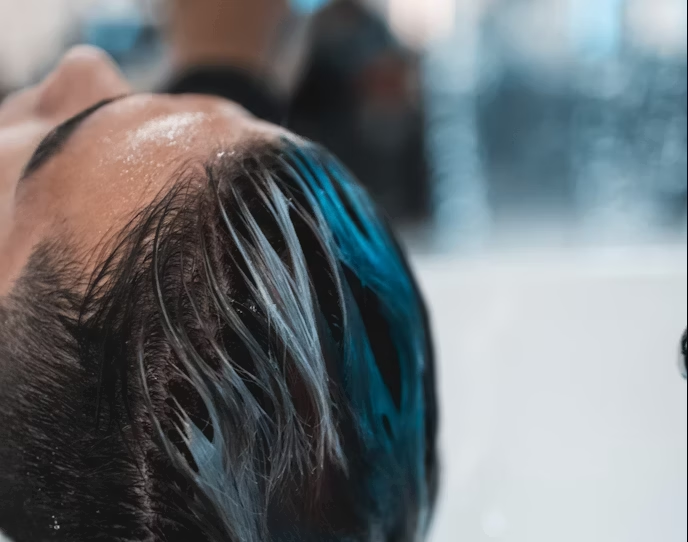
When it's safe to wash your hair again

August 2026 · Hårtransplantation.dk research desk · 3 min read

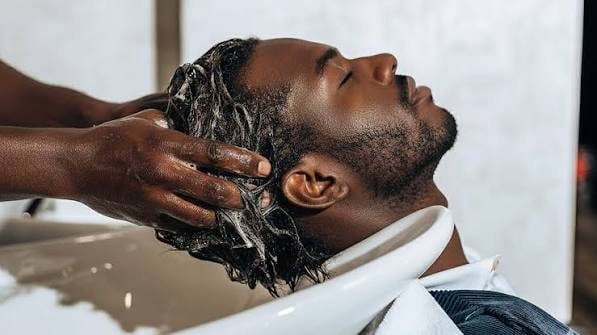
Most clinics start a gentle washing routine within the first few days, because softening crusts steadily is safer than letting them harden. The date is set by your clinic, not by a general rule, and the technique matters far more than the timing.

Main findings

  • Washing is prescribed to soften crusts, not merely for cleanliness.
  • Adherent crusts could still dislodge a graft through day 5, so early washing must be gentle.
Read full research →
Healing

Correct washing technique in the first two weeks

August 2026 · Hårtransplantation.dk research desk · 3 min read

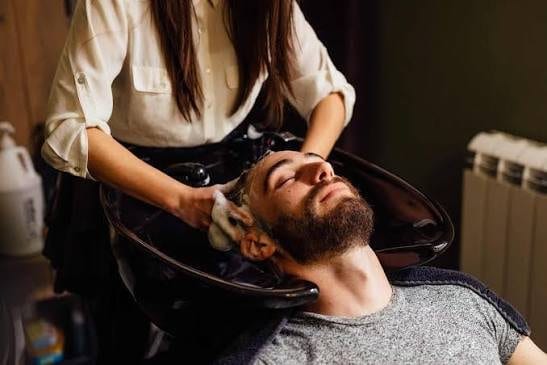
The washing technique used in the first fortnight is designed to do one thing: soften and release crusts without applying force to the graft underneath. Foam applied by hand, low-pressure rinsing and no towel contact are the whole method.

Main findings

  • Lather in the hands and apply as foam; never rub shampoo directly onto the recipient area.
  • Rinse with low pressure and dry by patting or air, never by rubbing.
Read full research →
Healing

Saline spray protocols and why they matter

August 2026 · Hårtransplantation.dk research desk · 3 min read

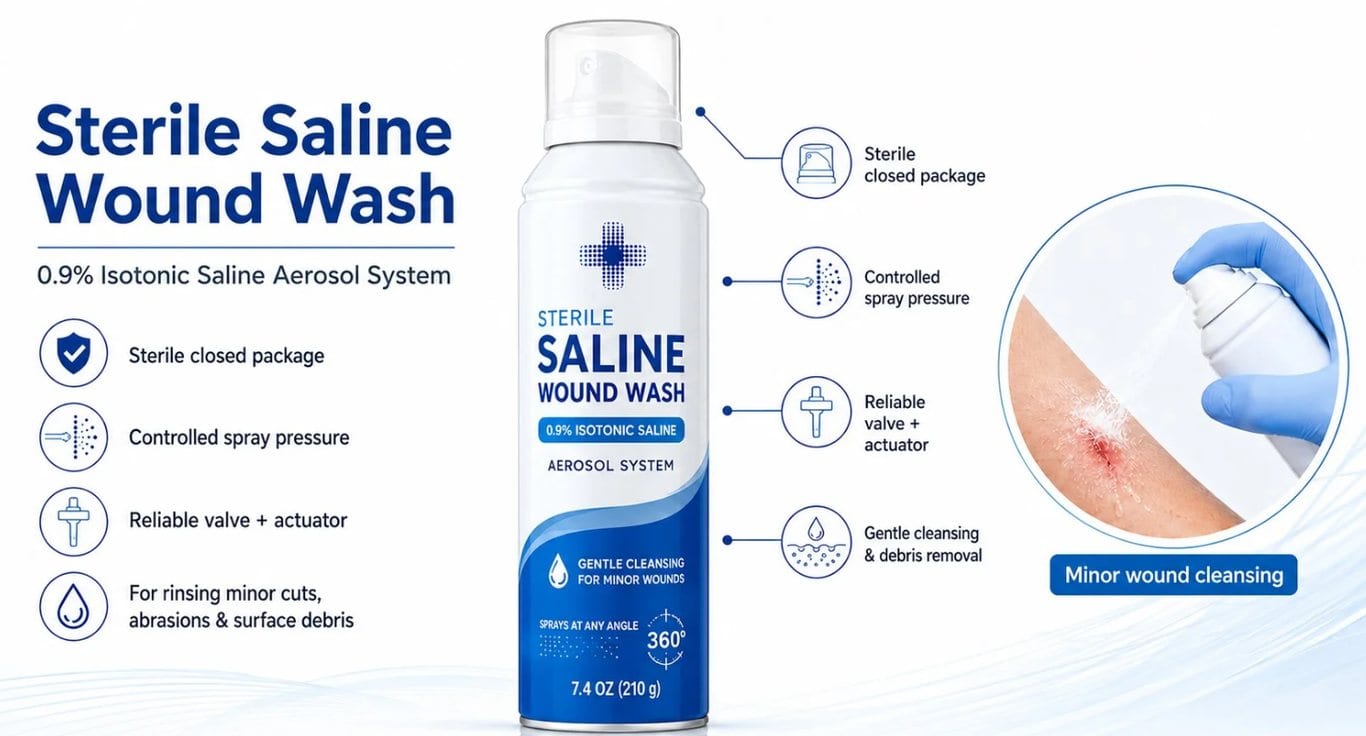
Saline spray keeps the recipient area moist between washes in the days after surgery. Moist crusts stay soft and release on their own; dry crusts harden onto the graft and become the mechanism by which grafts are pulled out.

Main findings

  • Saline works by keeping crusts soft so they release without traction on the graft.
  • Frequency in the first days matters more than the specific product used.
Read full research →
Healing

Shock loss explained: why existing hair falls out

August 2026 · Hårtransplantation.dk research desk · 3 min read

Shock loss is the temporary shedding of existing native hair around or within a transplanted area, caused by the trauma of surgery pushing follicles prematurely into their resting phase. It is usually temporary, and it is distinct from the shedding of the transplanted hairs themselves.

Main findings

  • Shock loss affects native hair; the separate shedding of transplanted shafts is a different process.
  • It is generally temporary, with recovery over months rather than weeks.
Read full research →
Healing

Timeline for shock loss recovery

August 2026 · Hårtransplantation.dk research desk · 3 min read

Shock loss typically appears within the first two months after surgery and recovers over the following three to six months, following the ordinary rhythm of the hair cycle rather than any treatment. The wait is uncomfortable but the trajectory is usually predictable.

Main findings

  • Shock loss of native hair usually appears in weeks 2 to 8 after surgery.
  • Recovery generally follows over 3 to 6 months as follicles re-enter the growth phase.
Read full research →
Healing

Folliculitis after transplant: causes and treatment

August 2026 · Hårtransplantation.dk research desk · 3 min read

Folliculitis after a transplant is inflammation around individual follicles, appearing as small red bumps or pustules, most often between the second week and a few months post-operatively. It is common, usually mild and treatable, but it should be assessed rather than squeezed.

Main findings

  • It typically appears from around week 2 onward, after crusting has cleared.
  • Most cases are mild and settle with clinic-directed treatment; squeezing risks scarring.
Read full research →
Healing

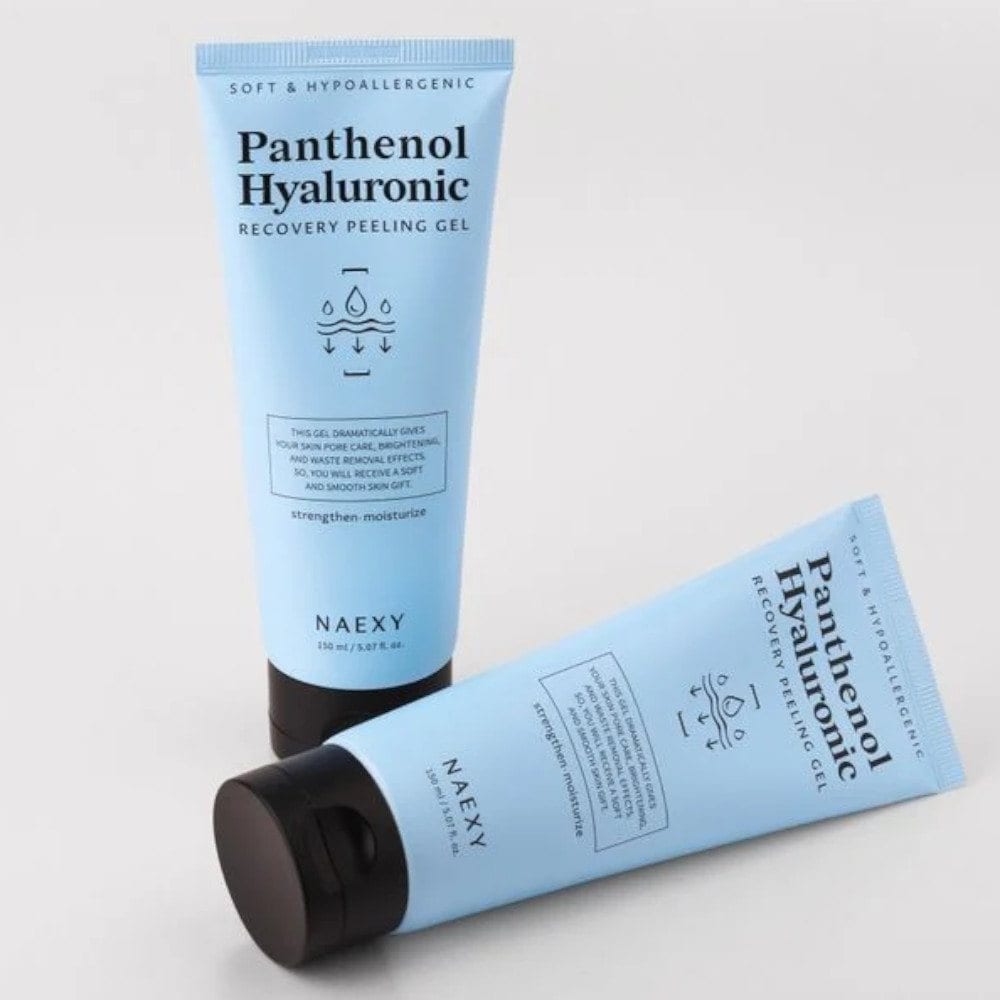
Panthenol and healing gels: do they help?

August 2026 · Hårtransplantation.dk research desk · 3 min read

Panthenol and similar post-operative gels are widely supplied by clinics and are generally soothing and moisturising, but the evidence that they improve graft survival or final density is thin. Their real value is keeping crusts soft and the scalp comfortable.

Main findings

  • Their demonstrated benefit is moisture and comfort, not improved graft yield.
  • Nothing should be applied to the recipient area that your clinic has not cleared.
Read full research →
Healing

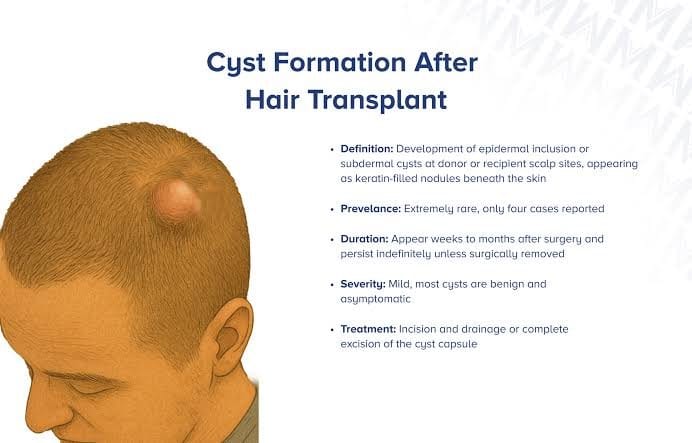
Cyst formation in the recipient area

August 2026 · Hårtransplantation.dk research desk · 3 min read

Small cysts in the recipient area are a recognised and usually minor post-operative event, typically appearing weeks after surgery as firm bumps where a hair has failed to break the surface or a fragment of tissue was buried. Most settle on their own or with simple clinic treatment.

Main findings

  • Most recipient-area cysts appear weeks after surgery, not in the first days.
  • They should be assessed rather than squeezed; squeezing risks scarring and infection.
Read full research →
Healing

Numbness in the donor area: how long it lasts

August 2026 · Hårtransplantation.dk research desk · 3 min read

Reduced sensation in the donor area is common after both FUE and strip surgery, caused by disruption of small sensory nerve branches in the scalp. It typically improves over weeks to months, and in a minority of cases small patches remain permanently altered.

Main findings

  • Numbness is caused by interruption of fine sensory nerve branches, not nerve damage in a serious sense.
  • Most sensation returns over weeks to months; small permanent patches are possible, more so after strip surgery.
Read full research →
Healing

Scalp tightness after FUT vs FUE

August 2026 · Hårtransplantation.dk research desk · 3 min read

Tightness after surgery is markedly different between the two techniques. Strip surgery removes a section of scalp and closes the gap, producing real, sustained tension; FUE removes follicles individually and produces mild, short-lived tightness from swelling rather than from closure.

Main findings

  • FUT tightness comes from wound closure tension and can last weeks; FUE tightness comes from swelling and settles within days.
  • Severe or increasing tightness after strip surgery should be reported rather than endured.
Read full research →
Healing

When you can sleep on your side again

August 2026 · Hårtransplantation.dk research desk · 3 min read

Sleeping position matters because the recipient area must not be pressed or dragged while grafts can still be dislodged. Research on graft anchoring found grafts were secure by day nine, and most clinics allow normal sleeping positions from around then, with side sleeping often possible earlier if the grafted zone is not in contact.

Main findings

  • Grafts were no longer at risk of dislodgement from day 9 in the anchoring study.
  • Whether side sleeping is safe earlier depends on where your grafts are, not on the calendar alone.
Read full research →
Healing

Best sleeping position the first week

August 2026 · Hårtransplantation.dk research desk · 3 min read

The best position for the first week is on your back with the head elevated. It keeps pressure off the grafts during the period when they can still be dislodged, and it uses gravity to limit the forehead swelling that peaks around days two to four.

Main findings

  • Back sleeping with elevation addresses both graft security and swelling at once.
  • Elevation matters most in the first three to five nights, when swelling peaks.
Read full research →
Healing

Do you need a travel pillow after surgery?

August 2026 · Hårtransplantation.dk research desk · 3 min read

A travel pillow is not essential but is one of the most useful cheap items after a transplant. It supports the head so the back of the scalp does not rest on the mattress, and it discourages rolling onto the grafts while asleep.

Main findings

  • Its value is keeping the scalp off the pillow and limiting rolling, not comfort alone.
  • It is most useful in the first week to ten days, while grafts can still be dislodged.
Read full research →
Healing

When you can wear a hat again

August 2026 · Hårtransplantation.dk research desk · 3 min read

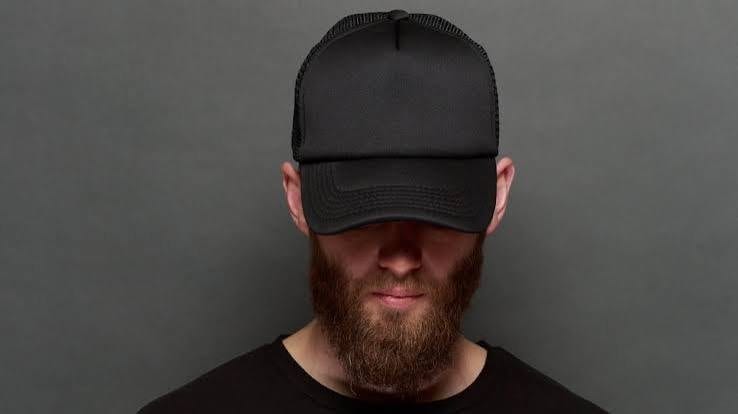
Most clinics allow a loose hat from around day ten, once grafts are anchored, and some permit a very loose, clean cap earlier for travel. The risk comes from the friction of putting it on and taking it off across unanchored grafts.

Main findings

  • Grafts were secure from day 9 in the anchoring study, which is why day 10 is the common threshold.
  • The dangerous moment is putting a hat on and removing it, not wearing it.
Read full research →
Healing

Helmets and hair transplant recovery for cyclists and motorcyclists

August 2026 · Hårtransplantation.dk research desk · 3 min read

Helmets combine everything a healing scalp tolerates badly: direct pressure, friction on and off, heat and heavy sweating. Most clinics advise a considerably longer wait than for an ordinary hat, and the honest answer for motorcyclists is that this needs planning before surgery, not after.

Main findings

  • A helmet applies sustained pressure and traps sweat, so the wait is longer than for a soft hat.
  • For anyone who rides daily for transport, the timing should be planned before booking.
Read full research →
Healing

Sun exposure and the recipient area

August 2026 · Hårtransplantation.dk research desk · 3 min read

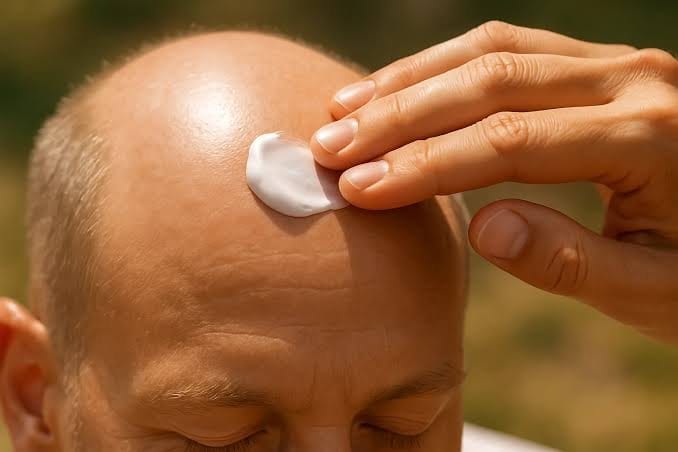
Healing scalp skin burns easily and pigments unpredictably, so sun exposure in the first months can prolong redness and leave lasting discolouration. Shade and covering are the primary protection early on, because sunscreen cannot be applied to a fresh recipient area.

Main findings

  • Fresh recipient skin is thin, inflamed and unusually vulnerable to burning.
  • Shade and covering come first; sunscreen is only appropriate once the skin has healed.
Read full research →
Healing

Sunscreen use on a healing scalp

August 2026 · Hårtransplantation.dk research desk · 3 min read

Sunscreen is important for a scalp that no longer has hair coverage, but it should not go onto a fresh recipient area. Applying it means rubbing product into skin that is still healing, so covering and shade come first and sunscreen follows once the surface has closed.

Main findings

  • Applying sunscreen requires rubbing, which is why it waits until the recipient area has healed.
  • Mineral formulations are usually better tolerated on newly healed skin than chemical ones.
Read full research →
Healing

Returning to a desk job: realistic timeline

August 2026 · Hårtransplantation.dk research desk · 3 min read

Most people are physically capable of desk work within a few days of surgery. The limiting factors are usually appearance and swelling rather than capacity, which is why the honest planning question is how visible you are willing to be rather than when you can type.

Main findings

  • Physical capacity for desk work usually returns within two to three days.

  • Swelling peaks around days two to four, which is typically the least presentable point.
Read full research →
Healing

Returning to manual labor or physical jobs

August 2026 · Hårtransplantation.dk research desk · 3 min read

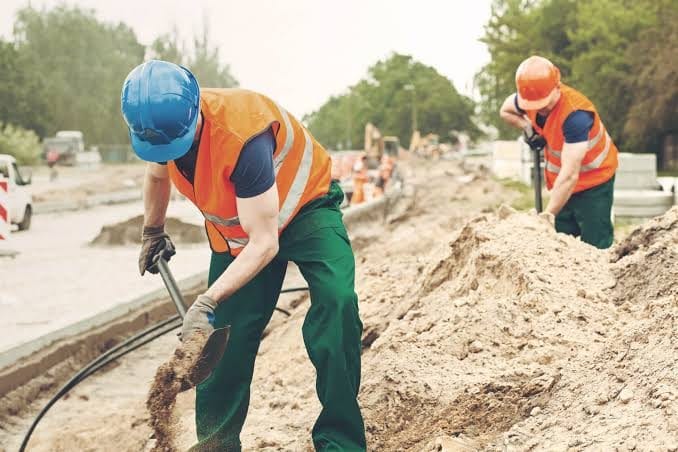
Physical work reintroduces the three things a healing scalp tolerates worst: sweating, impact and protective headwear. Most clinics advise considerably longer off manual work than off desk work, and the timeline should be agreed before booking rather than negotiated afterwards.

Main findings

  • Sweat, dust and hard hats are the limiting factors, not exertion alone.
  • Anyone whose job requires a hard hat should plan the absence before surgery.
Read full research →
Healing

When you can return to the gym

August 2026 · Hårtransplantation.dk research desk · 3 min read

Light activity can usually resume within days, but real training waits. The concerns are sweat on healing skin, raised blood pressure in the first week, and impact or friction on grafts that are not yet anchored. Most clinics stage a return over two to four weeks.

Main findings

  • Grafts are physically secure from around day 9, but sweat and blood pressure remain concerns for longer.
  • Return is staged: walking first, then light cardio, then resistance work.
Read full research →
Healing

Cardio vs weightlifting: different healing risks

August 2026 · Hårtransplantation.dk research desk · 3 min read

The two carry different risks. Cardio mainly threatens the recipient area through sustained sweating; weightlifting mainly threatens the donor closure through straining and raised blood pressure, which is why strip patients are held back from lifting longer than from running.

Main findings

  • Cardio's main risk is sweat on healing skin; weightlifting's is intra-abdominal pressure and closure tension.
  • Strip surgery patients need a longer wait before heavy lifting than FUE patients.
Read full research →
Healing

Swimming pools after hair transplant

August 2026 · Hårtransplantation.dk research desk · 3 min read

Pools combine prolonged water immersion with chlorine and shared water, none of which suits a healing scalp. Most clinics advise waiting around a month, and longer for sea or lake water where the microbiological risk is less controlled.

Main findings

  • Chlorinated pools are usually off-limits for roughly a month.
  • Open water often carries a longer restriction because contamination is unpredictable.
Read full research →
Healing

Saunas and steam rooms: how long to wait

August 2026 · Hårtransplantation.dk research desk · 3 min read

Saunas and steam rooms are among the last things to return, usually around a month or more. Heat dilates blood vessels, drives heavy sweating and softens healing skin, and steam rooms add shared humid air in which organisms thrive.

Main findings

  • Heat, sweat and vasodilation make saunas a late return, commonly around four weeks or more.
  • Steam rooms are generally treated more cautiously than dry saunas.
Read full research →
Healing

Hot tubs and healing risk

August 2026 · Hårtransplantation.dk research desk · 3 min read

Hot tubs combine every individual risk factor: heat, immersion, chemicals and shared warm water. They are usually the last water activity cleared, and hot tub folliculitis is a recognised infection risk even in healthy skin.

Main findings

  • Warm shared water is a known source of folliculitis even without recent surgery.
  • Hot tubs typically come back later than pools or saunas.
Read full research →
Healing

Flying after a hair transplant

August 2026 · Hårtransplantation.dk research desk · 3 min read

Flying home is safe for the grafts themselves, and most clinics ask patients to stay for the first check and wash before travelling. The real hazards are the airport and cabin: crowds, luggage, overhead lockers, dry air and sleeping against a headrest.

Main findings

  • Most clinics ask you to stay for the first check and wash before flying home.
  • Cabin air is very dry, so keeping the scalp moist matters more than usual on a flight.
Read full research →
Healing

Altitude and swelling

August 2026 · Hårtransplantation.dk research desk · 3 min read

Altitude does not meaningfully change post-operative swelling in a pressurised cabin, and the swelling most people notice around travel is the ordinary day two to four peak coinciding with the journey home. Prolonged time at genuine high altitude is a separate question worth asking your surgeon.

Main findings

  • Post-operative swelling peaks on days 2 to 4 regardless of travel, which is why it often coincides with flying home.
  • Cabin pressurisation means a commercial flight is not a true high-altitude exposure.
Read full research →
Healing

Sex and physical exertion after surgery

August 2026 · Hårtransplantation.dk research desk · 3 min read

The relevant issue is not the activity itself but what accompanies it: raised blood pressure, sweating and physical contact with the recipient area. Most clinics advise a short pause of several days to a week, on the same reasoning that governs the return to exercise.

Main findings

  • The concerns are raised blood pressure, sweating and contact, not the activity itself.
  • Guidance typically aligns with the staged return to exercise rather than being a separate rule.
Read full research →
Healing

Alcohol's effect on healing

August 2026 · Hårtransplantation.dk research desk · 3 min read

Alcohol is usually restricted for the first days after surgery because it dilates blood vessels, promotes bleeding and worsens swelling, and interacts with medication commonly prescribed post-operatively. The restriction is short but the reasons are real.

Main findings

  • Alcohol is a vasodilator, which works directly against controlling early swelling and oozing.
  • It also interacts with painkillers and antibiotics commonly prescribed after surgery.
Read full research →
Healing

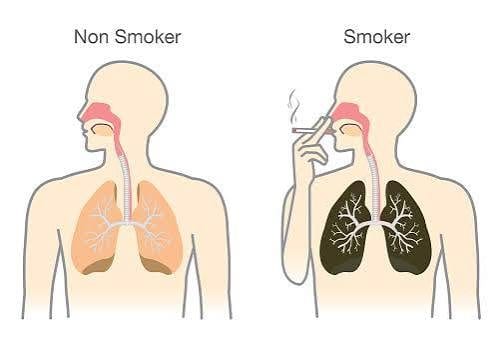
Smoking and delayed wound healing

August 2026 · Hårtransplantation.dk research desk · 3 min read

Smoking impairs wound healing through well-established mechanisms: nicotine constricts small blood vessels and carbon monoxide reduces the oxygen the blood can carry. Both act directly against the blood supply a newly placed graft depends on, which is why clinics ask patients to stop around surgery.

Main findings

  • Nicotine causes vasoconstriction and carbon monoxide reduces oxygen delivery, both central to graft survival.
  • Most clinics ask for cessation both before and after surgery, not only afterwards.
Read full research →
Healing

Diet and nutrition to support healing

August 2026 · Hårtransplantation.dk research desk · 3 min read

There is no diet that improves graft survival, but adequate protein, calories, hydration and correction of genuine deficiencies support normal wound healing. The realistic goal is to avoid deficiency, not to optimise your way to a better result.

Main findings

  • No dietary regime has been shown to increase graft survival.
  • Correcting a genuine deficiency helps; supplementing an adequate diet generally does not.
Read full research →
Healing

Protein intake and graft recovery

August 2026 · Hårtransplantation.dk research desk · 3 min read

Hair is largely keratin, a protein, and wound repair is protein-dependent, so adequate intake matters. But adequate is the operative word: there is no evidence that intake beyond normal requirements improves graft survival or accelerates growth.

Main findings

  • Protein supports wound repair and hair production, but only up to adequacy.
  • No evidence supports high-protein loading to improve transplant outcomes.
Read full research →
Healing

Supplements that may help post-op (zinc, vitamin C)

August 2026 · Hårtransplantation.dk research desk · 3 min read

Zinc and vitamin C both have genuine roles in wound healing, and correcting a real deficiency in either supports recovery. Supplementing when you are not deficient has not been shown to improve outcomes, and high-dose zinc carries its own problems.

Main findings

  • Both nutrients matter for wound healing; supplementing without deficiency has not been shown to help.
  • High-dose zinc can impair copper absorption and cause nausea.
Read full research →
Healing

Scalp massage: when it's safe and why

August 2026 · Hårtransplantation.dk research desk · 3 min read

Massage is prohibited early because it applies exactly the shearing force that dislodges unanchored grafts. Later it has a specific role after strip surgery, where it is used to improve scalp laxity, and a much vaguer one for general circulation.

Main findings

  • Massage is contraindicated while grafts can still be dislodged, which the anchoring research put at up to day 9.
  • Its clearest legitimate use is improving scalp laxity after strip surgery, on clinic instruction.
Read full research →
Healing

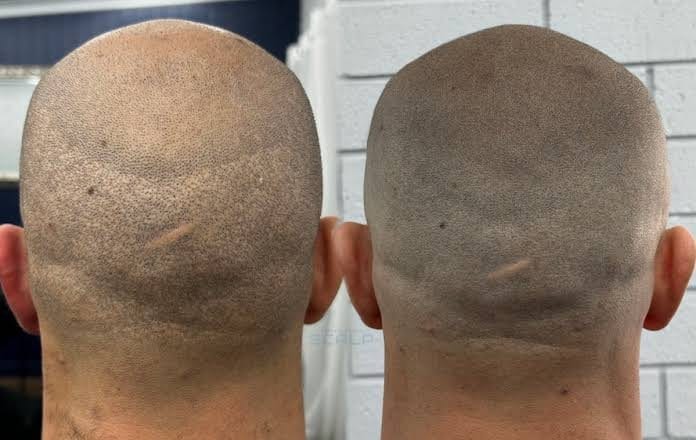
Scalp micropigmentation to camouflage healing scars

August 2026 · Hårtransplantation.dk research desk · 3 min read

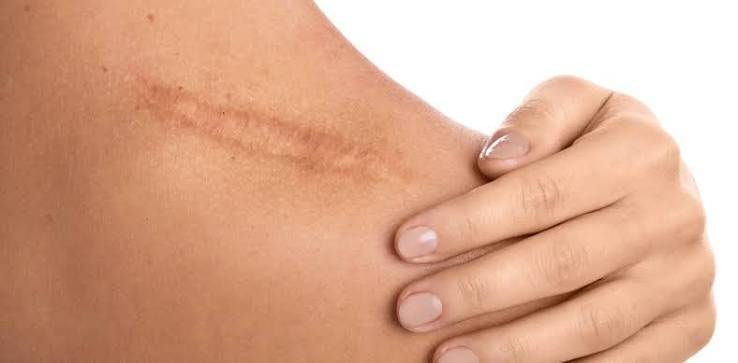
Scalp micropigmentation deposits pigment in the scalp to mimic the appearance of shaved stubble, and it is genuinely effective at reducing the contrast that makes a donor scar visible. It must wait until healing is complete, typically many months after surgery.

Main findings

  • SMP camouflages by reducing contrast between scar tissue and surrounding hair, rather than restoring hair.
  • It must wait until scar maturation is complete, generally many months post-operatively.
Read full research →
Healing

Healing differences: beard donor vs scalp donor

August 2026 · Hårtransplantation.dk research desk · 3 min read

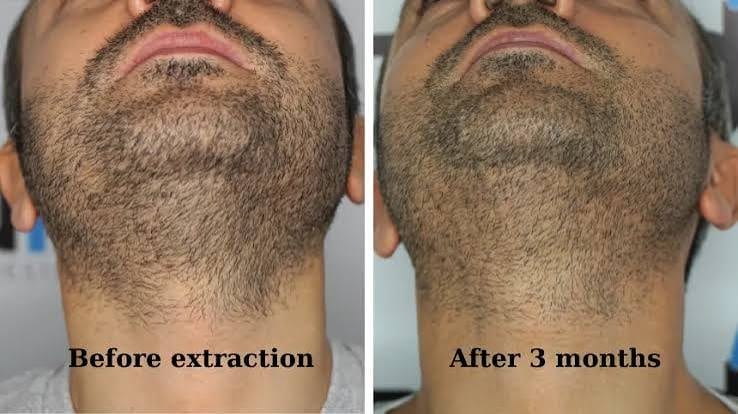
Beard donor sites generally heal quickly and are well concealed by regrowing facial hair, but the face is more visible during the healing window and beard follicles behave differently once transplanted. The trade-off is speed and concealment against visibility and hair character.

Main findings

  • Beard extraction sites heal quickly and are concealed once facial hair regrows.
  • Beard hair is typically coarser and behaves differently from scalp hair when transplanted.
Read full research →
Healing

Healing differences: body hair donor

August 2026 · Hårtransplantation.dk research desk · 3 min read

Body hair extraction is a last-resort donor source used when scalp and beard supply are exhausted. Healing at the extraction sites is usually straightforward, but body hair differs from scalp hair in growth cycle, length and texture, which limits what it can achieve.

Main findings

  • Body hair has a shorter growth phase than scalp hair, so it does not reach the same length.
  • It is a supplementary source used when scalp and beard donor supply are insufficient.
Read full research →
Healing

Healing in smokers vs non-smokers

August 2026 · Hårtransplantation.dk research desk · 3 min read

Smokers heal less reliably after surgery generally, and the mechanisms involved bear directly on hair transplantation: nicotine constricts the small vessels a graft depends on, and carbon monoxide reduces oxygen delivery. Many surgeons will discuss modifying or declining a case in heavy smokers.

Main findings

  • The impairment is mechanistic: vasoconstriction plus reduced oxygen-carrying capacity.
  • Cessation before as well as after surgery is what clinics generally ask for.
Read full research →
Healing

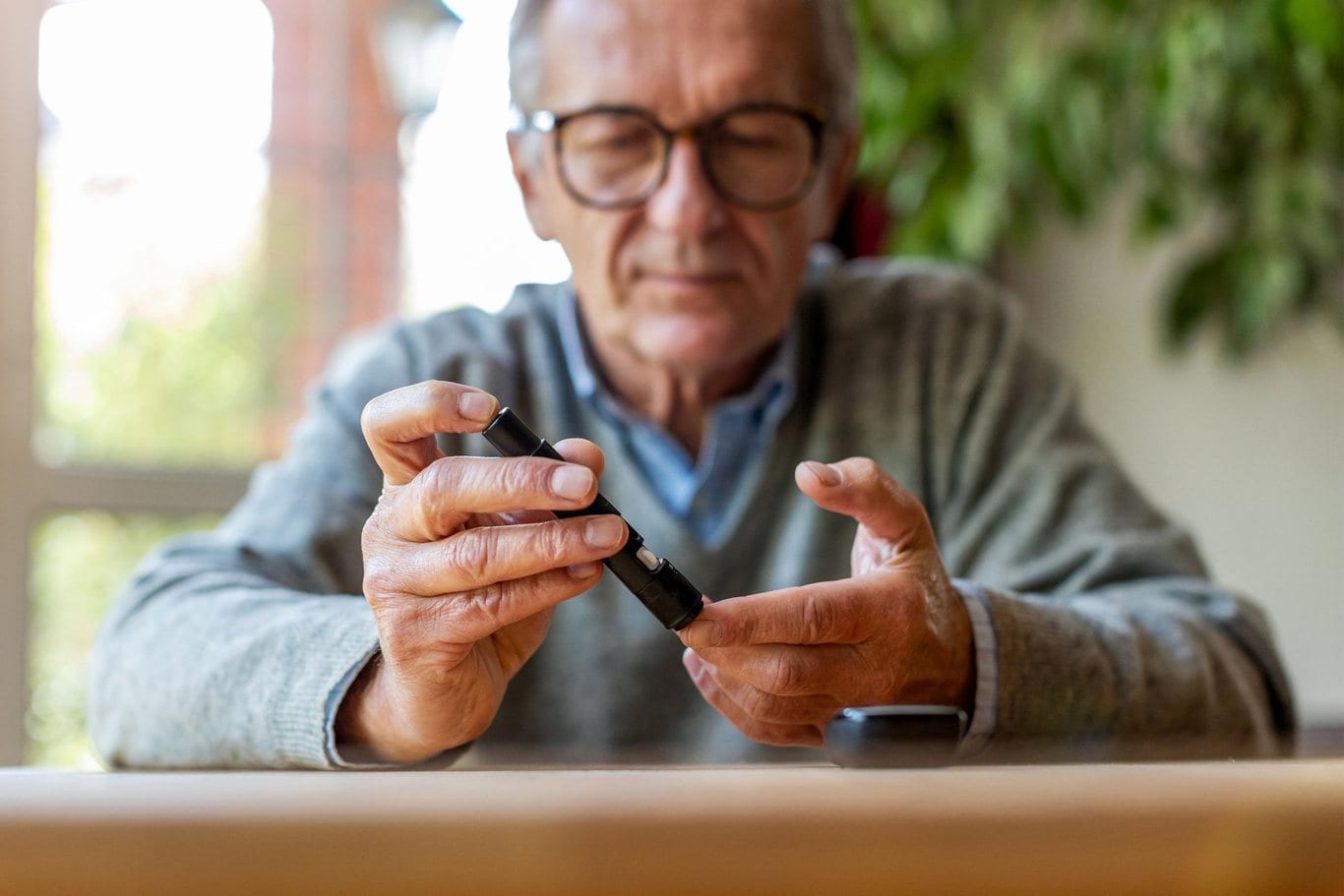
Healing in diabetic patients

August 2026 · Hårtransplantation.dk research desk · 3 min read

Diabetes is not a bar to hair transplantation, but it changes the assessment. Well-controlled diabetes is generally compatible with surgery; poorly controlled diabetes impairs wound healing and raises infection risk, and control rather than diagnosis is what matters.

Main findings

  • Control, not the diagnosis itself, is the factor that matters for healing.
  • Diabetes also causes hair changes in its own right, so diagnosis should precede surgery.
Read full research →
Healing

Healing differences in older patients

August 2026 · Hårtransplantation.dk research desk · 3 min read

Age alone is not a barrier to hair transplantation, and older patients are often good candidates because their loss pattern is stable. Healing can be modestly slower, skin is often more lax and thinner, and comorbidities and medications matter more than the birth year.

Main findings

  • Stable, established loss makes planning more predictable in older patients.
  • Medications, particularly blood thinners, matter more than age itself.
Read full research →
Healing

Women's healing patterns after transplant

August 2026 · Hårtransplantation.dk research desk · 3 min read

Women heal on broadly the same timeline as men, but the surrounding circumstances differ: procedures are more often unshaved, more native hair remains in the treated area so shock loss is more noticeable, and the underlying diagnosis needs to be settled before surgery.

Main findings

  • More retained native hair means shock loss is generally more visible in women.
  • Diagnosis matters more, because female hair loss has a wider differential.
Read full research →
Healing

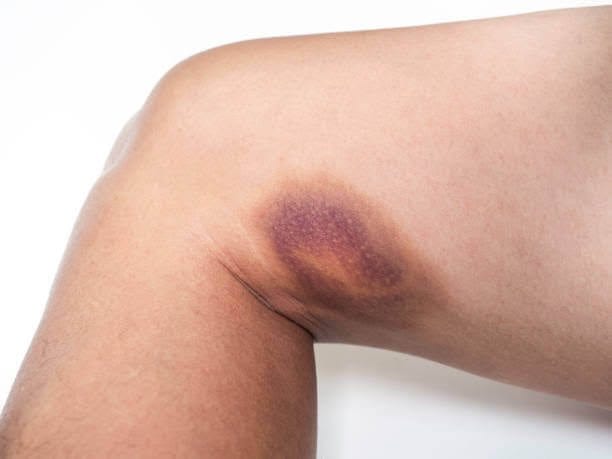
Rare complications: hematoma and how it's managed

August 2026 · Hårtransplantation.dk research desk · 3 min read

A haematoma is a collection of blood under the skin, and it is an uncommon but recognised complication of hair transplant surgery. Small ones settle on their own; larger ones need drainage, and the signs that distinguish them from ordinary swelling are worth knowing.

Main findings

  • A haematoma is distinguished from ordinary swelling by being firm, localised and often one-sided.
  • Small collections resolve spontaneously; larger ones require clinician drainage.
Read full research →
Healing

When to actually contact your clinic during healing

August 2026 · Hårtransplantation.dk research desk · 3 min read

Most post-operative worry concerns things that are entirely normal. A short list of genuine warning signs separates the events worth an urgent call from the ones worth photographing and mentioning at the next check.

Main findings

  • The consistent warning sign is a symptom that increases rather than decreases after the first days.

  • Fever, spreading redness, pus or severe one-sided pain warrant prompt contact.
Read full research →

FUE 49

FUEDonor managementLong-term outcomes

Out-of-body time and graft survival rates

August 2026 · Hårtransplantation.dk research desk · 15 min read

A transplanted follicle spends hours outside the body without a blood supply, and survival falls the longer that lasts. The most-cited figures come from a small pre-FUE study showing roughly 1% loss per hour. Later work points to dehydration and handling trauma as bigger threats than the clock alone, and one 2021 comparison found room-temperature storage outperformed cold. The evidence base is thinner and older than the confident percentages advertised by clinics suggest.

Main findings

  • The widely quoted survival curve runs 95% at 2 hours, 90% at 4, 86% at 6 and 79% at 24, roughly 1% loss per hour.
  • Grafts can begin dying from dehydration within 3 to 16 minutes of exposure to a dry environment.
Read full research →
FUE

What FUE actually is, step by step

August 2026 · Hårtransplantation.dk research desk · 3 min read

Follicular unit excision removes hair one natural grouping at a time using a small circular punch, then places each graft into a prepared site in the thinning area. The whole operation is a tissue transfer, and every stage of it affects how many follicles survive.

Main findings

  • FUE extracts follicular units individually with a punch rather than removing a strip of scalp.
  • Graft survival is decided during surgery, by handling, hydration and time outside the body.
Read full research →
FUE

FUE vs FUT: how the techniques differ

August 2026 · Hårtransplantation.dk research desk · 3 min read

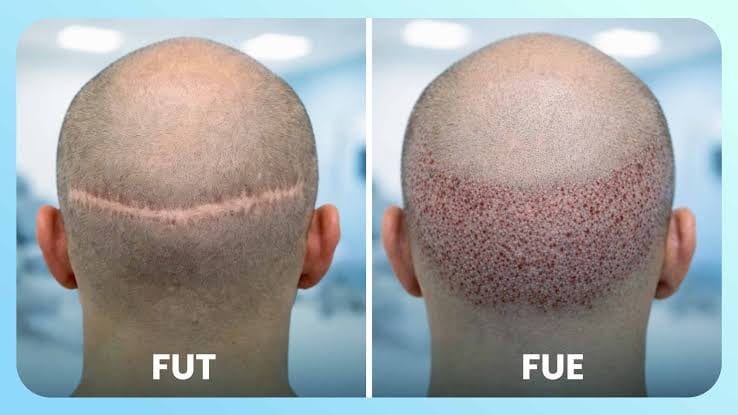
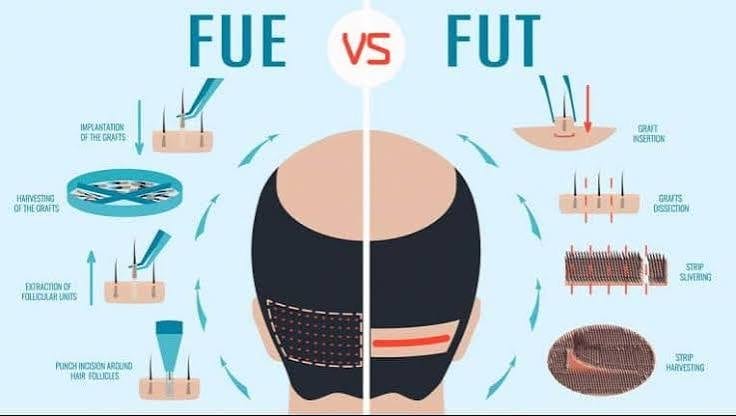
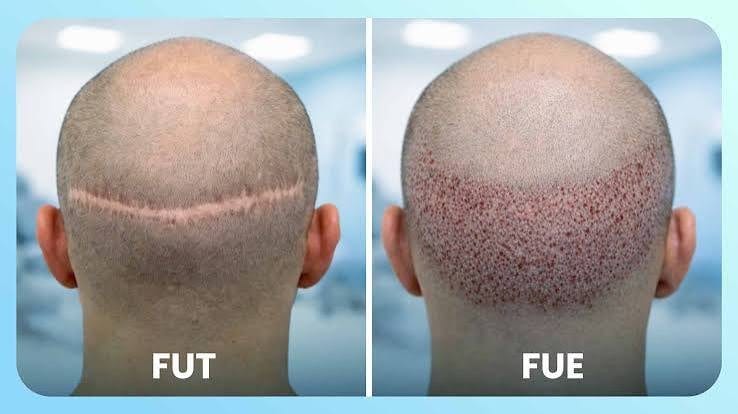
The two techniques differ only in how hair is harvested. FUE punches follicular units out individually, leaving scattered small dots; FUT removes a strip of scalp and leaves a single line. Everything downstream, including placement and growth, is the same.

Main findings

  • The difference is harvesting, not implantation; placement and growth are identical.
  • FUE leaves scattered dot scars, FUT a single linear scar, which drives most of the decision.
Read full research →
FUE

Sapphire FUE explained

August 2026 · Hårtransplantation.dk research desk · 3 min read

Sapphire FUE is standard FUE in which recipient sites are made with sapphire-tipped blades instead of steel. It changes one step of the procedure, not the extraction, and the evidence that it changes the final result is limited.

Main findings

  • Sapphire refers to the blade making recipient sites, not to extraction or to the grafts.
  • It is a refinement of one step, not a different procedure, and is often marketed as more than it is.
Read full research →
FUE

Long-hair FUE (unshaven technique)

August 2026 · Hårtransplantation.dk research desk · 3 min read

Unshaven FUE extracts grafts without shaving the donor area, leaving surrounding hair to conceal the procedure. It is slower, technically harder and usually limited in graft numbers, and it is priced accordingly.

Main findings

  • Its advantage is concealment; its cost is slower extraction and usually fewer grafts.
  • Fully unshaven work is generally limited to smaller sessions.
Read full research →
FUE

Robotic FUE (ARTAS) vs manual FUE

August 2026 · Hårtransplantation.dk research desk · 3 min read

Robotic systems assist extraction by imaging the donor area and positioning the punch automatically. Adoption has stayed low, largely because the machines are expensive and many surgeons judge human hands better where the donor area is uneven.

Main findings

  • Robotic systems assist extraction; the surgeon still plans, designs and oversees the case.
  • Adoption has remained a small share of procedures, constrained by cost and by uneven donor areas.
Read full research →
FUE

Manual vs motorized punch extraction

August 2026 · Hårtransplantation.dk research desk · 3 min read

Manual punches are turned by hand; motorised punches rotate or oscillate under power. Motorised extraction is faster and less tiring, manual gives more tactile feedback, and skilled surgeons produce good results with either.

Main findings

  • Motorised punches are faster; manual punches give more tactile feedback per graft.
  • Transection rate depends far more on the operator than on which punch is used.
Read full research →
FUE

Punch sizes and why they matter for scarring

August 2026 · Hårtransplantation.dk research desk · 3 min read

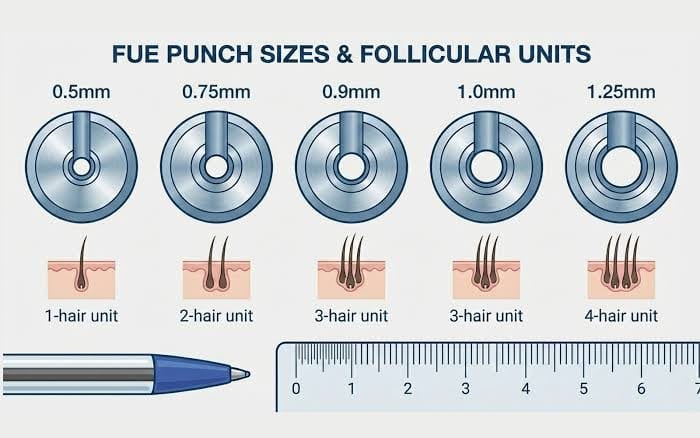
Punch diameter sets a direct trade-off: smaller punches leave smaller donor scars but raise the risk of cutting through follicles, while larger punches protect the graft and leave more visible dots. The right size depends on your hair, not on a marketing number.

Main findings

  • Smaller punches mean smaller scars but a higher transection risk.
  • Correct sizing depends on hair calibre and follicular unit size, not on a single best number.
Read full research →
FUE

What a good transection rate looks like

August 2026 · Hårtransplantation.dk research desk · 3 min read

Transection is the proportion of follicles cut through during extraction rather than removed intact. A transected follicle usually does not grow, so the rate directly reduces your yield, and it is one of the few quality measures a patient can actually ask about.

Main findings

  • A transected follicle is generally a lost graft, so the rate is a direct multiplier on yield.
  • Rates are self-reported and not standardised, so ask how the figure is measured.
Read full research →
FUE

Donor area scarring: what to expect

August 2026 · Hårtransplantation.dk research desk · 3 min read

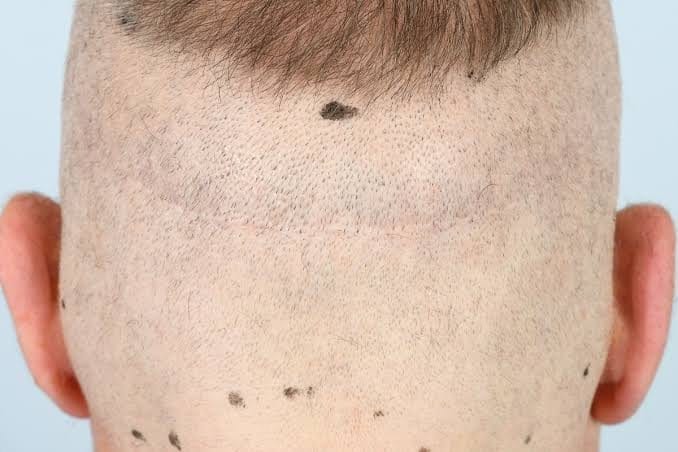
FUE leaves hundreds or thousands of small round scars rather than one line. Individually they are difficult to see; the risk is cumulative, because heavy or repeated harvesting produces a generally thinner, stippled donor area that cannot be reversed.

Main findings

  • FUE scarring is cumulative across the whole donor area rather than concentrated in one line.
  • Over-harvesting is permanent; the donor area does not regenerate.
Read full research →
FUE

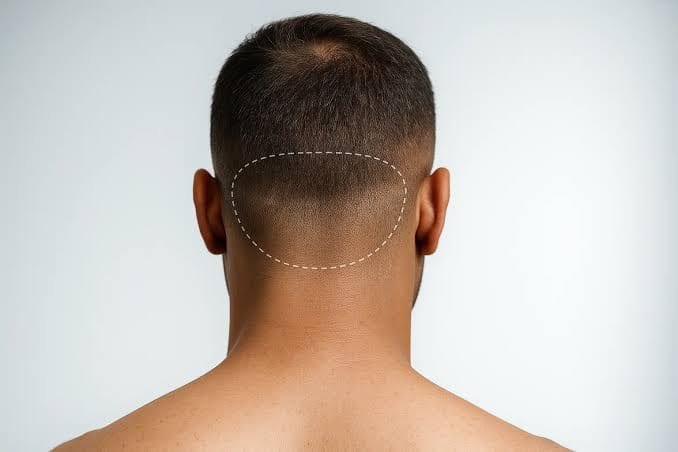
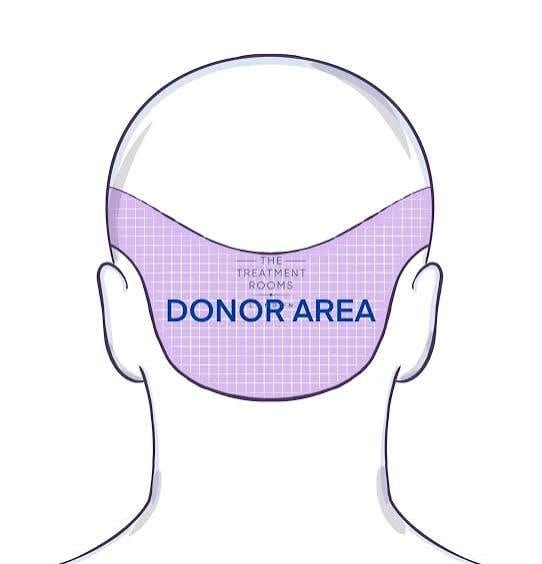
The safe donor zone, explained

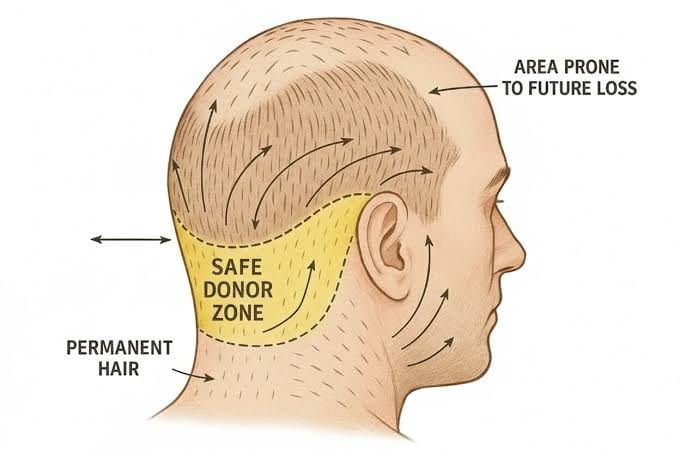
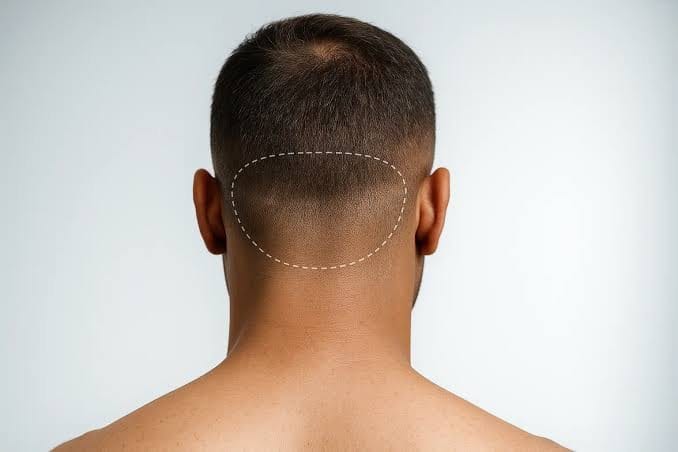
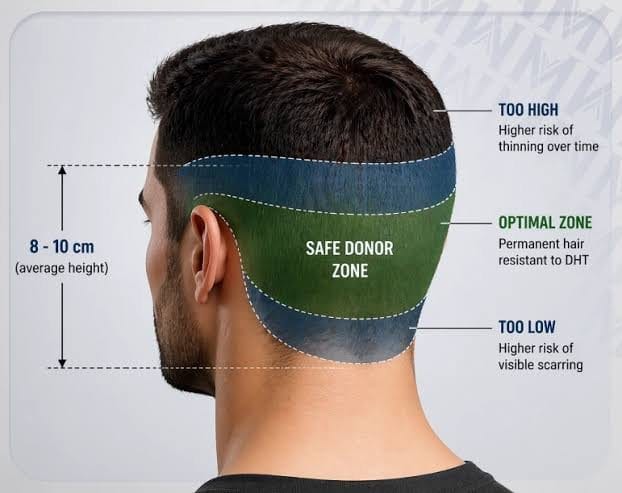
August 2026 · Hårtransplantation.dk research desk · 3 min read

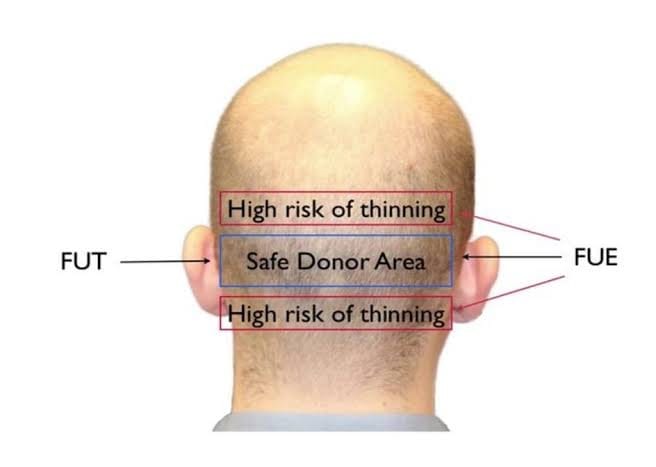
The safe donor zone is the band of scalp at the back and sides where hair is largely resistant to DHT and so is expected to persist. Taking grafts from outside it means transplanting hair that will thin later, and it is one of the more consequential errors a clinic can make.

Main findings

  • The safe zone is defined by DHT resistance, not simply by having hair now.
  • Hair taken from outside it can thin later in its new location.
Read full research →
FUE

Donor density and how it limits graft count

August 2026 · Hårtransplantation.dk research desk · 3 min read

Donor density, measured in follicular units per square centimetre, sets the ceiling on how many grafts can be taken without visibly thinning the donor area. It is the single measurement that most constrains what a transplant can achieve, and it should be measured rather than estimated.

Main findings

  • Density should be measured with trichoscopy, not eyeballed.
  • Ideally donor density is over 50 follicles per cm²; lower density means a lower safe graft ceiling.
Read full research →
FUE

Graft counts by Norwood stage

August 2026 · Hårtransplantation.dk research desk · 3 min read

Norwood stage gives a rough indication of how many grafts an area needs, but the figures circulated online are averages across different heads, different densities and different goals. Your own donor supply, not your Norwood number, decides what is actually possible.

Main findings

  • Norwood stage estimates demand; donor density determines supply. Both are needed.
  • Published graft ranges are averages and vary widely with head size and hair characteristics.
Read full research →
FUE

FUE for women: what's different

August 2026 · Hårtransplantation.dk research desk · 3 min read

Women are candidates for FUE, but the assessment differs: loss is more often diffuse than patterned, the donor area may be affected too, the underlying cause has a wider differential, and procedures are more often unshaven.

Main findings

  • Diffuse female loss can affect the donor area itself, which patterned male loss usually does not.
  • Diagnosis must come first, because female hair loss has a far wider differential.
Read full research →
FUE

FUE for eyebrow restoration

August 2026 · Hårtransplantation.dk research desk · 3 min read

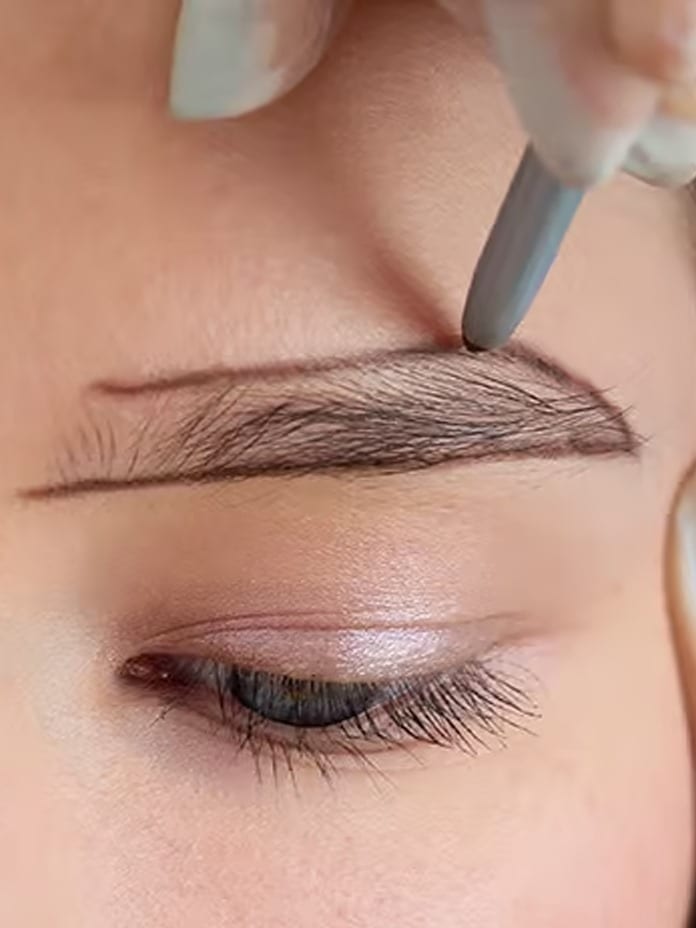
Eyebrow restoration uses the same extraction technique but demands far more of the placement: single-hair grafts, very shallow angles, and a direction that changes across the brow. It is a small procedure that is disproportionately difficult to do well.

Main findings

  • Eyebrow work needs single-hair grafts placed at very flat angles with direction changing across the brow.
  • Transplanted scalp hair keeps scalp growth behaviour and needs regular trimming.
Read full research →
FUE

FUE for beard restoration

August 2026 · Hårtransplantation.dk research desk · 3 min read

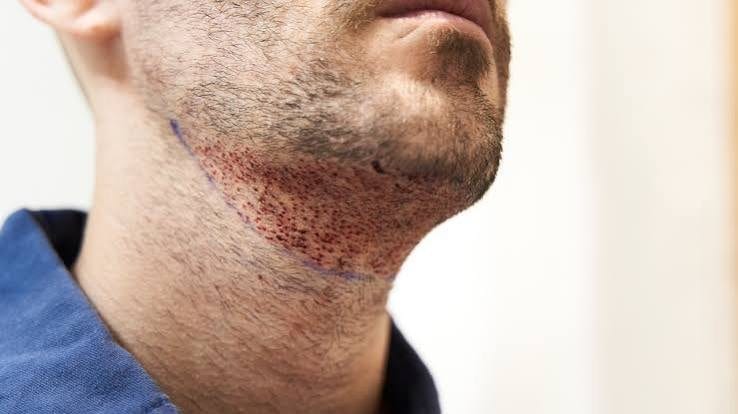
Beard restoration moves scalp hair into the face, usually as single grafts placed at flat angles. It works well, but the transplanted hair keeps scalp characteristics, and donor supply spent on the beard is no longer available for the scalp.

Main findings

  • Beard grafts are usually single hairs placed at very flat angles to mimic natural growth.
  • Grafts used on the beard permanently reduce what is available for the scalp.
Read full research →
FUE

Repair FUE after a bad FUT scar

August 2026 · Hårtransplantation.dk research desk · 3 min read

FUE grafts can be placed into a widened strip scar to break up its appearance, but scar tissue is a poor recipient bed with a compromised blood supply, so survival is lower than in normal scalp and expectations should be set accordingly.

Main findings

  • Graft survival in scar tissue is lower than in healthy scalp because the blood supply is compromised.
  • The goal is to reduce contrast, not to restore normal density in the scar.
Read full research →
FUE

Mega sessions: risks and benefits of 3 000+ grafts

August 2026 · Hårtransplantation.dk research desk · 3 min read

Large single sessions cover more area in one trip, but every additional graft lengthens the operation, and the grafts extracted first wait longest outside the body. Session size is therefore a graft survival variable, not merely a scheduling convenience.

Main findings

  • Out-of-body time rises with session length, and survival falls the longer grafts wait.
  • Very large numbers are constrained by donor capacity as much as by surgical stamina.
Read full research →
FUE

Surgeon-performed vs technician-performed extraction

August 2026 · Hårtransplantation.dk research desk · 3 min read

In many high-volume clinics, technicians perform most extraction and placement while the surgeon plans the case and creates recipient sites. This is legal in some jurisdictions and not others, and it is one of the most consequential things patients fail to ask about.

Main findings

  • Who physically performs extraction and placement varies enormously between clinics.
  • Technician involvement is not automatically bad; undisclosed or unsupervised involvement is.
Read full research →
FUE

Growth timeline after FUE, month by month

August 2026 · Hårtransplantation.dk research desk · 3 min read

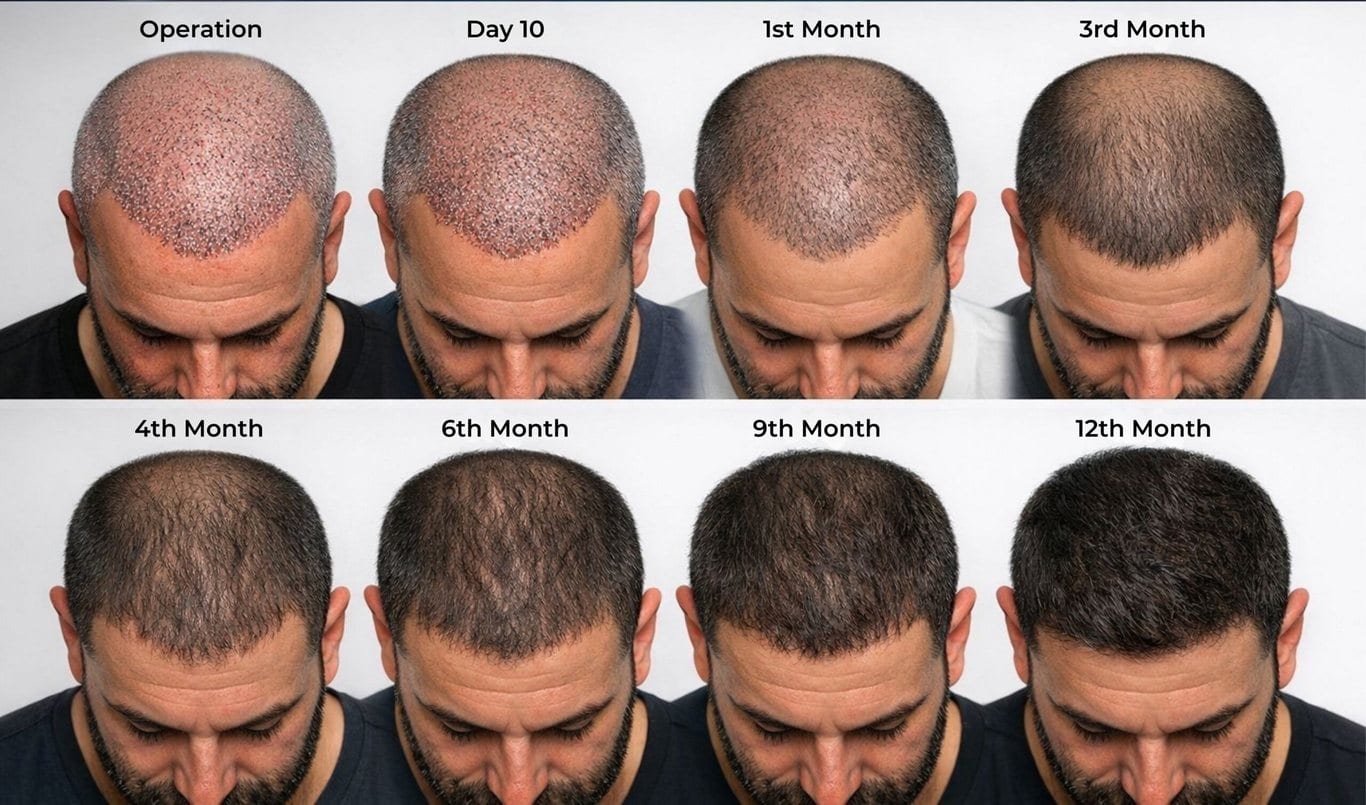
Transplanted hair sheds within the first weeks, spends a dormant period, then begins growing from around months three to four, with the result settling at about twelve months. The middle of that curve looks worse than the starting point, which is normal.

Main findings

  • Transplanted shafts shed at weeks 2 to 3; visible growth begins around months 3 to 4.
  • The final settled result is judged at about 12 months, later for the crown.
Read full research →
FUE

Graft implantation angle and natural results

August 2026 · Hårtransplantation.dk research desk · 3 min read

Angle and direction do more for a natural result than density does. Hair leaves the scalp at a specific angle that varies by region, and grafts placed against that pattern look wrong however many of them there are.

Main findings

  • Angle and direction determine naturalness more than graft count does.
  • Angles vary by region: flat at the hairline, steeper at the crown, with a whorl at the vertex.
Read full research →
FUE

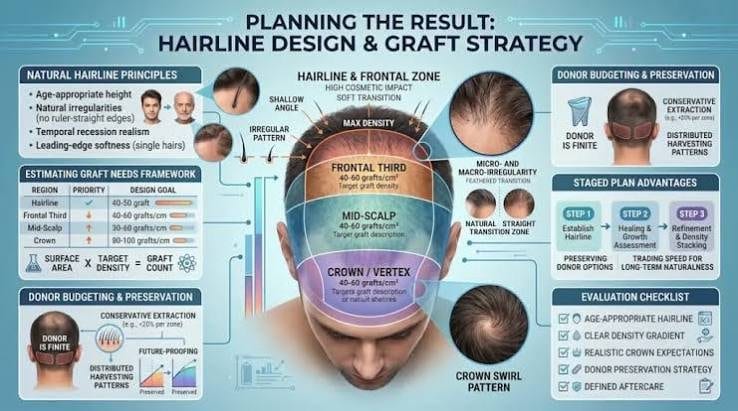
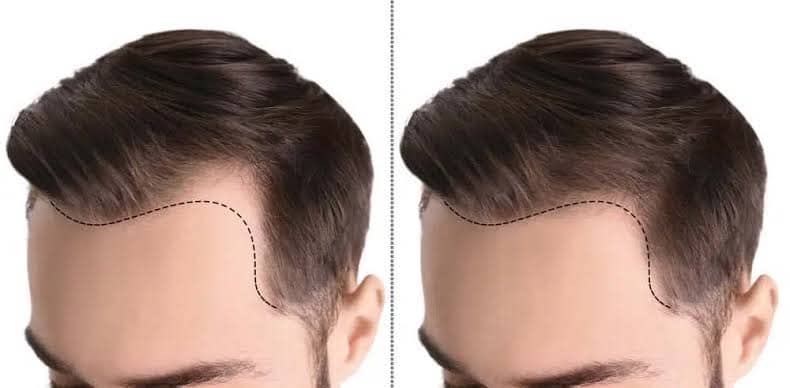
Hairline design principles

August 2026 · Hårtransplantation.dk research desk · 3 min read

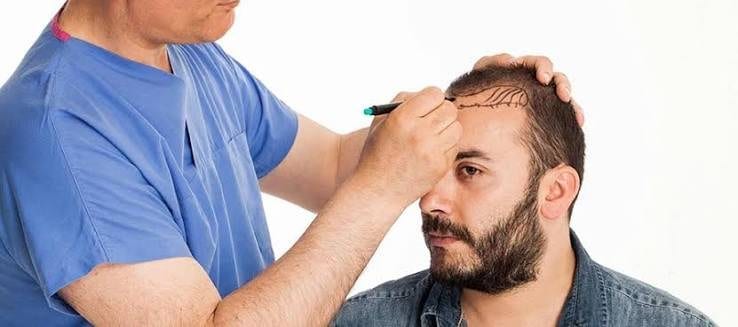
A natural hairline is irregular, softly defined, appropriate to the face and, above all, planned for the patient's age in twenty years rather than today. Design is the decision that most determines whether a transplant looks like one.

Main findings

  • A natural hairline is irregular and soft-edged, never a straight line.
  • It must be planned for future loss, which is why very low hairlines age badly.
Read full research →
FUE

Rebuilding temple points

August 2026 · Hårtransplantation.dk research desk · 3 min read

Temple points frame the face and their loss ages the appearance more than most people expect. They are also among the hardest areas to transplant well, because the hair is fine, the angle is extremely flat and the direction is unforgiving.

Main findings

  • Temple hair is fine and emerges at an extremely flat angle, so only single grafts work.
  • Poorly angled temple work is conspicuous and difficult to correct.
Read full research →
FUE

Why the crown is harder to restore

August 2026 · Hårtransplantation.dk research desk · 3 min read

The crown is a large, curved area with a spiral growth pattern, and it consumes grafts faster than any other region while continuing to expand as loss progresses. Many surgeons deprioritise it deliberately, and that is usually sound advice rather than a limitation.

Main findings

  • The crown's spiral whorl must be reconstructed, not filled uniformly.
  • It consumes grafts quickly and keeps expanding, which is why it is often deprioritised.
Read full research →
FUE

FUE cost differences: Turkey vs Denmark vs UK

August 2026 · Hårtransplantation.dk research desk · 3 min read

The price gap between markets is driven by labour costs, clinic volume and regulatory overhead rather than by any difference in the biology. What varies with price is who performs the work, how many patients share the day, and what happens if something goes wrong.

Main findings

  • Price differences reflect labour cost, volume and regulation, not different biology.
  • What you are buying at higher prices is usually surgeon time, lower volume and accessible follow-up.
Read full research →
FUE

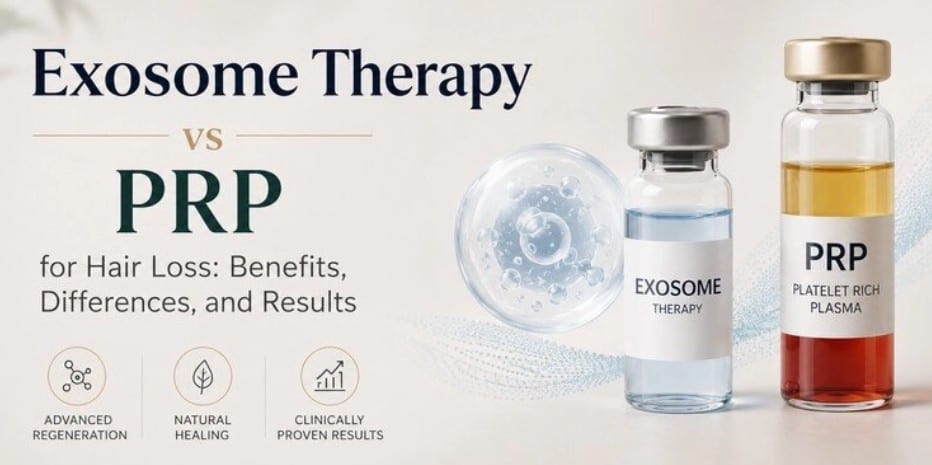
Combining FUE with PRP

August 2026 · Hårtransplantation.dk research desk · 3 min read

Platelet-rich plasma is offered alongside transplantation on the reasoning that concentrated growth factors support graft survival and native hair. It is widely used and plausible, but the evidence for adding it to surgery specifically is weaker than the marketing implies.

Main findings

  • PRP is a near-standard add-on offered by a large share of clinics.
  • Evidence for PRP improving transplant outcomes specifically is weaker than for PRP in medical hair loss.
Read full research →
FUE

Combining FUE with Finasteride or Minoxidil

August 2026 · Hårtransplantation.dk research desk · 3 min read

Surgery moves hair; medication protects the hair you still have. Because a transplant does not stop pattern loss in untreated areas, combining the two is the standard approach for keeping a result looking coherent over years.

Main findings

  • A transplant does not halt loss in the native hair around it.
  • Medication addresses ongoing loss; surgery addresses hair already gone. They solve different problems.
Read full research →
FUE

FUE's limits when donor supply is low

August 2026 · Hårtransplantation.dk research desk · 3 min read

When donor density is low, the honest answer is often that surgery cannot deliver what the patient wants. Recognising that before operating is the difference between a modest good result and a depleted donor area with a disappointing top.

Main findings

  • Low donor density lowers the safe graft ceiling, sometimes below what the goal requires.
  • Over-harvesting a limited donor produces two visible problems instead of one.
Read full research →
FUE

Body hair FUE: realistic outcomes

August 2026 · Hårtransplantation.dk research desk · 3 min read

Body hair can supplement scalp donor supply when it is exhausted, but it grows for a shorter period, reaches shorter lengths and yields less predictably than scalp hair. It is a supplement for difficult cases, not an equivalent source.

Main findings

  • Body hair has a shorter growth phase, so it does not reach scalp hair length.
  • It is used when scalp and beard donor supply are insufficient, typically in repair cases.
Read full research →
FUE

Timing a second FUE session

August 2026 · Hårtransplantation.dk research desk · 3 min read

A second session is usually planned rather than remedial, because donor supply is finite and loss continues. The main constraint on timing is that the first result must be mature enough to assess, which takes about a year.

Main findings

  • The first result should be assessed at around 12 months before planning more.
  • Donor recovery and remaining density must be reassessed, not assumed.
Read full research →
FUE

Graft storage solutions and why they affect survival

August 2026 · Hårtransplantation.dk research desk · 3 min read

Between extraction and placement, grafts sit in fluid. Preservation solutions designed for organ storage outperform plain saline over long periods, but within a well-run session the choice matters far less than keeping the session short and the grafts wet.

Main findings

  • Preservation solutions show their advantage mainly over durations a good session should never reach.
  • Keeping grafts moist and the session short matters more than which solution is used.
Read full research →
FUE

Punch technology comparisons across clinics

August 2026 · Hårtransplantation.dk research desk · 3 min read

Clinics market punch technology heavily, with proprietary names for what are largely variations on sharp, dull, serrated and trumpet-shaped tips. The differences are real but modest, and none of them substitutes for the operator's skill.

Main findings

  • Punch variations are real but modest; branded names often describe standard geometries.
  • Sharpness management across a long session matters more than the punch's marketing name.
Read full research →
FUE

FUE in patients with scarring alopecia

August 2026 · Hårtransplantation.dk research desk · 3 min read

Scarring alopecias destroy follicles and replace them with fibrous tissue, and transplanting into active disease usually fails. Surgery is only considered once the condition has been quiet for a sustained period, generally at least six months, and often longer.

Main findings

  • Transplantation is only considered once the disease has been quiet for at least six months.
  • Scar tissue is a poorer recipient bed, so survival is lower than in healthy scalp.
Read full research →
FUE

Using FUE to camouflage old scars

August 2026 · Hårtransplantation.dk research desk · 3 min read

Grafts can be placed into scars from surgery, injury or burns to break up their appearance. Survival in scar tissue is lower than in normal scalp because the blood supply is compromised, so the realistic goal is reduced contrast rather than restored density.

Main findings

  • Survival in scar tissue is lower than in healthy scalp; a test session is common practice.
  • The aim is to disguise the scar's edges, not to make it disappear.
Read full research →
FUE

Red flags in an FUE consultation

August 2026 · Hårtransplantation.dk research desk · 3 min read

The consultation predicts the result better than any before-and-after gallery. The reliable warning signs are pressure to decide, a graft number quoted without measurement, vagueness about who operates, and unwillingness to discuss future loss.

Main findings

  • A graft count quoted without measuring donor density is a sales figure, not a plan.
  • Refusing to name who performs extraction and placement is the most consequential evasion.
Read full research →
FUE

ISHRS accreditation and why it matters

August 2026 · Hårtransplantation.dk research desk · 3 min read

The International Society of Hair Restoration Surgery is the field's main professional body. Membership signals engagement with peers and standards, but it is not a licence, not a guarantee of skill, and not a substitute for checking a surgeon's actual credentials.

Main findings

  • ISHRS membership indicates professional engagement, not a certification of surgical skill.
  • National medical registration is the credential that legally matters and should be checked separately.
Read full research →
FUE

Cost vs quality: what cheap FUE usually cuts

August 2026 · Hårtransplantation.dk research desk · 3 min read

Very low prices are achieved by cutting the inputs that determine your result: surgeon involvement, team size, session pacing and follow-up. The technique is not what gets cheaper, and the savings are usually taken from things a patient cannot see on the day.

Main findings

  • Low prices are generally achieved through volume and reduced surgeon involvement, not efficiency in technique.
  • The costs cut are usually invisible on the day and visible a year later.
Read full research →
FUE

FUE graft yield: extracted vs implanted numbers

August 2026 · Hårtransplantation.dk research desk · 3 min read

The number extracted, the number implanted and the number that eventually grows are three different figures. Clinics usually quote the first, patients care about the third, and the gap between them is where transection and handling losses hide.

Main findings

  • Extracted, implanted and surviving graft counts are three distinct numbers.
  • Contracts and quotes almost always refer to extraction, not to what grows.
Read full research →
FUEDHI

Recipient site creation techniques

August 2026 · Hårtransplantation.dk research desk · 3 min read

Recipient sites determine angle, direction, depth and density, which between them decide whether the result looks natural. The site is made before the graft goes in, and once made it cannot be changed.

Main findings

  • Recipient sites, not the grafts, determine angle, direction, depth and density.
  • Site depth and spacing affect graft survival as well as appearance.
Read full research →
FUE

Lateral slit vs coronal slit implantation

August 2026 · Hårtransplantation.dk research desk · 3 min read

Lateral and coronal refer to the orientation of the recipient incision relative to the direction of hair growth. The distinction affects how hair fans out and how it lies, and surgeons hold genuine, long-standing differences of opinion about it.

Main findings

  • Lateral slits are made perpendicular to hair direction; sagittal slits run parallel to it.
  • Both are used successfully; the debate is about coverage appearance versus surgeon control.
Read full research →
FUE

Densities achievable per session

August 2026 · Hårtransplantation.dk research desk · 3 min read

Achievable density is limited by the recipient area's blood supply, not by how many grafts a surgeon is willing to place. Natural hair sits at a far higher density than any transplant achieves, and matching it is not the goal.

Main findings

  • Planting density is constrained by the recipient blood supply, not by ambition.
  • Transplants create the impression of density rather than restoring the original.
Read full research →
FUE

FUE and future hair loss: what it doesn't fix

August 2026 · Hårtransplantation.dk research desk · 3 min read

A transplant moves resistant hair into a bald area. It does not stop the process causing the loss, so native hair around the grafts keeps thinning on its own schedule. Planning that fails to account for this produces results that unravel within years.

Main findings

  • Surgery relocates hair; it does not alter the process driving pattern loss.
  • Native hair around a transplant continues to thin unless treated.
Read full research →
FUE

Combining FUE with low-level laser therapy

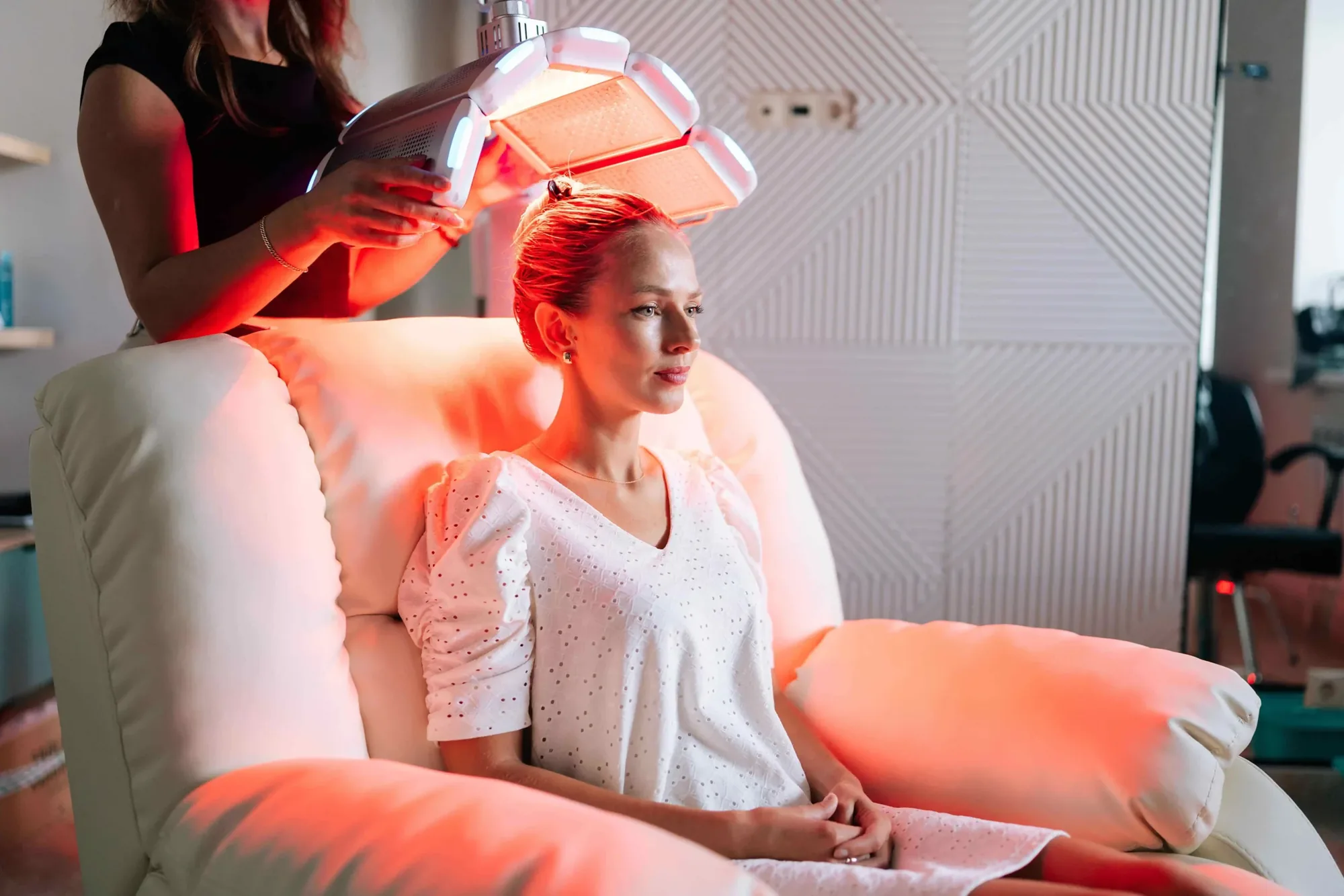
August 2026 · Hårtransplantation.dk research desk · 3 min read

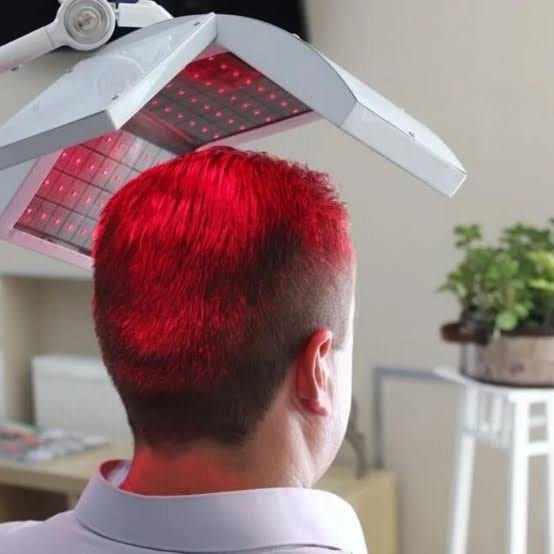
Low-level laser therapy is offered as an adjunct on the basis that light stimulates follicular activity. It has some evidence in androgenetic alopecia, but evidence that it improves transplant outcomes specifically is limited, and device quality varies widely.

Main findings

  • LLLT has some evidence in androgenetic alopecia; evidence for improving transplant results specifically is limited.
  • Device output and protocols vary widely, which makes results inconsistent.
Read full research →
FUE

Anesthesia options during FUE

August 2026 · Hårtransplantation.dk research desk · 3 min read

FUE is performed under local anaesthetic, with the injections at the start being the most uncomfortable part of the day. Sedation is sometimes offered in addition; general anaesthesia is not standard and its routine use should raise questions.

Main findings

  • FUE is a local anaesthetic procedure; the initial injections are the main discomfort.
  • General anaesthesia is not standard practice for routine hair transplantation.
Read full research →
FUE

Pain management during and after FUE

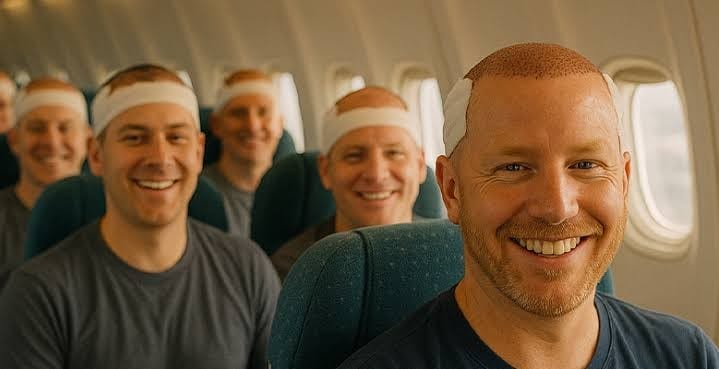
August 2026 · Hårtransplantation.dk research desk · 3 min read

Most patients describe the procedure itself as tedious rather than painful once anaesthetic is established. Afterwards, the donor area is usually the sorer of the two sites, and discomfort is generally manageable with simple analgesia for a few days.
Main findings

  • The anaesthetic injections are the most uncomfortable part; the procedure itself is usually not painful.
  • The donor area is typically sorer than the recipient area afterwards.
Read full research →
FUE

FUE in patients with tight scalps

August 2026 · Hårtransplantation.dk research desk · 3 min read

Scalp laxity matters far less for FUE than for strip surgery, because nothing is closed under tension. A tight scalp is a serious constraint on FUT and a minor technical consideration in FUE, which is one reason FUE suits these patients better.

Main findings

  • Low scalp laxity is a major constraint for strip surgery and a minor one for FUE.
  • A tight scalp can make extraction and recipient site creation slightly more demanding.
Read full research →
FUE

Choosing graft distribution: hairline vs crown priority

August 2026 · Hårtransplantation.dk research desk · 3 min read

Donor supply is finite, so grafts spent on the crown are grafts not spent on the hairline. Most surgeons prioritise the frontal region because it frames the face and delivers more visible improvement per graft, and that reasoning is usually sound.

Main findings

  • The frontal third delivers more perceived improvement per graft than the crown.
  • The crown keeps expanding, so grafting it early risks a widening bald ring around treated hair.
Read full research →
FUE

What a poor FUE result looks like and why

August 2026 · Hårtransplantation.dk research desk · 3 min read

Poor results have recognisable signatures: wrong angles, straight hairlines, multi-hair grafts at the leading edge, depleted donor areas and density that does not match the plan. Most trace back to decisions made before surgery rather than to bad luck.

Main findings

  • Most poor results trace to planning and design errors, not to biology.
  • Angle and design errors are permanent and require surgical correction.
Read full research →
FUE

Consultation questions to ask before booking FUE

August 2026 · Hårtransplantation.dk research desk · 3 min read

The questions that predict your result are about measurement, personnel and process, not about technique branding. A clinic that answers all of these clearly is thinking about outcomes; one that deflects on several is selling a package.

Main findings

  • The most useful questions concern measured donor density, who operates, and out-of-body time.
  • Get the answers in writing before paying a deposit.
Read full research →

DHI 1

DHIFUE

DHI (Direct Hair Implantation) vs standard FUE

August 2026 · Hårtransplantation.dk research desk · 3 min read

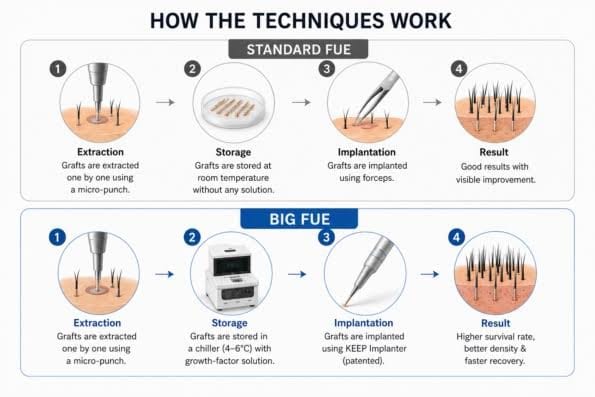
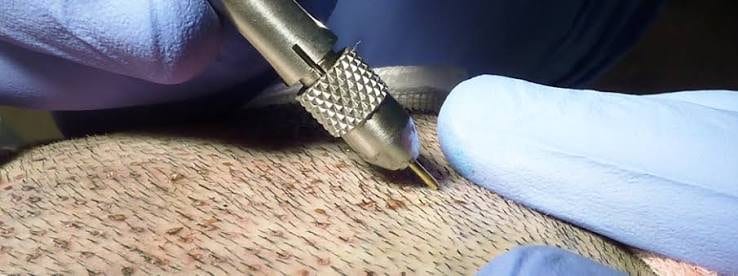
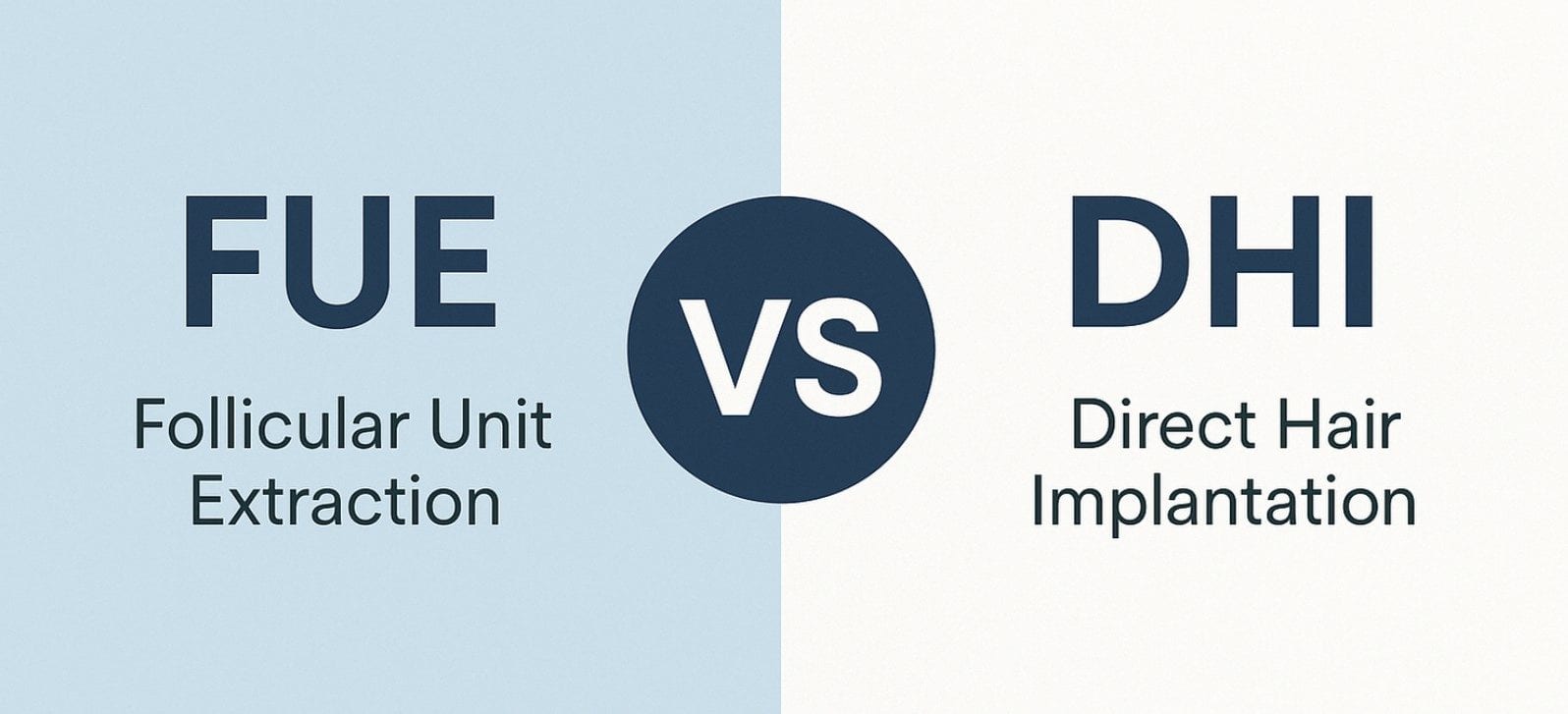
DHI uses an implanter pen that makes the recipient site and places the graft in one action, where standard FUE makes sites first and places grafts into them afterwards. Extraction is identical in both; the difference is entirely in how grafts go in.

Main findings

  • Extraction is the same in both; DHI differs only in how grafts are implanted.
  • DHI is slower per graft, which is why sessions are often smaller or priced higher.
Read full research →

Medications 45

MedicationsLong-term outcomes

Low-dose oral Minoxidil: the emerging evidence

August 2026 · Hårtransplantation.dk research desk · 14 min read

Low-dose oral Minoxidil is prescribed off-label for hair loss and is supported by a growing but still uneven evidence base. Observational data show a dose-dependent effect on hair density, a large multicentre safety study found adverse effects were mostly cosmetic and rarely caused withdrawal, and a 2024 randomised trial found oral Minoxidil was not superior to topical Minoxidil on its primary measure. An international consensus published the same year set out starting doses, contraindications and monitoring.

Main findings

  • Each additional 1 mg/day was associated with 47.1 more hairs/cm² of total density at six months in a meta-regression of six studies.
  • In 1 404 patients, hypertrichosis affected 15.1% and only 1.7% stopped treatment because of any adverse effect.
Read full research →
Medications

Finasteride: how it works

August 2026 · Hårtransplantation.dk research desk · 3 min read

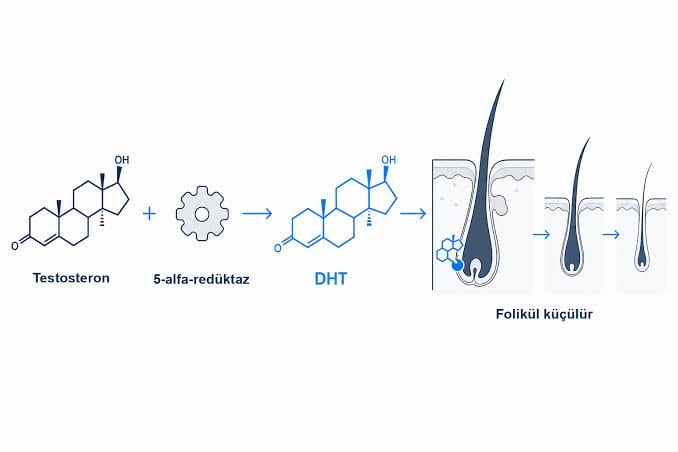
Finasteride blocks the enzyme that converts testosterone into DHT, the hormone that drives pattern hair loss in genetically susceptible follicles. Lowering DHT slows miniaturisation and in many men partly reverses it.

Main findings

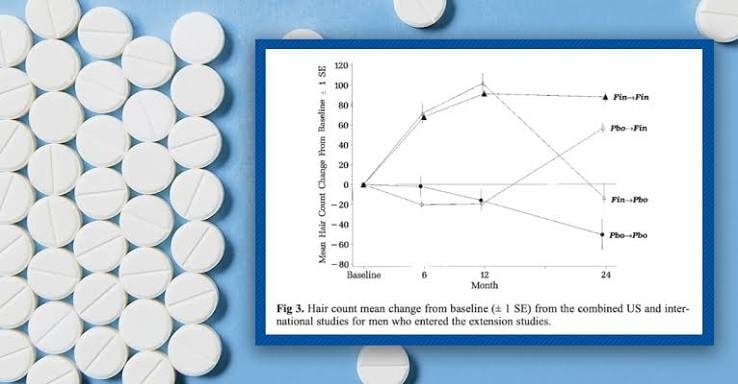
  • Finasteride inhibits type II 5-alpha reductase, reducing circulating DHT.
  • Trial data show increased hair counts against placebo, with placebo groups continuing to lose hair.
Read full research →
Medications

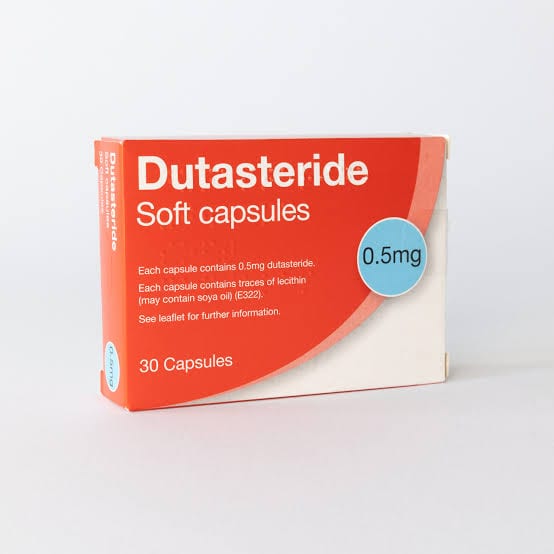
Dutasteride vs Finasteride

August 2026 · Hårtransplantation.dk research desk · 3 min read

Dutasteride inhibits both type I and type II 5-alpha reductase where Finasteride inhibits only type II, so it suppresses DHT more completely. Meta-analysis suggests better hair counts, with broadly comparable rates of sexual side effects.

Main findings

  • A meta-analysis of three studies (576 participants) found Dutasteride increased total hair count by 28.57 hairs more than Finasteride.
  • Reported rates of altered libido, erectile dysfunction and ejaculation disorders did not differ significantly between the two.
Read full research →
Medications

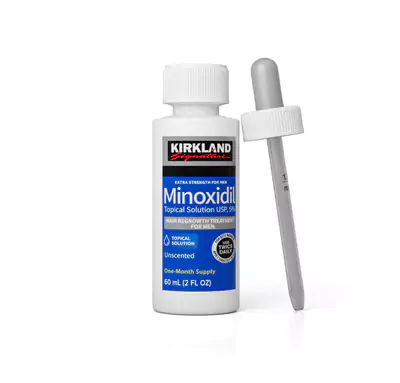
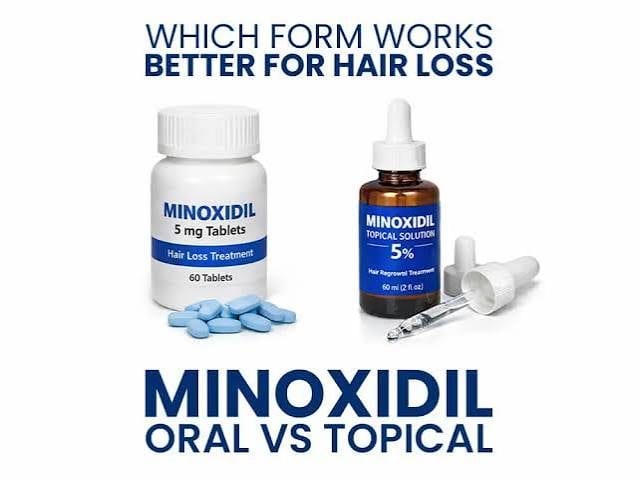
Oral Minoxidil vs topical Minoxidil

August 2026 · Hårtransplantation.dk research desk · 3 min read

The one direct randomised comparison found oral Minoxidil 5 mg daily was not superior to topical Minoxidil 5 percent twice daily on its primary measure at 24 weeks. The tablet's practical advantage is adherence, not potency.

Main findings

  • A 2024 randomised trial did not demonstrate superiority of oral over topical Minoxidil on terminal hair density.
  • Hypertrichosis affected 49 percent of the oral arm versus 25 percent of the topical arm.
Read full research →
Medications

Spironolactone for female pattern hair loss

August 2026 · Hårtransplantation.dk research desk · 3 min read

Spironolactone is a diuretic with anti-androgen activity, used off-label for female pattern hair loss where Finasteride is not an option. Evidence is weaker than for the drugs licensed in men, and it requires contraception and monitoring.

Main findings

  • Spironolactone is used off-label in women; its anti-androgen effect is secondary to its diuretic action.
  • It is contraindicated in pregnancy and requires reliable contraception.
Read full research →
Medications

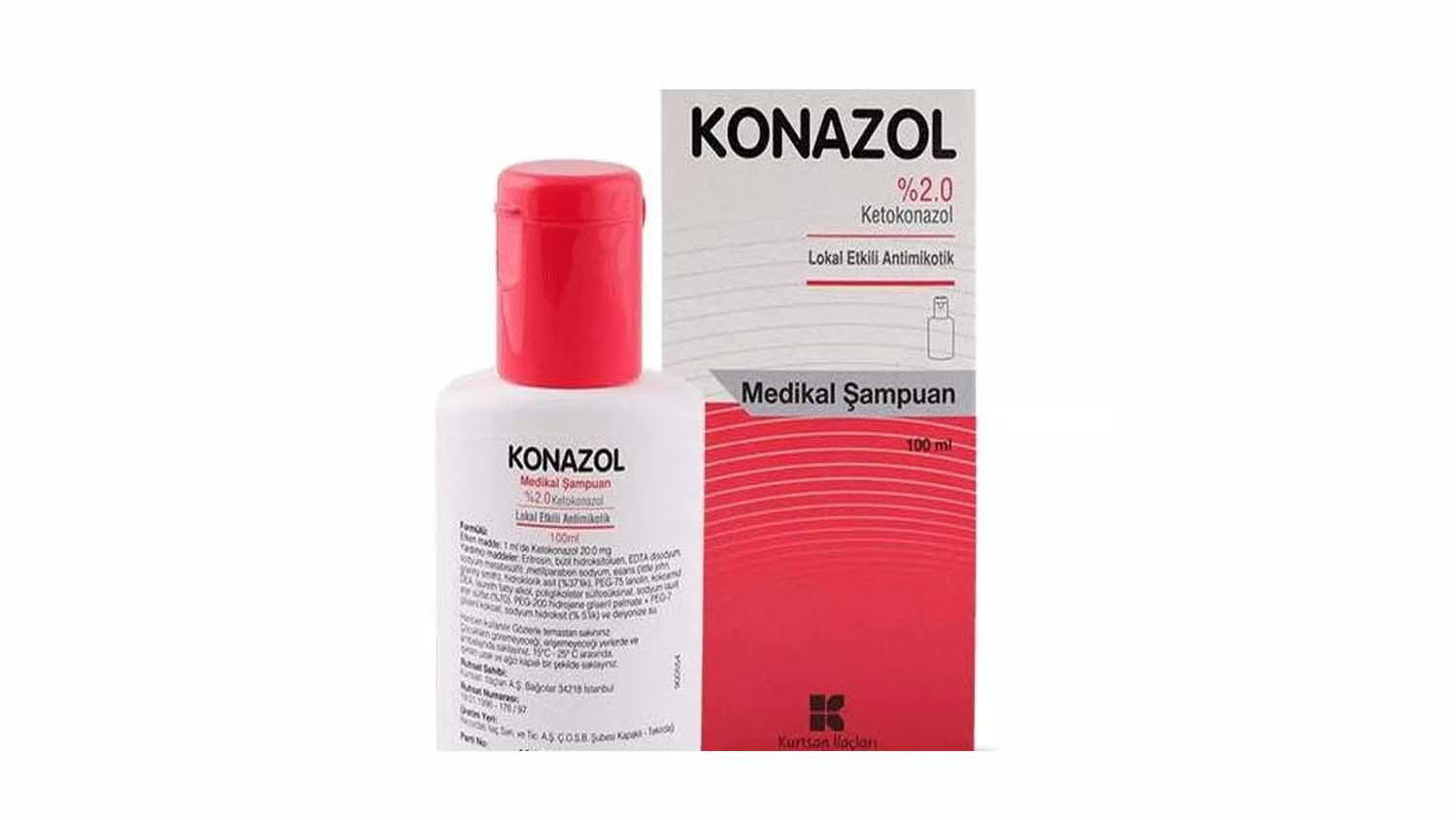
Ketoconazole shampoo as an adjunct

August 2026 · Hårtransplantation.dk research desk · 3 min read

Ketoconazole shampoo is an antifungal used for dandruff and seborrhoeic dermatitis. It is often suggested as a hair-loss adjunct on the basis of small studies and a plausible anti-inflammatory effect, but it is not a primary treatment.

Main findings

  • Its established indication is antifungal, for dandruff and seborrhoeic dermatitis.
  • Evidence for a direct effect on androgenetic alopecia is limited and comes from small studies.
Read full research →
Medications

Biotin: what the evidence actually shows

August 2026 · Hårtransplantation.dk research desk · 3 min read

Biotin supplements are marketed heavily for hair, but the evidence supports them only where there is a genuine Biotin deficiency, which is rare. In people who are not deficient, there is no good evidence of benefit, and Biotin interferes with common laboratory tests.

Main findings

  • Benefit is established in genuine deficiency, which is uncommon in people eating normally.
  • High-dose Biotin can seriously distort laboratory tests, including thyroid and cardiac assays.

Read full research →
Medications

Saw palmetto as a natural DHT blocker

August 2026 · Hårtransplantation.dk research desk · 3 min read

Saw palmetto is promoted as a natural alternative to Finasteride on the basis that it inhibits 5-alpha reductase. Some small studies suggest a modest effect, but it is less consistently dosed and much less well evidenced, and no trial has compared the two directly.

Main findings

  • Its proposed mechanism is the same as Finasteride's, but no trial has compared the two directly.
  • As a supplement it is not standardised, so dose and content vary between products.
Read full research →
Medications

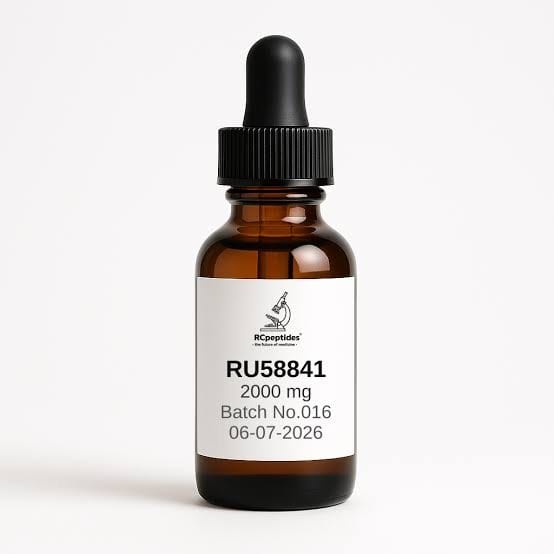
RU58841: experimental topical antiandrogen

August 2026 · Hårtransplantation.dk research desk · 3 min read

RU58841 is an experimental topical anti-androgen sold through research-chemical channels. It has never completed clinical development, has no approval anywhere, and no established safety data in humans.

Main findings

  • RU58841 is not an approved medicine in any country and has no completed human safety programme.
  • Material sold online is not manufactured to pharmaceutical standards.
Read full research →
Medications

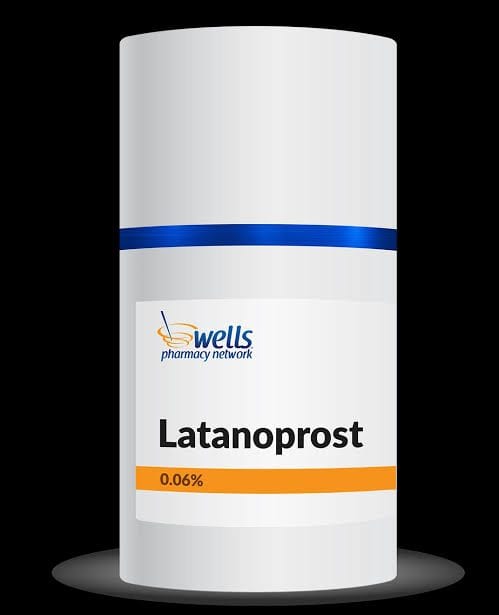
Latanoprost and bimatoprost for hair growth

August 2026 · Hårtransplantation.dk research desk · 3 min read

These prostaglandin analogues were developed for glaucoma, and eyelash lengthening was discovered as a side effect. Bimatoprost is approved for eyelash hypotrichosis; evidence for scalp hair loss is limited.

Main findings

  • Bimatoprost is approved for eyelash hypotrichosis, not for scalp hair loss.
  • Scalp evidence is limited, and the cost per treated area is high.
Read full research →
Medications

PRP as a medical adjunct to transplant

August 2026 · Hårtransplantation.dk research desk · 3 min read

PRP concentrates a patient's own platelets and injects them into the scalp. It has a reasonable evidence base in androgenetic alopecia as a medical treatment; evidence that it improves transplant outcomes specifically is weaker.

Main findings

  • PRP has more evidence as a medical treatment for androgenetic alopecia than as a transplant adjunct.
  • Preparation protocols vary widely between clinics, which makes results inconsistent.
Read full research →
Medications

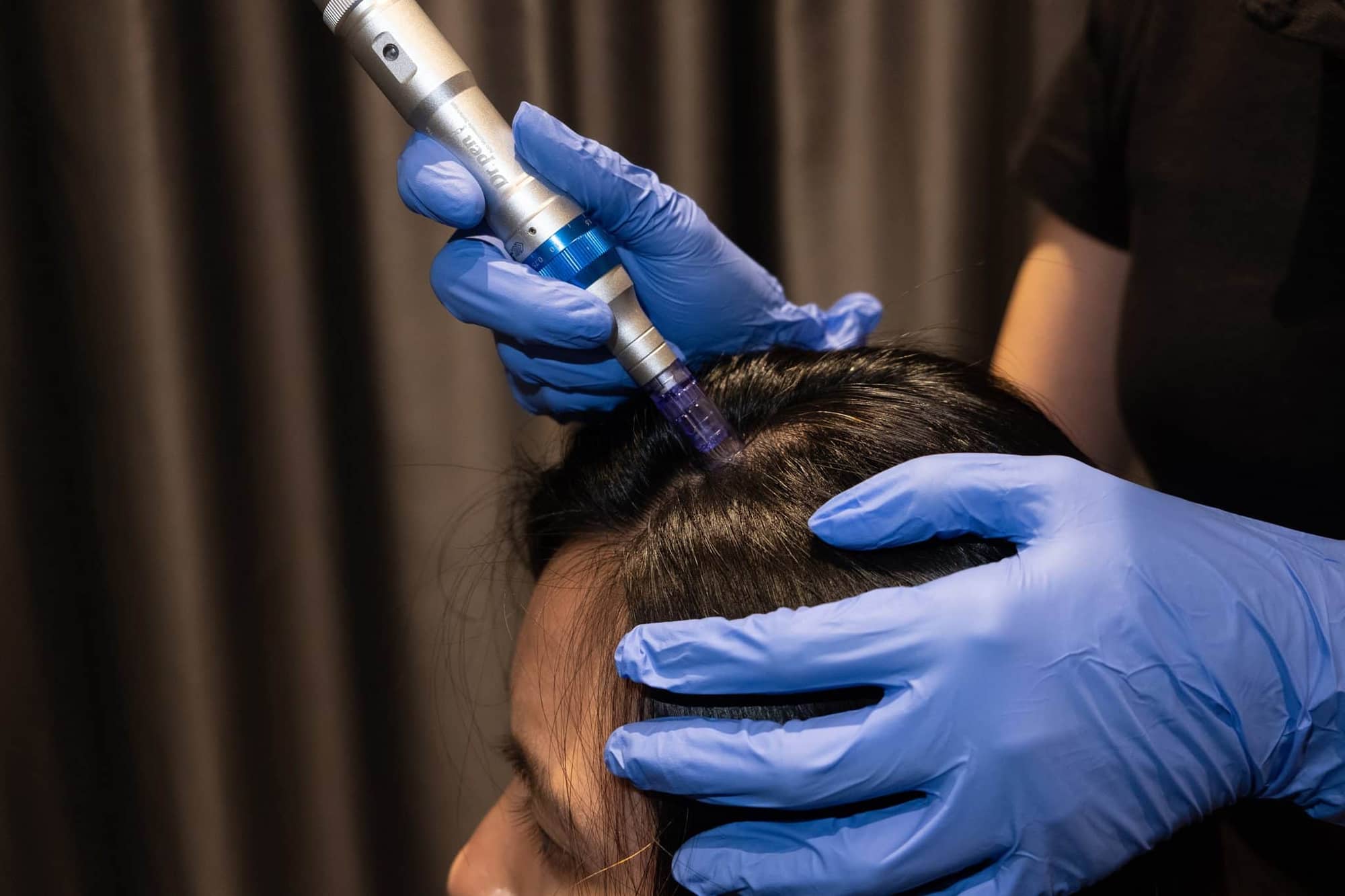
Microneedling combined with topical treatments

August 2026 · Hårtransplantation.dk research desk · 3 min read

Microneedling creates controlled micro-injuries in the scalp, and several small studies suggest it improves results when combined with topical Minoxidil. It is one of the more promising adjuncts, though the evidence remains limited and device hygiene matters.

Main findings

  • Small studies suggest microneedling plus topical Minoxidil outperforms Minoxidil alone.
  • Needle depth, frequency and device hygiene vary widely and are not standardised.
Read full research →
Medications

Low-level laser therapy devices: does it work

August 2026 · Hårtransplantation.dk research desk · 3 min read

Low-level laser therapy delivers red or near-infrared light to the scalp. Several devices hold regulatory clearance for androgenetic alopecia and there is a body of supporting evidence, but device output varies widely and the routine has to be kept up indefinitely.

Main findings

  • Several LLLT devices have regulatory clearance for androgenetic alopecia in some markets.
  • Output, wavelength and protocol vary between devices, so evidence does not transfer between them.
Read full research →
Medications

Corticosteroid injections for alopecia areata

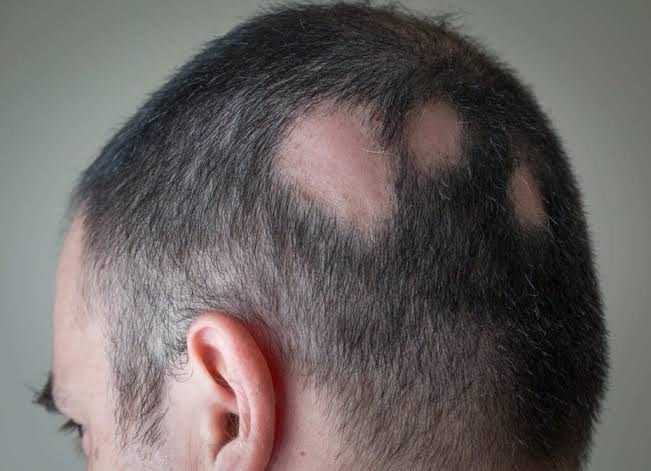
August 2026 · Hårtransplantation.dk research desk · 3 min read

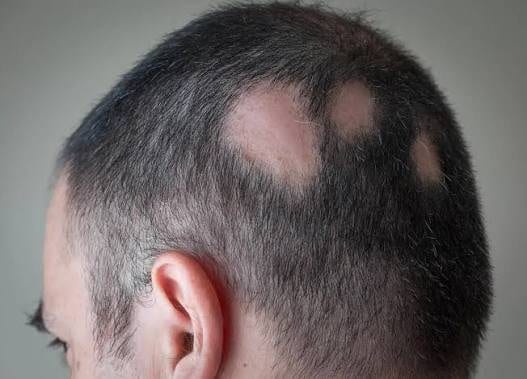
Intralesional corticosteroid injections are a long-standing first-line treatment for limited patchy alopecia areata. They suppress the local immune attack on the follicle, and they are unrelated to pattern hair loss, where they have no role.

Main findings

  • Intralesional steroids are used for patchy alopecia areata, not for pattern hair loss.
  • Repeated injections can cause local skin thinning at the injection site.
Read full research →
Medications

JAK inhibitors: newest option for alopecia areata

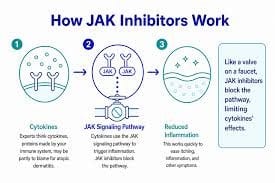
August 2026 · Hårtransplantation.dk research desk · 3 min read

JAK inhibitors are the first systemic drugs approved for severe alopecia areata, and they have changed the outlook for a condition that previously had little to offer. They also carry a class-wide boxed warning and require monitoring.

Main findings

  • Baricitinib was approved in June 2022 as the first systemic treatment for severe alopecia areata.
  • The class carries a boxed warning covering thrombosis, malignancy, major adverse cardiac events and death.
Read full research →
Medications

Antibiotics prescribed after transplant surgery

August 2026 · Hårtransplantation.dk research desk · 3 min read

Many clinics prescribe a short antibiotic course after surgery, though practice varies and routine prophylaxis is not universally agreed. Infection after a hair transplant is uncommon, and the case for blanket antibiotics is weaker than patients assume.

Main findings

  • Routine post-operative antibiotic prophylaxis is common practice but not universally agreed.
  • Infection rates after hair transplantation are low, which weakens the case for blanket use.
Read full research →
Medications

Dexamethasone taper protocols post-op

August 2026 · Hårtransplantation.dk research desk · 3 min read

Some clinics prescribe a short tapering course of corticosteroid after surgery, specifically to reduce the forehead swelling that peaks around days two to four. It is targeted at comfort and appearance rather than at the result.

Main findings

  • Short steroid courses after surgery target swelling, not graft survival.
  • A taper should be taken exactly as prescribed and not extended or stopped early on your own.
Read full research →
Medications

Anti-inflammatory medication after surgery

August 2026 · Hårtransplantation.dk research desk · 3 min read

Non-steroidal anti-inflammatories relieve pain and swelling but also affect platelet function, which is why many clinics prefer paracetamol in the first days after surgery. Take what your clinic specifies rather than reaching for what you have at home.

Main findings

  • NSAIDs affect platelet function, which is why they are often avoided immediately after surgery.
  • Paracetamol is commonly preferred for the first days because it does not.
Read full research →
Medications

Pain medication in the first 48 hours

August 2026 · Hårtransplantation.dk research desk · 3 min read

Most people find the first two days uncomfortable rather than painful, with the donor area the sorer site. Simple analgesia on a schedule works better than waiting for pain to build.

Main findings

  • Taking analgesia on schedule is more effective than taking it reactively.
  • The donor area is usually sorer than the recipient area in the first days.

Read full research →
Medications

Sleep aids and post-op rest

August 2026 · Hårtransplantation.dk research desk · 3 min read

Sleep is genuinely disrupted after a transplant, mostly by having to sleep elevated and on your back. Sleep aids should be cleared with your clinic first, because sedation makes rolling onto the grafts more likely.

Main findings

  • Sedation increases the chance of rolling onto unanchored grafts while asleep.
  • Any sleep aid should be cleared against the medication you were prescribed.
Read full research →
Medications

Blood thinners: why you stop them before surgery

August 2026 · Hårtransplantation.dk research desk · 3 min read

Anticoagulants and antiplatelet drugs increase bleeding during and after surgery, so clinics often ask about pausing them. That decision belongs to the doctor who prescribed them, never to you and never to the surgical clinic alone.

Main findings

  • Never stop a prescribed anticoagulant on your own initiative or on a clinic's say-so alone.
  • The prescribing doctor must weigh bleeding risk against the risk the drug was preventing.
Read full research →
Medications

Hormone therapy and its effect on hair medication

August 2026 · Hårtransplantation.dk research desk · 3 min read

Hormone therapy changes the androgen environment that drives pattern hair loss, so it interacts directly with hair-loss treatment. Anyone on hormone therapy of any kind should have their hair plan built around it rather than alongside it.

Main findings

  • Hormone therapy alters the androgen environment that hair-loss drugs act on.
  • Hair-loss treatment should be planned with the clinician managing the hormone therapy.
Read full research →
Medications

Finasteride sexual side effects: what the data says

August 2026 · Hårtransplantation.dk research desk · 3 min read

Sexual side effects are the most discussed aspect of Finasteride. Trial data report them in a small minority, generally a low single-digit percentage with a substantial placebo response, while a contested debate continues about persistent symptoms after stopping.

Main findings

  • Trial-reported rates are low single digits, with notable rates in placebo arms too.
  • Whether symptoms persist after discontinuation in some men remains genuinely contested.
Read full research →
Medications

Dutasteride side effect profile

August 2026 · Hårtransplantation.dk research desk · 3 min read

Dutasteride's reported side effects resemble Finasteride's, and meta-analysis found no significant difference in sexual adverse effects between them. The practical difference is its much longer half-life, so anything that does occur takes far longer to clear.

Main findings

  • Meta-analysis found no significant difference in sexual adverse effects versus Finasteride.
  • Its long half-life means side effects and washout take considerably longer than with Finasteride.
Read full research →
Medications

Why Finasteride isn't prescribed to women

August 2026 · Hårtransplantation.dk research desk · 3 min read

Finasteride is not prescribed to women of childbearing potential because 5-alpha reductase inhibitors interfere with the development of male fetal genitalia. Efficacy evidence in women is also weaker than in men.

Main findings

  • The primary reason is teratogenicity: the drug affects development of a male fetus.

  • Efficacy evidence in women is weaker and less consistent than in men.
Read full research →
Medications

Medications and teenagers: what's off the table

August 2026 · Hårtransplantation.dk research desk · 3 min read

Hair-loss treatment in teenagers is a specialist area. Finasteride is not approved for under-18s, the pattern of loss is not yet established, and the first question is usually whether the diagnosis is even androgenetic alopecia.

Main findings

  • Finasteride is not approved for use under 18 and is generally avoided in adolescents.
  • Diagnosis matters more in this age group, because non-androgenetic causes are relatively more common.
Read full research →
Medications

Combining medication with a transplant for best results

August 2026 · Hårtransplantation.dk research desk · 3 min read

Surgery relocates hair that is resistant to DHT; medication protects the susceptible hair that remains. Because a transplant does nothing to stop ongoing loss, combining the two is the standard approach for a result that still looks coherent in ten years.

Main findings

  • Surgery does not slow pattern loss in the untreated hair around the grafts.
  • Combining medication with surgery is standard practice, not an upsell.
Read full research →
Medications

Stopping medication before surgery: why and when

August 2026 · Hårtransplantation.dk research desk · 3 min read

Some medications are paused around surgery and some are not, and the distinction matters. Never stop a prescribed drug on your own initiative; the decision belongs to whoever prescribed it, in discussion with your surgeon.

Main findings

  • Never stop a prescribed medication on your own or on a clinic's instruction alone.
  • Topical Minoxidil is commonly paused around surgery; systemic prescriptions are a different decision.
Read full research →
Medications

Medications for post-op folliculitis

August 2026 · Hårtransplantation.dk research desk · 3 min read

Folliculitis after a transplant is common, usually mild, and treated according to cause. Most cases are ingrown hairs rather than infection, which is why photographing it and asking beats reaching for leftover antibiotics.

Main findings

  • Most post-operative folliculitis is caused by ingrown hairs rather than bacterial infection.
  • Treatment depends on cause, which is why it should be assessed rather than self-treated.
Read full research →
Medications

Can medication prevent shock loss

August 2026 · Hårtransplantation.dk research desk · 3 min read

Shock loss is native hair pushed into its resting phase by the trauma of surgery. Medication may reduce how much is lost and support recovery, but no drug reliably prevents it, and claims otherwise outrun the evidence.

Main findings

  • No medication has been shown to reliably prevent post-operative shock loss.
  • Being on stable treatment beforehand is more plausible than starting something at the last minute.
Read full research →
Medications

Medication and graft survival: what evidence exists

August 2026 · Hårtransplantation.dk research desk · 3 min read

Graft survival is determined overwhelmingly during surgery, by handling, hydration, out-of-body time and recipient site quality. There is little evidence that any medication taken afterwards changes how many grafts take.

Main findings

  • Graft survival is decided by surgical variables, not by post-operative medication.
  • Medication's real contribution is protecting native hair, which is a different question.
Read full research →
Medications

Generic vs brand-name Minoxidil

August 2026 · Hårtransplantation.dk research desk · 3 min read

Generic topical Minoxidil contains the same active ingredient at the same concentration as the branded original and is regulated to demonstrate equivalence. Differences are in the vehicle, the packaging and the price.

Main findings

  • Generic and brand-name Minoxidil contain the same active ingredient at the same strength.
  • Differences that matter are in the vehicle and formulation, not the drug.
Read full research →
Medications

Minoxidil foam vs liquid formulation

August 2026 · Hårtransplantation.dk research desk · 3 min read

Foam and liquid deliver the same drug. The practical difference is the vehicle: most liquids contain propylene glycol, a common cause of irritation, while foams generally do not. Choose on tolerability and habit.

Main findings

  • Both formulations deliver the same active drug at the same strengths.
  • Most liquids contain propylene glycol; foams generally do not, which matters for irritation.
Read full research →
Medications

Compounded medication formulas from specialty pharmacies

August 2026 · Hårtransplantation.dk research desk · 3 min read

Compounded formulations combine active ingredients into a custom preparation, often topical Minoxidil with Finasteride or other agents. They can be genuinely useful, but they are not assessed by regulators the way licensed products are.

Main findings

  • Compounded products are prepared per prescription and are not regulator-assessed for efficacy.
  • Quality depends entirely on the compounding pharmacy's standards.
Read full research →
Medications

Medication for eyebrow and beard growth

August 2026 · Hårtransplantation.dk research desk · 3 min read

Bimatoprost is approved for inadequate eyelashes and used off-label on eyebrows. Minoxidil is used off-label on the beard with limited evidence. Neither creates follicles where none exist.

Main findings

  • Bimatoprost is approved for eyelashes; eyebrow and beard use is off-label.
  • Topicals act on follicles that are already there; they are not understood to create new ones.
Read full research →
Medications

Medication cost comparison by country

August 2026 · Hårtransplantation.dk research desk · 3 min read

Prices for the same hair-loss drugs vary widely between countries because of reimbursement rules, generic availability and prescription status. Since these are long-term treatments, the annual cost matters more than the pack price.

Main findings

  • Cost varies mainly with generic availability, prescription status and reimbursement rules.
  • Because treatment is indefinite, annual cost is the number that matters.
Read full research →
Medications

What happens when you stop Finasteride

August 2026 · Hårtransplantation.dk research desk · 3 min read

DHT returns to its previous level within weeks of stopping, and the hair the drug was protecting resumes its original trajectory. Gains are generally lost over roughly the following year, returning you to where you would have been untreated.

Main findings

  • Stopping returns DHT to baseline within weeks and hair to its untreated trajectory.
  • Loss after stopping is generally the delayed loss the drug had been preventing, not extra loss.
Read full research →
Medications

Medication timeline before and after transplant

August 2026 · Hårtransplantation.dk research desk · 3 min read

The usual sequence is to be established on medication before surgery, pause topical products around the procedure, and resume once the scalp has healed. Specifics vary by clinic and should be given to you in writing.

Main findings

  • Being established on medication before surgery avoids confusing drug-related shedding with shock loss.
  • Topical products are commonly paused around surgery; systemic ones usually continue.
Read full research →
Medications

Topical Finasteride: newer delivery method

August 2026 · Hårtransplantation.dk research desk · 3 min read

Topical Finasteride aims to act on the scalp while reducing systemic exposure. It does reduce it, but not to zero, so the assumption that topical means free of systemic effects is not supported.

Main findings

  • Topical Finasteride reduces systemic exposure but does not eliminate it.
  • Availability varies: licensed in some markets, compounded in others.
Read full research →
Medications

Iron deficiency and hair loss medication

August 2026 · Hårtransplantation.dk research desk · 3 min read

Iron deficiency is a genuine and treatable cause of hair shedding, particularly in women. It should be tested for rather than assumed, because supplementing iron you do not need is not benign.

Main findings

  • Iron deficiency is a real, testable and treatable cause of hair shedding.
  • Ferritin is the useful measure; supplementing without deficiency can cause harm.
Read full research →
Medications

Vitamin D deficiency and hair thinning

August 2026 · Hårtransplantation.dk research desk · 3 min read

Vitamin D receptors are involved in the hair cycle, and deficiency has been associated with several hair disorders. The association is better established than the treatment effect: correcting deficiency is sensible, but supplementation is not a hair-loss therapy.

Main findings

  • Vitamin D receptor signalling is involved in the hair follicle cycle.
  • Association with hair loss is better established than benefit from supplementing the non-deficient.
Read full research →
Medications

Thyroid medication and its effect on hair

August 2026 · Hårtransplantation.dk research desk · 3 min read

Both underactive and overactive thyroid disease cause hair loss, and so, confusingly, can starting treatment for them. Hair generally recovers once thyroid function is stable, which is why stability matters more than the direction of the initial change.

Main findings

  • Both hypothyroidism and hyperthyroidism cause diffuse hair loss.
  • The levothyroxine label notes hair loss may rarely occur when starting treatment, and that it is usually temporary.
Read full research →
Medications

Medication interactions to flag with your surgeon

August 2026 · Hårtransplantation.dk research desk · 3 min read

Your surgeon needs a complete list of everything you take, including supplements. The categories that matter most are anything affecting bleeding, anything affecting blood pressure, and anything affecting glucose control.

Main findings

  • Supplements affecting bleeding are the most commonly omitted category.
  • Disclose everything, including things you consider irrelevant or embarrassing.
Read full research →
Medications

Off-label medications sometimes used for hair loss

August 2026 · Hårtransplantation.dk research desk · 3 min read

Much of hair-loss prescribing is off-label, meaning the drug is licensed for something else. That is lawful and often reasonable, but it changes where the evidence sits and who carries responsibility.

Main findings

  • Off-label prescribing is lawful and common; it means the indication is unlicensed, not that the drug is unstudied.
  • Evidence for off-label uses is generally thinner than for licensed indications.
Read full research →
Medications

When medication alone is the better option over surgery

August 2026 · Hårtransplantation.dk research desk · 3 min read

Medication is often the better first step: where loss is early, where the pattern has not stabilised, where donor supply is limited, or where the person is young. Surgery is irreversible and spends a finite resource.

Main findings

  • Medication is generally the better first step where hair is thinning rather than absent.
  • Surgery spends a finite donor supply and cannot be undone.
Read full research →

Hyperbaric oxygen 22

Hyperbaric oxygen

What hyperbaric oxygen therapy actually is

August 2026 · Hårtransplantation.dk research desk · 10 min read

Hyperbaric oxygen therapy means breathing 100% oxygen inside a sealed chamber pressurised above normal atmospheric pressure, usually 2.0-2.4 ATA. It is an established hospital treatment with a well-understood mechanism, and the hair-transplant evidence has grown from a single small randomised trial to a 220-patient prospective cohort with blinded photographic review.

Main findings

  • HBOT is defined by pressure, not by an oxygen mask: 100% oxygen delivered at 1.4 ATA or more inside a chamber.
  • Hair transplantation does not appear on the UHMS approved-indications list, so HBOT offered alongside surgery is an off-label, self-funded add-on.
Read full research →
Hyperbaric oxygen

The mechanism: oxygen, angiogenesis, and graft survival

August 2026 · Hårtransplantation.dk research desk · 4 min read

The theoretical case for HBOT after a hair transplant rests on the period before grafts have a blood supply. Dissolved plasma oxygen can reach tissue red cells cannot, and hyperbaric exposure influences angiogenesis and inflammation. The mechanism is coherent; the clinical payoff is unproven.

Main findings

  • Transplanted grafts survive on diffusion for roughly the first 48-72 hours before revascularisation begins, which is the window HBOT is aimed at.
  • Thom's review describes hyperbaric oxygen acting through reactive oxygen and nitrogen species that drive signalling cascades — not simply by 'adding oxygen'.
Read full research →
Hyperbaric oxygen

HBOT protocol: sessions, pressure, and duration

August 2026 · Hårtransplantation.dk research desk · 4 min read

Published hair-transplant protocols cluster around 2.0-2.4 ATA, 60-90 minutes per session, once daily for six or seven consecutive days after surgery. There is no consensus protocol, because there is not enough research to have produced one.

Main findings

  • The two published clinical protocols are 2.0 ATA / 60 min / 7 days (Fan) and 2.4 ATA / 90 min / 6 days starting 4-6 hours post-op (Giardiello).
  • Clinics offering more sessions, higher pressures or 'maintenance' courses are going beyond anything that has been studied in this setting.
Read full research →
Hyperbaric oxygen

Best timing for HBOT after transplant

August 2026 · Hårtransplantation.dk research desk · 4 min read

Both published protocols start HBOT on the day of surgery or the day after and run daily for about a week, which matches the period when grafts depend on diffusion. Whether starting within hours rather than the next morning changes anything has never been tested.

Main findings

  • The graft's diffusion-dependent period is the first few days, so early sessions are mechanistically the ones that could matter.
  • No published study has compared different start times, so any claim that a specific hour matters is not evidence-based.
Read full research →
Hyperbaric oxygen

Cost of HBOT as an add-on treatment

August 2026 · Hårtransplantation.dk research desk · 4 min read

HBOT after a hair transplant is self-funded everywhere, because hair transplantation is not an approved hyperbaric indication. The cost is driven by session count, chamber type and facility overheads, and it should always be quoted separately from the surgical fee.

Main findings

  • Because the indication is not approved, no public health system or insurer in the Nordics reimburses HBOT taken alongside elective hair surgery.
  • A six- or seven-session course is the only thing published protocols support; longer packages should be priced and justified separately.
Read full research →
Hyperbaric oxygen

Which clinics actually offer HBOT

August 2026 · Hårtransplantation.dk research desk · 3 min read

Very few hair clinics own a hyperbaric chamber. Most that advertise HBOT refer patients to a third-party facility, and some are describing soft chambers that do not deliver a clinical hyperbaric dose. Establishing which arrangement you are being offered is the first question.

Main findings

  • Owning and running a hard chamber requires capital, trained hyperbaric staff and safety infrastructure that a hair clinic normally has no reason to have.
  • Ask whether the chamber is on site, who operates it, and what pressure it reaches — the answers separate a clinical service from a marketing line.
Read full research →
Hyperbaric oxygen

Contraindications: who shouldn't use a chamber

August 2026 · Hårtransplantation.dk research desk · 4 min read

Untreated pneumothorax is the one absolute contraindication to hyperbaric oxygen therapy. Several relative contraindications — including certain lung disease, recent ear surgery, uncontrolled seizures and some chemotherapy agents — require specialist assessment before any session.

Main findings

  • Untreated tension pneumothorax is universally treated as an absolute bar to hyperbaric exposure.
  • Contraindication screening should be done by hyperbaric-trained staff, not by the hair clinic booking the sessions.
Read full research →
Hyperbaric oxygen

Claustrophobia and chamber tolerance

August 2026 · Hårtransplantation.dk research desk · 4 min read

A meaningful minority of people find an enclosed hyperbaric chamber difficult, and monoplace chambers are harder to tolerate than multiplace ones. Tolerance is worth testing before you pay for a course, because a package bought up front is usually not refundable.

Main findings

  • Claustrophobia is a recognised practical limitation of hyperbaric therapy and a common reason courses are abandoned.
  • A multiplace chamber, where you sit in a room-sized vessel with others, is substantially easier for anxious patients than a monoplace tube.
Read full research →
Hyperbaric oxygen

Hard chambers vs soft (mild) chambers

August 2026 · Hårtransplantation.dk research desk · 4 min read

Hard clinical chambers reach 2.0-2.4 ATA with 100% oxygen; soft inflatable chambers typically operate near 1.3 ATA. Every published hair-transplant protocol used hard-chamber pressures, so a soft chamber is not delivering the studied treatment.

Main findings

  • Fan used 2.0 ATA and Giardiello 2.4 ATA — both hard-chamber pressures that soft chambers cannot reach.
  • 'Mild hyperbaric' marketing describes a genuinely different exposure, not a gentler version of the same one.
Read full research →
Hyperbaric oxygen

Barotrauma and other HBOT risks

August 2026 · Hårtransplantation.dk research desk · 4 min read

Middle ear barotrauma is the most common adverse effect of hyperbaric oxygen therapy. Sinus barotrauma, temporary myopia, confinement anxiety and, rarely, CNS oxygen toxicity seizures make up most of the remainder. The overall safety record is good, with proper screening.

Main findings

  • Heyboer and colleagues describe HBOT as among the safest therapies in use, while setting out side effects that are real, quantifiable and largely dose-dependent.
  • Most adverse effects are pressure- or oxygen-dose-dependent, which is why protocol and screening matter more than they appear to.
Read full research →
Hyperbaric oxygen

HBOT and reduced post-op swelling

August 2026 · Hårtransplantation.dk research desk · 4 min read

Reduced swelling is one of the most commonly advertised benefits of post-transplant HBOT, but it is not what the published trial measured. The trial found less itching and folliculitis and less early shedding; oedema was not its reported endpoint.

Main findings

  • The Fan trial reported itching and folliculitis (11.8% vs 35.3%) and early shedding (27.6% vs 69.1%) — not oedema scores.
  • Anti-inflammatory mechanisms proposed for HBOT are plausible grounds to expect a swelling effect, but plausible is not the same as measured.
Read full research →
Hyperbaric oxygen

HBOT in mega sessions: does it lower necrosis risk

August 2026 · Hårtransplantation.dk research desk · 4 min read

Recipient-area necrosis is a rare but serious complication of very dense, very large sessions. HBOT has an established role in compromised grafts and flaps generally, but no published study has examined it for necrosis risk in hair transplantation specifically.

Main findings

  • Hyperbaric oxygen is a recognised adjunct for compromised skin grafts and flaps, though Thom notes that indication rests largely on animal work and limited clinical trials.
  • No hair-transplant study has used necrosis as an endpoint — the published trial enrolled 34 patients, far too few to observe a rare complication.
Read full research →
Hyperbaric oxygen

HBOT vs low-level laser therapy as adjuncts

August 2026 · Hårtransplantation.dk research desk · 4 min read

LLLT has a substantially larger evidence base than HBOT, but almost all of it concerns treating androgenetic alopecia rather than supporting a transplant. Comparing the two as post-operative adjuncts means comparing one small trial against essentially none.

Main findings

  • LLLT for androgenetic alopecia has been examined in multiple randomised trials and meta-analyses; HBOT after transplant has one trial of 34 patients.
  • Neither has good evidence as a post-operative graft-survival adjunct — the LLLT literature is about growing existing hair, not protecting new grafts.
Read full research →
Hyperbaric oxygen

HBOT vs PRP: which has stronger evidence

August 2026 · Hårtransplantation.dk research desk · 4 min read

PRP has been studied far more extensively than HBOT, with multiple meta-analyses in androgenetic alopecia. Neither has convincing evidence as a post-transplant graft-survival adjunct, and both are frequently sold on claims their studies do not support.

Main findings

  • PRP for androgenetic alopecia has multiple systematic reviews and meta-analyses behind it; HBOT after transplant has a single 34-patient trial.
  • Both literatures are largely about treating existing hair, not about protecting newly placed grafts.
Read full research →
Hyperbaric oxygen

HBOT and graft survival in smokers

August 2026 · Hårtransplantation.dk research desk · 4 min read

Smoking impairs wound healing through vasoconstriction and reduced tissue oxygenation, which is precisely the deficit HBOT addresses in theory. No study has tested HBOT in smoking hair transplant patients, and stopping smoking remains the intervention with an actual basis.

Main findings

  • Nicotine-driven vasoconstriction reduces perfusion in the recipient area during the period grafts are diffusion-dependent.
  • No published hair-transplant study has reported outcomes for smokers separately, and none has tested HBOT in that group.
Read full research →
Hyperbaric oxygen

HBOT and graft survival in diabetic patients

August 2026 · Hårtransplantation.dk research desk · 4 min read

HBOT's strongest evidence anywhere is in refractory diabetic wound healing, which makes diabetic transplant patients the group where the extrapolation is most tempting. It remains an extrapolation: no hair-transplant study has enrolled or analysed diabetic patients separately.

Main findings

  • Refractory diabetic wound healing is one of the indications Thom identifies as supported by systematic reviews and randomised trials.
  • That evidence concerns chronic non-healing ulcers, not elective surgical wounds in patients with controlled diabetes.
Read full research →
Hyperbaric oxygen

HBOT and graft survival in women

August 2026 · Hårtransplantation.dk research desk · 4 min read

No published study has examined HBOT after hair transplantation in women as a group. The one randomised trial did not report outcomes by sex, an omission that was raised directly in correspondence with the journal.

Main findings

  • Dong and Jin's letter specifically criticised the Fan trial for not describing whether outcomes differed between male and female patients.
  • Female patients often undergo no-shave procedures with different graft handling, and no HBOT study has addressed that setting.
Read full research →
Hyperbaric oxygen

Insurance and coverage for HBOT

August 2026 · Hårtransplantation.dk research desk · 3 min read

Hyperbaric oxygen therapy is reimbursed against a defined list of approved indications. Hair transplantation is not on that list, so chamber sessions taken alongside elective hair surgery are self-funded in every Nordic health system and by private insurers.

Main findings

  • Reimbursement follows the approved-indication list maintained by the Undersea and Hyperbaric Medical Society and equivalent national bodies.
  • Elective cosmetic surgery is excluded from public and private cover in its own right, which forecloses the question independently.
Read full research →
Hyperbaric oxygen

Combining HBOT with other adjunct therapies

August 2026 · Hårtransplantation.dk research desk · 4 min read

Packages that stack HBOT with PRP, exosomes, laser therapy and supplements are common. No study has tested any of those combinations after a hair transplant, and combining unproven treatments does not produce a proven one.

Main findings

  • No published study has examined HBOT in combination with any other post-transplant adjunct.
  • Stacking adjuncts multiplies cost and makes it impossible to tell which component, if any, did anything.
Read full research →
Hyperbaric oxygen

Why some experts are skeptical of small HBOT cohorts

August 2026 · Hårtransplantation.dk research desk · 5 min read

A 34-patient trial cannot detect a three-percentage-point difference in graft survival, and a five-patient case series without controls cannot attribute anything. The scepticism about HBOT in hair transplantation is about study size and design, not about the treatment being implausible.

Main findings

  • The Fan trial's nine-month survival difference (96.9% vs 93.8%) was not statistically significant, and a trial of 34 patients would not be expected to detect a difference that small.
  • Published correspondence raised specific methodological gaps in the trial that were never resolved.
Read full research →
Hyperbaric oxygen

What research would actually settle the HBOT question

August 2026 · Hårtransplantation.dk research desk · 5 min read

Settling it needs a multicentre randomised trial with several hundred patients, twelve-month follow-up, blinded hair counts in a defined recipient zone, and a sham-pressure control. None of the four published studies comes close to that design.

Main findings

  • Detecting a three-point difference between arms both near 95% survival requires hundreds of patients per arm, not seventeen.
  • A sham control is feasible in hyperbaric research and would separate treatment effect from the attention and routine of daily sessions.
Read full research →
Hyperbaric oxygen

Patient-reported comfort and downtime with HBOT

August 2026 · Hårtransplantation.dk research desk · 4 min read

The strongest published findings for HBOT after a transplant are about the patient's experience rather than the final result: less early shedding, roughly a third the rate of itching and folliculitis, and in one small case series faster scab clearance.

Main findings

  • Fan reported itching and folliculitis in 11.8% of HBOT patients against 35.3% of controls.
  • Giardiello's five-patient series reported scabs clearing in 3-5 days and average recovery of 2.8 days — with no control group to compare against.
Read full research →

Donor management 50

Donor management

What the safe donor zone actually is

August 2026 · Hårtransplantation.dk research desk · 3 min read

The safe donor zone is the band of occipital and lateral scalp whose follicles are largely resistant to DHT and therefore expected to keep growing after transfer. Its boundaries are a clinical judgement, not a fixed anatomical line, and recent work questions how safe its edges really are.

Main findings

  • Donor hair is more resistant to DHT, not immune to it — 'permanent' overstates what the biology supports.
  • Published work has begun questioning the assumption that the occipital scalp is reliably unaffected in advanced androgenetic alopecia.
Read full research →
Donor management

How donor density is measured

August 2026 · Hårtransplantation.dk research desk · 3 min read

Donor density is measured as follicular units per square centimetre, usually with a densitometer or trichoscope over a clipped patch. It should be measured, not estimated by eye, and the number matters less on its own than in combination with hair calibre.

Main findings

  • Density is counted in follicular units per cm², which is not the same as hairs per cm² — the two differ by the average hairs per unit.
  • Ideally donor density is over 50 follicular units per cm²; below that, the plan has to be scaled down.
Read full research →
Donor management

Total lifetime donor supply: how surgeons estimate it

August 2026 · Hårtransplantation.dk research desk · 3 min read

Lifetime donor supply is estimated from the area of the safe zone multiplied by density, then reduced by how much must be left behind to keep the area looking normal. It is a finite budget, and every session spends part of it permanently.

Main findings

  • Donor supply is a fixed reserve — follicles removed from the donor area do not regrow there.
  • The usable fraction is well below the total present, because the donor area must retain enough density to look untouched.
Read full research →
Donor management

Overharvesting: what it looks like and why it's irreversible

August 2026 · Hårtransplantation.dk research desk · 4 min read

Overharvesting means removing more follicular units from the donor area than the remaining hair can camouflage. It produces a permanently thin, patchy or moth-eaten donor zone, and there is no procedure that restores the extracted follicles.

Main findings

  • Donor depletion is a recognised complication of follicular unit excision and cannot be reversed — extracted follicles do not regrow.
  • The damage is often invisible immediately after surgery and only becomes apparent months later as the donor area settles.
Read full research →
Donor management

Extraction density: how many grafts per cm² is safe

August 2026 · Hårtransplantation.dk research desk · 3 min read

There is no single safe extraction figure. What matters is the proportion of follicular units removed relative to starting density, and how evenly they are distributed — clustered extraction at moderate density looks worse than even extraction at higher density.

Main findings

  • Extraction is safest judged as a percentage of local density, not as an absolute grafts-per-cm² number.
  • Even distribution across the donor zone matters as much as the total, because clustering produces visible patchiness.
Read full research →
Donor management

Punch size and donor scarring

August 2026 · Hårtransplantation.dk research desk · 4 min read

Every FUE extraction leaves a round hypopigmented scar roughly the diameter of the punch. Smaller punches leave less visible dots but demand more precision, and the trade-off against transection is the central technical tension in donor harvesting.

Main findings

  • Punch diameter sets the size of the permanent dot scar left at each extraction site.
  • A smaller punch reduces scarring but narrows the margin for error around the follicular unit.
Read full research →
Donor management

Transection in the donor area: causes and consequences

August 2026 · Hårtransplantation.dk research desk · 3 min read

Transection means cutting through a follicle during extraction rather than removing it intact. It wastes donor supply permanently, since the wound is made and no usable graft results, and it is the main hidden cost of a rushed high-volume session.

Main findings

  • A transected follicle costs a donor wound and produces no graft — the worst possible exchange for a finite reserve.
  • Reported transection performance varies by punch design and technique; one 2026 case series using a flared ring punch reported a mean rate of 3%.
Read full research →
Donor management

Donor area healing: dot scars and how visible they are

August 2026 · Hårtransplantation.dk research desk · 3 min read

Every FUE extraction leaves a small round scar that usually heals slightly paler than surrounding skin. At normal density and moderate hair length they are invisible; visibility depends on punch size, extraction density, skin-hair contrast and how short you wear your hair.

Main findings

  • Hypopigmentation at extraction sites is a documented donor-area complication of follicular unit excision.
  • Dot scars are permanent — what changes over time is how well the surrounding hair conceals them.
Read full research →
Donor management

FUT strip scars vs FUE dot scars

August 2026 · Hårtransplantation.dk research desk · 4 min read

FUT leaves one linear scar across the donor area; FUE leaves hundreds or thousands of small round ones. Neither is scarless, and which is preferable depends almost entirely on how short you intend to wear your hair.

Main findings

  • FUT concentrates scarring into one line that longer hair hides completely; FUE distributes it across the whole donor zone.
  • A shaved head reveals FUE dots; a very short back reveals an FUT line — the failure modes differ.
Read full research →
Donor management

Can you shave your head after FUE

August 2026 · Hårtransplantation.dk research desk · 3 min read

Sometimes, but it depends on how much was taken. A conservatively harvested donor area can usually tolerate a very short clip; a heavily harvested one shows diffuse lightening and visible dot scars at any length below about 6 mm.

Main findings

  • FUE is often marketed as allowing a shaved head — this is conditional on extraction density, not automatic.
  • Skin-hair contrast and punch diameter change the threshold length at which dots become visible.
Read full research →
Donor management

Beard hair as a donor source

August 2026 · Hårtransplantation.dk research desk · 4 min read

Beard hair can substantially extend donor supply in advanced hair loss, and published series support its use. It is coarser than scalp hair with different growth characteristics, so it is generally used in the mid-scalp and crown rather than the hairline.

Main findings

  • A retrospective study in East Asian men found beard extraction enhanced cosmetic results in advanced androgenetic alopecia, reporting beard-area density around 48 follicular units per cm².
  • Published criteria classify beard grafts as unsuitable below roughly 8 follicular units/cm², 60 μm diameter, or 10° emergence angle.
Read full research →
Donor management

Chest and body hair as donor sources

August 2026 · Hårtransplantation.dk research desk · 3 min read

Body hair can add donor supply in patients whose scalp and beard reserves are exhausted, and multicentre work supports its use by follicular unit excision. Yields and growth characteristics are less predictable than scalp or beard hair, so it is a last-line source.

Main findings

  • Body hair transplantation by FUE has been reported in a 2024 multicentre study using a skin-responsive device.
  • Body hair has a shorter anagen phase than scalp hair, which limits achievable length after transfer.
Read full research →
Donor management

Nape hair: why surgeons avoid it

August 2026 · Hårtransplantation.dk research desk · 3 min read

The fine hair at the nape sits below the safe donor zone, is frequently affected by retrograde thinning, and has a different texture and growth cycle from occipital hair. Harvesting it is a common sign of a plan reaching beyond its reserve.

Main findings

  • Nape hair lies outside the region normally judged resistant to DHT and can thin over time.
  • Its fine calibre and different growth characteristics make it a poor substitute for occipital donor hair.
Read full research →
Donor management

Hair calibre and why it matters more than count

August 2026 · Hårtransplantation.dk research desk · 3 min read

Coverage depends on the total mass of hair placed, not the number of follicles. A patient with thick shafts achieves visibly better results from fewer grafts than a fine-haired patient with the same count, which is why calibre belongs in every donor assessment.

Main findings

  • Published beard-donor criteria treat shaft diameter below roughly 60 μm as unsuitable, which shows how directly calibre is used in graft selection.
  • Two patients with identical graft counts can have very different visual outcomes purely because of shaft thickness.
Read full research →
Donor management

Follicular unit composition: singles, doubles and triples

August 2026 · Hårtransplantation.dk research desk · 3 min read

Hair grows in natural groupings of one to four hairs. The mix in your donor area determines how many hairs a given graft count actually delivers, and it is the reason 'grafts' and 'hairs' are not interchangeable terms.

Main findings

  • Jimenez and Ruifernández modelled the distribution of human hair in follicular units specifically to estimate donor requirements.
  • A donor area rich in three- and four-hair units yields substantially more hair per graft than one dominated by singles.
Read full research →
Donor management

Donor supply and Norwood stage: matching plan to reserve

August 2026 · Hårtransplantation.dk research desk · 3 min read

A plan should be built against the pattern you may eventually reach, not the one you have today. Matching reserve to a worst-case Norwood stage is what separates a result that ages well from one that strands you with a good hairline and a bald crown.

Main findings

  • Planning against current stage rather than final stage is the commonest structural error in donor management.
  • Family history and age are the two inputs that most change the worst-case assumption.
Read full research →
Donor management

Why donor management is the whole game in a young patient

August 2026 · Hårtransplantation.dk research desk · 4 min read

In a patient under about thirty, the pattern has not finished expressing itself and the donor zone's true boundaries are unknown. Every decision made now constrains what is possible for the next forty years, which is why conservatism is not caution but arithmetic.

Main findings

  • The standard guideline is to consider surgery from around age 25 once loss has stabilised.
  • A young patient's eventual pattern is unknown, so a plan built on today's pattern is a plan built on incomplete information.
Read full research →
Donor management

Donor depletion after multiple sessions

August 2026 · Hårtransplantation.dk research desk · 3 min read

Each session takes from the same finite area, and the second and third are extracted from a donor zone already reduced by the first. Depletion is cumulative, and the arithmetic of a later session is not the same as the first.

Main findings

  • Donor depletion is a documented complication of follicular unit excision and is irreversible.
  • Each subsequent session starts from a lower density baseline, so the same graft number represents a larger proportional loss.
Read full research →
Donor management

DHT sensitivity in the donor zone: what 'resistant' really means

August 2026 · Hårtransplantation.dk research desk · 3 min read

Donor hair is more resistant to DHT than frontal and crown hair, which is why it survives transfer. It is not immune, and recent literature questions how reliably the occipital scalp can be treated as unaffected.

Main findings

  • The accurate formulation is 'largely resistant to DHT' — 'permanent' and '100% resistant' overstate the biology.
  • Published work in 2026 has directly challenged treating the occipital scalp as an unaffected control in advanced androgenetic alopecia.
Read full research →
Donor management

Donor area and retrograde alopecia

August 2026 · Hårtransplantation.dk research desk · 3 min read

Retrograde alopecia is thinning that advances upward from the nape and around the ears, eroding the lower border of the safe donor zone. It is easy to miss and it shrinks the reserve a plan is built on.

Main findings

  • Retrograde thinning affects the lower and peripheral donor zone, which is exactly where an over-ambitious plan tends to harvest.
  • It is detected on magnified examination of the donor periphery, not by inspecting the crown.
Read full research →
Donor management

Donor hair miniaturisation over time

August 2026 · Hårtransplantation.dk research desk · 3 min read

Miniaturisation in the donor zone means follicles producing progressively finer hairs — the signature of androgen-driven thinning. Finding it before surgery changes the plan; finding it afterwards explains why a result faded.

Main findings

  • Shaft diameter diversity within the donor area is the trichoscopic marker that distinguishes a stable donor zone from a thinning one.
  • Grafts taken from a miniaturising donor area continue to miniaturise after transfer.
Read full research →
Donor management

Donor area in women: diffuse thinning risk

August 2026 · Hårtransplantation.dk research desk · 3 min read

Female pattern hair loss is frequently diffuse, which means the donor zone itself may be involved. Donor assessment is therefore more decisive in women than in men, and it is the step that determines candidacy.

Main findings

  • Diffuse thinning that includes the donor zone makes grafts unlikely to persist, and it is more common in female pattern loss.
  • Female hair loss more often has a non-androgenetic component, which must be investigated before surgery is considered.
Read full research →
Donor management

Donor area in Afro-textured hair

August 2026 · Hårtransplantation.dk research desk · 3 min read

Afro-textured hair curves sharply beneath the skin, which raises transection risk and demands specific extraction technique. It also provides excellent visual coverage per follicle, and low hair-skin contrast makes dot scars less visible.

Main findings

  • Subsurface follicular curvature is the technical challenge — extraction requires punch selection and angle judgement suited to it.
  • Tight curl provides more coverage per follicle, so a given graft count achieves more than it would with straight hair.
Read full research →
Donor management

Donor area in Asian hair

August 2026 · Hårtransplantation.dk research desk · 3 min read

Asian hair is typically coarse and straight with a relatively low number of hairs per follicular unit and lower density than Caucasian hair. Coverage per graft is good, but the high hair-skin contrast makes donor scarring more visible.

Main findings

  • Straight, thick shafts give strong coverage per graft but poor camouflage of extraction sites compared with wavy or curly hair.
  • Published Asian series report beard extraction as a meaningful supplement in advanced patterns.
Read full research →
Donor management

Scalp laxity and its effect on FUT donor yield

August 2026 · Hårtransplantation.dk research desk · 3 min read

Scalp laxity determines how wide a strip can be taken and closed without tension. Low laxity limits FUT yield and raises the risk of a stretched scar; it is largely irrelevant to FUE.

Main findings

  • Strip width is constrained by how much donor scalp can be closed without tension — tension is what widens a strip scar.
  • Laxity is assessed manually at consultation and varies considerably between individuals.
Read full research →
Donor management

Donor assessment at consultation: what should be measured

August 2026 · Hårtransplantation.dk research desk · 3 min read

A proper donor assessment measures density at several points, records hair calibre and hairs per unit, examines the periphery under magnification for miniaturisation, and produces a lifetime reserve estimate. Anything less is an estimate from a photograph.

Main findings

  • Density, calibre, hairs per follicular unit and miniaturisation are four separate findings, and all four change the plan.
  • An assessment that has not used magnification cannot rule out diffuse unpatterned alopecia.
Read full research →
Donor management

Trichoscopy in donor evaluation

August 2026 · Hårtransplantation.dk research desk · 3 min read

Trichoscopy is magnified examination of the scalp, and it is the tool that turns a donor assessment from an impression into a finding. It shows miniaturisation, shaft diameter diversity and unit composition that the naked eye cannot resolve.

Main findings

  • Shaft diameter diversity is the trichoscopic marker that distinguishes a stable donor zone from a thinning one.
  • Trichoscopy is what rules out diffuse unpatterned alopecia, which cannot be excluded by inspection alone.
Read full research →
Donor management

How to spot a clinic that overharvests

August 2026 · Hårtransplantation.dk research desk · 3 min read

The signals are visible before surgery: graft numbers far above other quotes, no measured donor density, no reserve held back, and an inability to produce twelve-month donor photographs at short hair length.

Main findings

  • Refusal or inability to show donor-area photographs at twelve months is the most informative single warning sign.
  • A very large graft count quoted without a measured density is a donor decision made without the relevant data.
Read full research →
Donor management

Graft counts vs hairs: the number that gets inflated

August 2026 · Hårtransplantation.dk research desk · 3 min read

A graft is a follicular unit containing one to four hairs; a hair is a single shaft. Quoting hairs instead of grafts roughly doubles the headline number for identical work, and it makes cross-clinic comparison meaningless.

Main findings

  • The same procedure can be described as 2 000 grafts or around 4 400 hairs depending on which unit is quoted.
  • Ask whether the number and the price are per graft or per hair before comparing any two quotes.
Read full research →
Donor management

Donor planning across two or three sessions

August 2026 · Hårtransplantation.dk research desk · 3 min read

Staging a large plan across sessions is often better donor management than one maximal session, provided the staging is planned in advance with a defined reserve, rather than being a reaction to continued loss.

Main findings

  • A planned second session preserves the option of responding to future loss; an unplanned one means the reserve was never budgeted.
  • Each session extracts from a lower baseline, so later sessions must be proportionally smaller.
Read full research →
Donor management

When to say no to a second session

August 2026 · Hårtransplantation.dk research desk · 3 min read

There is a point at which further extraction costs more in donor appearance than it delivers in coverage. The signals are measurable: density near the low fifties, dot scars visible at your normal hair length, or a harvest that would leave the safe zone.

Main findings

  • A donor area harvested down toward roughly 50 follicular units per cm² has little safe margin left.
  • A surgeon who declines a further session is giving you real clinical information.
Read full research →
Donor management

Donor area numbness after extraction

August 2026 · Hårtransplantation.dk research desk · 3 min read

Reduced sensation in the donor area is common after both FUE and strip surgery and usually resolves over weeks to months. It is more pronounced and longer-lasting after strip harvesting, where a longer incision crosses more small sensory nerves.

Main findings

  • Numbness arises from disruption of small cutaneous sensory nerves and typically recovers as they regenerate.
  • Strip surgery produces more extensive and longer-lasting numbness than FUE because of the continuous incision.
Read full research →
Donor management

Donor area pain and how long it lasts

August 2026 · Hårtransplantation.dk research desk · 3 min read

Donor discomfort is usually worst in the first two or three days and settles over the first week or two. Strip surgery is generally more painful than FUE because of the closure, and tightness rather than sharp pain is the typical complaint.

Main findings

  • Most patients describe donor discomfort as soreness and tightness rather than sharp pain, peaking in the first 48-72 hours.
  • Pain that is increasing after the first days, rather than decreasing, warrants contacting the clinic.
Read full research →
Donor management

Donor area folliculitis and ingrown hairs

August 2026 · Hårtransplantation.dk research desk · 3 min read

Small inflamed spots in the donor area are common in the weeks after extraction, usually from hairs struggling to emerge through healing skin. Most settle without intervention; persistent or spreading inflammation should be seen by the clinic.

Main findings

  • Folliculitis is a recognised complication after follicular unit excision and usually presents as small tender pustules weeks after surgery.
  • Squeezing or picking lesions in a healing donor area risks introducing infection and worsening scarring.
Read full research →
Donor management

Donor healing timeline week by week

August 2026 · Hårtransplantation.dk research desk · 3 min read

The donor area crusts in the first days, clears over the first week to ten days, loses its redness over the following month, and reaches its final appearance somewhere between six and twelve months. Judgements about donor outcome before then are premature.

Main findings

  • Crusts over extraction sites typically separate within the first week to ten days on a normal washing schedule.
  • Final donor appearance — density, dot visibility, recovery from any shedding — is not settled until around twelve months.
Read full research →
Donor management

Donor shock loss: temporary thinning after extraction

August 2026 · Hårtransplantation.dk research desk · 3 min read

Some patients shed hair around the extraction sites in the weeks after surgery. It is usually temporary and recovers over months, but it is easily confused with permanent depletion — which is why judgement should wait until twelve months.

Main findings

  • Shock loss is temporary shedding of existing hair triggered by surgical trauma; the follicles survive and re-enter growth.
  • Distinguishing shock loss from true depletion requires waiting, since both look identical at three months.
Read full research →
Donor management

Washing and caring for the donor area

August 2026 · Hårtransplantation.dk research desk · 3 min read

The donor area needs regular gentle washing from the point your clinic specifies. Under-washing is the more common error and is associated with prolonged crusting and folliculitis; your clinic's protocol takes precedence over any general advice.

Main findings

  • Crusts left in place longer than necessary are associated with more folliculitis and slower settling.
  • The donor area's final appearance is set during the first weeks and cannot be revised later, unlike the recipient result.
Read full research →
Donor management

Donor scar repair: SMP, FUE into the scar, and revision

August 2026 · Hårtransplantation.dk research desk · 3 min read

A visible donor scar can be camouflaged but not removed. Scalp micropigmentation is the most reliable option, grafting into a strip scar helps in selected cases, and surgical revision trades one scar for a hopefully finer one.

Main findings

  • No option restores extracted follicles — every repair route is camouflage rather than reversal.
  • Grafting into a scar spends donor supply to address a donor problem, which limits how far it can go.
Read full research →
Donor management

Temporal donor hair: the fine hair at the sides

August 2026 · Hårtransplantation.dk research desk · 3 min read

The hair above and in front of the ears is finer than occipital hair and can recede as part of the pattern. It has a narrow legitimate use for fine detail work and is a warning sign when harvested at volume.

Main findings

  • Temporal hair is finer than occipital hair, which makes it useful for hairline detail and poor as bulk donor supply.
  • Temporal recession is part of the androgenetic pattern in many men, so this region is not reliably permanent.
Read full research →
Donor management

Body hair characteristics: growth cycle and calibre differences

August 2026 · Hårtransplantation.dk research desk · 3 min read

Body hair has a shorter growth phase and a higher resting proportion than scalp hair, which limits the length transplanted body hair reaches. Those properties largely travel with the follicle, so they set the ceiling on what body hair grafts can do.

Main findings

  • A shorter anagen phase is why body hair does not grow long on the body, and the property largely persists after transfer.
  • Body hair is predominantly single-hair units, so graft counts translate to markedly lower hair counts.
Read full research →
Donor management

Mixing body and scalp donor hair in one session

August 2026 · Hårtransplantation.dk research desk · 3 min read

Combining sources is standard practice in advanced cases: scalp hair for the visible frontal zone, beard or body hair for bulk behind it. Placement by characteristic is what makes the mix work; placing sources interchangeably is what makes it fail.

Main findings

  • Beard and body hair are placed in the mid-scalp and crown, not the hairline, because texture and calibre differences show at the front.
  • Published series report beard extraction improving cosmetic results in advanced patterns when used alongside scalp hair.
Read full research →
Donor management

Long hair FUE and donor concealment

August 2026 · Hårtransplantation.dk research desk · 3 min read

Unshaven and partial-shave techniques let patients avoid a visibly shaved donor area, at the cost of slower extraction and longer time out of the body for grafts. It is a concealment advantage, not a donor-preservation advantage.

Main findings

  • No-shave techniques leave surrounding hair to cover extraction sites immediately, but they do not reduce how much is extracted.
  • Slower extraction means longer out-of-body time, which is an established graft-survival variable.
Read full research →
Donor management

Storage and handling: protecting what you extracted

August 2026 · Hårtransplantation.dk research desk · 3 min read

Grafts removed from the donor area are vulnerable to drying, temperature and mechanical trauma before placement. Handling is where a well-harvested reserve can be lost between extraction and implantation.

Main findings

  • Handling, desiccation and out-of-body time are among the established factors affecting follicular graft growth and survival.
  • Grafts lost to poor handling cost the donor area exactly as much as grafts lost to transection.
Read full research →
Donor management

Out-of-body time and donor yield

August 2026 · Hårtransplantation.dk research desk · 3 min read

Grafts survive on stored resources between extraction and placement, and the longer that interval, the greater the stress. It is one of the established factors affecting follicular graft survival and one of the arguments against very large single sessions.

Main findings

  • Time outside the body is among the recognised determinants of follicular graft growth and survival.
  • In a very large session the first grafts extracted wait longest, which is an argument for staging independent of donor density.
Read full research →
Donor management

Donor area and smoking

August 2026 · Hårtransplantation.dk research desk · 3 min read

Smoking impairs wound healing through vasoconstriction and reduced oxygen delivery, and the donor area is thousands of small wounds healing by secondary intention. Stopping around surgery is the modifiable factor most under the patient's control.

Main findings

  • Nicotine-driven vasoconstriction and carbon monoxide both reduce oxygen delivery to healing tissue.
  • The donor area heals by secondary intention across thousands of sites, so impaired healing shows there as much as in the recipient area.
Read full research →
Donor management

Donor area after a failed transplant abroad

August 2026 · Hårtransplantation.dk research desk · 3 min read

Repair cases frequently arrive with a depleted donor area as well as a poor recipient result, and the donor damage is the harder problem. Assessment has to start with what reserve remains, not with what the front looks like.

Main findings

  • A repair plan is limited by the donor reserve that survived the first operation, which is often the binding constraint.
  • Donor damage from overharvesting cannot be reversed, so repair means camouflage and careful use of what remains.
Read full research →
Donor management

Donor supply and future medical therapy

August 2026 · Hårtransplantation.dk research desk · 4 min read

Medical therapy does not act on transplanted grafts, which are already resistant. It acts on the native hair around them, and by slowing further loss it reduces the area that will eventually need covering — which is a donor-supply decision.

Main findings

  • Grafts are largely DHT-resistant already; medication protects the native hair whose loss creates the need for further sessions.
  • Preserving native hair reduces future graft demand, which is the most effective way to extend a finite donor reserve.
Read full research →
Donor management

Donor considerations in scarring alopecia

August 2026 · Hårtransplantation.dk research desk · 3 min read

Scarring alopecias destroy follicles permanently and can involve the donor area itself. Transplantation is only considered once the condition has been quiet for at least six months, and donor assessment must exclude active disease there.

Main findings

  • Transplantation into a scarring alopecia is considered only once the process has been quiet for at least six months.
  • If the scarring process involves the donor area, grafts taken from it will be lost to the same disease.
Read full research →
Donor management

Donor supply in older patients

August 2026 · Hårtransplantation.dk research desk · 3 min read

Older patients have one major planning advantage — the pattern is known — and some disadvantages: hair thins with age independently of androgenetic alopecia, and healing is generally slower. Reserve estimates should account for both.

Main findings

  • A stable, fully expressed pattern makes donor planning far more reliable than in a young patient.
  • Age-related thinning affects the donor area too, so density measured today is not a permanent figure.
Read full research →
Donor management

Donor management questions to ask before booking

August 2026 · Hårtransplantation.dk research desk · 3 min read

A dozen specific questions separate a clinic that has assessed your donor area from one that has quoted a graft number. The answers should be numbers and findings, not reassurances.

Main findings

  • The most informative single request is to see the clinic's own patients' donor areas at twelve months, at short hair length.
  • A clinic that cannot state your measured density has not assessed the resource the whole operation depends on.
Read full research →

Long-term outcomes 50

Long-term outcomes

5-year results: what holds up

August 2026 · Hårtransplantation.dk research desk · 4 min read

At five years the grafts themselves usually persist, because they came from a largely DHT-resistant zone. What changes is the hair around them. Published follow-up in hair transplantation rarely extends this far, so most of what is known is clinical experience rather than data.

Main findings

  • Published hair-transplant outcome studies overwhelmingly report at 12 months; five-year follow-up data is scarce.
  • The variable that determines a five-year result is usually native hair loss around the grafts, not graft survival.
Read full research →
Long-term outcomes

10-year results: what changes

August 2026 · Hårtransplantation.dk research desk · 3 min read

At ten years the transplanted hair is usually still present and the surrounding scalp has changed considerably. There is essentially no published ten-year outcome data in hair transplantation, so this is clinical experience rather than evidence.

Main findings

  • No substantial published series follows hair transplant patients to ten years with standardised measurement.
  • At ten years the dominant changes are native hair loss, ageing of both hair and skin, and the cumulative effect of any further sessions.
Read full research →
Long-term outcomes

Hairline recession patterns over decades

August 2026 · Hårtransplantation.dk research desk · 3 min read

Androgenetic recession continues around a transplanted hairline unless the underlying process is treated. The transplanted hairs stay where they were placed, which is why a low hairline can end up isolated from the hair behind it.

Main findings

  • Transplanted grafts do not recede; the native hair behind and beside them does, which changes the shape of the result over time.
  • Temporal recession continues independently and is a common reason a frontal restoration looks increasingly artificial with age.
Read full research →
Long-term outcomes

Graft longevity and DHT resistance

August 2026 · Hårtransplantation.dk research desk · 3 min read

Transplanted follicles persist because they came from a zone that is largely resistant to DHT. Resistance is relative rather than absolute, and recent literature has begun questioning how reliably the occipital scalp can be assumed unaffected.

Main findings

  • 'Largely resistant to DHT' is the accurate description; 'permanent' and '100% resistant' are marketing simplifications.
  • Two 2026 publications questioned the assumption that occipital hair is reliably unaffected in advanced androgenetic alopecia.
Read full research →
Long-term outcomes

Donor area depletion after multiple sessions

August 2026 · Hårtransplantation.dk research desk · 3 min read

Depletion accumulates across sessions because each one extracts from a zone already reduced by the last. It is a documented complication of follicular unit excision with no restorative treatment, and it is the long-term cost of reactive rather than planned surgery.

Main findings

  • Donor depletion is listed among the recognised complications of follicular unit excision and is irreversible.
  • Each successive session removes a larger proportion of the remaining density, so later sessions must be smaller, not equal.
Read full research →
Long-term outcomes

When touch-up procedures become necessary

August 2026 · Hårtransplantation.dk research desk · 3 min read

Touch-ups fall into two categories: correcting something from the first session, and responding to further loss. The first should be rare with good surgery; the second is expected and should have been budgeted for in advance.

Main findings

  • A genuine touch-up for density or refinement is usually small and considered at around twelve months, once the first result has matured.
  • A large 'touch-up' to close a gap created by continued native loss is a second session, and should be planned as one.
Read full research →
Long-term outcomes

How a transplanted hairline ages aesthetically

August 2026 · Hårtransplantation.dk research desk · 3 min read

A hairline is fixed at surgery while the face and the surrounding hair keep changing. Conservative, irregular, age-appropriate designs continue to look right; low, straight, densely packed ones increasingly do not.

Main findings

  • Hairline position cannot be raised later, which makes it the least reversible decision in the whole procedure.
  • A design that suits a thirty-year-old face frequently reads as artificial on a fifty-year-old one.
Read full research →
Long-term outcomes

Does transplanted hair change texture over time

August 2026 · Hårtransplantation.dk research desk · 3 min read

Transplanted hair keeps the characteristics of its donor follicle, so it ages the way the donor area ages — greying, some loss of calibre. Early texture differences usually reflect the recovery cycle rather than a permanent change.

Main findings

  • Grafts retain donor characteristics, so their long-term texture tracks the donor zone rather than the recipient area.
  • Coarse, wiry or kinked hair in the first year is common and usually normalises over subsequent growth cycles.
Read full research →
Long-term outcomes

Scar visibility years after FUE or FUT

August 2026 · Hårtransplantation.dk research desk · 3 min read

Scars reach their final appearance within the first year and change little afterwards. What changes is the hair around them — so a scar that was invisible at year one can become visible at year ten purely through donor thinning.

Main findings

  • Scar appearance stabilises within twelve months; visibility afterwards is a function of surrounding hair density.
  • Age-related donor thinning and further sessions both reduce the camouflage that hides existing scars.
Read full research →
Long-term outcomes

Long-term patient satisfaction data

August 2026 · Hårtransplantation.dk research desk · 3 min read

Satisfaction after hair transplantation is well documented at twelve months and essentially undocumented beyond it. Published studies consistently show improved quality of life and self-esteem; none of them follows patients for years.

Main findings

  • Maletic and colleagues reported significant SF-36 improvement after hair transplantation; Nilforoushzadeh and colleagues found significant quality-of-life gains pre- versus post-operatively.
  • Both, like almost all outcome studies in this field, report at around twelve months rather than years later.
Read full research →
Long-term outcomes

Regret rates: what the studies show

August 2026 · Hårtransplantation.dk research desk · 3 min read

There are no published regret rates for hair transplantation. What exists is satisfaction data at twelve months and a psychological literature on expectations and screening — which points to where regret is most likely to arise.

Main findings

  • No study has measured regret after hair transplantation as an outcome, at any time horizon.
  • The psychological literature identifies unrealistic expectations and undiagnosed body dysmorphic disorder as the main risk factors for a dissatisfied outcome.
Read full research →
Long-term outcomes

Lifetime cost-effectiveness of transplant vs medication

August 2026 · Hårtransplantation.dk research desk · 3 min read

No published cost-effectiveness analysis compares hair transplantation with medical therapy over a lifetime. The two are not substitutes in any case: surgery redistributes existing hair, medication acts on hair you still have.

Main findings

  • No health-economic analysis of hair transplantation versus medication exists in the published literature.
  • The comparison is structurally wrong — the treatments address different problems and are usually used together.
Read full research →
Long-term outcomes

FUE vs FUT: which holds up better long-term

August 2026 · Hårtransplantation.dk research desk · 3 min read

No study has compared FUE and FUT outcomes at five or ten years. Grafts from the same safe zone should behave the same way regardless of how they were harvested; the durable differences are in the donor area, not the result.

Main findings

  • No long-term comparative study of FUE versus FUT outcomes exists in the published literature.
  • Both techniques take follicles from the same donor zone, so the transplanted hair's longevity should not depend on the harvest method.
Read full research →
Long-term outcomes

Combining transplant with long-term medication use

August 2026 · Hårtransplantation.dk research desk · 3 min read

Medication and surgery address different problems: grafts are already largely DHT-resistant, so medication protects the native hair around them. Combining the two is what produces a result that still looks coherent a decade later.

Main findings

  • Medical therapy acts on the native hair, not on the transplanted grafts, which are already resistant.
  • Finasteride has five-year multinational follow-up data, one of the few genuinely long-horizon evidence sets in this field.
Read full research →
Long-term outcomes

Native hair thinning around a transplanted area

August 2026 · Hårtransplantation.dk research desk · 3 min read

The native hair mixed among and behind the grafts continues to miniaturise unless treated. This, rather than graft loss, is what makes a result look thinner over time — and it is the commonest reason patients return.

Main findings

  • Density in a transplanted area is the sum of grafts and surviving native hair; losing the second reduces the total without any graft failing.
  • Shock loss in the early months is temporary; androgenetic thinning over years is not.
Read full research →
Long-term outcomes

Further hair loss in non-transplanted zones

August 2026 · Hårtransplantation.dk research desk · 3 min read

Areas that were not treated continue to lose hair on their own schedule. The crown is the most common and most expensive of these, and a frontal-only plan in a progressing pattern commits the patient to further surgery.

Main findings

  • Untreated zones progress independently, so a frontal restoration does not slow crown loss.
  • The crown consumes grafts faster than any other region because its area grows as loss expands outward.
Read full research →
Long-term outcomes

Long-term psychological and quality-of-life outcomes

August 2026 · Hårtransplantation.dk research desk · 3 min read

Quality-of-life improvement after hair transplantation is well documented at around twelve months. Beyond that, nothing is published — and the psychological literature suggests screening before surgery matters more than any post-operative measure.

Main findings

  • Published quality-of-life studies report significant improvement, all measured at roughly twelve months.
  • A 2025 narrative review recommends incorporating psychological evaluation into pre-operative assessment, noting effective screening tools for high-risk individuals.
Read full research →
Long-term outcomes

Outcomes by Norwood stage at time of surgery

August 2026 · Hårtransplantation.dk research desk · 3 min read

Norwood stage at surgery predicts long-term outcome mostly through what it implies about donor supply and remaining progression. No study reports outcomes stratified by stage over years.

Main findings

  • No published outcome data stratifies hair transplant results by Norwood stage at long-term follow-up.
  • Stage matters less than whether the pattern has stabilised and whether the donor reserve covers the projected endpoint.
Read full research →
Long-term outcomes

National registries and long-term outcome tracking

August 2026 · Hårtransplantation.dk research desk · 3 min read

There is no national or international registry tracking hair transplant outcomes anywhere. Long-term data does not exist because nobody collects it, which is why almost every long-horizon claim in this field is clinical experience rather than evidence.

Main findings

  • No hair transplantation outcome registry exists in any country, unlike implant, joint or transplant registries in other surgical fields.
  • Without a registry, complication rates, revision rates and long-term durability cannot be established at population level.
Read full research →
Long-term outcomes

Revision surgery rates over 10+ years

August 2026 · Hårtransplantation.dk research desk · 3 min read

Nobody knows. Revision rates after hair transplantation are not tracked in any registry or published series, so any figure quoted is an estimate. The structural drivers of revision are, however, well understood.

Main findings

  • No published data reports revision or repeat-procedure rates after hair transplantation at long-term follow-up.
  • Most repeat surgery responds to continued native loss rather than to a technical failure of the first procedure.
Read full research →
Long-term outcomes

Long-term complication rates

August 2026 · Hårtransplantation.dk research desk · 3 min read

Recognised complications of follicular unit excision are documented, but their frequency across the whole patient population is unknown because no registry tracks them. Most serious long-term complications are donor-area problems.

Main findings

  • Hypopigmentation, hypertrophic scarring, epithelial cysts and donor depletion are documented donor-area complications of follicular unit excision.
  • Frequency data does not exist at population level, since no outcome registry exists in any country.
Read full research →
Long-term outcomes

Graft survival percentages across long-term studies

August 2026 · Hårtransplantation.dk research desk · 3 min read

Reported survival figures come from small studies at twelve months or less, and they are measured in inconsistent ways. There is no long-term survival data, and the high percentages quoted in marketing are not from long-horizon research.
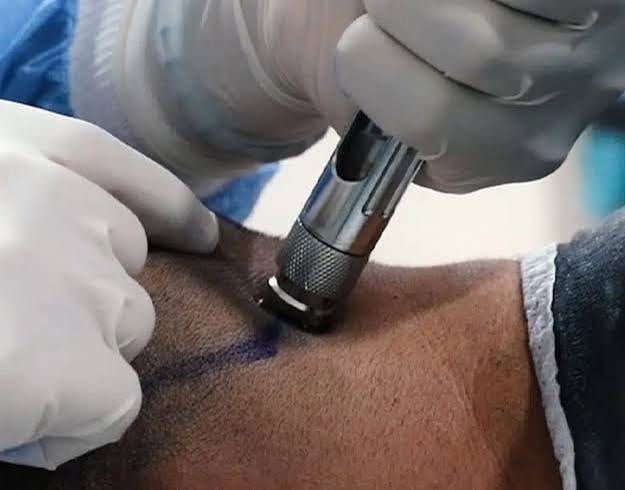
Main findings

  • Published survival figures — such as 96.9% and 93.8% at nine months in one randomised trial — come from small studies at short follow-up.
  • Survival is measured differently between studies, so figures from different sources are not directly comparable.
Read full research →
Long-term outcomes

Comparing results at 1, 3, 5, and 10 years

August 2026 · Hårtransplantation.dk research desk · 3 min read

The twelve-month photograph is the best a result will look relative to the before state. Each subsequent milestone reflects less about the surgery and more about whether the native hair was protected and the plan was conservative.

Main findings

  • Twelve months is the conventional endpoint and the point of maximum contrast against the pre-operative state.
  • Beyond twelve months, changes are driven by native hair loss and ageing rather than by the grafts.
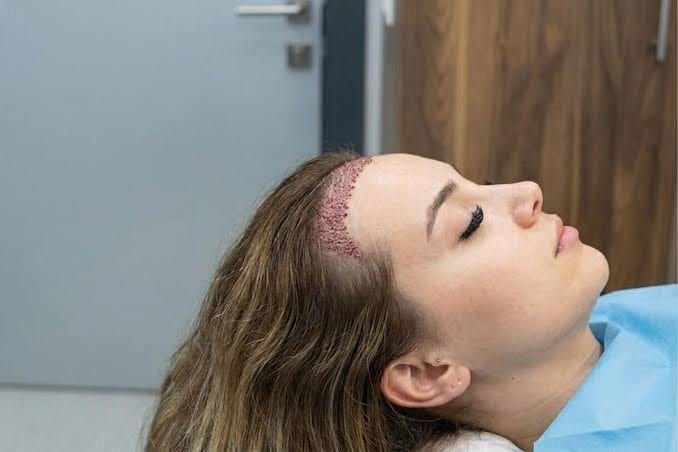
Read full research →
Long-term outcomes

What happens to the donor area as it ages

August 2026 · Hårtransplantation.dk research desk · 3 min read

The donor area thins with age like the rest of the scalp, which slowly reduces the camouflage over extraction scars. Nothing about the scars changes; the hair covering them does.
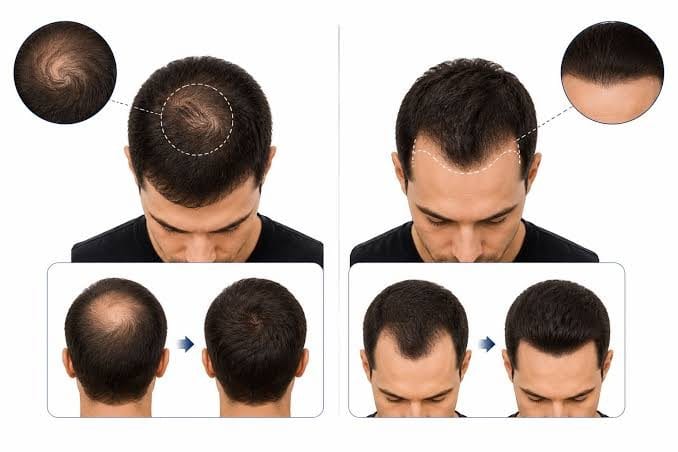
Main findings

  • Age-related hair thinning affects the donor zone too, independently of androgenetic alopecia.
  • A donor area that concealed extraction at year one may not at year twenty, without anything having gone wrong.
Read full research →
Long-term outcomes

Gray hair transition in transplanted grafts

August 2026 · Hårtransplantation.dk research desk · 3 min read

Transplanted follicles grey on the donor area's schedule because pigmentation is a property of the follicle. In practice this usually means the transplanted zone greys roughly in step with the back and sides, which looks natural.

Main findings

  • Greying is determined by the follicle, so transplanted hair follows the donor zone's timing rather than the recipient area's.
  • Lower hair-scalp contrast from greying generally improves the apparent density of a thin result.
Read full research →
Long-term outcomes

Long-term outcomes in women specifically

August 2026 · Hårtransplantation.dk research desk · 3 min read

There is no long-term outcome data for hair transplantation in women. The durability question is decided by whether the donor zone was genuinely unaffected — which is harder to establish in diffuse female pattern loss than in male patterning.

Main findings

  • No published series follows female hair transplant patients beyond around twelve months.
  • Female pattern loss is more often diffuse, so donor involvement is a live risk that determines whether grafts persist.
Read full research →
Long-term outcomes

Beard and eyebrow transplant durability over time

August 2026 · Hårtransplantation.dk research desk · 3 min read

Beard and eyebrow grafts come from the scalp donor zone and are therefore largely DHT-resistant, but they keep scalp growth characteristics — which means eyebrow grafts need trimming for life and beard grafts behave like scalp hair.

Main findings

  • Grafts retain donor characteristics, so transplanted eyebrow hair keeps growing to scalp length and requires ongoing trimming.
  • Long-term follow-up data for beard and eyebrow transplantation is as scarce as for scalp work.
Read full research →
Long-term outcomes

Robotic vs manual extraction: long-term comparison

August 2026 · Hårtransplantation.dk research desk · 3 min read

Comparative work exists at short follow-up but no study compares robotic and manual extraction over years. Since both remove follicles from the same donor zone, the durable differences are in donor-area appearance rather than in graft longevity.

Main findings

  • A 2024 comparative study examined robotic versus traditional follicular unit excision, but at short follow-up rather than over years.
  • Graft longevity depends on where follicles came from, not on what device removed them.
Read full research →
Long-term outcomes

Long-term outcomes when medication is stopped

August 2026 · Hårtransplantation.dk research desk · 3 min read

Stopping medical therapy generally returns the native hair to its untreated trajectory over the following months. The grafts persist; the hair around them resumes thinning, which can change the appearance of the result considerably.

Main findings

  • Medication acts on native hair, so stopping affects the hair around the grafts rather than the grafts themselves.
  • A design that only works on continuous lifelong medication is fragile, because a substantial proportion of patients stop.
Read full research →
Long-term outcomes

Insurance and long-term cost tracking

August 2026 · Hårtransplantation.dk research desk · 3 min read

Elective cosmetic hair restoration is not reimbursed by Nordic public health systems or private insurers, and neither are its complications in most policies. The long-term cost is entirely the patient's, including any revision.

Main findings

  • Elective cosmetic procedures are excluded from public funding and from standard private health insurance.
  • Complications arising abroad frequently fall outside travel policies, which exclude planned medical treatment.
Read full research →
Long-term outcomes

How second and third surgeries affect final density

August 2026 · Hårtransplantation.dk research desk · 3 min read

Additional sessions add grafts but from a progressively smaller reserve, and each is placed among existing grafts and thinning native hair. Final density is set less by total sessions than by how much donor supply survived them.

Main findings

  • Later sessions extract from a reduced donor baseline, so the same graft number represents a larger proportional loss.
  • Adding grafts among existing ones raises the risk of shock loss to hair already transplanted.
Read full research →
Long-term outcomes

Long-term outcomes in younger patients (under 25)

August 2026 · Hårtransplantation.dk research desk · 3 min read

Under-25 patients have the worst long-term outcome profile in hair restoration, not because surgery fails but because the pattern is unknown. The standard guidance is to consider surgery from around 25 once loss has stabilised.

Main findings

  • A pattern that has not finished expressing itself cannot be planned against, so the donor reserve is being allocated against unknown demand.
  • The most common long-term regret in repair consultations is a low hairline placed young.
Read full research →
Long-term outcomes

Long-term outcomes in patients over 60

August 2026 · Hårtransplantation.dk research desk · 3 min read

Older patients have the most predictable planning position because the pattern is settled, offset by age-related thinning of the donor zone, slower healing, and a shorter horizon that changes what a sensible plan looks like.

Main findings

  • A fully expressed, stable pattern makes reserve-to-demand matching far more reliable than in a young patient.
  • Age-related thinning affects the donor area too, so measured density today is not a permanent figure.
Read full research →
Long-term outcomes

Diffuse thinning patients: long-term transplant results

August 2026 · Hårtransplantation.dk research desk · 3 min read

Diffuse thinning is the presentation where long-term results most often disappoint, because the donor zone may be involved. In diffuse unpatterned alopecia, grafts continue to miniaturise after transfer and the reserve is spent for nothing.

Main findings

  • Grafts taken from a miniaturising donor area continue to miniaturise in their new position.
  • Published work has argued that donor-area involvement in diffuse presentations is under-recognised because occipital sparing is assumed rather than verified.
Read full research →
Long-term outcomes

Long-term crown coverage: does it hold

August 2026 · Hårtransplantation.dk research desk · 3 min read

The grafts hold; the crown around them keeps expanding. Because crown loss grows radially, transplanted crown coverage in a progressing pattern becomes an island unless the reserve can keep pace — which it usually cannot.

Main findings

  • Crown area grows with the square of its radius, so each further year of loss costs more grafts than the last.
  • Many careful surgeons decline crown work in younger patients specifically because of this arithmetic.
Read full research →
Long-term outcomes

Long-term temple point stability

August 2026 · Hårtransplantation.dk research desk · 3 min read

Rebuilt temple points sit in a region that continues to recede around them. The grafts persist, but the surrounding recession narrows the frontal band and makes an aggressively restored temple look progressively less natural.

Main findings

  • Temporal recession is part of the androgenetic pattern and continues independently of transplanted grafts.
  • Temple work requires fine hair and precise flat angles, which makes it unforgiving of both design and technique errors.
Read full research →
Long-term outcomes

Weight change and its effect on hairline appearance

August 2026 · Hårtransplantation.dk research desk · 3 min read

Significant weight change alters facial proportion and can make a fixed hairline look differently placed, and rapid weight loss can trigger telogen effluvium — a temporary diffuse shed that is easily mistaken for transplant failure.

Main findings

  • Rapid or substantial weight loss is a recognised trigger for telogen effluvium, a temporary diffuse shed that recovers.
  • A hairline is fixed in position while facial proportions change, so it can read differently after major weight change.
Read full research →
Long-term outcomes

Long-term sun damage to the donor scar

August 2026 · Hårtransplantation.dk research desk · 3 min read

Scar tissue does not pigment like normal skin, so repeated sun exposure over years increases the contrast between hypopigmented scars and tanned skin. It is one of the few donor-area variables a patient controls after surgery.

Main findings

  • Hypopigmented scars do not tan with the surrounding skin, so sun exposure widens the visible contrast over time.
  • Reduced sensation in the donor area after extraction means burning may not be felt until damage is done.
Read full research →
Long-term outcomes

Long-term outcomes across different countries' clinics

August 2026 · Hårtransplantation.dk research desk · 3 min read

No data compares long-term hair transplant outcomes by country, and the structure of the market makes such data almost impossible to collect. What varies systematically is regulation, who performs the surgery, and access to follow-up.

Main findings

  • No registry or comparative study reports outcomes by country of treatment.
  • Cross-border care breaks the link between where surgery happened and where complications present, which is why the data cannot exist under current arrangements.
Read full research →
Long-term outcomes

Follow-up frequency and its effect on outcomes

August 2026 · Hårtransplantation.dk research desk · 3 min read

No study has tested whether follow-up frequency changes hair transplant outcomes. What follow-up does reliably is catch treatable problems early and create the photographic record that makes long-term assessment possible at all.

Main findings

  • No published research links follow-up frequency to outcome in hair transplantation.
  • Follow-up's clearest value is early detection of treatable complications and the creation of comparable records over time.
Read full research →
Long-term outcomes

Long-term outcomes when PRP is used ongoing

August 2026 · Hårtransplantation.dk research desk · 3 min read

A 2025 systematic review examined PRP as an adjunct to hair transplantation and, like the wider PRP literature, identified the need for long-term follow-up and standardised protocols. No study reports outcomes from ongoing PRP over years.

Main findings

  • A 2025 systematic review of PRP as an adjunct to hair transplantation notes the need for long-term follow-up and standardised protocols.
  • PRP's larger evidence base concerns treating androgenetic alopecia, not maintaining a transplanted result.
Read full research →
Long-term outcomes

Long-term outcomes when LLLT is used ongoing

August 2026 · Hårtransplantation.dk research desk · 3 min read

LLLT has randomised evidence in androgenetic alopecia, mostly at months rather than years and mostly alongside Minoxidil. Its relevance after a transplant is to the native hair, not to the grafts — which do not need it.

Main findings

  • A 2025 meta-analysis of seven randomised trials found LLLT added to topical Minoxidil produced greater density gains than Minoxidil alone.
  • That evidence concerns treating androgenetic alopecia; transplanted grafts are already largely DHT-resistant.
Read full research →
Long-term outcomes

Patient photos: 10-year progression case studies

August 2026 · Hårtransplantation.dk research desk · 3 min read

Ten-year photographic series are almost never published, and the reasons are structural. Learning to read what a long-term photograph does and does not show is more useful than looking for series that mostly do not exist.

Main findings

  • Almost all published and marketed hair transplant photography is taken at around twelve months, the most flattering point in the timeline.
  • Lighting, hair length, angle and styling can change apparent density more than a year of hair loss does.
Read full research →
Long-term outcomes

Long-term density loss measured by trichoscopy

August 2026 · Hårtransplantation.dk research desk · 3 min read

Trichoscopy can measure density and shaft diameter objectively over years, which is the only reliable way to distinguish continuing native loss from graft failure. Almost no clinic does it serially, so the data does not exist.

Main findings

  • Shaft diameter diversity and follicular unit counts give an objective measure that photographs cannot provide.
  • Serial trichoscopy is rare in practice, which is one reason long-term outcome data in this field does not exist.
Read full research →
Long-term outcomes

What 'permanent' actually means in transplant marketing

August 2026 · Hårtransplantation.dk research desk · 3 min read

'Permanent' is a marketing simplification of a real but qualified property. Donor hair is largely resistant to DHT, the safe zone's boundaries are inferred rather than measured, and hair ages regardless.

Main findings

  • The clinically accurate phrase is 'largely resistant to DHT' — not permanent, and not 100% resistant.
  • Recent literature has questioned whether occipital hair can reliably be treated as unaffected in advanced androgenetic alopecia.
Read full research →
Long-term outcomes

Long-term outcomes after scarring alopecia transplants

August 2026 · Hårtransplantation.dk research desk · 3 min read

Transplantation into a burnt-out scarring alopecia can work, but graft survival in scarred tissue is lower and disease reactivation is a real risk. Published experience is limited to small case series with follow-up in months to a couple of years.

Main findings

  • A 2025 case series of five lichen planopilaris patients reported satisfaction with follow-up extending beyond twelve months.
  • Transplantation is considered only once the condition has been quiet for at least six months, and often longer.
Read full research →
Long-term outcomes

Long-term outcomes after repair surgeries

August 2026 · Hårtransplantation.dk research desk · 3 min read

Repair is constrained by whatever donor reserve survived the first procedure, and the realistic long-term goal is usually a natural-looking result rather than the one originally promised. No published data follows repair patients over years.

Main findings

  • A repair plan is limited by the surviving donor reserve, which is frequently the binding constraint rather than surgical skill.
  • Camouflage options that cost no donor supply often achieve more than further grafting in a depleted patient.
Read full research →
Long-term outcomes

How aging skin affects graft appearance

August 2026 · Hårtransplantation.dk research desk · 3 min read

Scalp skin thins and loses elasticity with age, which subtly changes how grafts sit and how scarring reads. The effects are gradual and modest, and lower hair-scalp contrast from greying generally offsets them.

Main findings

  • Age-related changes in scalp skin affect how hair exits the surface and how scars appear, though gradually.
  • Reduced contrast from greying usually improves apparent density more than skin ageing degrades it.
Read full research →
Long-term outcomes

Long-term outcomes tied to surgeon experience level

August 2026 · Hårtransplantation.dk research desk · 3 min read

No study links surgeon experience to hair transplant outcomes, because no outcome data is collected. The decisions that determine a ten-year result are mostly made at consultation, which is where experience shows.

Main findings

  • No published research correlates surgeon experience with long-term hair transplant outcomes.
  • The planning decisions that govern a ten-year result — donor assessment, hairline height, reserve allocation — happen before any surgery.
Read full research →
Long-term outcomes

What 20-year case studies (where they exist) show

August 2026 · Hårtransplantation.dk research desk · 3 min read

Twenty-year documented case studies in hair transplantation are essentially absent from the literature. What can be said about two decades comes from biology, from repair-clinic experience, and from what older techniques left behind.

Main findings

  • No published twenty-year cohort or case series with standardised measurement exists in hair transplantation.
  • The clearest twenty-year evidence is negative: repair clinics see the results of plans made two decades ago.
Read full research →

Get a free hair analysis

  1. 1Start
  2. 2Info
  3. 3Done
Talk to an expert