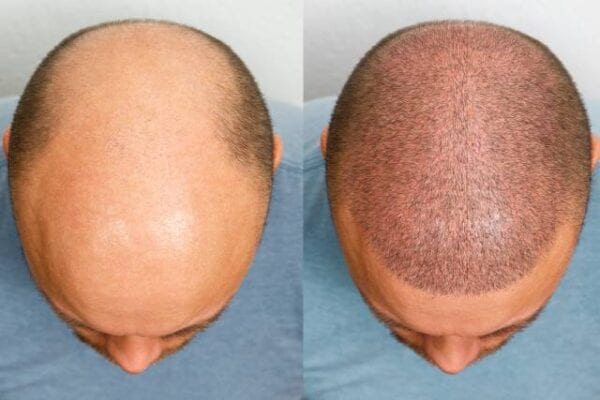
The first 72 hours after a hair transplant: the most critical phase, hour by hour
The first three days determine a large part of how many grafts survive. I review what happens, what you should do, and what you must at all costs avoid.
Why the first 72 hours determine so much
If there is one period in which you as a patient have direct influence on the result of your hair transplant, it is the first 72 hours. In this window the newly placed grafts still sit only loosely in the skin, and they depend on the body establishing a new blood supply to them. Until that happens they survive on oxygen seeping in from the surrounding tissue, a fragile state in which any disturbance can cost grafts that cannot be replaced.
That is why I stress to all my patients that the operation is only half the job. The other half is your effort in the critical first days. An excellent operation can end with a poorer result if the patient is careless now, and conversely careful care can ensure that the operation reaches its full potential. The next three days are an investment in your result.
In this article I go through what happens, and what you should do and avoid, through the first 72 hours. Always follow your own clinic's specific instructions, they are tailored to your particular procedure, but this review gives you an understanding of the principles behind them.
The first hours after the operation
When you leave the clinic the anaesthetic is often still partly working, and the recipient area is delicate, with small, newly placed grafts and possibly a little oozing. The most important principles from the first minute are: do not touch the area, do not let anything, a hat, a pillow, your hands, come into contact with the grafts, and keep your head elevated. Your clinic has probably given you instructions and perhaps a headband to direct any swelling away from the eyes.
Slight oozing and tenderness are normal in the first hours, and as the anaesthetic wears off there may be a tight, tender sensation, which is managed with the painkillers the clinic has prescribed. Take it easy for the rest of the day, do not plan any activities, and make sure you have everything you need within reach so that you do not have to exert yourself.
The most important mental attitude from the start is that you are now the guardian of a fragile investment. Everything you do over the next few days should be seen through one question: does this protect my grafts?
The first night and sleep
Sleep in the first nights matters more than most people think. You should sleep on your back with your head raised about 45 degrees, supported by a couple of pillows or a neck pillow, for two reasons: it reduces swelling and, crucially, it prevents you from rubbing the fragile grafts against the pillow in your sleep. A travel neck pillow helps many people keep the back of the head clear.
Avoid at all costs sleeping on your front or your side, where the recipient area can come into contact with the bedding. It can feel unfamiliar and a little uncomfortable, but it is only for a short period, and it is one of the most direct ways of protecting your grafts. It is a good idea to put a clean towel on the pillow in case of any oozing.
If you find it hard to sleep in that position, talk to your clinic in advance, some recommend a light, approved approach to making it more manageable. But the principle of an elevated head and sleeping on your back is central in the first nights.
Swelling, normal and harmless
A phenomenon that surprises many people is the swelling that often appears on day two to four. It can travel down into the forehead and sometimes around the eyes, which can look dramatic but is entirely harmless and temporary. It is a normal reaction to the anaesthetic fluid and the surgical impact, and it disappears of its own accord over a few days.
You can reduce the swelling by continuing to keep your head elevated, and some clinics recommend gentle cooling of the forehead (not the recipient area itself) according to their instructions. Do not be alarmed if one morning you look more swollen than expected, it typically peaks around day three and then subsides. With unusual signs such as marked, one-sided swelling with pain and heat you should, however, contact the clinic.
Knowing that the swelling is an expected part of the process makes it far less worrying. It is a further example of why knowing what is normal is such an important part of a calm recovery.
Get a free hair analysis
- 1Start
- 2Info
- 3Done
What you absolutely must avoid
- Touching: Do not touch, scratch or pick at the recipient area, however much it itches.
- Pressure and rubbing: No hat, helmet or pillow against the grafts.
- Physical exertion and sweating: Avoid anything that raises the blood pressure in the head, exercise, heavy lifting, bending.
- Smoking and alcohol: Both impair healing and the blood supply; avoid them.
- Sun and heat: Avoid direct sun and very warm surroundings on the recipient area.
- Washing incorrectly: Wash only when and how the clinic instructs, never a hard jet directly on the grafts.
Frequently asked questions
Why are the first 72 hours so important? Because the grafts sit loosely and survive on oxygen from the surrounding tissue until a new blood supply is established. Disturbances in this phase, pressure, rubbing, sweat, can cost grafts permanently.
How should I sleep? On your back with your head raised about 45 degrees to reduce swelling and avoid rubbing the grafts against the pillow. Avoid sleeping on your front or side.
Is swelling in the forehead dangerous? No, it is a normal, temporary reaction, often on day 2-4. Keep your head elevated. Do contact the clinic with marked, one-sided swelling with pain and heat.
When may I wash my hair? Only when and how your clinic instructs, typically 1-3 days afterwards, and always very gently without a hard jet directly on the grafts.
Conclusion
The first 72 hours after a hair transplant are the most critical phase for graft survival, and this is where you as a patient have the most direct influence on your result. Protect the grafts from touching, pressure, rubbing and sweat, sleep on your back with your head elevated, take the temporary swelling calmly, and avoid smoking, alcohol, sun and exertion.
Regard these three days as a short but decisive investment: an excellent operation deserves careful aftercare in order to reach its full potential. Follow your clinic's specific instructions closely. This article is informative and does not replace the clinic's individual guidance.
© IdealofMeD Research Academy. Republished with permission.
Get a no-obligation assessment against fixed criteria, directly on WhatsApp.