
Best sleeping position the first week
On your back with the head raised: one position looks after the grafts and the swelling at the same time.
The best position for the first week is on your back with the head elevated. It keeps pressure off the grafts during the period when they can still be dislodged, and it uses gravity to limit the forehead swelling that peaks around days two to four.
Why do elevation and position work together in the first week after surgery?
Lying on your back keeps the recipient area off the pillow, avoiding pressure and friction on unanchored grafts, while raising the head lets the fluid that causes post-operative swelling drain rather than pool in the forehead and eyelids overnight. One posture solves both problems, which is why people who sleep flat report worse morning swelling.
How do you set up the recommended sleeping position?
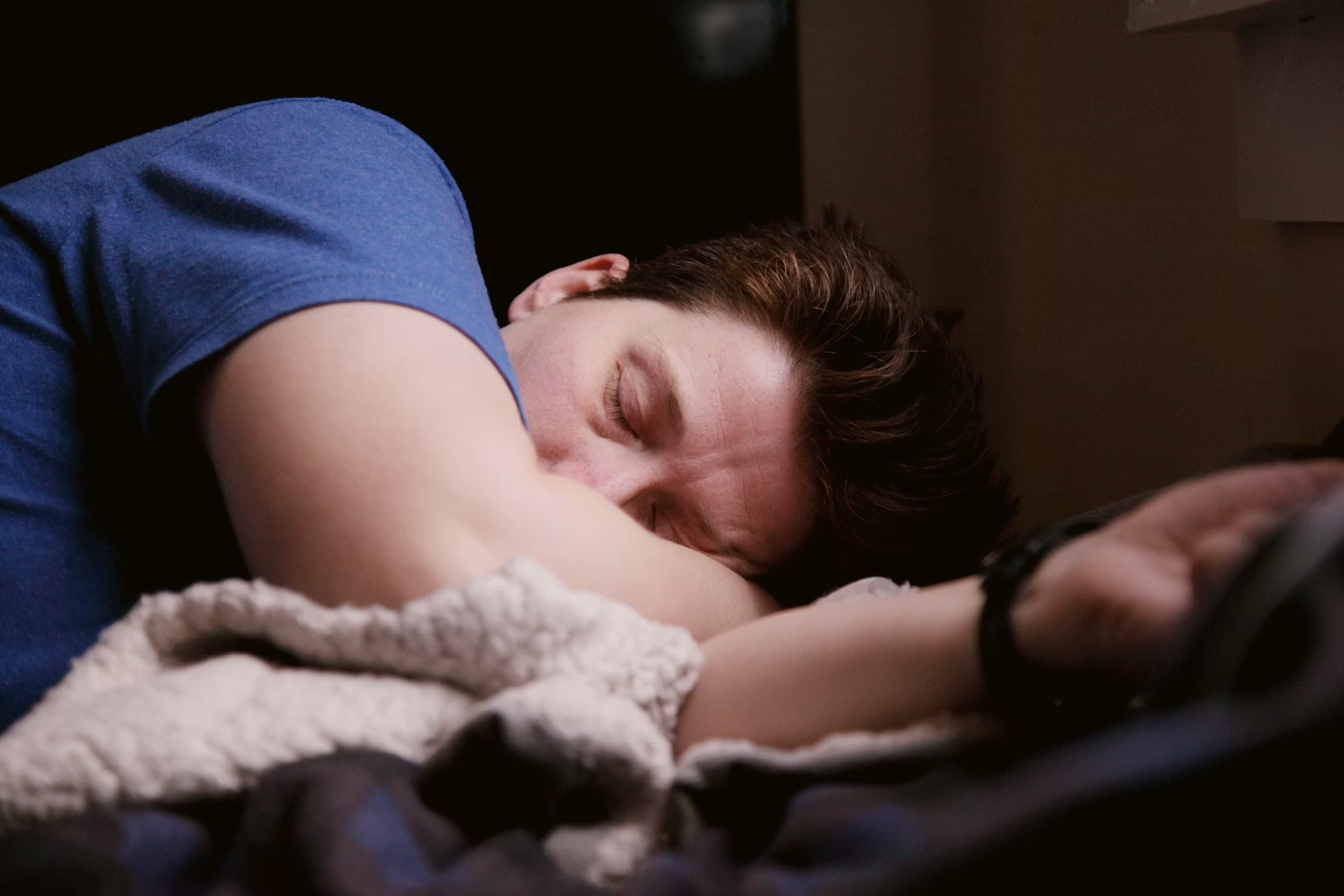
Set up with two or three pillows, a wedge, or a reclining chair at roughly 30 to 45 degrees, plus a travel pillow around the neck so the scalp does not touch anything. Use a clean, smooth pillowcase changed regularly, and place a dark towel on the pillow, since minor oozing is normal.
- Two or three pillows, a wedge, or a reclining chair at roughly 30 to 45 degrees
- A travel pillow around the neck to support the head without the back of the scalp touching anything
- A clean, smooth pillowcase; change it regularly
- A dark towel on the pillow for the first nights, since minor oozing is normal
Which sleeping positions should you avoid in the first week?
Avoid sleeping face down, which drags across the recipient area, and flat on your back with no elevation, which worsens swelling. Also avoid any position where the grafted zone rests against the pillow, and skip a reclining chair with no neck support, which just trades one problem for a stiff neck.
- Face down, which drags across the recipient area
- Flat on the back with no elevation, which worsens swelling
- Any position where the grafted zone rests against the pillow
- Sleeping in a chair without neck support, which trades one problem for a stiff neck
How do you manage a difficult first week of disrupted sleep?
Sleep is disrupted for many people in this period, since elevation is unfamiliar, the donor area can be sore, and the itch phase may begin. Ask your clinic before taking any sleep aid, as it may interact with your medication, and avoid alcohol, which worsens swelling and is a poor sleep aid.
The other first-week restrictions sit alongside this one in our aftercare guide.
Sources
- Bernstein RM, Rassman WR. Graft Anchoring in Hair Transplantation. Dermatologic Surgery, 2006;32(2):198-204. pubmed.ncbi.nlm.nih.gov/16442039
This article summarises published research and standard clinical practice. It is general educational information, not medical advice, and it does not replace the instructions your own surgical team gives you. Where their guidance differs from anything here, follow theirs.
Get a no-obligation assessment against fixed criteria, directly on WhatsApp.