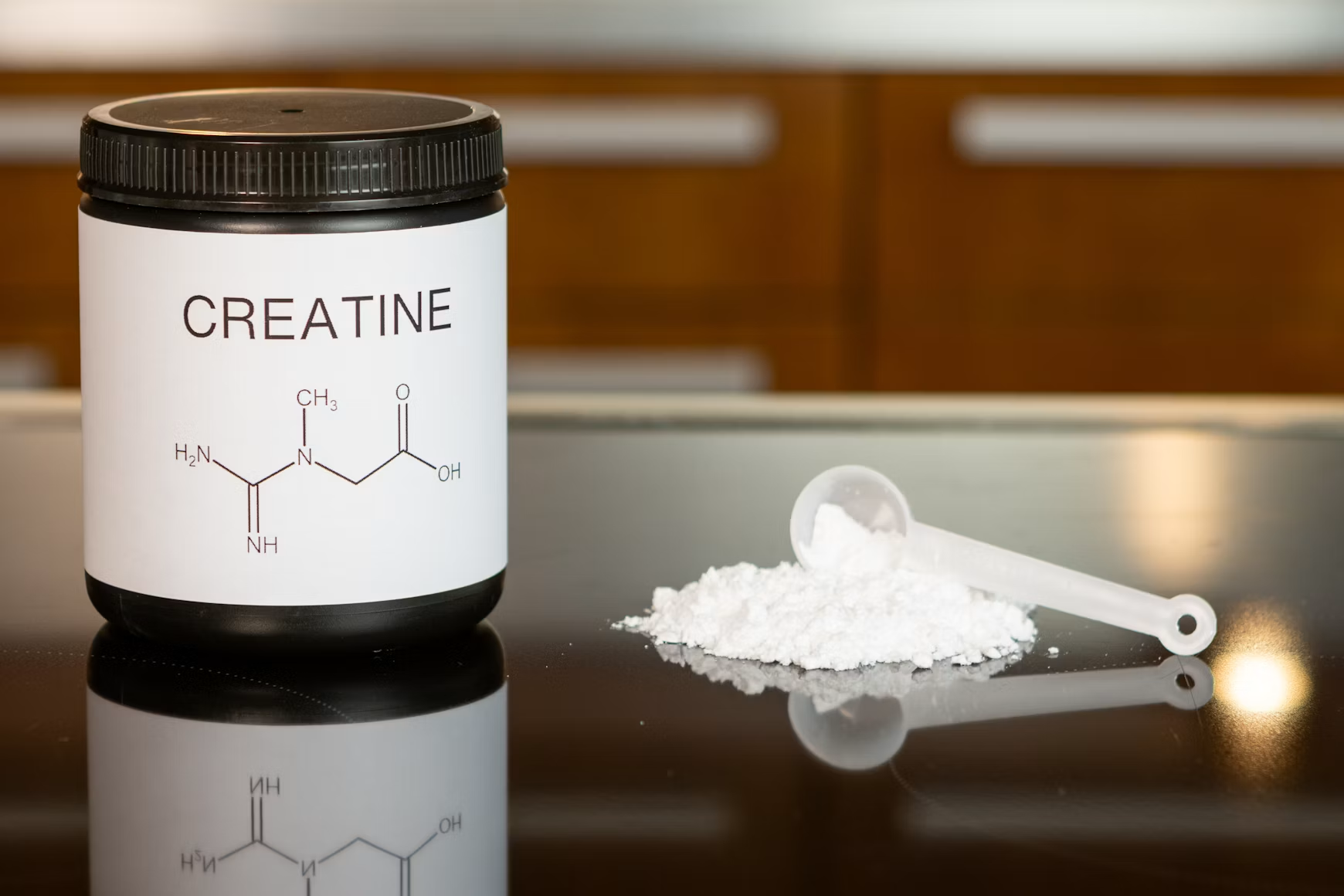
Creatine and hair loss: myth or fact? What the science actually says
Many gym-goers fear that creatine accelerates hair loss. I explain where the concern comes from, and what the evidence really shows.
The concern among gym-goers
Among people who train and use supplements, creatine is one of the most popular and best documented, but it is accompanied by a persistent fear: that it accelerates hair loss. Is there anything in it, or is it a myth?
Where does the concern come from?
The fear rests largely on one frequently cited study from 2009 in rugby players, which showed that creatine raised the level of DHT, the hormone behind hereditary hair loss. It is a logical source of concern, because if creatine raises DHT, it could in theory accelerate hair loss in those genetically predisposed.
What does the evidence actually show?
Here the nuance matters: that one study measured raised DHT, but it did not measure actual hair loss. And it has never been solidly confirmed by larger, well designed studies. There is therefore today no strong evidence that creatine actually causes or accelerates hair loss in humans. It is a theoretical possibility based on one indirect finding, not a demonstrated connection.
What does that mean for you?
If you are not genetically predisposed to hair loss, there is no reason for concern. If you are predisposed, a theoretical risk cannot be entirely excluded, but the proof of a real effect is missing. For most people the well documented benefits of creatine outweigh an unsubstantiated fear. If you are worried, discuss it with a professional rather than basing the decision on one old study.
Get a free hair analysis
- 1Start
- 2Info
- 3Done
Why a single study is not enough
In science a single study is rarely enough to establish a connection, especially when it measures something indirectly. The frequently cited creatine study measured a rise in DHT, but it never observed actual hair loss in the participants, and it has not been repeated and confirmed in larger, well designed trials. Building a strong conclusion that creatine causes baldness on a single, indirect finding is precisely the kind of over-interpretation to be wary of, both in research and in health advice on the internet.
A sensible piece of advice
If you are not genetically predisposed to hair loss, there is really nothing to worry about with creatine. If you are predisposed and still concerned, you can discuss it with a professional, but the decision should rest on the overall evidence, not on one old study or on fear spread on social media. For the great majority the well documented benefits of creatine for training and strength outweigh a theoretical, unsubstantiated risk to the hair.
Conclusion
The link between creatine and hair loss rests on one single study that measured raised DHT but not actual hair loss, and that has never been solidly confirmed. There is today no strong evidence that creatine causes hair loss. For most people the concern is out of proportion to the evidence. This article is informative and does not replace an individual medical assessment.
The underlying mechanism here is hereditary, which we explain under causes of hair loss.
© IdealofMeD Research Academy. Republished with permission.
Get a no-obligation assessment against fixed criteria, directly on WhatsApp.