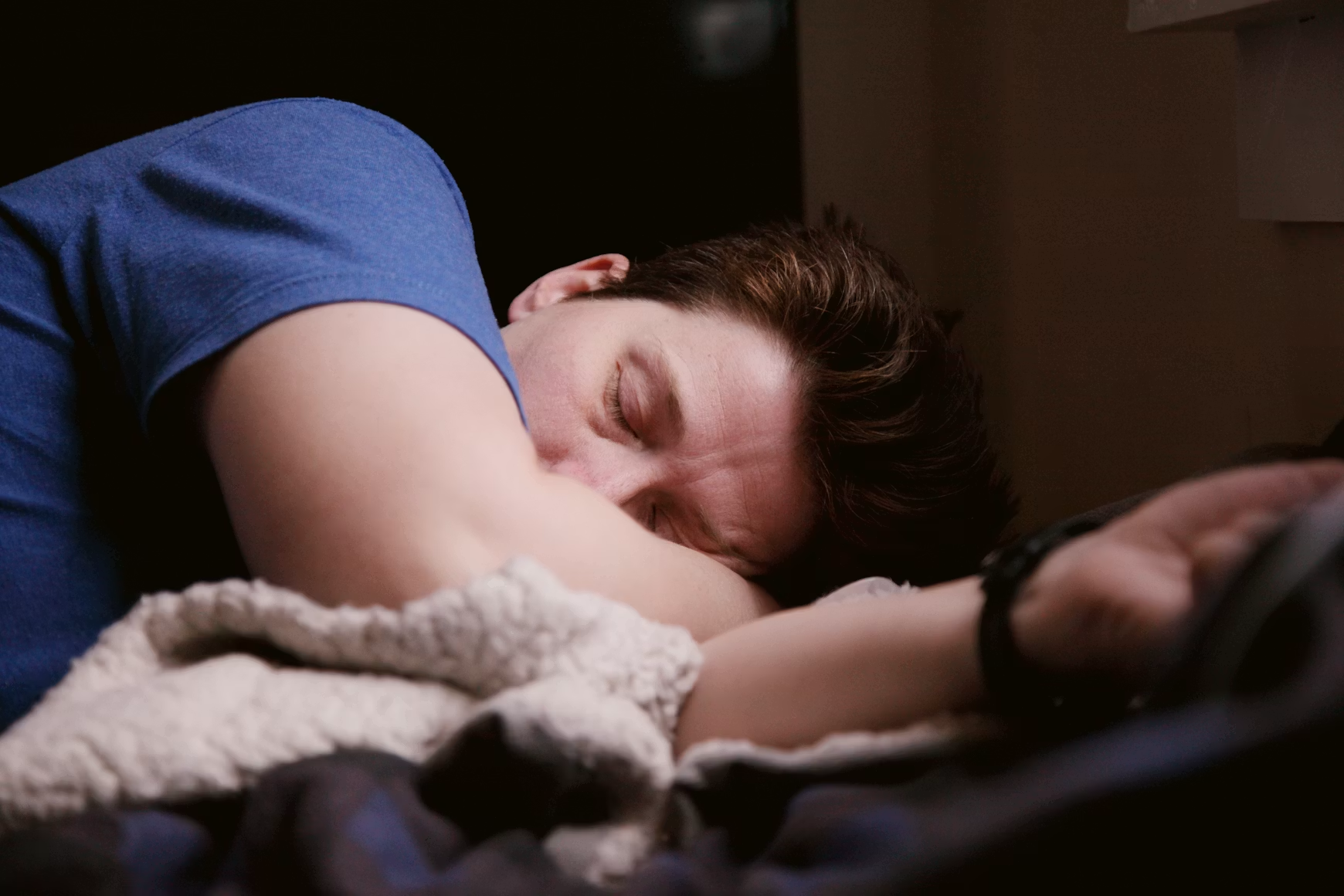
Sleep and hair health: does poor sleep affect your hair?
Sleep affects hormones, stress and healing. I explain the indirect but real connection between sleep and hair health, without exaggerating it.
An indirect but real connection
Can poor sleep cost you your hair? There is no simple, direct causal link, but sleep affects several of the systems that matter for hair health: hormones, stress and healing. The connection is indirect but real, and worth understanding without exaggerating it.
Sleep, stress and hormones
Chronically poor sleep increases the body's stress burden and affects the hormonal balance, including the stress hormone cortisol. Sustained high stress is a known trigger of telogen effluvium, the diffuse hair loss in which many follicles are pushed into the resting phase at once. In that way, prolonged lack of sleep can help sustain or worsen stress-related hair loss.
Sleep and healing
Sleep is also the body's most important time for repair and regeneration. During sleep a large part of the cellular maintenance takes place, and a healthy follicle benefits from a body that is well rested rather than constantly exhausted. Particularly after a hair transplant, good sleep is part of a healthy healing environment.
Put it in perspective
Do not exaggerate it, though: poor sleep alone does not cause hereditary hair loss, and a single bad night's sleep means nothing for your hair. It is chronic lack of sleep that, as part of an overall burden, can contribute to diffuse loss. Sleep is a supporting factor, not a main cause.
Get a free hair analysis
- 1Start
- 2Info
- 3Done
What can be done?
Prioritising good, regular sleep is a cheap and healthy way of removing an unnecessary burden from the hair, and naturally benefits your whole health. Good sleep habits, managing stress and a settled daily rhythm support both your wellbeing and the best growing environment for your follicles. It is not a hair cure, but a sensible foundation.
Part of a whole
Sleep belongs with the other lifestyle factors (stress, diet, smoking) that together make up the environment around the hair. None of them stops hereditary loss on its own, but together they can either burden or support the hair. In genuine hereditary hair loss the effective treatment still belongs with well documented medication, with a healthy lifestyle as the supporting framework.
Conclusion
Poor sleep does not cause hereditary hair loss, but chronic lack of sleep increases stress and affects hormones and healing, which can indirectly contribute to diffuse loss and a poorer growing environment. Good, regular sleep is a cheap, healthy way of supporting the hair, as part of a whole rather than as a cure. This article is for general information and does not replace an individual medical assessment.
Sleep sits among the wider set of factors listed under causes of hair loss.
© IdealofMeD Research Academy. Republished with permission.
Get a no-obligation assessment against fixed criteria, directly on WhatsApp.