Mesotherapy for hair loss: do the small injections help, or is it a waste of money?
Mesotherapy promises to deliver a cocktail of vitamins and growth factors directly to the follicles. I explain what the treatment actually contains, what the evidence says, and set out the advantages and disadvantages honestly.
What is mesotherapy?
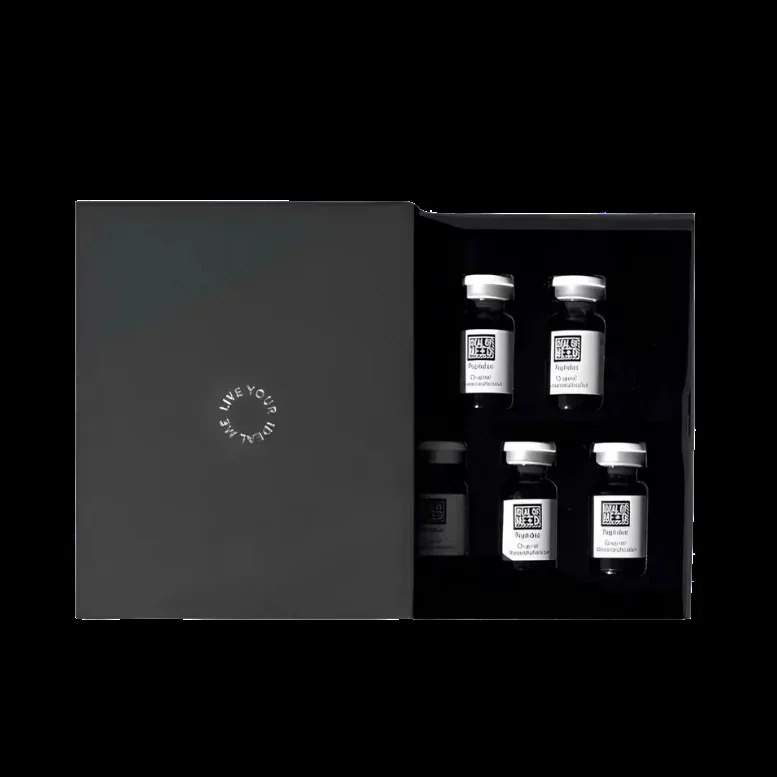
Mesotherapy is a treatment in which a very fine needle is used to inject a mixture of active substances directly into the uppermost layer of the scalp, close to the follicles. The mixture, sometimes called a 'cocktail', may contain vitamins, minerals, amino acids, hyaluronic acid, caffeine, and in certain protocols medicines or growth factors as well. The idea is that by delivering these substances locally, precisely where the follicle sits, you can create a better growing environment than if the substances were simply swallowed or applied to the surface.
The treatment originally comes from French medicine and is today used on the scalp by many beauty and hair clinics. It is marketed broadly for diffuse hair loss and for 'strengthening' the hair generally. As with most popular add-on treatments, it is important to separate the promises of the marketing from the actual documentation, and that is precisely what I will attempt in this article, on the basis of my experience as a hair surgeon.
One important point from the outset: 'mesotherapy' is not one fixed treatment with one fixed content. The cocktail varies enormously from clinic to clinic, which makes it hard to talk about the treatment as a single, well defined thing. Two patients who have both had 'mesotherapy' may have had wildly different substances injected into the scalp.
The theoretical idea behind the treatment
The logic behind mesotherapy is immediately appealing. The follicle is a demanding little organ that needs nutrition, a good blood supply and a healthy environment in order to produce strong hair. In diffuse hair loss, where the follicles are weakened without necessarily being fully DHT driven, the idea is that a direct supply of the right building blocks can revitalise weakened follicles and prolong their growth phase.
Some protocols also include substances that should theoretically block DHT locally or improve the microcirculation. The needle pricks themselves can also, as in microneedling, trigger a mild wound healing response that releases growth factors. On paper there are therefore several plausible mechanisms of action. But again: a plausible mechanism does not prove an effect, and it is the leap from theory to a documented result that matters for you as a patient.
What does the evidence say?
Here I have to be direct: the scientific documentation for mesotherapy against hair loss is weak and inconsistent. There are small studies with mixed results, and because the content of the cocktail varies so much, it is almost impossible to compare treatments or draw general conclusions. We lack the large, well designed, randomised trials that would be needed to establish a real effect.
That does not mean no patients experience improvement, some do. But it is unclear how much of the perceived effect is due to the cocktail itself, how much to the microneedling-like effect of the needle pricks, and how much is placebo or natural variation. Compared with well documented treatments such as Finasteride and Minoxidil, mesotherapy stands on a markedly weaker evidence base. That should weigh heavily when you decide where to place your money and your hopes.
Advantages of mesotherapy
- Local, targeted delivery: The substances are delivered directly where the follicles sit, rather than having to reach them through the bloodstream.
- Minimal recovery: The treatment is an outpatient procedure, quick and requiring no appreciable downtime.
- A possible microneedling effect: The needle pricks themselves can trigger a beneficial wound healing response, independently of what the cocktail contains.
- Can be combined: It does not work against medical treatment and is sometimes used as a supplement.
- Widely available: Offered by many clinics and comparatively gentle.
Note that several of the most certain advantages, the easy recovery and the microneedling effect, have nothing to do with any magical content in the cocktail, but with the form of the procedure itself. That is an important nuance when you assess what you are actually paying for.
Disadvantages and reservations
- Weak evidence: The documentation is limited and inconsistent; you are paying for a treatment of uncertain effect.
- A lack of standardisation: The content of the cocktail varies wildly between clinics, so 'mesotherapy' can mean almost anything.
- A need for repetition: The effect, if any, typically requires a series of sessions and ongoing maintenance, which adds up in cost.
- Discomfort and small risks: The injections can cause tenderness, redness and small bruises, and as with all injections there is a small risk of infection where hygiene is poor.
- It can distract from what works: There is a risk that patients choose mesotherapy instead of the well documented treatments that genuinely make a difference.
Mesotherapy compared with the alternatives
To place mesotherapy fairly it is useful to hold it up against the other injection and stimulation treatments patients often choose between:
| Treatment | Action | Evidence |
|---|---|---|
| Mesotherapy | Nutrient cocktail locally | Weak/inconsistent |
| Microneedling | Wound healing response + uptake | Moderate (especially with Minoxidil) |
| PRP | Your own growth factors | Moderate |
| Minoxidil (topical) | Prolongs the growth phase | Strong |
The table illustrates the point: if you want to spend money on an injection or stimulation treatment, both microneedling and PRP stand on a stronger evidence base than mesotherapy, and topical Minoxidil beats them all on documentation. That makes mesotherapy one of the least convincing choices in this group.
Get a free hair analysis
- 1Start
- 2Info
- 3Done
My clinical position
My position on mesotherapy is reserved. I do not dismiss it entirely, it is comparatively gentle, and the needle pricks themselves may have some beneficial effect, but I cannot recommend it as a documented, priority part of a treatment plan. There are quite simply treatments with better documentation for the same money.
I also become sceptical when mesotherapy is sold in expensive packages with grand promises to 'revive' the hair. In genuine, DHT driven hereditary hair loss a vitamin cocktail does not change the hormonal process behind the thinning. For that patient the time and the money are better spent on well documented medication. If, on the other hand, you have a diffuse, nutrition related loss, it makes more sense to have the underlying cause investigated and corrected, iron, vitamin D, thyroid function, than to inject vitamins into the scalp.
Frequently asked questions about mesotherapy
Can mesotherapy stop hereditary hair loss? No. No vitamin cocktail affects the hormonal, DHT driven process behind hereditary hair loss. That requires well documented medication.
Is it better than PRP? No, in my assessment. PRP uses your own growth factors and has slightly stronger documentation. The inconsistent content of mesotherapy makes it hard to recommend ahead of PRP.
Does it hurt? The fine needle pricks can cause discomfort, tenderness and occasionally small bruises, but the treatment is tolerated by most people and requires no recovery.
Who might it make sense for? Perhaps the person with a diffuse, not purely hereditary loss who wants gentle stimulation and understands that the evidence is weak. For the classic androgenetic patient I would prioritise differently.
Who seeks out mesotherapy, and why I understand it
In my practice I often meet patients who have tried mesotherapy before they come to me, and I understand the attraction perfectly well. The treatment feels active and concrete: you are doing something tangible about the problem, you receive a series of treatments at a clinic, and you experience a sense of having taken the matter in hand. For someone worried about their hair loss and struggling to accept the slow, invisible effect of tablets and foam, there is real psychological value in that feeling.
The problem arises when the feeling of action is confused with a documented effect. I have seen patients spend considerable sums on repeated courses of mesotherapy while omitting or postponing the well documented medication that could actually have preserved their hair. That is the trap I most want to help people avoid: that what feels like the most active effort is not necessarily the one that works best. Genuine care for your hair is sometimes about patience with the invisible rather than enthusiasm for the tangible.
What you should do before considering mesotherapy
If you are experiencing hair loss and considering mesotherapy, my advice will always be to take things in the right order. First: get a proper diagnosis. Is your loss hereditary (androgenetic), diffuse, or due to an underlying cause such as iron deficiency or thyroid disease? This clarification changes everything, because it determines which treatment makes any sense at all.
If the loss is hereditary, build your foundation on well documented medication before you spend money on supplements with weak evidence. If the loss is diffuse and nutrition related, get the underlying deficiency corrected, that makes a greater difference than any vitamin cocktail injected into the skin. Once the foundation is in place, you can consider supplements with open eyes, and here I would personally prioritise microneedling or PRP over mesotherapy because of the better documentation. Mesotherapy is not dangerous, but it is rarely the wisest place to put your money and your hope first.
Realistic expectations and an honest sum
Let me finish with the sum I ask my patients to do for themselves before choosing mesotherapy. A typical course consists of a series of treatments followed by ongoing maintenance, and when you add it all up over a year or two we are often talking about considerable amounts. The question you should honestly ask is: what could the same money buy in treatment with better documentation?
For most people with hereditary hair loss the answer will be several years of well documented medication, which demonstrably slows the loss, or a meaningful contribution towards an actual hair transplant if that becomes relevant one day. Set against a treatment with weak, inconsistent evidence, the priority is often clear once you think it through coolly and soberly.
That does not mean mesotherapy can never have a place. For the patient who has the foundation in order, has had the cause investigated, and who with open eyes wants to try a gentle supplement, it is a defensible choice. But it should be an informed addition on top of what works, not a substitute for it, and not a purchase made in the hope that this particular cocktail will be the one that finally works. Genuine progress against your hair loss comes from the documented basics, not from the most eye-catching treatment.
Conclusion
Mesotherapy for hair loss rests on an appealing idea, delivering nutrition directly to the follicles, but it suffers from weak, inconsistent evidence and a total lack of standardisation. Part of the possible effect is probably due to the needle pricks themselves rather than the content of the cocktail, and for the same money there are treatments with better documentation.
My recommendation is to anchor your treatment in what is well documented, medication for hereditary loss, investigation of the cause in diffuse loss, and to regard mesotherapy as an uncertain, optional supplement rather than a solution in itself. This article is informative and does not replace an individual medical assessment.
© IdealofMeD Research Academy. Republished with permission.
Get a no-obligation assessment against fixed criteria, directly on WhatsApp.