Microneedling for hair loss: one of the best documented supplements, and how to use it properly
Microneedling is cheap, simple and better documented than most people think, especially alongside Minoxidil. I explain the mechanism, the evidence and the real pros and cons.
What is microneedling?
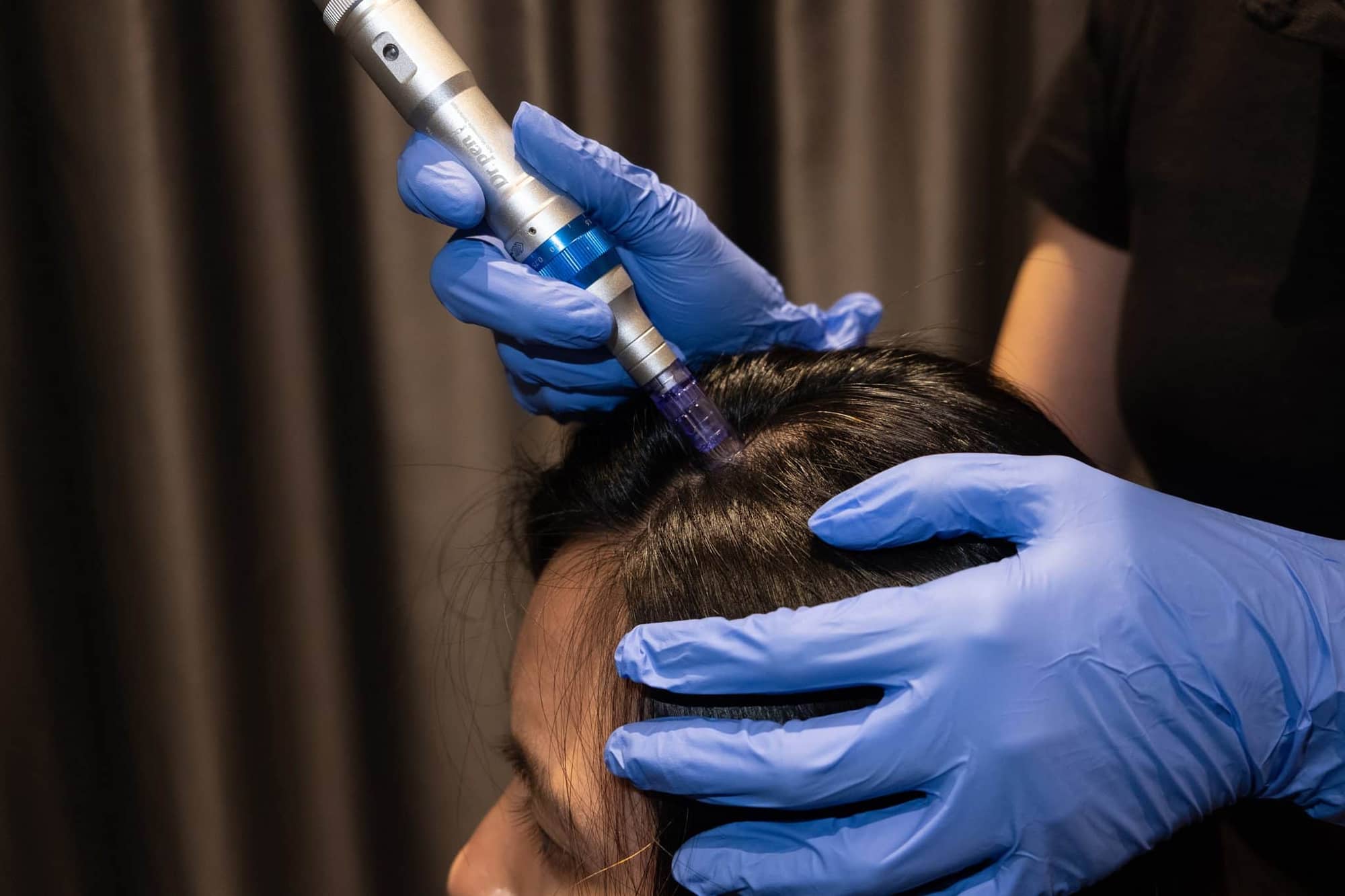
Microneedling, also called dermarolling or collagen induction therapy, is a treatment in which a device fitted with many fine needles is used to make a large number of microscopic punctures in the scalp. The device can be a roller (a dermaroller) or a pen (a dermapen), and the needle length typically varies from under a millimetre to a couple of millimetres. The purpose is not to 'wound' the scalp, but to trigger a controlled healing response in the skin.
The treatment is cheap, can be carried out both at a clinic and, with care, at home, and has become widespread among people struggling with hair loss. Microneedling is actually one of the better documented do-it-yourself treatments, especially when combined with Minoxidil. As a surgeon I regard it as one of the more sensible supplements, provided it is used correctly, which is far from always the case.
How does it work?
There are two main mechanisms behind microneedling. The first is the wound healing response: when the skin registers the many microscopic punctures, it activates a repair process that releases growth factors and signalling substances. The same substances that heal the skin are thought to stimulate the follicles and potentially wake resting ones. There is also evidence that the process activates particular signalling pathways (such as Wnt/β-catenin) that are important for hair growth.
The second mechanism is just as important in practice: microneedling improves the uptake of topical agents. When you apply Minoxidil to a scalp that has been microneedled, far more of the active substance can penetrate down to the follicles. That is probably a large part of the explanation for why the combination of microneedling plus Minoxidil has proved more effective in studies than Minoxidil alone.
What does the evidence say?
Here the picture is actually fairly encouraging by the standards of hair treatment. Several studies, including randomised trials, have shown that microneedling combined with Minoxidil gives better results than Minoxidil alone, with a measurable improvement in hair count and density. That is stronger documentation than can be claimed for many popular add-on treatments.
The important reservation is that the evidence is strongest for microneedling as a supplement, especially to Minoxidil, not as a standalone cure. There is also variation in which protocols (needle length, frequency) work best, and a number of the studies are small. But taken together, microneedling sits among the better documented supplements, which is worth knowing when you have to prioritise your resources.
Advantages of microneedling
- Reasonable evidence: Better documented than most supplements, especially alongside Minoxidil.
- It improves the uptake of Minoxidil: It can make your existing treatment more effective.
- Cheap: A quality device costs far less than most clinic treatments.
- Can be done at home: With correct technique and hygiene you can carry out the treatment yourself.
- A gentle mechanism: It uses the body's own healing response rather than introducing foreign substances.
Disadvantages and risks
- Technique and hygiene are critical: Incorrect use (needles that are too long, treating too often, an unclean device) can damage the skin or cause infection.
- Discomfort: The treatment can cause tenderness, redness and slight bleeding, depending on needle length.
- A need for persistence: Like all hair treatment it requires regular, long term use to have an effect.
- Timing with Minoxidil needs thought: You should not apply Minoxidil immediately after microneedling, since the increased uptake can also increase irritation; follow a sensible protocol.
- Not a solution on its own: As a single treatment against hereditary loss the effect is limited; the strength lies in the combination.
How to do it properly
Because microneedling is one of the few treatments I can genuinely see the sense in as a cheap supplement, it is worth doing properly. Some practical principles I share with interested patients:
| Element | A sensible approach |
|---|---|
| Needle length | Shorter needles more often are gentler than long needles rarely; follow clinical guidance. |
| Frequency | Typically once a week, not daily; the skin has to have time to heal. |
| Hygiene | A clean device every time, a clean scalp; otherwise there is a risk of infection. |
| Minoxidil timing | Avoid applying Minoxidil straight afterwards; wait so that the irritation subsides. |
If you are in doubt, get guidance from a professional before you begin, particularly about needle length and frequency, where most mistakes happen. Excessive use in the belief that 'more is better' is the classic error and can do more harm than good.
Get a free hair analysis
- 1Start
- 2Info
- 3Done
Microneedling after a hair transplant
A frequent question is whether microneedling can be used after a transplant to support growth. The answer is yes, but with important reservations about timing. Under no circumstances should you microneedle a recently transplanted area; the fragile grafts need plenty of time to anchor and heal, typically many months, before the skin can tolerate that treatment.
Used well into the process, on a fully healed area and by agreement with your clinic, microneedling can potentially support both the transplanted and the surrounding hair. But it is a decision to be taken together with your surgeon, not something to launch into on your own shortly after the operation.
Frequently asked questions about microneedling
Does microneedling work on its own? The effect is limited as a single treatment. The documentation is strongest when it is combined with Minoxidil, where the two reinforce one another.
How long should the needles be? That depends on the protocol and should be settled with a professional. In general, shorter needles used correctly and frequently are gentler and safer than long needles used aggressively.
Can I do it at home? Yes, with correct technique and strict hygiene. But errors in needle length, frequency or cleanliness can cause harm, so read up thoroughly first, or have it done at a clinic.
Is it dangerous? With correct use the risk is low. The main risks are infection where hygiene is poor and skin damage from excessive use, both avoidable with a little thought.
Why I am positive about microneedling, with reservations
Among the many supplements patients ask me about, microneedling is one of the few I can genuinely get a little enthusiastic about, and I do not say that often. The reason is simple: it rests on a sensible biological mechanism, it has documentation that is actually worth taking seriously, it is cheap, and it uses the body's own healing capacity rather than introducing foreign substances of uncertain effect. In a world full of overpriced miracle cures there is something refreshingly straightforward about a simple, well documented method.
My reservations are not about the method itself, but about how people use it. I regularly see patients who have damaged their scalp by using needles that are too long, treating too frequently in the belief that 'more is better', or neglecting hygiene. Microneedling is only as good as the technique behind it. Used carefully and consistently it is one of the best cheap supplements; used aggressively and carelessly it can do harm. That difference is worth taking seriously before you start.
Microneedling within an overall strategy
The way I fit microneedling into a treatment plan is as an amplifier, not as a main treatment. Picture the treatment of hereditary hair loss as a pyramid: at the bottom lies the foundation, the well documented medicines Finasteride and Minoxidil, which do the heavy lifting. On top of that foundation you can place supplements that strengthen the effect, and this is where microneedling fits, particularly because it improves the uptake of Minoxidil itself.
This layered way of thinking helps keep things in the right perspective. Microneedling makes a good treatment slightly better; it does not rescue a treatment that is missing its foundation. The patient who microneedles diligently but omits the well documented medication has turned the pyramid upside down. Used properly, as reinforcement on top of what works, microneedling is on the other hand one of the smartest and cheapest additions you can make. That is the nuance I would like my patients to take away.
Because microneedling is so cheap and accessible, cost is never an argument against trying it, provided you use it with respect for technique and hygiene. For many of my patients it has become a fixed weekly routine tied to their Minoxidil treatment, contributing over months to the overall effort without any appreciable extra expense. This is the kind of down-to-earth, well documented measure I would far rather recommend than the expensive, glittering treatments the market is so full of.
A safety reminder I always give
Because microneedling is so accessible and cheap, many people throw themselves into it without sufficient thought, and so I always finish with a safety reminder. The most important rule is that the scalp must have time to heal between treatments. The punctures, however small, are still microscopic wounds, and if you treat too frequently the skin never gets to recover. The result is irritation, inflammation and, in the worst case, harm rather than benefit.
The second central rule is hygiene. A device reused without proper cleaning, or a scalp that is not clean, is an obvious source of infection. Because you are creating many small openings in the skin, there is a genuine entry route for bacteria that has to be taken seriously. A clean device and clean skin, every single time: that is not negotiable.
Finally, I always warn against the temptation to use ever longer needles in the belief that this gives better results. Longer needles reach deeper, hurt more, bleed more and increase the risk of damage, without a correspondingly proven gain. For home use, shorter needles used correctly and regularly are far preferable. If you are in doubt about any of these points, have it done or supervised at a clinic until you are confident with the technique. Microneedling is a good tool, but only in respectful hands.
Conclusion
Microneedling is one of the more sensible and better documented supplements against hair loss, especially in combination with Minoxidil, where the two reinforce one another. It is cheap, gentle and can be done at home, but only with correct technique and strict hygiene; otherwise it can cause harm.
Regard microneedling as an amplifier on top of a solid foundation, not as a solution on its own. Used properly, on top of well documented medication, it is one of the few additions I genuinely see value in. This article is for general information and does not replace an individual medical assessment.
© IdealofMeD Research Academy. Republished with permission.
Get a no-obligation assessment against fixed criteria, directly on WhatsApp.