Shock loss: why the new hairs fall out (and come back)
It looks alarming, but it is entirely expected, and a sign that the process is normal.
What is shock loss?
Shock loss is a phenomenon almost everyone experiences after a hair transplant, and one that can seem deeply worrying if you are not prepared for it: around the second to third week after the operation the transplanted hairs fall out. Many people panic and believe the operation has failed, but the opposite is the case. Shock loss is an entirely normal, expected part of the process.
The explanation lies in the hair's growth cycle. The hair shaft itself is shed, but the follicle remains in the skin. It enters a resting phase (telogen) and, after a few months, begins to produce a new hair. So it is only the visible shaft you temporarily lose, not the transplanted follicle itself.
Because shock loss is so common and so easy to misunderstand, it is one of the topics where aligning expectations before the operation matters most. A good clinic prepares you thoroughly, so that you are not hit by unnecessary panic when the hair starts to fall out, because it will happen in most people.
Why does it happen?
When a follicle is moved, it is exposed to considerable trauma: it is released from its original site, is briefly without a blood supply and is placed somewhere new. This stress pushes the follicle into the resting phase, where the existing shaft is expelled. It is the body's natural reaction, not a sign of rejection or of a mistake.
Some people also experience a temporary loss of some of their original hair around the recipient area, and this is also called shock loss and is caused by the surgical stress in that area. This too grows back in the great majority of cases as the follicles recover.
The timeline: what happens when?
- Week 1-2: Crusts fall off, and the transplanted hairs are still in place.
- Week 2-3: Shock loss: the transplanted hairs fall out. Entirely normal.
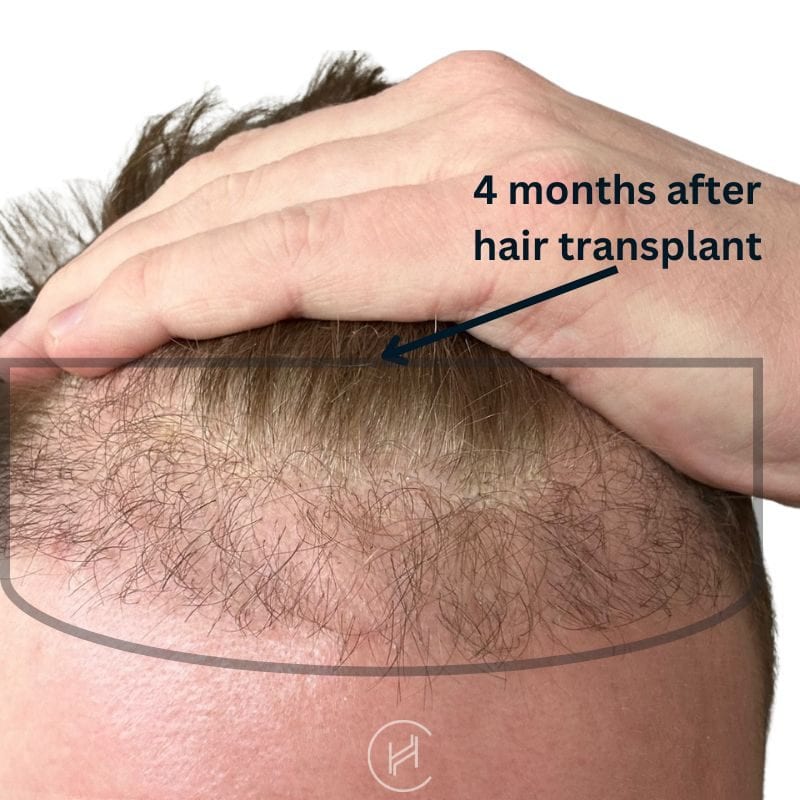
- Month 3-4: The new hairs begin to sprout, often thin and fine at first.
- Month 6: Around half of the final result is typically visible.
- Month 12-18: The final result with full density, especially at the crown.
Because months pass between the shedding and the new growth, there is often a period where the area can look thinner than it did immediately after the operation. It is a dip, not a dead end.
Get a free hair analysis
- 1Start
- 2Info
- 3Done
How to handle shock loss mentally
The best tool against shock loss is knowledge and patience. Once you know that the shedding is expected and temporary, it loses its power to frighten. Resist the urge to draw hasty conclusions: it is impossible to judge a transplant before the new hairs have grown through, which happens at the earliest from month 3-4 and is only complete after 12-18 months.
Follow the clinic's aftercare instructions closely during this period, see our guide to aftercare, and contact your clinic if you are in doubt. A reputable clinic will have explained shock loss to you in advance and is available for questions along the way.
It can help to keep a simple log with date-stamped photographs taken in the same light and at the same angle. That way you can see the real development rather than reacting to daily uncertainty. Many people find the mental side of the process (the patience during the wait) the hardest part, simply because the result develops so slowly.
Conclusion
Shock loss, where the transplanted (and sometimes original) hairs fall out in the weeks after an operation, is a normal, expected part of the process, not a sign of failure. The follicles stay in the skin and produce new hairs after a resting phase. The real result only shows itself from month 3-4 and fully after 12-18 months. Patience is what it takes. This article is for general information and does not replace the clinic's individual guidance.
When should you contact the clinic?
Shock loss in itself is normal and requires no action. But you should contact your clinic if you experience signs that do not belong to normal healing: increasing redness, heat, pus, severe pain, fever or signs of infection in the donor or recipient area. These are rare, but must be assessed professionally and quickly.
If you are simply worried about the amount of hair falling out during the shock loss phase, a short conversation with the clinic is often enough to restore your peace of mind. A reputable clinic expects that kind of question and answers it willingly; it is part of a proper recovery process, which you can read more about under aftercare.
© IdealofMeD Research Academy. Republished with permission.
Get a no-obligation assessment against fixed criteria, directly on WhatsApp.