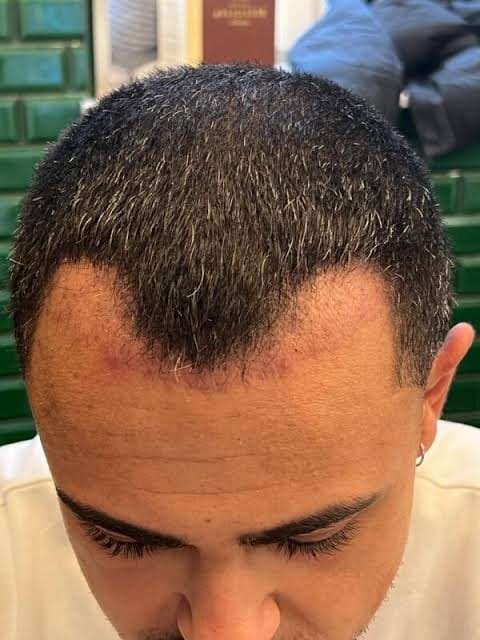
Shock loss explained: why existing hair falls out
Losing hair you already had, weeks after the surgery, is alarming. In most cases it grows back.
Shock loss is the temporary shedding of existing native hair around or within a transplanted area, caused by the trauma of surgery pushing follicles prematurely into their resting phase. It is usually temporary, and it is distinct from the shedding of the transplanted hairs themselves.
What is shock loss?
Shock loss is when the stress of surgery (incisions, anaesthetic, swelling and altered blood supply) pushes native hairs out of their growth phase and into an early resting phase. Because affected follicles enter rest together, they shed together a few weeks later, which is why the loss looks sudden and dramatic rather than gradual.
What is the difference between shock loss and transplanted hair shedding?
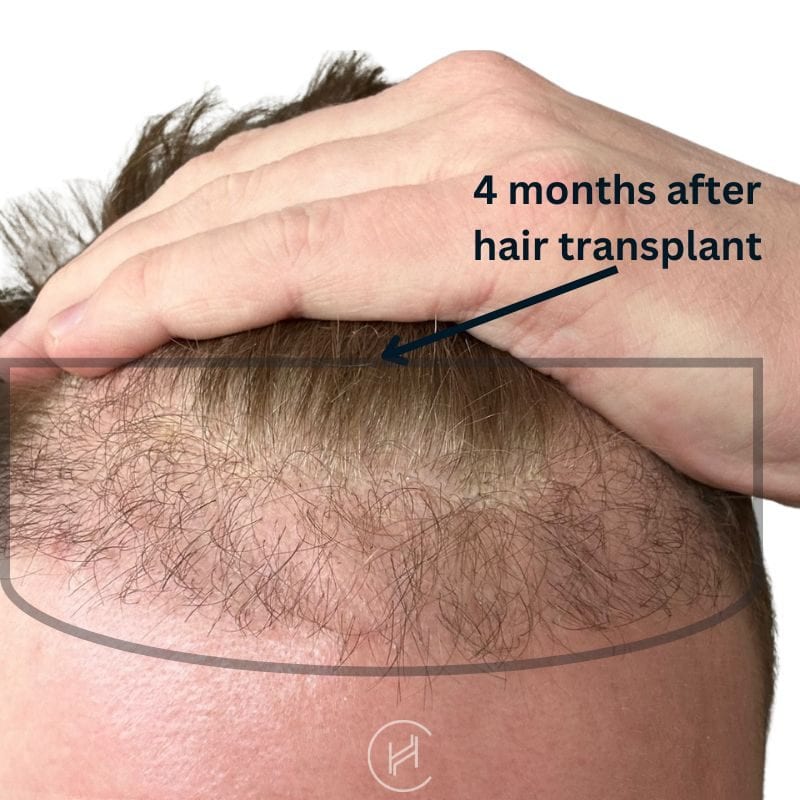
Transplanted hair shedding is the loss of newly placed graft shafts in the first weeks, expected in nearly everyone, with the follicle itself remaining intact. Shock loss is different: existing native hair around the recipient or donor area sheds, which is not universal. Both are usually temporary, and neither means the transplant has failed.
- Transplanted hair shedding. The shafts of the newly placed grafts fall out in the first weeks. Expected in nearly everyone; the follicle stays.
- Shock loss. Existing native hair around the recipient or donor area sheds. Not universal, and more noticeable in people who still had substantial native hair in the treated zone.
Both are usually temporary. Neither means the transplant has failed.
Who is more likely to experience shock loss?
Shock loss is more likely in people with significant miniaturised native hair in the recipient area, since weakened follicles tip into rest most easily, and in larger sessions with denser packing. Women are more affected too, since diffuse thinning leaves more native hair present to shed, as are people already losing hair rapidly.
- People with significant miniaturised native hair in the recipient area, because weakened follicles are the most easily tipped into rest
- Larger sessions and denser packing
- Women, who more often have diffuse thinning rather than bare areas, so there is more native hair present to shed
- People already experiencing active, rapid hair loss
Is shock loss permanent?
In most cases, no. Follicles pushed into rest re-enter growth and hair returns over the following months. The exception is hair that was already heavily miniaturised, where surgery can be the final stress that finishes off a failing follicle. The operation then reveals loss that was already under way rather than causing it, which is one reason medical treatment alongside surgery is often recommended.
Sources
- Bernstein RM, Rassman WR. Graft Anchoring in Hair Transplantation. Dermatologic Surgery, 2006;32(2):198-204. pubmed.ncbi.nlm.nih.gov/16442039
This article summarises published research and standard clinical practice. It is general educational information, not medical advice, and it does not replace the instructions your own surgical team gives you. Where their guidance differs from anything here, follow theirs.
Get a no-obligation assessment against fixed criteria, directly on WhatsApp.