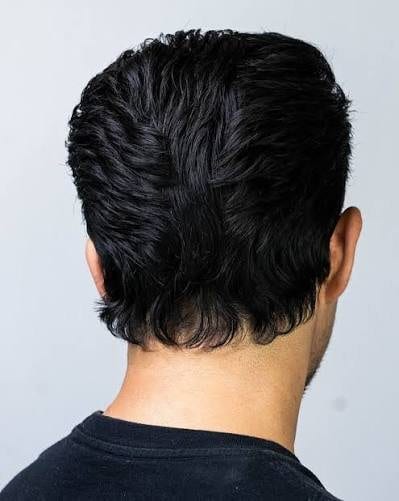
Donor assessment at consultation: what should be measured
A proper donor assessment measures density at several points, records hair calibre and hairs per unit, examines the periphery under magnification for miniaturisation, and produces a lifetime reserve estimate.
A proper donor assessment measures density at several points, records hair calibre and hairs per unit, examines the periphery under magnification for miniaturisation, and produces a lifetime reserve estimate. Anything less is an estimate from a photograph.
Why does the donor assessment matter more than the rest of the consultation?
Most of a consultation focuses on the recipient area — the hairline, how much coverage is achievable — because that's what patients care about. The donor assessment is the input every other decision depends on, and is the step most often skipped. Without it, any graft number quoted is an estimate from a photograph.
Most of a hair transplant consultation is spent on the recipient area: where the hairline should sit, how much coverage is achievable, what the result will look like. That is the part patients care about and the part clinics lead with.
The donor assessment determines whether any of it is possible. It is the input to every other decision, it takes a few minutes, and it is the step most often skipped in a video consultation or a high-volume clinic.
If your consultation did not include a magnified examination of your donor area, the graft number you were quoted was an estimate from a photograph.
What four things should a donor assessment measure and record?
A proper donor assessment records four findings: follicular unit density in units per cm² at several points, ideally over 50; the average hairs per follicular unit, which converts a graft count into a hair count; hair calibre, or shaft diameter; and miniaturisation, the finding that can rule out surgery entirely.
1. Follicular unit density
Measured with a densitometer or trichoscope over a clipped patch, in follicular units per cm², at several points across the donor zone rather than one. Ideally over 50 per cm². Should be recorded as a number, and you should be told what it is.
2. Hairs per follicular unit
The average number of hairs in each unit. This is what converts a graft count into a hair count, and it varies substantially between individuals.
3. Hair calibre
Shaft diameter, assessed under the same magnification. Coverage depends on hair mass, so calibre is at least as important as density.
4. Miniaturisation
The presence or absence of shaft diameter diversity and finer hairs mixed among terminal ones, examined across the zone including the periphery. This is what distinguishes a stable donor area from a thinning one, and it is the finding that can rule out surgery altogether.
What should a donor assessment produce, beyond raw measurements?
Measurements alone are not an assessment; they should produce three outputs: an estimated lifetime donor reserve covering all future sessions, not what can be extracted today; a worst-case pattern assumption, meaning the Norwood stage the plan is built against; and an allocation showing how the reserve is divided between this session and future ones.
Measurements alone are not an assessment. They should produce three outputs.
- An estimated lifetime donor reserve — the total number of follicular units realistically available across all future sessions, not just what can be extracted on the day.
- A worst-case pattern assumption — the Norwood stage the plan is built against, with the reasoning behind it (age, family history, current rate).
- An allocation — how the reserve is divided between this session and future ones, and which regions get priority.
These three, stated explicitly, are what distinguishes a plan from a quote.
What else should be discussed at a thorough donor consultation?
A thorough consultation covers your intended hair length, since wanting to clip short constrains extraction; any keloid or hypertrophic scarring history, which changes the risk picture for both techniques; scalp laxity if strip surgery is being considered; medical therapy to protect native hair around grafts; and standardised donor-area photographs taken before surgery as a baseline.
- Your intended hair length. If you want to keep the option of clipping short, this constrains extraction and must be said out loud.
- Scarring history. Keloid or hypertrophic scarring history changes the risk picture for both techniques.
- Scalp laxity, if strip surgery is on the table.
- Medical therapy. What protects the native hair around the grafts, discussed with a doctor who knows your history.
- Photographs. Standardised donor-area photographs before surgery, which give you a baseline to compare against later.
What six questions test whether a clinic actually did a proper donor assessment?
Ask your donor density in follicular units per cm² and how many points were measured; your average hairs per unit and shaft calibre; whether the periphery was examined under magnification; your estimated lifetime reserve and the Norwood stage the plan is built against; how many grafts are held back; and to see twelve-month donor photographs.
- What is my donor density, in follicular units per cm², and at how many points did you measure?
- What is my average hairs per follicular unit, and my shaft calibre?
- Did you examine the donor periphery under magnification, and was there any miniaturisation?
- What is my estimated lifetime reserve, and what Norwood stage is the plan built against?
- How many grafts are held back for future sessions?
- Can I see donor-area photographs of your patients at twelve months at short hair length?
A clinic that answers these six clearly has assessed you properly. One that answers none of them has sold you a graft number.
Sources
- Jimenez F, Ruifernández JM. Distribution of human hair in follicular units. A mathematical model for estimating the donor size in follicular unit transplantation. Dermatologic Surgery, 1999;25(4):294-298. pubmed.ncbi.nlm.nih.gov/10417585
- Maas D, et al. Rethinking the occipital scalp as a control in advanced androgenetic alopecia. Journal of the American Academy of Dermatology, 2026 (ahead of print). pubmed.ncbi.nlm.nih.gov/42398778
- Xu Y, et al. Case Report: Paired vertex-occipital assessment reveals donor-area involvement in diffuse unpatterned alopecia. Frontiers in Medicine, 2026;13:1797275. pubmed.ncbi.nlm.nih.gov/41982548
- Romera de Blas C, Vega Díez D, Ricart Vayá JM, Gómez Zubiaur A. Complications in follicular unit excision hair transplantation: current evidence and practical approaches. Frontiers in Medicine, 2026;13:1750989. pubmed.ncbi.nlm.nih.gov/41709896
- Zhao Y, Zhang J, Jiang B, Fan Z, Miao Y. Development of an Evaluation System to Classify Beard Donor Area for Hair Transplantation. Dermatologic Surgery, 2025;51(9):882-886. pubmed.ncbi.nlm.nih.gov/40323042
This article summarises published research and standard clinical practice. It is general educational information, not medical advice, and it does not replace the instructions your own surgical team gives you. Where their guidance differs from anything here, follow theirs.
Get a no-obligation assessment against fixed criteria, directly on WhatsApp.