Donor management questions to ask before booking
A dozen specific questions separate a clinic that has assessed your donor area from one that has quoted a graft number.
A dozen specific questions separate a clinic that has assessed your donor area from one that has quoted a graft number. The answers should be numbers and findings, not reassurances.
Why do donor questions matter more than recipient questions in a hair transplant consultation?
Donor questions matter most because donor decisions cannot be corrected: extracted follicles do not regrow, dot scars are permanent, and donor depletion is a recognised complication of follicular unit excision with no restorative treatment. Recipient issues like hairline or density are largely fixable, so donor questions deserve most of your consultation time.
Most consultation questions concern the recipient area: hairline design, coverage, density, what the result will look like. Those are the things patients care about, and they are largely correctable if they go wrong — a hairline can be softened, density can be added.
Donor decisions cannot be corrected. Extracted follicles do not regrow, dot scars are permanent, and donor depletion is listed among the complications of follicular unit excision with no restorative treatment available.
So the questions below are the ones worth spending your consultation on. They are all answerable in a sentence by a clinic that has done the work.
What assessment questions should you ask a hair transplant clinic before booking?
Key assessment questions cover measured donor density in follicular units per cm² (from a densitometer, at multiple points), hairs per follicular unit, hair calibre, magnified examination of the donor area including its periphery for miniaturisation, and whether diffuse unpatterned alopecia has been excluded — since it cannot be ruled out by inspection alone.
- What is my donor density, in follicular units per cm², and at how many points did you measure it? A number, from a densitometer, at multiple locations.
- Is that follicular units or hairs, and what is my average hairs per unit? These are different figures and both should exist.
- What is my hair calibre? Coverage depends on hair mass, not follicle count.
- Did you examine my donor area under magnification, including the periphery, and was there any miniaturisation? This is the finding that can rule out surgery.
- Have you excluded diffuse unpatterned alopecia? It cannot be excluded by inspection alone.
What planning questions determine whether a hair transplant plan will hold up long term?
Planning questions should establish your estimated lifetime donor reserve, which Norwood stage — your projected worst case, not current stage — the plan is built against, whether it still works if you lose everything possible, how many grafts are held back for future sessions, and what proportion of density will be extracted.
- What is my estimated lifetime donor reserve? A number.
- What Norwood stage is this plan built against, and why that one? It should be your projected worst case, not your current stage.
- If I lose everything I could lose, does this plan still work?
- How many grafts are you holding back for future sessions? A specific number, not 'we'll see'.
- What proportion of my measured density will be extracted, and over what area?
What technique questions reveal how carefully a clinic performs graft extraction?
Technique questions should cover the punch diameter used and why, the clinic's achieved transection rate and how it is audited, whether grafts extracted and implanted are counted separately (and which figure you are billed for), who performs extraction, and the expected maximum out-of-body time for grafts.
- What punch diameter, and why that size for my hair?
- What transection rate do you achieve, and how do you audit it?
- Do you count grafts extracted and grafts implanted separately, and which am I billed for?
- Who performs the extraction, and is it the same person throughout?
- Will extraction and placement overlap, and what is the expected maximum out-of-body time?
What is the single most important question to ask a hair transplant clinic about the donor area?
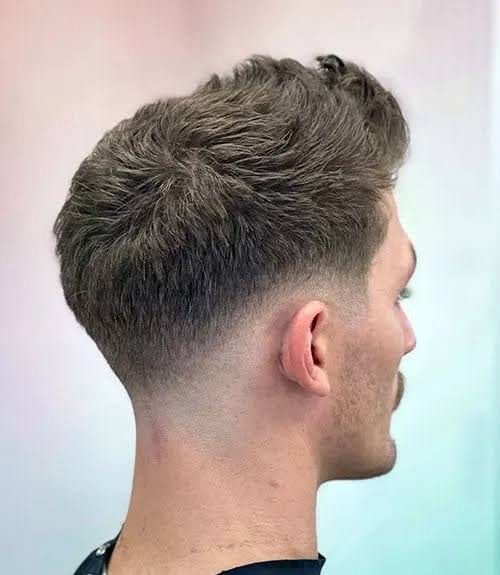
Ask to see photographs of the clinic's own patients' donor areas at twelve months, short hair length, taken from behind in good light. Immediate production of several such images is the strongest positive signal; redirection to frontal results, a single long-hair photo, or talk of patient consent signals evasion.
Can I see photographs of your own patients' donor areas, at twelve months, at short hair length, taken from behind, in good light?
Almost every clinic shows before-and-after images of the front. Very few volunteer the back, because the back is where restraint shows and where overharvesting is undeniable.
Watch what happens when you ask. Immediate production of several such images is the strongest positive signal available. Redirection to frontal results, a single image at long hair length, or an explanation about patient consent are all answers to a different question.
What should you tell a hair transplant clinic rather than ask?
Tell your clinic, rather than ask, how short you want to be able to wear your hair — this constrains extraction and cannot be added retrospectively — and disclose any personal or family history of keloid or hypertrophic scarring, since it changes the risk assessment for both techniques.
- How short you want to be able to wear your hair. This constrains extraction and cannot be added retrospectively. Say it explicitly.
- Any history of keloid or hypertrophic scarring, in you or your family. It changes the risk assessment for both techniques.
What should you personally track about your donor area before and after hair transplant surgery?
Photograph your donor area yourself before surgery — from behind, at a known hair length, in consistent light — and repeat at three, six and twelve months. It takes a minute and is the only objective record of the one part of the result you cannot see, unlike everything else that depends on the clinic.
Sources
- Jimenez F, Ruifernández JM. Distribution of human hair in follicular units. A mathematical model for estimating the donor size in follicular unit transplantation. Dermatologic Surgery, 1999;25(4):294-298. pubmed.ncbi.nlm.nih.gov/10417585
- Romera de Blas C, Vega Díez D, Ricart Vayá JM, Gómez Zubiaur A. Complications in follicular unit excision hair transplantation: current evidence and practical approaches. Frontiers in Medicine, 2026;13:1750989. pubmed.ncbi.nlm.nih.gov/41709896
- Maas D, et al. Rethinking the occipital scalp as a control in advanced androgenetic alopecia. Journal of the American Academy of Dermatology, 2026 (ahead of print). pubmed.ncbi.nlm.nih.gov/42398778
- Xu Y, et al. Case Report: Paired vertex-occipital assessment reveals donor-area involvement in diffuse unpatterned alopecia. Frontiers in Medicine, 2026;13:1797275. pubmed.ncbi.nlm.nih.gov/41982548
- Kim J, Ko YU, Yi KH. The condition of hair follicles produced by different punching methods during FUE surgery. Journal of Cosmetic Dermatology, 2024;23(12):4202-4207. pubmed.ncbi.nlm.nih.gov/39152658
- Parsley WM, Perez-Meza D. Review of factors affecting the growth and survival of follicular grafts. Journal of Cutaneous and Aesthetic Surgery, 2010;3(2). jcasonline.com
This article summarises published research and standard clinical practice. It is general educational information, not medical advice, and it does not replace the instructions your own surgical team gives you. Where their guidance differs from anything here, follow theirs.
Get a no-obligation assessment against fixed criteria, directly on WhatsApp.