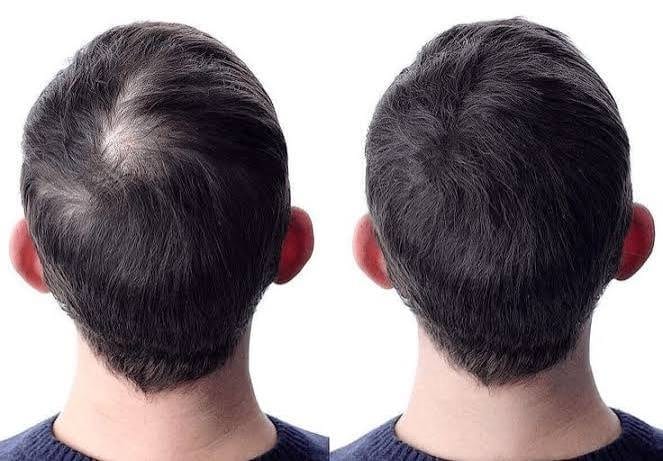
How second and third surgeries affect final density
Additional sessions add grafts but from a progressively smaller reserve, and each is placed among existing grafts and thinning native hair.
Additional sessions add grafts but from a progressively smaller reserve, and each is placed among existing grafts and thinning native hair. Final density is set less by total sessions than by how much donor supply survived them.
Why doesn't adding more hair transplant sessions produce proportionally more density?
More sessions don't add density proportionally because the donor reserve shrinks non-linearly (each session takes a larger share of what's left), native hair keeps thinning at the same time so total density can stay flat, and placing new grafts between existing hairs is harder and riskier, limiting how much density is achievable.
The intuitive model is additive: 2 000 grafts, then 2 000 more, gives the density of 4 000. Three things break that.
- The reserve shrinks non-linearly. Each session extracts from a zone already reduced by the last, so the same absolute number takes a larger proportion of what remains. A plan of three equal sessions is usually not viable.
- Native hair is disappearing at the same time. Density in a recipient area is grafts plus surviving native hair. Adding grafts while native hair thins can leave the total roughly unchanged.
- Placement among existing grafts is harder. Recipient sites must be created between hairs already growing, which limits achievable density and raises the risk of damaging what is there.
What is shock loss to existing grafts in a second hair transplant session?
Shock loss to existing grafts happens when creating new recipient sites among established grafts traumatizes them, pushing some into a resting phase where they shed. Most recover on schedule — shed at weeks two to three, regrowth by months three to four, settled by twelve months — so a second session's net gain should be judged then.
This is the specific risk of adding into a previously transplanted area, and it is less discussed than shock loss to native hair.
Creating recipient sites among established grafts is surgical trauma to those grafts. Some can be pushed into a resting phase and shed, and while most recover on the usual schedule — shed at weeks two to three, regrowth around months three to four, settled by twelve months — the process is unsettling and occasionally incomplete.
The practical implication is that a second session into a transplanted zone should be judged at twelve months, not before, and that the net gain is often smaller than the graft count implies.
What determines the final density of a hair transplant over multiple sessions?
Final density is capped by the donor area, not by the number of operations: lifetime reserve, hairs per follicular unit, hair calibre, and the area needing coverage all set the ceiling. A patient with a modest reserve and large eventual pattern cannot reach high density anywhere, since more sessions spend the reserve, not enlarge it.
Across a whole surgical career, the ceiling is set by the donor area rather than by the number of operations.
- Lifetime reserve. Area of the safe zone, measured density, and the proportion that can be taken without visible thinning.
- Hairs per follicular unit. The figure that converts grafts into hairs, and it varies substantially between individuals.
- Hair calibre. Coverage depends on hair mass, so thick hair achieves more per graft.
- Area to be covered. Which is set by the eventual pattern, not the current one.
- Losses along the way. Transection, handling, poor survival — each spends reserve without producing hair.
A patient with a modest reserve and a large eventual pattern cannot reach high density anywhere, however many sessions he has. More operations spend the reserve faster; they do not enlarge it.
What's the best use of a second hair transplant session?
A second session adds most value by extending coverage backward into a thinning mid-scalp, refining the hairline with fine single-hair grafts, or addressing progression in an area the first plan deliberately left — not by packing more density into an already-covered zone. The commonest mistake is over-densifying the front while the mid-scalp thins behind it.
Where a second session genuinely adds most is usually not more density in an already-covered zone.
- Extending coverage backward into a mid-scalp that has thinned, which restores the continuity that makes a result read as hair rather than a band.
- Refining a hairline with fine single-hair grafts, which improves naturalness cheaply.
- Answering progression in a region the first plan deliberately left.
Spending a second session packing density into a frontal zone that already looks acceptable, while the mid-scalp thins behind it, is the commonest misallocation.
What questions should I ask before a further hair transplant session?
Before a further session, ask what your donor area measures now, how much current density is native hair rather than grafts, what the risk of shock loss to existing grafts is, whether reserve is better spent behind the transplanted zone than within it, and what will be left afterward.
- What does my donor area measure now, and what proportion remains?
- How much of the density I currently have is native hair rather than grafts?
- What is the risk of shock loss to my existing grafts?
- Would this reserve be better spent behind the current transplanted zone than within it?
- After this, what is left?
Each further session draws on the same finite reserve; see donor supply.
Sources
- Jimenez F, Ruifernández JM. Distribution of human hair in follicular units. A mathematical model for estimating the donor size in follicular unit transplantation. Dermatologic Surgery, 1999;25(4):294-298. pubmed.ncbi.nlm.nih.gov/10417585
- Romera de Blas C, Vega Díez D, Ricart Vayá JM, Gómez Zubiaur A. Complications in follicular unit excision hair transplantation: current evidence and practical approaches. Frontiers in Medicine, 2026;13:1750989. pubmed.ncbi.nlm.nih.gov/41709896
- Bernstein RM, Rassman WR. Graft Anchoring in Hair Transplantation. Dermatologic Surgery, 2006;32(2):198-204. pubmed.ncbi.nlm.nih.gov/16442039
- Maas D, et al. Rethinking the occipital scalp as a control in advanced androgenetic alopecia. Journal of the American Academy of Dermatology, 2026 (ahead of print). pubmed.ncbi.nlm.nih.gov/42398778
- Parsley WM, Perez-Meza D. Review of factors affecting the growth and survival of follicular grafts. Journal of Cutaneous and Aesthetic Surgery, 2010;3(2). jcasonline.com
This article summarises published research and standard clinical practice. It is general educational information, not medical advice, and it does not replace the instructions your own surgical team gives you. Where their guidance differs from anything here, follow theirs.
Get a no-obligation assessment against fixed criteria, directly on WhatsApp.