Storage and handling: protecting what you extracted
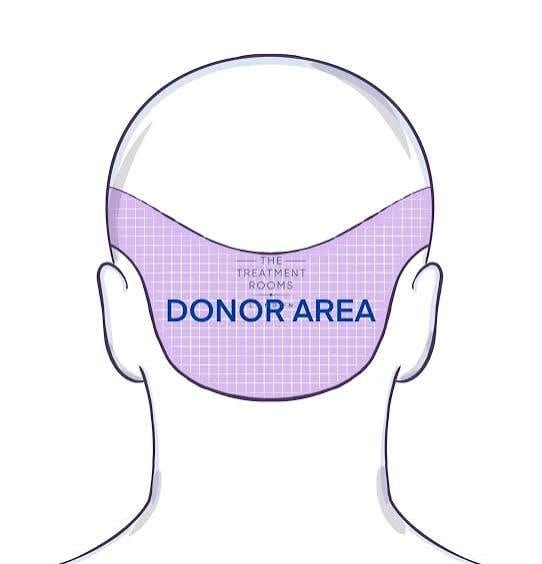
Grafts removed from the donor area are vulnerable to drying, temperature and mechanical trauma before placement.
Grafts removed from the donor area are vulnerable to drying, temperature and mechanical trauma before placement. Handling is where a well-harvested reserve can be lost between extraction and implantation.
What happens to grafts between extraction and placement?
Between extraction and placement, grafts sit outside the body as living tissue with no blood supply — anywhere from minutes to several hours, depending on session size and technique. Parsley and Perez-Meza's review treats this handling, desiccation and storage period as a central determinant of graft yield, though it is entirely invisible to patients.
Between extraction and placement, grafts sit outside the body. Depending on session size and technique that can be minutes for the last grafts placed and several hours for the first ones extracted.
During that interval they are living tissue with no blood supply, and their survival depends on how they are kept. Parsley and Perez-Meza's review of factors affecting the growth and survival of follicular grafts treats this period — handling, desiccation, storage and time out of the body — as a central determinant of yield.
It is also entirely invisible to the patient. You see the donor area shaved and you see the result at twelve months. What happened to your grafts in between is not something most patients ever ask about.
Why does graft handling count as a donor-management issue?
A graft destroyed by drying or crushing costs what a transected one costs — a donor wound was made, a unit was removed from a finite reserve, and nothing grows in the recipient area. Donor management is usually framed as how much to extract, but it is equally about how much extracted tissue actually survives.
What are the main threats to grafts during storage and handling?
The main threats are desiccation (drying, the most cited hazard, which is not reversible by rewetting), temperature (grafts are held chilled to reduce metabolic demand), mechanical trauma from crushing during sorting or placement, extended out-of-body time, and repeated handling, since every additional manipulation between extraction and placement is another chance for damage.
- Desiccation. Drying is the most cited hazard. Grafts left exposed to air lose moisture quickly, and the damage is not reversible by rewetting.
- Temperature. Grafts are typically held in a chilled holding solution to reduce metabolic demand during the ischaemic period.
- Mechanical trauma. Grafts crushed by forceps during sorting or placement are damaged. Handling by the surrounding tissue rather than by the follicle itself is standard careful practice.
- Time. Out-of-body time is a survival variable in its own right, which is why very long sessions and slow techniques carry a cost that is not visible on the day.
- Repeated handling. Every additional manipulation between extraction and placement is another chance for damage.
Does session size affect graft handling risk?
Yes — in very large single sessions, the first grafts extracted wait longest, and that wait can be substantial with several thousand grafts. Two sessions of 2 000 have shorter maximum out-of-body times than one session of 4 000, independent of donor density. No-shave extraction is slower too, lengthening out-of-body time for the same graft count.
Very large single sessions have an inherent handling problem. The first grafts extracted wait the longest, and in a session of several thousand grafts that wait can be substantial.
This is one of the arguments for staging that is rarely made to patients. Two sessions of 2 000 have shorter maximum out-of-body times than one session of 4 000, independent of any donor-density argument.
It also interacts with technique. No-shave extraction is slower, which lengthens out-of-body time for the same graft count — a real cost of a technique chosen for concealment.
What should I ask a clinic about graft storage and handling?
Ask what holding solution and temperature are used, the expected maximum out-of-body time for the first grafts extracted, who handles grafts between extraction and placement, whether extracted and implanted grafts are counted separately, and how desiccation is prevented during sorting. A clinic with defined protocols answers immediately; one never asked will improvise.
- What holding solution do you use, and at what temperature?
- What is the expected maximum out-of-body time for the first grafts extracted in a session of this size?
- Who handles the grafts between extraction and placement, and how many people are involved?
- Do you count grafts extracted and grafts implanted separately?
- How is desiccation prevented during sorting and placement?
These are not questions most patients ask, and the response is informative. A clinic with defined protocols answers immediately. One that has never been asked will improvise.
How significant is graft handling compared with other factors in donor management?
Handling is not the dominant variable — surgical planning, donor assessment and extraction technique matter more, and most competent clinics manage handling adequately as routine. It still belongs in donor management because every graft lost between extraction and placement was paid for from a reserve that never refills, and that loss stays invisible.
It would be misleading to present handling as the dominant variable. Surgical planning, donor assessment and extraction technique matter more, and most competent clinics manage handling adequately as a matter of routine.
The reason it belongs in a donor-management series is the accounting. Every graft lost between extraction and placement was paid for out of a reserve that does not refill, and it is the one category of loss that is entirely invisible in the final result — you simply get less growth than you should have, with no way to know why.
Handling is one of the things that separates clinics; see our guide to choosing a clinic.
Sources
- Parsley WM, Perez-Meza D. Review of factors affecting the growth and survival of follicular grafts. Journal of Cutaneous and Aesthetic Surgery, 2010;3(2). jcasonline.com
- Bernstein RM, Rassman WR. Graft Anchoring in Hair Transplantation. Dermatologic Surgery, 2006;32(2):198-204. pubmed.ncbi.nlm.nih.gov/16442039
- Rassman WR, Bernstein RM, McClellan R, Jones R, Worton E, Uyttendaele H. Follicular unit extraction: minimally invasive surgery for hair transplantation. Dermatologic Surgery, 2002;28(8):720-728. pubmed.ncbi.nlm.nih.gov/12174065
- Kim J, Ko YU, Yi KH. The condition of hair follicles produced by different punching methods during FUE surgery. Journal of Cosmetic Dermatology, 2024;23(12):4202-4207. pubmed.ncbi.nlm.nih.gov/39152658
- Brigante R, Wells A. Direct No-Shave Follicular Unit Excision (DNS FUE): A Modified Technique and Case Series. Cureus, 2026;18(1):e102271. doi.org/10.7759/cureus.102271
This article summarises published research and standard clinical practice. It is general educational information, not medical advice, and it does not replace the instructions your own surgical team gives you. Where their guidance differs from anything here, follow theirs.
Get a no-obligation assessment against fixed criteria, directly on WhatsApp.