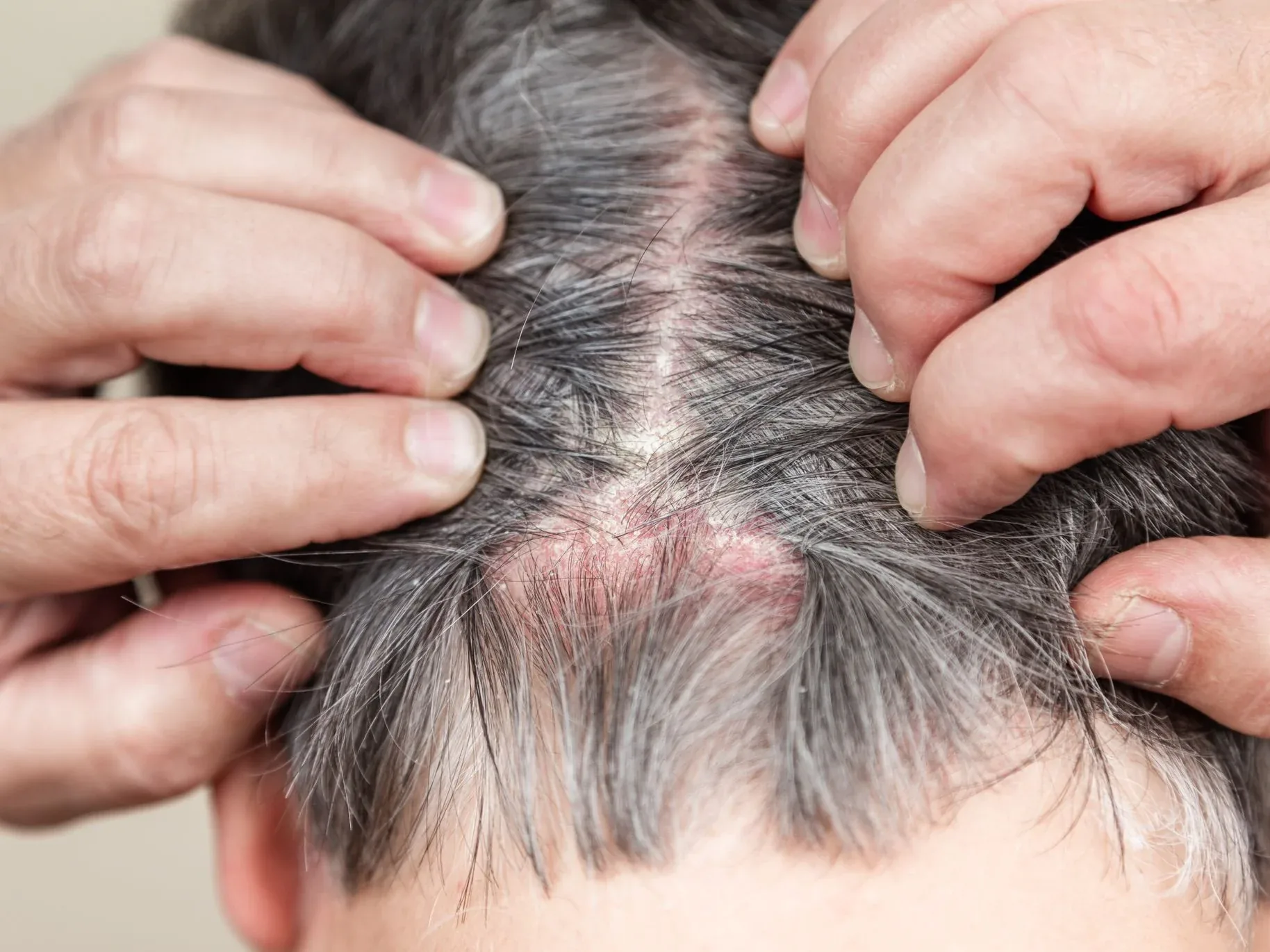
An itchy scalp and hair loss: are they connected?
Itching, dandruff and hair loss often occur together. I explain the possible connections, when itching is a warning sign, and what can be done.
A common coincidence
Many people who experience hair loss also experience itching, dandruff or irritation of the scalp and ask whether the two are connected. The answer is that they sometimes are, and that itching is in certain cases an important clue to what is going on.
Hereditary hair loss does not typically itch
Classic hereditary hair loss (androgenetic alopecia) does not normally itch in itself. So if you experience strong itching alongside your hair loss, it may point to something else, or something additional, being at play that is worth having investigated.
Possible connections
Itching and dandruff are often due to conditions such as seborrhoeic dermatitis (greasy dandruff), psoriasis or a fungal infection of the scalp. These create inflammation, and chronic inflammation around the follicles can in itself contribute to or worsen hair loss. Treating the underlying skin condition can therefore both relieve the itching and improve the environment for the hair.
When itching is a warning sign
Itching accompanied by redness, burning, scaling, sores or bald patches should always be assessed by a doctor. It can be a sign of an inflammatory condition or a scarring alopecia, where early treatment is important to prevent permanent loss of follicles. Here the itching is not merely a nuisance but a signal that should not be ignored.
Get a free hair analysis
- 1Start
- 2Info
- 3Done
What can be done?
For ordinary dandruff and mild itching, a shampoo containing Ketoconazole, for example, can help, since it treats both fungus and dandruff and dampens inflammation. Avoid scratching, as it can worsen the irritation and damage the skin. With persistent or severe itching, or with the warning signs mentioned, you should see a doctor rather than experimenting on your own.
Itching after a transplant
Itching is also entirely normal in the healing phase after a hair transplant, while the skin repairs itself. Here the itching is temporary and expected, but you still must not scratch, as it can damage the new grafts. Follow the clinic's instructions, and ask about an approved, soothing solution if it becomes troublesome.
Conclusion
Hereditary hair loss does not normally itch in itself, so strong itching alongside hair loss can point to an underlying skin condition such as dandruff, seborrhoeic dermatitis or psoriasis, whose inflammation can worsen the loss. Itching with redness, burning or bald patches should be assessed by a doctor. Treat the underlying cause, avoid scratching, and seek help if there are warning signs. This article is for general information and does not replace an individual medical assessment.
© IdealofMeD Research Academy. Republished with permission.
Get a no-obligation assessment against fixed criteria, directly on WhatsApp.