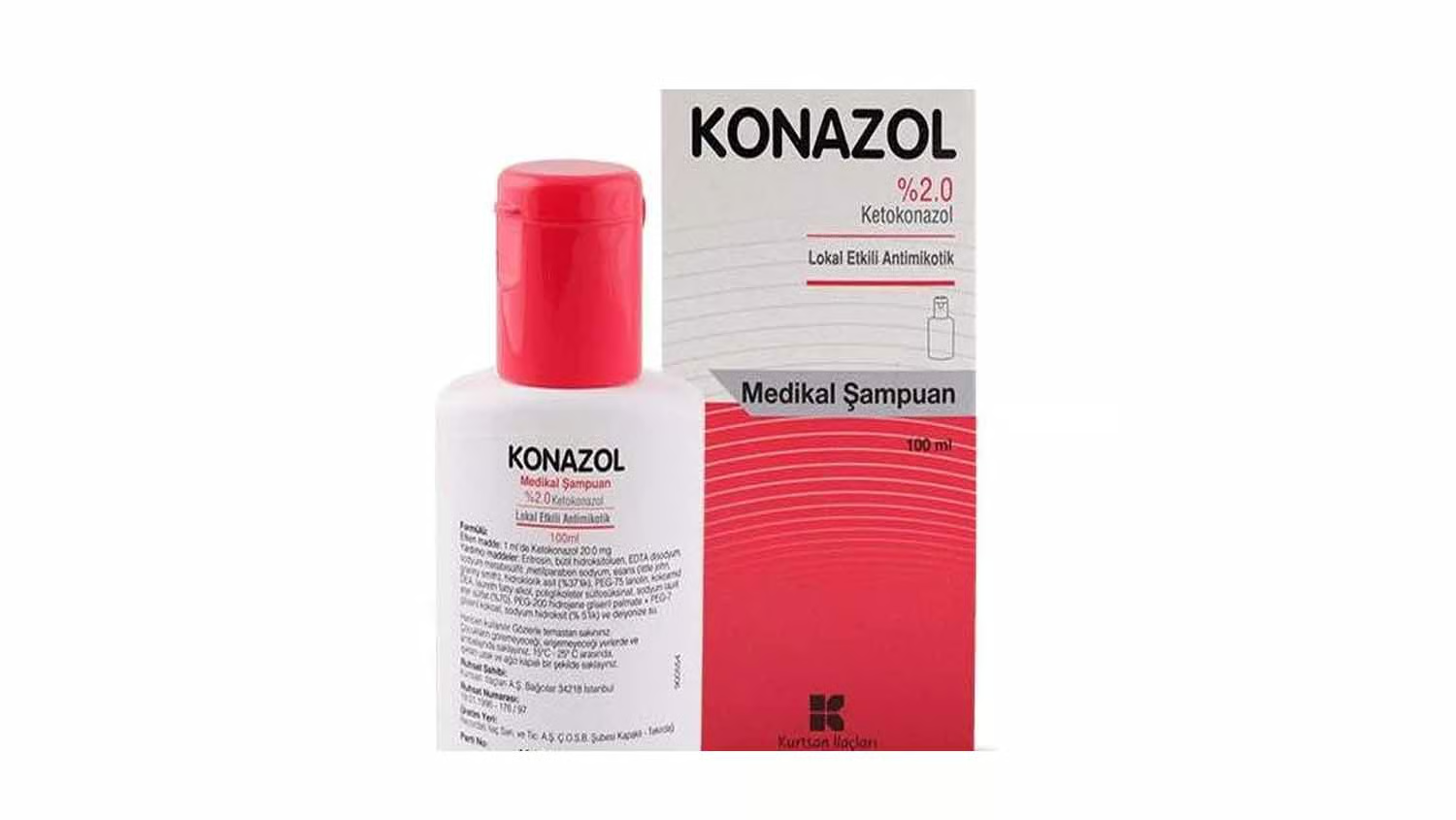
Ketoconazole shampoo as an adjunct
Ketoconazole shampoo is an antifungal used for dandruff and seborrhoeic dermatitis.
Ketoconazole shampoo is an antifungal used for dandruff and seborrhoeic dermatitis. It is often suggested as a hair-loss adjunct on the basis of small studies and a plausible anti-inflammatory effect, but it is not a primary treatment.
What is Ketoconazole shampoo actually licensed to treat?
Ketoconazole is an antifungal whose licensed use on the scalp is for conditions driven by Malassezia yeast, principally dandruff and seborrhoeic dermatitis, where it works well. That indication is worth taking seriously on its own terms, since scalp inflammation is uncomfortable and treating it is useful whether or not it changes hair density.
What is the evidence behind Ketoconazole's hair-loss claim?
Two arguments are made for Ketoconazole and hair loss: reducing scalp inflammation may remove a factor contributing to follicular damage, and Ketoconazole may have some local anti-androgen activity. The supporting studies are small and old, with modest effect sizes, making it a reasonable adjunct with limited evidence, not an established treatment.
How is Ketoconazole shampoo typically used?
Two percent Ketoconazole formulations are prescription-only in many countries, while one percent is often available over the counter. It is applied a few times weekly rather than daily, left on the scalp for a few minutes before rinsing, and typically alternated with a regular shampoo to limit dryness.
- Two percent formulations are prescription in many countries; one percent is often available over the counter
- Applied a few times weekly rather than daily
- Left on the scalp for a few minutes before rinsing
- Alternated with a regular shampoo to limit dryness
Is Ketoconazole shampoo safe to use around hair transplant surgery?
No medicated shampoo, including Ketoconazole, should be introduced onto a healing recipient area without your clinic's approval. The post-operative washing routine uses specific products for a reason, and antifungal shampoos can be drying exactly when crusts need to stay soft. If you use it routinely, mention it at consultation and ask when you can resume.
Treat this as an adjunct to, not a replacement for, the treatments with stronger evidence.
Sources
- Okokon EO, Verbeek JH, Ruotsalainen JH, Ojo OA, Bakhoya VN. Topical antifungals for seborrhoeic dermatitis. Cochrane Database of Systematic Reviews, 2015;(5):CD008138. pubmed.ncbi.nlm.nih.gov/25933684
- Piérard-Franchimont C, De Doncker P, Cauwenbergh G, Piérard GE. Ketoconazole shampoo: effect of long-term use in androgenic alopecia. Dermatology, 1998;196(4):474-477. pubmed.ncbi.nlm.nih.gov/9669136
- Fields JR, Vonu PM, Monir RL, Schoch JJ. Topical ketoconazole for the treatment of androgenetic alopecia: A systematic review. Dermatologic Therapy, 2020;33(1):e13202. pubmed.ncbi.nlm.nih.gov/31858672
- Marks DH, Prasad S, De Souza B, Burns LJ, Senna MM. Topical Antiandrogen Therapies for Androgenetic Alopecia and Acne Vulgaris. American Journal of Clinical Dermatology, 2020;21(2):245-254. pubmed.ncbi.nlm.nih.gov/31832993
This article summarises published research. It is general educational information, not medical advice, and it is not a recommendation to start, stop or change any medication. Prescription drugs carry contraindications and interactions; discuss them with a doctor who knows your medical history.
Get a no-obligation assessment against fixed criteria, directly on WhatsApp.