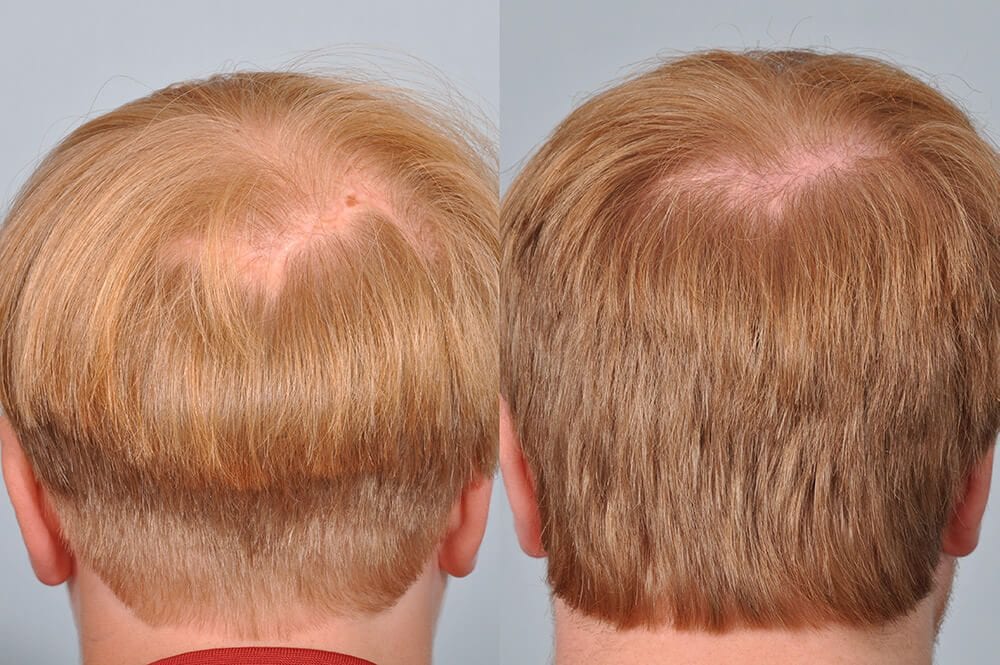
Can hair be transplanted into scar tissue and scarring alopecia?
Scars from burns, operations or scarring alopecia raise the question of whether hair can be restored. I explain when it is possible, and when it is difficult.
A particular and demanding area
Hair lost to scars (after burns, operations such as a facelift or previous hair surgery, or injuries) or to so-called scarring alopecia raises the question of whether the hair can be restored with a transplant. The answer is often yes, but it is a particular and demanding area with important reservations.
Why scar tissue is a challenge
Scar tissue differs from a normal scalp: it typically has a poorer blood supply, is tighter and less elastic, and does not have the same healthy environment for follicles. Because graft survival depends on the blood supply, grafts in scar tissue can have a lower survival rate than in normal skin. That does not mean it is impossible, merely that it is harder and less predictable.
A stable scar vs. active disease
The crucial distinction is whether the scar is stable or whether there is an active, underlying disease. Scars after a burn or operation are usually stable, and transplantation can often succeed. In active scarring alopecia, where an inflammatory process is still destroying follicles, the disease should be quiet for at least six months before surgery is considered, since an active process can destroy the new grafts as well.
What can be done?
In stable scars an experienced surgeon can often transplant hair into or around the scar and thereby reduce its visibility markedly. Sometimes a test session is done first to assess how well the grafts survive in that particular scar tissue before a larger session is planned. Where the blood supply is poor, conditions can sometimes be improved before transplanting.
Get a free hair analysis
- 1Start
- 2Info
- 3Done
Realistic expectations
Because survival in scar tissue can be lower and less predictable, expectations have to be realistic. The result may not be as dense as in normal skin, and several sessions may be needed. An honest surgeon explains these limitations in advance and does not promise a perfect result where the tissue makes it difficult.
Seek specific experience
Transplantation into scar tissue and the treatment of scarring alopecia are among the more complex tasks in the field and require a surgeon with specific experience, and where an active underlying disease is suspected, a dermatological assessment first as well. So seek out a specialist, and get a thorough, honest assessment of your particular scar and its possibilities.
Conclusion
Hair can often be restored in stable scars after burns, operations or injuries, but scar tissue is a demanding area with potentially lower, less predictable graft survival. In active scarring alopecia the underlying disease must be quiet for at least six months first. Seek an experienced specialist, expect realistic results, and get an honest assessment. This article is for general information and does not replace an individual medical assessment.
Work on previously damaged skin belongs with repair and correction.
© IdealofMeD Research Academy. Republished with permission.
Get a no-obligation assessment against fixed criteria, directly on WhatsApp.