Repairing a failed hair transplant: what can be saved, and how?
Poor transplants can often be improved, but repair is the hardest work in the field. I explain what can be corrected, what cannot, and how to avoid ending up there.
When a transplant has gone wrong
One of the most heartbreaking situations I encounter as a surgeon is the patient who comes to me after a badly performed hair transplant elsewhere. Perhaps he has an unnatural hairline that is too low, with coarse 'doll's hair', perhaps a wide, visible scar, perhaps an exhausted donor area, or several of these problems at once. He is often disappointed, embarrassed and afraid that nothing can be saved.
The good news is that very often a poor result can be improved considerably. The less good news is that repair surgery is some of the most technically difficult and most constrained work we do, and that some damage is permanent. This article is an honest account of what can be corrected, what cannot, and why it is always best not to end up there in the first place.
The purpose is twofold: to give hope to someone who already has a poor result, and to underline to someone who has not yet had surgery how much it matters to choose correctly from the start.
The typical problems that need repairing
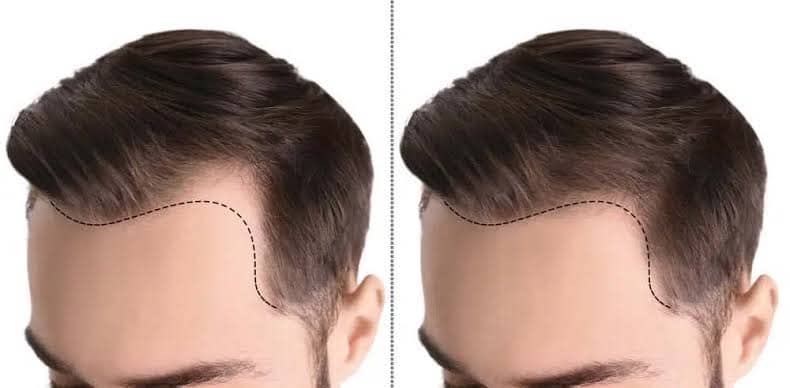
The poor results I see fall into some typical categories. The unnatural hairline is the most frequent: too low, too straight, too dense, or with grafts that are too large at the front, giving an artificial, revealing appearance. The visible scar is another, either a wide FUT scar at the back of the head or scattered, unfortunate scars from crude FUE harvesting.
An exhausted donor area is a more serious problem: if a previous clinic has harvested too aggressively, the back of the head can have become visibly thin or 'moth-eaten', which both looks bad and limits what can be done going forward. Finally I see low graft survival, where a large number of grafts were placed but only a fraction grew, so that the result is thin and disappointing despite a high figure on paper.
Often several of these problems occur together, which makes the repair more complex. Judging exactly what can be done requires a thorough examination of the hairline, the scars and, crucially, how much donor reserve is left to work with.
What can be repaired?
A good deal can in fact be improved. An unnatural hairline can often be redesigned: grafts that are too large at the front can be thinned out or removed, and fine single hair grafts can be added to soften the transition and create a more natural appearance. A hairline that is too low is harder, but it can sometimes be camouflaged or partly corrected.
A FUT scar can often be made less visible, either by transplanting hair into the scar itself, by revising it surgically, or by camouflaging it with scalp micropigmentation. Thin results with low survival can often be thickened with a new, carefully executed session, provided there is donor left. And a skilled surgeon can use alternative donor sources such as beard hair when the scalp donor is under pressure.
The key to all these options is the same, though: there has to be sufficient donor resource left. That resource is what the whole repair depends on, and it brings us to what unfortunately cannot be corrected.
What cannot be corrected?
I have to be clear about the limits. What is hardest, and sometimes impossible, to correct is a permanently exhausted donor area. If a previous clinic has harvested so aggressively that the donor is permanently damaged, I cannot create new donor hair. That resource has been spent, and it fundamentally limits what any subsequent surgeon can do.
In the same way, scar tissue in which the follicles have been entirely lost cannot be made to grow again by itself; it can only be covered by transplantation if there is donor available for it. These limitations are exactly why I repeat my most important message so often: a hair transplant can in practice only be done properly once, and a poor first attempt can cost you options that no later surgeon can give back.
That is why the best 'repair' is always the one that never becomes necessary, because you chose correctly from the start.
Get a free hair analysis
- 1Start
- 2Info
- 3Done
How to avoid ending up here
This whole subject is in reality the strongest argument for choosing carefully from the beginning. The poor results I repair almost always come from the same sources: clinics chosen on the lowest price, clinics that mass-produced with technicians rather than a doctor at the critical steps, and unrealistic promises of low hairlines and high graft counts.
By applying the criteria we describe in our guide to choosing a clinic (medical involvement in the critical steps, documented results, few patients a day, a focus on graft survival and donor management), you dramatically reduce the risk of ever needing repair. The price of doing it properly the first time is almost always lower than the price of doing it cheaply and having to have it repaired afterwards.
If you are considering a transplant, let this subject be a reminder: your donor is limited and the result is hard to undo. Invest the time in choosing correctly.
Frequently asked questions
Can a poor hairline be corrected? It can often be improved considerably: grafts that are too large can be thinned out, and fine grafts added to soften the line. Placement that is too low is harder, but can sometimes be camouflaged.
Can a FUT scar be removed? Not removed entirely, but often made less visible by transplanting into the scar, surgical revision or SMP camouflage.
What if my donor area is ruined? That is the most serious limitation. New donor hair cannot be created, but alternative sources such as beard hair can sometimes help. It underlines why the first procedure has to be done properly.
Is repair more expensive than the original procedure? Often yes, and it is harder. That is why the cheapest option in the end is almost always to choose a good clinic from the start.
The emotional side of repair
I will allow myself a reflection on something often overlooked in repair surgery: the emotional side. The patients who come to me after a poor result often carry not just a physical problem but also disappointment, embarrassment and a mistrust that is entirely understandable after being let down once. Part of my job is to meet them with respect and honesty rather than promises.
That means I am very careful not to oversell what repair can achieve. False hopes offered to an already disappointed patient are doubly harmful. Instead I give an honest assessment of what can realistically be improved, what cannot, and what it will require, including when the answer is that the donor is too exhausted to do everything the patient hopes for.
For someone considering a transplant for the first time, this is a further reminder: the emotional and financial price of a poor result reaches far beyond the hair itself. It is one of the strongest reasons to invest time and care in choosing correctly from the beginning, so that you never end up in the repair chair.
Conclusion
A badly performed hair transplant can often be improved considerably (unnatural hairlines redesigned, scars camouflaged, thin results thickened), but repair is the hardest work in the field and has real limits. A permanently exhausted donor area cannot be restored, and that fundamentally limits what can be done.
The most important lesson is therefore prevention: a transplant can in practice only be done properly once, so choose your clinic with the greatest care from the start. If you already have a poor result, seek an experienced surgeon with specific repair experience for an honest assessment. This article is for general information and does not replace an individual assessment.
© IdealofMeD Research Academy. Republished with permission.
Get a no-obligation assessment against fixed criteria, directly on WhatsApp.