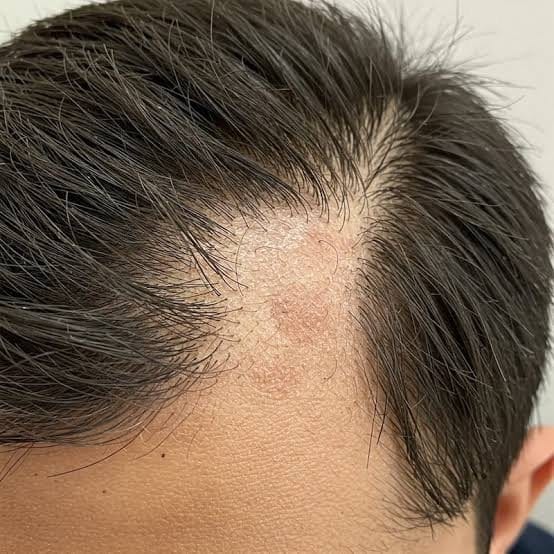
FUE in patients with scarring alopecia
Scarring alopecias destroy follicles and replace them with fibrous tissue, and transplanting into active disease usually fails.
Scarring alopecias destroy follicles and replace them with fibrous tissue, and transplanting into active disease usually fails. Surgery is only considered once the condition has been quiet for a sustained period, generally at least six months, and often longer.
What is scarring alopecia?
Scarring alopecia is a group of conditions in which inflammation destroys the hair follicle and replaces it with scar tissue; unlike pattern loss, where the follicle miniaturises but survives, here it is gone. Recognised forms include frontal fibrosing alopecia, lichen planopilaris and central centrifugal cicatricial alopecia; diagnosis usually requires a dermatologist and often a biopsy.
Why is active scarring alopecia a contraindication for transplant surgery?
Transplanting into an actively inflammatory scalp places healthy follicles into a hostile environment, since the same process that destroyed the original follicles can destroy the grafts, and surgery may provoke a flare. The standard requirement is a documented quiet period of at least six months, assessed by a dermatologist rather than the surgical clinic alone.
What can patients expect if surgery goes ahead despite scarring alopecia?
If surgery goes ahead, expect lower graft survival than in healthy scalp, because scar tissue is less vascular, a staged approach that often starts with a small test session, conservative density expectations, ongoing medical management to keep the condition suppressed, and a real possibility of recurrence.
- Lower graft survival than in healthy scalp, because scar tissue is less vascular
- A staged approach, often with a small test session first
- Conservative density expectations
- Ongoing medical management to keep the condition suppressed
- A real possibility of recurrence, which should be discussed explicitly
What must happen before scarring alopecia patients consider surgery?
Before considering surgery, patients need a confirmed diagnosis, usually with biopsy, documented inactivity for a sustained period, a dermatologist involved in the decision, a surgeon experienced in this specific situation, and written expectations covering graft survival and the possibility of recurrence.
- Confirmed diagnosis, usually with biopsy
- Documented inactivity for a sustained period
- A dermatologist involved in the decision
- A surgeon experienced in this specific situation
- Written expectations about survival and recurrence
Transplanting into damaged skin belongs to the wider subject of repair and correction.
Sources
- Parsley WM, Perez-Meza D. Review of factors affecting the growth and survival of follicular grafts. Journal of Cutaneous and Aesthetic Surgery, 2010;3(2). jcasonline.com
This article summarises published research and standard clinical practice. It is general educational information, not medical advice, and it does not replace the instructions your own surgical team gives you. Where their guidance differs from anything here, follow theirs.
Get a no-obligation assessment against fixed criteria, directly on WhatsApp.