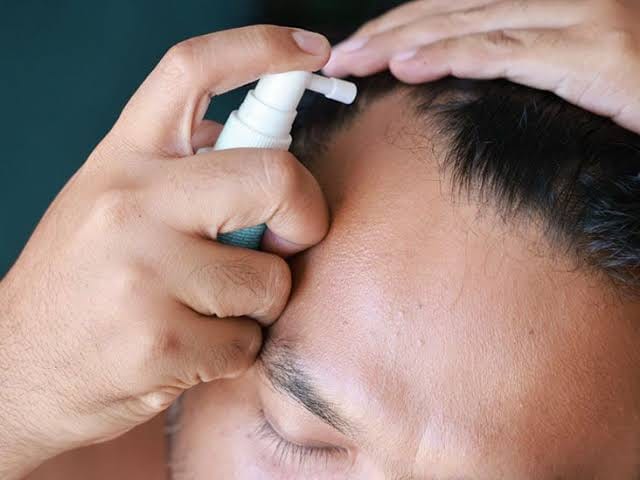
Topical Finasteride for hair loss: can you get the effect without the tablet's side effects?
Topical Finasteride promises the same DHT inhibition as the tablet, but applied locally, in the hope of fewer systemic side effects. I go through the evidence, the hope and the reservations.
What is topical Finasteride?
Most people know Finasteride as a tablet, one of the best documented treatments for hereditary hair loss, working by lowering the level of the hormone DHT. But because a minority of men worry about the possible sexual side effects of the tablet, recent years have seen growing interest in another form: topical Finasteride, that is, Finasteride applied directly to the scalp as a liquid, a foam or a cream, often in combination with Minoxidil.
The thinking behind it is seductively simple. If you can deliver Finasteride locally, right where the follicles sit, you may achieve the desired DHT inhibition in the scalp while limiting the amount of the substance absorbed into the rest of the body, and thereby, one hopes, reducing the risk of the systemic side effects that concern some men. It is an attempt to get the best of both worlds: the tablet's documented effect without its most feared drawbacks.
As a surgeon I encounter growing curiosity about this option, especially from patients who want to treat their hair loss at its cause but are reluctant about the systemic tablet. The question is whether the local form actually delivers what it promises. The answer is promising, but more nuanced than the marketing often suggests.
The biological idea, and an important catch
The logic rests on the basic pharmacological principle that local application gives a high concentration exactly where you want the effect, with lower absorption into the body as a whole. Studies have indeed shown that topical Finasteride can lower DHT in the scalp considerably and improve hair growth, confirming that the local approach really can deliver an effect on the hair. So far the news is good.
But there is an important catch I have to point out. Although absorption into the body is lower than with the tablet, it is not zero. Some of the topically applied Finasteride penetrates the skin and enters the bloodstream, and studies have found a measurable reduction of DHT in the blood as well in users of topical Finasteride. That means the notion that the local form is entirely free of systemic effect, and therefore entirely free of the risk of systemic side effects, is not correct.
The more precise and honest description is that topical Finasteride probably gives a lower systemic burden than the tablet, and therefore possibly a lower risk of side effects, but not a guaranteed absence of them. That is a meaningful difference, but it is a difference of degree, not an absolute separation. Understanding that is the basis for realistic expectations.
What does the evidence say?
The evidence for topical Finasteride is growing and promising. Several studies, including randomised trials, have shown that topical Finasteride can give an improvement in hair density approaching that seen with the tablet, while the systemic effect on DHT is smaller. That has made it a genuine and interesting alternative, especially for the patient concerned about side effects.
But the documentation is still younger and less extensive than for the well established tablet, and there is variation in formulations, concentrations and protocols between studies and products. There is also a lack of long follow-ups that could definitively clarify the long term side effect profile compared with the tablet. The conclusion is that topical Finasteride is a promising, evidence based option on the rise, but not as well established and standardised a product as the tablet.
One practical consequence is that the quality and composition of the particular product matter a great deal. Topical Finasteride is often made up as a compounded formulation, and there is a large difference between a well formulated product from a reputable source and a random mixture. This is a further reason why the treatment should go through a doctor, not via dubious sources online.
Advantages of topical Finasteride
- Possibly lower systemic absorption: Probably a lower burden on the body than the tablet, and therefore possibly a lower risk of systemic side effects.
- It attacks the cause locally: It lowers DHT in the scalp, where it is wanted.
- Growing evidence: Several studies show an effect approaching that of the tablet.
- It can be combined with Minoxidil: Often available as a combined formulation that attacks the problem from two angles.
- An alternative for those concerned about side effects: It can make DHT inhibition acceptable to patients who would otherwise have declined it.
Disadvantages and reservations
- Not free of systemic absorption: Some is still absorbed; the risk of systemic side effects is reduced, not eliminated.
- Younger, less standardised evidence: Less well established than the tablet, with variation between products and a lack of long follow-ups.
- Differences in quality: As a compounded formulation, the result depends on the quality and source of the product.
- Practicalities: It requires daily, correct application: the same adherence challenge as topical Minoxidil.
- It requires medical management: It should be prescribed and monitored by a doctor, not obtained from unreliable sources.
Get a free hair analysis
- 1Start
- 2Info
- 3Done
Who does it make the most sense for?
In my experience topical Finasteride is particularly interesting for the patient who wants the cause-directed effect of DHT inhibition but who has either experienced side effects on the tablet or is so concerned about them that he would otherwise decline Finasteride entirely. For this group the local form can be the bridge that makes a well documented treatment mechanism acceptable and therefore available.
Conversely, there is no compelling reason for a patient who takes the tablet without any side effects and is satisfied to switch. The tablet is cheaper, more standardised and better documented, and if it works without trouble there is no problem to solve. Topical Finasteride is an alternative for those who have a reason to seek it, not a universal upgrade for everyone.
As with all these choices, the decision is individual. It depends on your tolerance, your concerns, your finances and your ability to keep up a daily application, and it should be taken together with a doctor who can ensure both a sensible formulation and proper follow-up.
An honest conversation about fear of side effects
I will allow myself a more personal reflection, because the subject of Finasteride side effects has become highly emotive, not least on the internet. My approach is neither to trivialise the concerns nor to inflate them. Sexual side effects from Finasteride are real for a minority, and they should be taken seriously and discussed openly. At the same time, the great majority of users experience no side effects at all, and for many the protection of the hair that Finasteride provides is a substantial gain.
Topical Finasteride is a sensible attempt to accommodate the worried patient with an agent that probably reduces the systemic burden. But the best guard against poor decisions is neither fear nor denial but an honest, individual conversation with a doctor who knows your situation and can help you weigh gain against risk on a sound basis. The decision to treat your hair is personal, and there is no wrong answer when it is made in a well informed way.
What I warn against is letting the internet's most dramatic accounts, in either direction, make the decision for you. Some forums exaggerate the dangers to the extreme; others dismiss any concern as imagination. The truth is more nuanced, and it is better found in a calm conversation with a professional than in a heated comment thread.
Frequently asked questions
Is topical Finasteride entirely free of side effects? No. Some of the substance is still absorbed into the body, so the risk of systemic side effects is reduced, but not eliminated. It is a difference of degree, not an absolute separation.
Does it work as well as the tablet? Studies show an effect approaching that of the tablet, but the documentation is younger and less extensive. For many it is a genuine alternative, especially if side effects are a concern.
Can I mix it myself or buy it online? That is not advisable. The quality of the formulation matters a great deal, and the treatment should go through a doctor who can ensure a proper product and follow-up.
Should I switch from the tablet if it works for me? Not necessarily. If you tolerate the tablet without trouble, there is no problem to solve. Topical Finasteride is most relevant for someone who has a reason to seek an alternative.
Topical Finasteride and hair transplantation
A question I am asked more and more often is how topical Finasteride fits with a hair transplant. The principle is the same as for the tablet: a transplant moves DHT-resistant hair, but it does not protect your original hair from continued thinning. That is why I recommend some form of DHT inhibition for most men who have a transplant, to preserve the untransplanted hair so that the whole stays natural over the years.
For the patient who is reluctant about the tablet, topical Finasteride can be an attractive compromise here: cause-directed protection of the remaining hair with probably a lower systemic burden. For some that makes it easier to commit to the long-term maintenance that matters so much for a durable transplant result. The decision should always be agreed with the operating clinic, though, which can advise on timing in relation to the operation itself.
The point is the same one that recurs throughout hair treatment: surgery and medical maintenance are complementary, not competing. Topical Finasteride merely widens the palette of options for that maintenance, and makes it acceptable to a group of patients who might otherwise have declined DHT inhibition altogether.
Conclusion
Topical Finasteride is a promising and evidence based alternative to the Finasteride tablet, probably giving a lower systemic burden and therefore possibly a lower risk of systemic side effects, but importantly: some of the substance is still absorbed, so it is not entirely free of systemic effect. It is a difference of degree, not a guarantee.
For the patient concerned about side effects who wants the cause-directed DHT inhibition, it can be exactly the bridge that makes the treatment acceptable. For someone who tolerates the tablet perfectly well, there is rarely reason to switch. Whatever the case, the choice should be made together with a doctor and with realistic expectations. This article is for general information and does not replace an individual medical assessment.
Our guide to non-surgical treatment covers how the oral version compares.
© IdealofMeD Research Academy. Republished with permission.
Get a no-obligation assessment against fixed criteria, directly on WhatsApp.