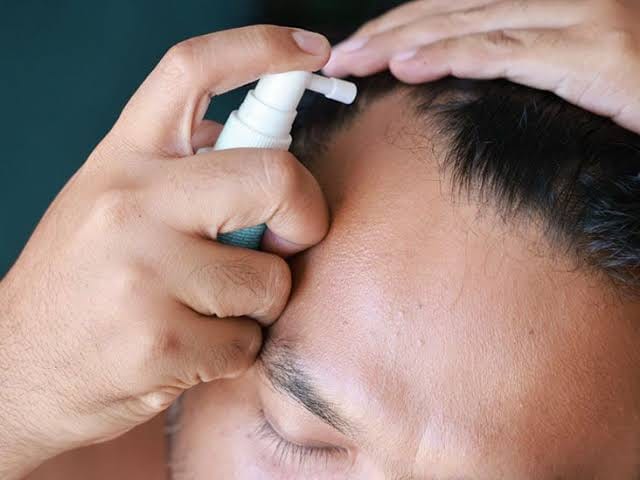
Topical Finasteride: newer delivery method
Topical Finasteride aims to act on the scalp while reducing systemic exposure.
Topical Finasteride aims to act on the scalp while reducing systemic exposure. It does reduce it, but not to zero, so the assumption that topical means free of systemic effects is not supported.
What is the rationale behind topical Finasteride?
Topical Finasteride aims to concentrate the drug's benefit at the scalp, where it works, while reducing the circulating systemic levels responsible for its most discussed side effects. That is a sensible aim, and the underlying mechanism for lowering systemic exposure while preserving local, scalp-level effect is biologically plausible.
Does topical Finasteride actually reduce systemic exposure?
Studies show topical Finasteride reduces serum DHT less than oral Finasteride, meaning lower systemic impact, and there is evidence of efficacy on scalp hair. The crucial qualification: systemic absorption is measurable, not absent, so serum DHT is still reduced. Topical use lowers systemic exposure rather than removing it entirely.
What practical considerations apply to using topical Finasteride?
Practical considerations for topical Finasteride include that availability varies, with licensed products in some markets and compounding elsewhere; formulations differ in concentration and vehicle; correct application to the scalp matters; contact transfer risk means avoiding others, particularly women who could become pregnant; and compounded combination products with Minoxidil add an unstudied variable.
- Availability varies. Licensed products exist in some markets; elsewhere it is compounded, with the quality-control caveats that carries.
- Formulations differ, in concentration and vehicle, so evidence for one does not transfer to another.
- Application matters, since it must reach the scalp rather than sit on hair.
- Transfer risk. As with any topical, avoid contact with others, particularly women who could become pregnant.
- Combination products with Minoxidil are commonly compounded and add another unstudied variable.
Who may topical Finasteride suit?
Topical Finasteride may suit someone who wants the benefit but is concerned about systemic exposure, or who experienced side effects on the oral drug and wants a lower-exposure route with a prescriber's involvement. It is not a way to take Finasteride without that medical conversation.
Our article on Finasteride side effects covers what the data supports.
Sources
- Kaufman KD, et al. Finasteride in the treatment of men with androgenetic alopecia. Finasteride Male Pattern Hair Loss Study Group. Journal of the American Academy of Dermatology, 1998. pubmed.ncbi.nlm.nih.gov/9777765
- Long-term (5-year) multinational experience with Finasteride 1 mg in the treatment of men with androgenetic alopecia. European Journal of Dermatology, 2002. pubmed.ncbi.nlm.nih.gov/11809594
- Gupta AK, Venkataraman M, Talukder M, Bamimore MA. Finasteride for hair loss: a review. Journal of Dermatological Treatment, 2022;33(4):1938-1946. pubmed.ncbi.nlm.nih.gov/34291720
This article summarises published research. It is general educational information, not medical advice, and it is not a recommendation to start, stop or change any medication. Prescription drugs carry contraindications and interactions; discuss them with a doctor who knows your medical history.
Get a no-obligation assessment against fixed criteria, directly on WhatsApp.