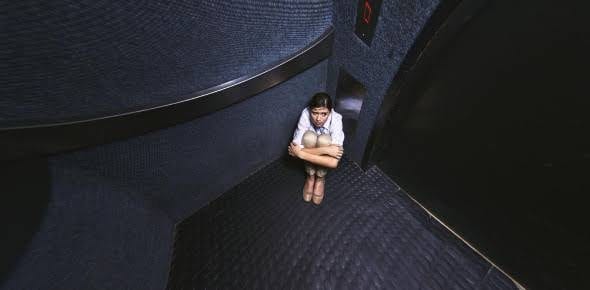
Claustrophobia and chamber tolerance
A meaningful minority of people find an enclosed hyperbaric chamber difficult, and monoplace chambers are harder to tolerate than multiplace ones.
A meaningful minority of people find an enclosed hyperbaric chamber difficult, and monoplace chambers are harder to tolerate than multiplace ones. Tolerance is worth testing before you pay for a course, because a package bought up front is usually not refundable.
What is it actually like to be inside a hyperbaric chamber?
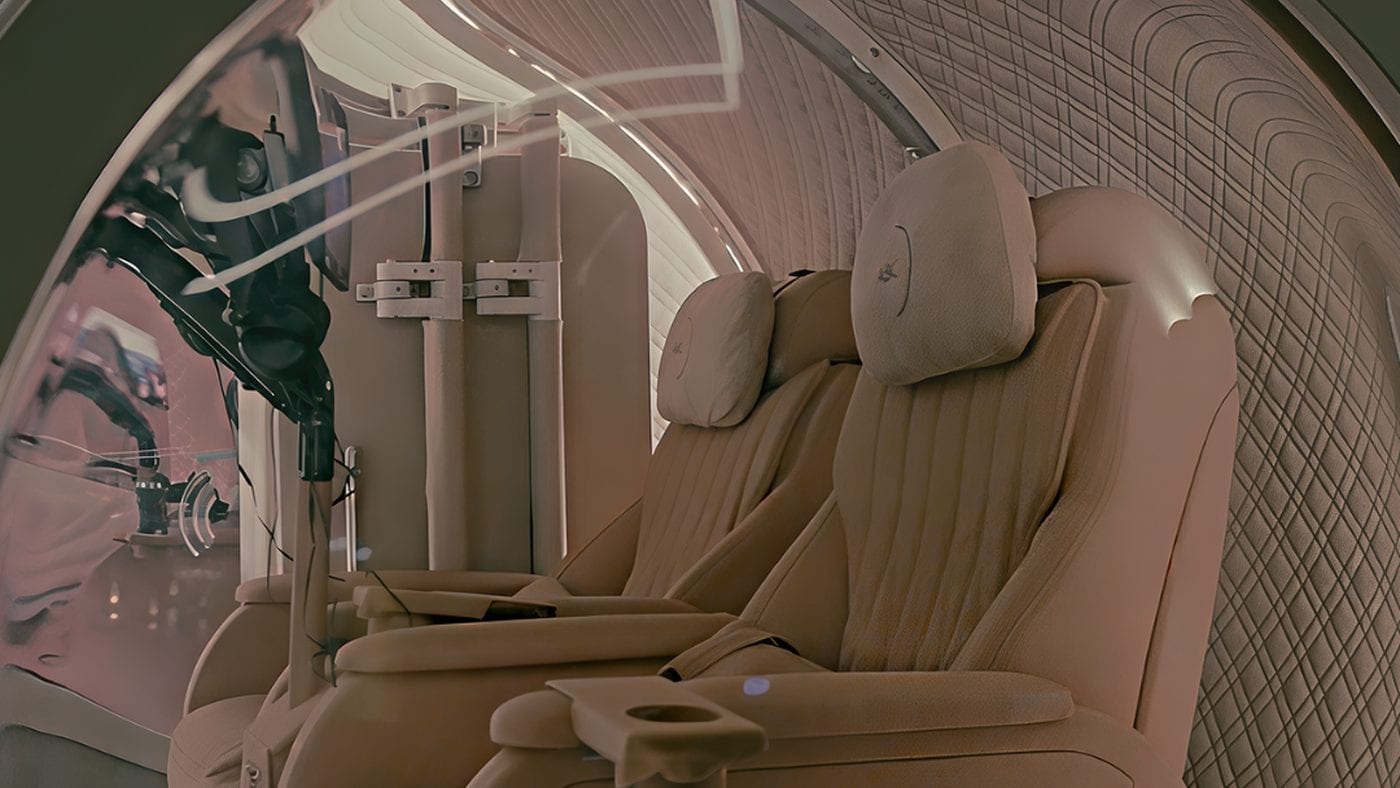
A monoplace chamber is a single-person, sealed acrylic cylinder you lie in for 60-90 minutes; you can see out and communicate, but depressurisation takes minutes. A multiplace chamber is a room-sized vessel where several seated patients breathe oxygen via mask or hood while air pressurises the room—generally easier to tolerate. Both require active ear equalisation.
Descriptions of hyperbaric therapy in clinic marketing tend to be reassuring and vague. The practical reality is worth setting out, because whether you can tolerate it is not a question you want to discover after paying for six sessions.
A monoplace chamber — the type used in the published hair transplant case report — is a single-person cylinder, usually transparent acrylic, that you lie down in. It is sealed for the duration of the session. Sixty to ninety minutes is a long time to lie still in a tube. You can normally see out and communicate with the operator, and the chamber can be depressurised if needed, but depressurisation takes minutes rather than seconds.
A multiplace chamber is a room-sized steel vessel with seating for several patients and, usually, an attendant inside. You breathe oxygen through a mask or hood while the chamber itself is pressurised with air. Most people find this considerably easier: you are sitting up, there is space, and there is another person present.
In both, pressurisation and depressurisation take several minutes each and produce ear pressure that you have to actively equalise, in the same way you would on a descending aircraft.
Why is claustrophobia a real limitation on cosmetic HBOT, not a minor footnote?
Claustrophobia is a recognised practical constraint on HBOT and a common reason patients discontinue courses. Unlike hospital treatment for a diabetic ulcer, cosmetic HBOT's demonstrated benefit is only reduced early shedding and folliculitis, with no significant nine-month survival difference—enduring six or seven distressing sessions for that is a poor trade nobody should face pressure over.
Claustrophobia is one of the recognised practical constraints on delivering hyperbaric therapy, and it is a common reason patients discontinue courses partway through. In a hospital setting, where the indication is a diabetic foot ulcer or radiation injury, there is a strong reason to work through it with the patient.
In a cosmetic setting the calculation is different. You are considering an off-label adjunct whose demonstrated benefit in the published trial was reduced early shedding and less folliculitis, with no statistically significant difference in nine-month survival. Enduring six or seven sessions of genuine distress for that is a poor trade, and nobody should be pressured into it.
What makes chamber tolerance harder in the days right after a hair transplant?
Five factors: fatigue from a six-to-eight-hour FUE procedure, especially since the tightest protocol starts within 4-6 hours; scalp discomfort from lying still in a monoplace tube; forehead/periorbital swelling peaking days two-to-four, mid-course; nasal congestion making ear equalisation harder; and a demanding six-day daily schedule where tolerance often worsens rather than improves.
- Fatigue. A large FUE session runs six to eight hours. Anxiety tolerance is lower when you are exhausted, and the tightest published protocol starts within four to six hours of surgery.
- Scalp discomfort. Lying still with a fresh recipient area is uncomfortable in its own right, and a monoplace chamber does not offer much scope for repositioning.
- Swelling. Forehead and periorbital swelling peaks around days two to four, which falls in the middle of a daily week-long course.
- Congestion. Nasal congestion after a long procedure under local anaesthesia is common and makes ear equalisation harder, which is itself a source of anxiety during pressurisation.
- The daily schedule. One session is manageable for most people. Six consecutive days is a different proposition, and tolerance often degrades rather than improves.
What practical steps help improve hyperbaric chamber tolerance?
Six steps help: request a multiplace chamber if available; visit and sit in an unpressurised chamber before booking a course; ask in advance what happens if you must stop mid-session; avoid paying for a non-refundable course upfront and buy one session first; rehearse ear equalisation technique; and stop the course if it isn't working.
- Ask for a multiplace chamber if one is available. The difference in tolerability is substantial and it costs you nothing to ask.
- Visit the chamber before booking a course. Sitting in an unpressurised chamber for a few minutes tells you more than any description.
- Ask what happens if you need to stop mid-session. Knowing the answer reduces the anxiety considerably, and the answer should be specific.
- Do not pay for a non-refundable course up front. Ask whether unused sessions are refundable. If they are not, buy one session first.
- Rehearse ear equalisation. Difficulty clearing your ears is a common trigger for panic during descent, and it is largely a technique problem.
- Say no if it is not working. There is no established clinical cost to abandoning an unproven cosmetic adjunct.
Can you be sedated to tolerate a hyperbaric chamber session?
Usually not. Sedation is a decision for the hyperbaric service, not the hair clinic, and the standard answer for routine elective use is no—staff need patients alert enough to equalise their ears, report oxygen-toxicity symptoms, and follow decompression instructions. A patient who needs sedation to tolerate a chamber generally shouldn't be doing an elective course.
If a chamber is not for you, the other add-ons are listed under supportive treatments.
Sources
- Heyboer M, Sharma D, Santiago W, McCulloch N. Hyperbaric Oxygen Therapy: Side Effects Defined and Quantified. Advances in Wound Care, 2017;6(6):210-224. pubmed.ncbi.nlm.nih.gov/28616361
- Giardiello F, De Medeiros Quirino L, Brigante R, Chumak M. Hyperbaric Oxygen Therapy for Enhanced Postoperative Recovery in Hair Transplantation. Cureus, 2025;17(12):e99635. doi.org/10.7759/cureus.99635
- Fan Z, Gan Y, Qu Q, Wang J, Lunan Y, Liu B, Chen R, Hu Z, Miao Y. The effect of hyperbaric oxygen therapy combined with hair transplantation surgery for the treatment of alopecia. Journal of Cosmetic Dermatology, 2021;20(3):917-921. pubmed.ncbi.nlm.nih.gov/32770782
- Undersea and Hyperbaric Medical Society. Indications for Hyperbaric Oxygen Therapy (approved indications list). uhms.org/resources/hbo-indications.html
This article summarises published research and standard clinical practice. It is general educational information, not medical advice, and it does not replace the instructions your own surgical team gives you. Where their guidance differs from anything here, follow theirs.
Get a no-obligation assessment against fixed criteria, directly on WhatsApp.