Patient-reported comfort and downtime with HBOT
The strongest published findings for HBOT after a transplant are about the patient's experience rather than the final result: less early shedding, roughly a third the rate of itching and folliculitis, and in one small case series faster scab clearance..
The strongest published findings for HBOT after a transplant are about the patient's experience rather than the final result: less early shedding, roughly a third the rate of itching and folliculitis, and in one small case series faster scab clearance.
What are the strongest published HBOT findings actually about?
They are about the first-fortnight experience, not the final result. The Fan trial found itching and folliculitis in 11.8% of the HBOT group versus 35.3% of controls, and early shedding of 27.6% versus 69.1% — both large, reliably detectable differences. Neither concerns the twelve-month outcome; both concern the weeks patients find hardest.
There is an irony in how HBOT is marketed. It is usually sold on graft survival, which the published research has not demonstrated, while the findings that are actually strongest concern how the first fortnight feels — which is what most patients find hardest about the process.
The Fan trial found itching and folliculitis in 11.8% of the HBOT group against 35.3% of controls. It found early shedding of 27.6% against 69.1%. Both are large differences, and large differences are the kind small trials can detect reliably.
Neither is about the twelve-month result. Both are about the weeks when patients are most anxious and most likely to think something has gone wrong.
Why are the first few weeks after a hair transplant so hard?
The recipient area stays crusted for one to ten days, itching is common and hard to ignore, and folliculitis looks alarming. From week two to three the hairs shed — normal, since the follicle survives and regrows by month three to four, with final result at twelve months — yet it is distressing to watch.
Anyone who has had a transplant recognises this period. The recipient area is crusted for the first week to ten days. Itching as healing progresses is common and difficult to ignore when scratching is exactly what you must not do. Folliculitis — small inflamed spots around emerging hairs — is unpleasant and looks alarming.
Then, from around week two to three, the transplanted hairs shed. This is normal: the follicle survives and re-enters growth at around month three to four, with the final result at about twelve months. Knowing that does not stop it being distressing to watch hair you paid for fall out.
A treatment that reduces the visible shedding and cuts inflammatory symptoms to roughly a third is addressing something real, even if it changes nothing about where you end up.
What did the five-patient HBOT case report find, and what's the catch?
Giardiello's five-patient series reported scabs clearing in three to five days, satisfaction of four or five out of five, average recovery of 2.8 days, and no complications — but with no control group, none can be attributed to HBOT, since uncomplicated FUE alone often heals as fast. It is directionally consistent with the trial's findings.
Giardiello and colleagues' five-patient series reported scab elimination within three to five days, averaging four days, patient satisfaction of four or five out of five, average recovery time of 2.8 days, pain diminishing by day three, and no complications.
The caveat matters and should not be buried. All five received HBOT and there was no control group. Scabs clear, pain settles and patients recover after uncomplicated FUE without any adjunct at all. Those numbers describe what happened to five people; they do not establish what caused it.
They are, however, consistent in direction with the trial's inflammatory findings, and consistency across two studies is worth something even when neither is decisive.
What does an HBOT course actually cost you in time and comfort?
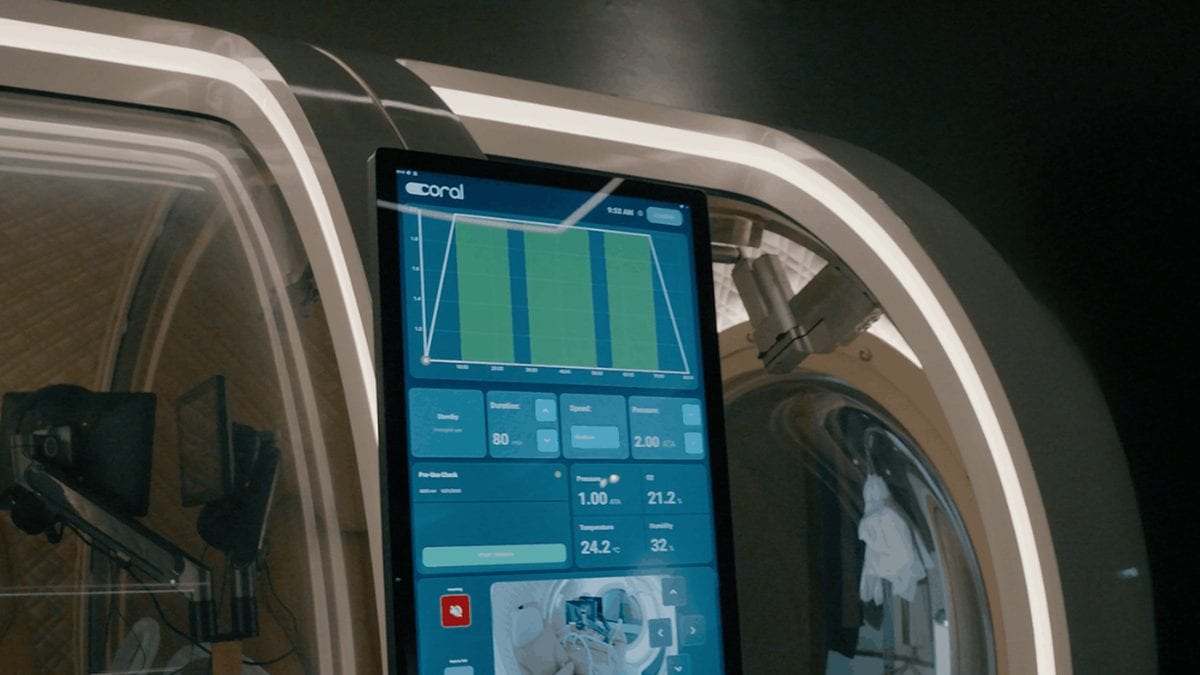
A course means six or seven days of 60-90 minutes in the chamber, plus travel time each session. Ear equalisation is required throughout, the most common source of adverse effects, and lying still in a sealed tube risks confinement anxiety, a common reason courses are abandoned — and it ties you to the clinic's location.
The experience side is not all upside, and an honest account has to include what the sessions themselves involve.
- Time. Six or seven consecutive days, 60-90 minutes in the chamber plus pressurisation, decompression and travel. Realistically that is half a day, daily, for a week.
- Ear equalisation. Every session requires clearing your ears during pressurisation. Middle ear barotrauma is the most common adverse effect of hyperbaric therapy, and congestion after a long procedure makes it more likely.
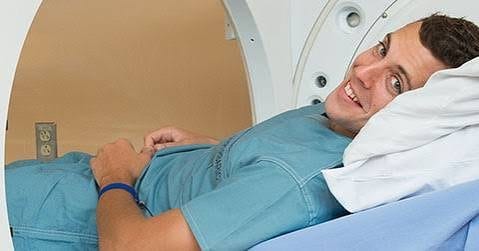
- Enclosure. A monoplace chamber means lying still in a sealed tube for up to 90 minutes. Confinement anxiety is a common reason courses are abandoned.
- Fatigue. The tightest published protocol starts within four to six hours of surgery, after a procedure that may have run six to eight hours.
- Being tied to one place. If you travelled for surgery, a daily week-long course means staying near the facility for the whole recovery week rather than flying home.
How should you actually decide whether to pay for HBOT?
Not by asking whether it will improve your result, since nobody can promise that. Ask whether a less uncomfortable, less alarming first fortnight is worth the cost, schedule and chamber time — which may be true if you've had bad folliculitis before, and false if you're flying home. A graft-survival promise should not decide it.
The question worth asking is not 'will this improve my result' — on the published evidence, nobody can tell you that. It is whether a less uncomfortable and less alarming first fortnight is worth the cost, the daily schedule and the chamber time.
For some patients it clearly is. Patients who have had bad folliculitis before, or who find the shedding phase genuinely distressing, or who are staying near the clinic anyway, may value it highly.
For others it clearly is not. If you are flying home on day three, if enclosed spaces are difficult for you, or if the money would otherwise go toward treating the native hair that will determine your five-year result, the case is weak.
What should not drive the decision is a promise about graft survival. That is the one thing the research has looked at directly and failed to demonstrate.
How it compares with the other add-ons is covered under supportive treatments.
Sources
- Fan Z, Gan Y, Qu Q, Wang J, Lunan Y, Liu B, Chen R, Hu Z, Miao Y. The effect of hyperbaric oxygen therapy combined with hair transplantation surgery for the treatment of alopecia. Journal of Cosmetic Dermatology, 2021;20(3):917-921. pubmed.ncbi.nlm.nih.gov/32770782
- Giardiello F, De Medeiros Quirino L, Brigante R, Chumak M. Hyperbaric Oxygen Therapy for Enhanced Postoperative Recovery in Hair Transplantation. Cureus, 2025;17(12):e99635. doi.org/10.7759/cureus.99635
- Heyboer M, Sharma D, Santiago W, McCulloch N. Hyperbaric Oxygen Therapy: Side Effects Defined and Quantified. Advances in Wound Care, 2017;6(6):210-224. pubmed.ncbi.nlm.nih.gov/28616361
- Thom SR. Hyperbaric oxygen: its mechanisms and efficacy. Plastic and Reconstructive Surgery, 2011;127 Suppl 1:131S-141S. pubmed.ncbi.nlm.nih.gov/21200283
- Lee HY, Lee JY, Kim SC, Lee Y. Preliminary Effects of Hyperbaric Oxygen Therapy on Hair Follicle Characteristics in Healthy Subjects. Bioengineering, 2026;13(2):240. doi.org/10.3390/bioengineering13020240
This article summarises published research and standard clinical practice. It is general educational information, not medical advice, and it does not replace the instructions your own surgical team gives you. Where their guidance differs from anything here, follow theirs.
Get a no-obligation assessment against fixed criteria, directly on WhatsApp.