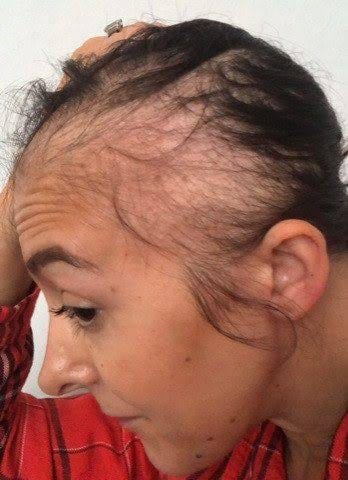
Hair loss after childbirth: why it happens, and when it goes away
Many new mothers experience marked hair loss 2-4 months after the birth. It is almost always temporary.
The hormones behind it
During pregnancy, high oestrogen levels keep more hairs than usual in the growth phase (anagen). That is why many pregnant women find their hair unusually thick and full, they are simply losing fewer hairs than normal.
After the birth the hormones drop abruptly back to normal, and all the "extra" hairs that were held back switch to the resting phase at the same time and fall out. It is a classic postpartum telogen effluvium, not a disease, but a hormonal normalisation.
The typical timeline
The loss usually begins 2-4 months after the birth, rarely immediately afterwards. Many new mothers are alarmed when the hair suddenly comes out in clumps in the brush or in the shower, often most around the hairline and the temples.
The amount can seem dramatic, but remember: these are the hairs that "should" have fallen during the pregnancy, now leaving the head all at once. It is catching up, not lasting damage.
It almost always resolves itself
The good news is that postpartum hair loss is self-limiting and reversible. In the great majority the hair normalises on its own within 6-12 months with no treatment at all. The follicles are intact and resume their normal cycle as the hormone balance settles.
So you do not have to do anything active, but patience helps, and breastfeeding does not appreciably delay the recovery.
Get a free hair analysis
- 1Start
- 2Info
- 3Done
What you can do yourself
Although the condition resolves itself, you can support the hair:
- Ensure sufficient iron and protein, new mothers are often low in iron after the birth
- Be gentle: avoid tight hairstyles, hard brushing and heat styling while the hair is fragile
- Prioritise sleep and reduce stress as far as possible (easier said than done with a newborn)
When you should see a doctor
Contact your doctor if the loss continues beyond 12 months, is unusually heavy, or is accompanied by other symptoms such as fatigue, weight change or feeling cold. Ferritin and thyroid function should then be checked, as postpartum thyroiditis is an overlooked cause of persistent hair loss in new mothers.
If you are in doubt about whether your loss is postpartum or something else, see the overview of the other causes of hair loss.
What you do not need to do
Because postpartum hair loss can seem dramatic, many people end up buying expensive "solutions" that are not necessary. Since the condition is self-limiting, it rarely requires active treatment, and expensive serums, clinic treatments or Minoxidil are usually superfluous when the hair returns on its own within 6-12 months anyway.
Avoid excessive worry as well, which itself creates stress. Save the money, be gentle with the hair, and make sure you get iron and protein. If the loss should continue beyond a year against expectations, that does belong with the doctor, see the other possible causes in the overview of hair loss.
© IdealofMeD Research Academy. Republished with permission.
Get a no-obligation assessment against fixed criteria, directly on WhatsApp.