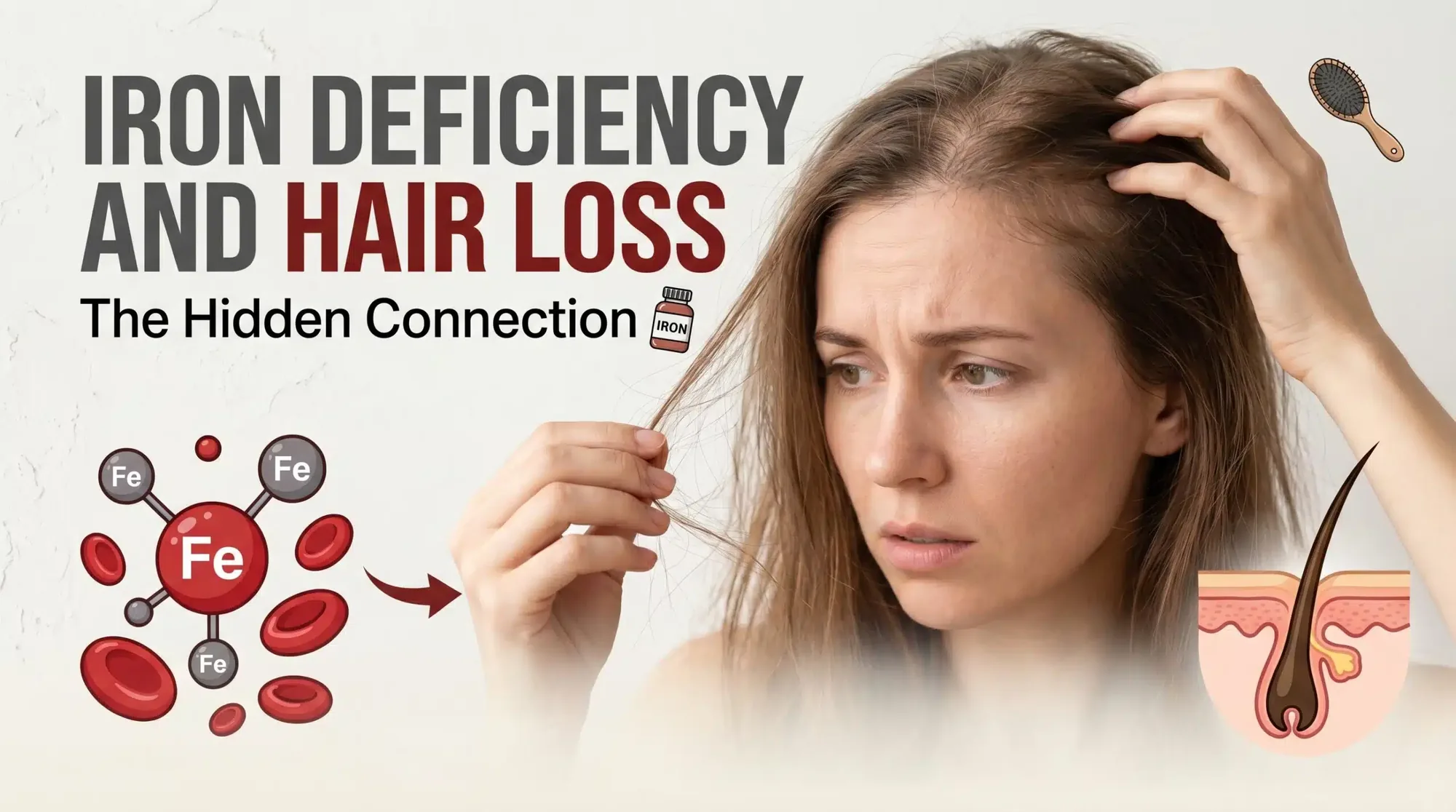
Iron deficiency and hair loss: the overlooked cause, especially in women
Low iron is one of the most frequent and most overlooked causes of diffuse hair loss. I explain the connection, which blood tests to ask for, and what you can do.
The connection between iron and hair
Hair is one of the body's fastest-growing tissues and therefore has a large need for nourishment and oxygen. Iron is necessary for transporting oxygen in the blood and is involved in the processes that drive the follicle's production. When iron stores fall, the body prioritises vital functions over hair growth. The result is that follicles shift from the growth phase to the resting phase, and diffuse hair loss follows.
Who is most often affected?
Iron deficiency is one of the most frequent causes of diffuse hair loss in women, especially with heavy periods, pregnancy, breastfeeding or after childbirth. Vegetarians and vegans are also at risk, because iron from plants is absorbed less well than iron from meat. In men iron deficiency is rarer and should always be investigated further, since it can point to another underlying cause.
Which blood tests should you ask for?
The most important test is ferritin, which measures the body's iron stores. You can have normal haemoglobin (that is, not actually be anaemic) and still have iron stores low enough to affect the hair. So it is ferritin, and not only haemoglobin, that you should ask for. Many clinicians regard low ferritin values as relevant in hair loss even when they fall within the broad reference range. Have your thyroid function and vitamin D checked as well, since they often go together.
Get a free hair analysis
- 1Start
- 2Info
- 3Done
Treatment
The treatment is to correct the deficiency, typically with iron supplements as directed by a doctor, and to find the reason the iron is low. Iron supplements should not be taken on your own initiative for long periods, since too much iron is also harmful. Absorption is improved by vitamin C and impaired by coffee and tea taken close to the dose. Once the iron stores have been rebuilt, the hair usually grows back over several months.
Realistic expectations
Hair loss from iron deficiency is a form of telogen effluvium and is therefore usually temporary. But it takes time: first the stores have to be rebuilt, and then the hair has to go through its growth cycle. Expect six to twelve months before you see clear improvement. Importantly: iron supplements only help if you actually have a deficiency. In hereditary hair loss extra iron makes no difference.
Conclusion
Iron deficiency is a frequent and easily overlooked cause of diffuse hair loss, especially in women. Ask specifically for a ferritin measurement, not only haemoglobin, and have your thyroid function and vitamin D checked at the same time. If the deficiency is corrected, the hair usually grows back over months. But remember that supplements only work with a genuine deficiency and cannot stop hereditary hair loss. This article is for general information and does not replace an individual medical assessment.
© IdealofMeD Research Academy. Republished with permission.
Get a no-obligation assessment against fixed criteria, directly on WhatsApp.