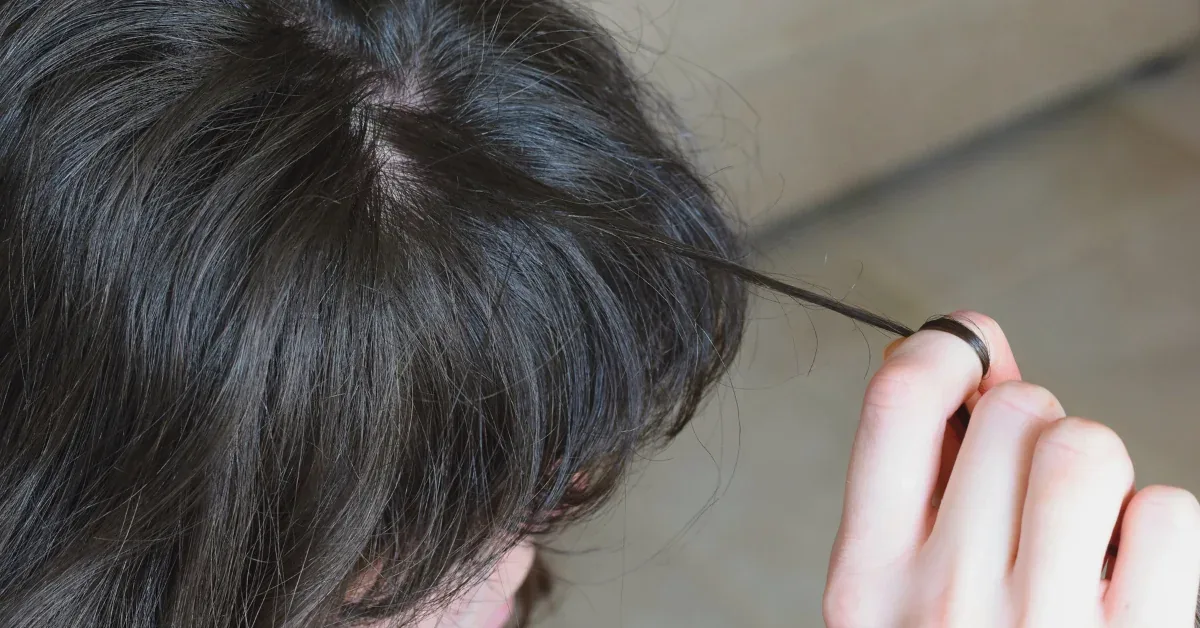
Trichotillomania: hair loss from compulsive hair pulling
Trichotillomania is a condition in which a person pulls out their own hair. I explain how it differs from other hair loss, how it is treated, and when surgery may come into question.
What is trichotillomania?
Trichotillomania is a condition in which a person repeatedly pulls out their own hair, often without being fully aware of it. It is regarded as an impulse-control or obsessive-compulsive-related condition, and it belongs with a psychologist or psychiatrist rather than a hair surgeon. The hair is typically pulled from the scalp, but the eyebrows and eyelashes can be affected too.
How does it differ from other hair loss?
The pattern in trichotillomania looks different from hereditary hair loss. The areas are often irregular and asymmetrical rather than following the classic male pattern. You typically see hairs of different lengths within the same area, because some hairs have been pulled out and are growing back. There is rarely the gradual miniaturisation that characterises androgenetic alopecia. A specialist can usually see the difference on examining the scalp.
Why it matters to know the difference
Because the cause is behavioural and not hormonal, neither Finasteride, Minoxidil nor surgery works on the problem itself. If you treat the symptom without addressing the behaviour, the loss continues. That is why the right diagnosis is essential, and it is one of the reasons any reputable clinic investigates the cause before proposing treatment.
Get a free hair analysis
- 1Start
- 2Info
- 3Done
Treatment
The treatment of trichotillomania is primarily psychological. Cognitive behavioural therapy, particularly a method called habit reversal training, has the best documentation. In some cases medical treatment of a concurrent anxiety or obsessive-compulsive condition can help. The goal is to stop the pulling, because only then can the hair grow back. Many people experience full regrowth once the behaviour is under control, provided the follicles are not permanently damaged.
Can you have a hair transplant?
Only in particular cases. If the pulling has gone on for many years, the follicles may be permanently damaged, and a transplant could in principle rebuild the area. But the precondition is that the behaviour has stopped and has been stably under control for a long time. If surgery is performed while the pulling is still going on, the new hairs will be pulled out in the same way, and the procedure is wasted. That is why a responsible surgeon will always refer to psychological treatment first.
Conclusion
Trichotillomania is hair loss caused by compulsive hair pulling, and it differs fundamentally from hereditary hair loss in both pattern and cause. The treatment is psychological, not medical or surgical. The hair often grows back once the behaviour stops. A hair transplant can only be considered with permanent damage and only once the pulling has been stopped for a long time. Seek professional help if you recognise yourself here. This article is for general information and does not replace professional treatment.
© IdealofMeD Research Academy. Republished with permission.
Get a no-obligation assessment against fixed criteria, directly on WhatsApp.