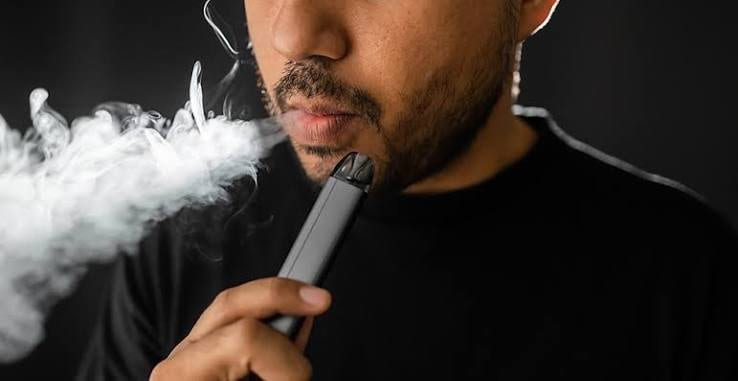
Donor area and smoking
Smoking impairs wound healing through vasoconstriction and reduced oxygen delivery, and the donor area is thousands of small wounds healing by secondary intention.
Smoking impairs wound healing through vasoconstriction and reduced oxygen delivery, and the donor area is thousands of small wounds healing by secondary intention. Stopping around surgery is the modifiable factor most under the patient's control.
Why does smoking-related healing damage in the donor area matter more than in the recipient area?
Smoking's effect on the donor area matters because that damage is permanent, unlike a recipient-area result that can sometimes be revised. After FUE the donor area is hundreds or thousands of small full-thickness wounds healing by secondary intention into scars; after strip surgery it is one long incision healing under tension — both are wound-healing problems.
How does smoking impair healing in the hair transplant donor area?

Smoking impairs donor-area healing through two mechanisms: nicotine constricts small vessels and reduces scalp perfusion, while carbon monoxide binds haemoglobin more readily than oxygen, cutting the blood's oxygen-carrying capacity. Smoking also impairs collagen synthesis and immune function during healing, so thousands of small donor wounds simultaneously receive less oxygen and use it less effectively.
- Nicotine is a vasoconstrictor. It narrows small vessels and reduces perfusion in the tissue they supply — including the scalp.
- Carbon monoxide binds haemoglobin with far greater affinity than oxygen, reducing the oxygen-carrying capacity of the blood that does arrive.
- Smoking impairs the healing response across several stages, including collagen synthesis and immune function.
For a healing wound, the combination reduces both the oxygen delivered and the tissue's ability to use it. For thousands of small wounds healing simultaneously, that effect is distributed across the whole donor area.
What donor and recipient outcomes can smoking affect in a hair transplant?
Smoking can worsen scar quality (wider strip scars or more visible dot scars), raise infection risk, cause folliculitis and delayed crust clearance, and reduce recipient-area graft survival. In large, dense sessions it is also among the recognised factors contributing to recipient-area necrosis, alongside high density and prior scarring.
- Scar quality. Slower, more inflamed healing tends toward more visible scarring — a wider strip scar, or dot scars that are more conspicuous.
- Infection risk. Impaired immune function and reduced perfusion both raise it.
- Folliculitis and delayed crust clearance.
- Graft survival in the recipient area, which is the other half of the same problem: transplanted follicles depend on diffusion from a perfused recipient bed for their first days.
- Recipient-area necrosis risk in large, dense sessions, where smoking appears among the recognised contributing factors alongside high density and prior scarring.
The strength of evidence varies across these, and hair-transplant-specific data is limited. The general surgical wound-healing evidence is what most of this rests on.
What should smokers do before and after a hair transplant to protect the donor area?
Smokers should follow their surgeon's pre- and post-operative stopping window, since quitting is the intervention with an actual basis and it costs nothing. Nicotine replacement is still a vasoconstrictor, so its use needs the surgical team's approval. Honesty about smoking lets the surgeon moderate density; if quitting isn't possible, that calls for a smaller plan.
Stopping smoking before and after surgery is the intervention with an actual basis, and it is free.
- Ask your surgeon for their specific pre- and post-operative stopping window and follow it. Clinics differ and yours knows what they are doing to you.
- Nicotine replacement is still nicotine, and therefore still a vasoconstrictor. Whether it is acceptable in your case is a question for your surgical team, not an assumption.
- Be honest about your smoking at consultation. A surgeon who knows may moderate recipient density and extraction density, and both adjustments help you.
- If you cannot stop, that is a reason for a more conservative plan rather than a reason to look for an adjunct that compensates.
Should smokers use hyperbaric oxygen or growth factors to allow a bigger hair transplant plan?
No. No adjunct treatment — hyperbaric oxygen, growth factors or otherwise — has been shown to compensate for smoking in hair transplantation. Offering one to allow an inadvisable plan shifts risk onto the patient. The correct response to a smoker with a large plan is a smaller plan, a conservative extraction proportion, and a stopping window.
There is a specific way this gets handled badly. If a clinic proposes an adjunct treatment — hyperbaric oxygen, growth factors, anything — as a way to let a smoker proceed with a plan that would otherwise be inadvisable, the plan is the problem.
No adjunct has been shown to compensate for smoking in hair transplantation, and offering one shifts risk onto the patient while removing the pressure to make the change that would actually help.
The correct response to a smoker with a large plan is a smaller plan, a more conservative extraction proportion, and a stopping window — not an additional purchase.
Sources
- Romera de Blas C, Vega Díez D, Ricart Vayá JM, Gómez Zubiaur A. Complications in follicular unit excision hair transplantation: current evidence and practical approaches. Frontiers in Medicine, 2026;13:1750989. pubmed.ncbi.nlm.nih.gov/41709896
- Parsley WM, Perez-Meza D. Review of factors affecting the growth and survival of follicular grafts. Journal of Cutaneous and Aesthetic Surgery, 2010;3(2). jcasonline.com
- Thom SR. Hyperbaric oxygen: its mechanisms and efficacy. Plastic and Reconstructive Surgery, 2011;127 Suppl 1:131S-141S. pubmed.ncbi.nlm.nih.gov/21200283
- Rassman WR, Bernstein RM, McClellan R, Jones R, Worton E, Uyttendaele H. Follicular unit extraction: minimally invasive surgery for hair transplantation. Dermatologic Surgery, 2002;28(8):720-728. pubmed.ncbi.nlm.nih.gov/12174065
This article summarises published research and standard clinical practice. It is general educational information, not medical advice, and it does not replace the instructions your own surgical team gives you. Where their guidance differs from anything here, follow theirs.
Get a no-obligation assessment against fixed criteria, directly on WhatsApp.