
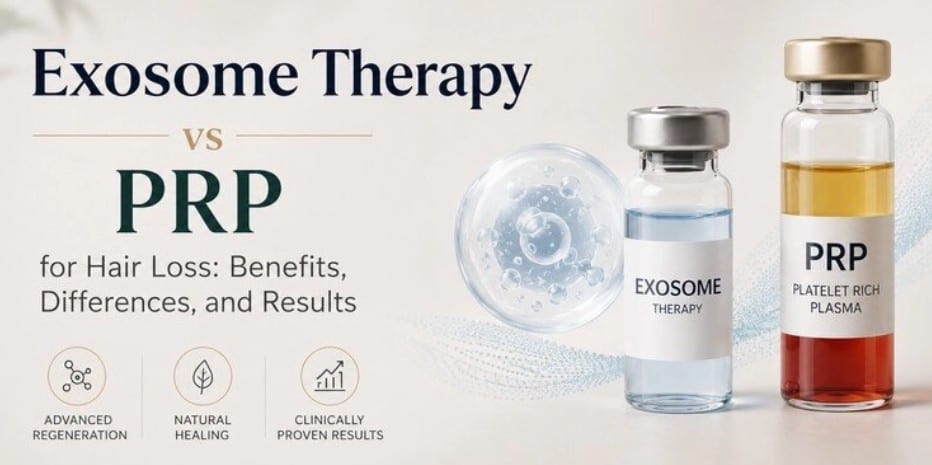
Platelet-rich plasma, or PRP, is a concentrate of a person's own platelets. A small blood sample is drawn and spun in a centrifuge, and the platelet-rich plasma that separates out is injected into the scalp to treat hair loss. It is a regenerative-medicine approach built on the patient's own material, and it has been studied more than most of the newer options in the same field.
That evidence is uneven. For hereditary hair loss there is a reasonable body of reviews and meta-analyses, limited by how differently clinics prepare it. As an add-on to a hair transplant the evidence is thinner, and no study reports outcomes from ongoing PRP over years. Both halves are set out below.
What is PRP – platelet-rich plasma?
PRP is a concentrate of the patient's own platelets in plasma. Blood is drawn and spun in a centrifuge, and the platelet-rich plasma is injected into the scalp on the reasoning that platelets carry growth factors involved in tissue repair. It is made from the patient's own blood, so the safety profile is favourable; the open questions concern how well it works and how consistently, not harm.
Platelets are best known for their role in clotting, but they also carry growth factors and signalling proteins that help regulate tissue repair. The therapy tries to deliver a concentrated dose of those signals to the scalp, in the hope of supporting follicles that are thinning but still present.
That is a plausible mechanism rather than a proven one. PRP is aimed at follicles that exist. It does not create new ones.
Because the material is autologous, taken from and returned to the same person, it avoids the rejection and matching questions that apply to donor tissue. PRP is not a single standardised product, though. How it is prepared differs between clinics, and that is the main obstacle to comparing results.
How is PRP prepared, and why does that matter?
A small blood sample is drawn, spun in a centrifuge to concentrate the platelets, and the platelet-rich plasma is injected into the treated areas of the scalp. Centrifuge speed, spin time, activation method, the platelet concentration achieved, injection depth, volume and session frequency all vary between clinics, so two treatments both called PRP can differ substantially. That is the main reason the published results are inconsistent: the studies are not testing the same intervention.
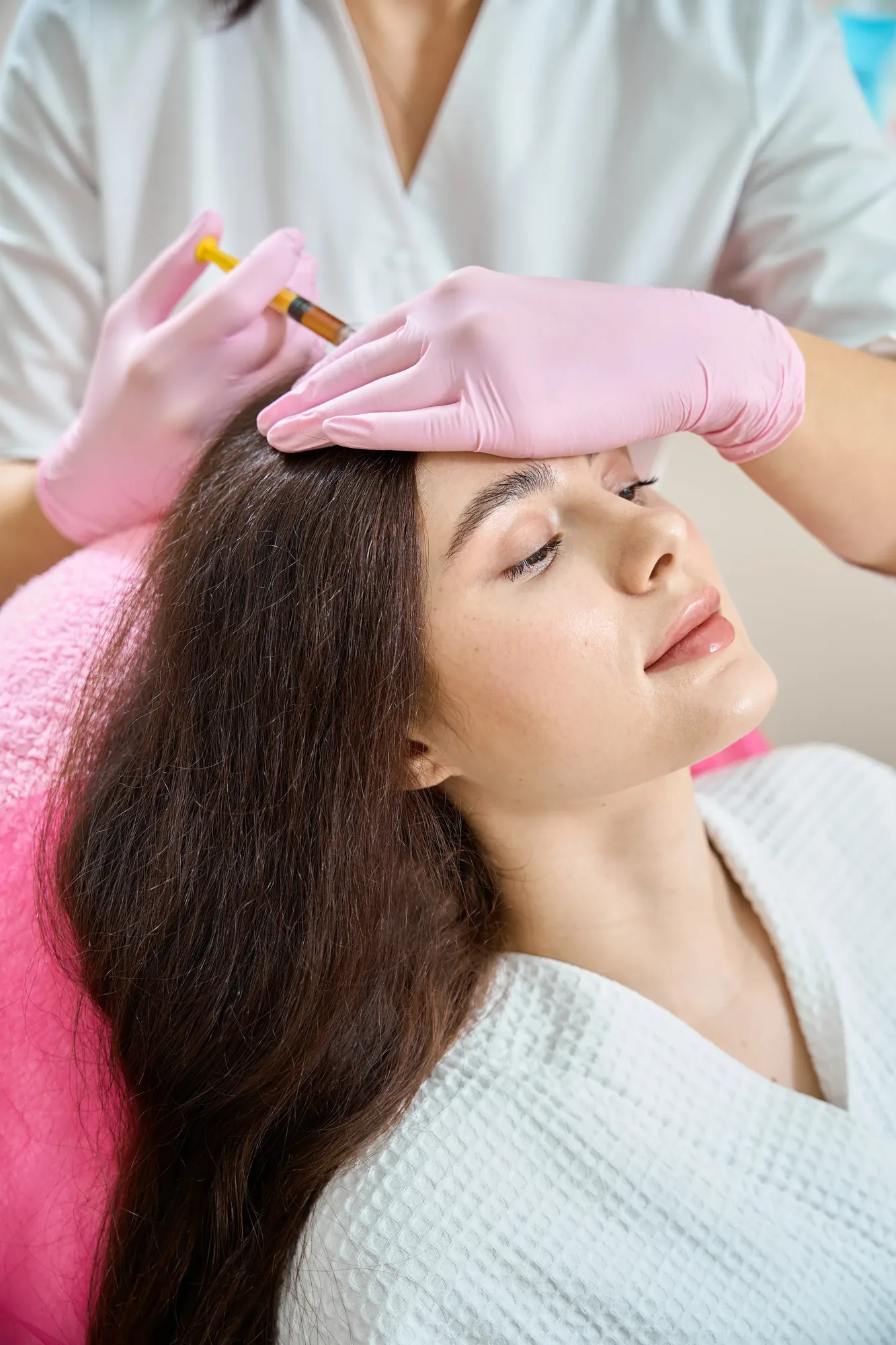
The basic sequence is the same. What differs is the detail:
- Centrifugation. Spin speed and duration.
- Activation. Whether and how the platelets are activated before injection.
- Concentration. How many platelets the final preparation actually contains.
- Injection. Depth, volume and technique.
- Schedule. How many sessions, how far apart, and whether maintenance follows.
A result achieved with one clinic's protocol does not automatically transfer to another's. That is the key caveat when reading any PRP study or clinic brochure.
What does the evidence show for treating hair loss?
For hereditary hair loss (androgenetic alopecia) there is a reasonable body of evidence for benefit, though differences in how PRP is prepared limit how confidently the studies can be pooled. A 2024 meta-analysis of PRP combined with minoxidil, pooling six studies and 343 participants, reported greater increases in hair density and diameter with the combination than with either treatment alone.
Two published sources are worth naming:
- Kieling and colleagues, a 2024 systematic review and meta-analysis in Anais Brasileiros de Dermatologia, asked whether autologous PRP increases hair density in androgenetic alopecia.
- Xiao and colleagues, a 2024 meta-analysis in Aesthetic Plastic Surgery, pooled six studies of PRP combined with minoxidil (343 participants).
The second result supports PRP as an addition to minoxidil, not a substitute for it. The literature has well-documented weaknesses too: studies are small, outcome measures inconsistent, follow-up usually a matter of months, blinding difficult. And individual results vary with age, the severity of the loss and the preparation method.
None of that means PRP does nothing. It means the size of any effect, and how long it lasts, are not established.
How does PRP compare with SVF, exosomes and hyperbaric oxygen?
PRP has a larger evidence base than exosome therapy or hyperbaric oxygen, and no published trial has shown SVF (stromal vascular fraction) to be better. In a 2024 randomised trial, adding a single SVF injection to two PRP sessions made no significant difference against three PRP sessions alone. Exosome therapy is at an earlier stage still, and many exosome products are not made from the patient's own body.
- SVF. A cell mixture from the patient's own fat, which needs a small liposuction harvest. In the 2024 trial both groups improved on hair count and hair diameter, with no significant difference between them.
- Exosomes. Cell-derived vesicles rather than platelets or cells. The published evidence is early-stage, and product composition varies enormously between suppliers.
- Hyperbaric oxygen. A different kind of adjunct, given in a chamber. Its hair-specific literature is one randomised trial of 34 patients, a five-patient case report, a nine-volunteer pilot study and a letter to the editor.
A larger literature is not the same as proof for a specific use. Almost all PRP evidence concerns injecting a thinning scalp to treat hereditary hair loss, not protecting grafts at surgery. Stacking several adjuncts in the hope that their benefits add up has no support: uncertain effects do not sum to an established one, and no study has tested hyperbaric oxygen combined with PRP or exosomes after a transplant.
What is known about safety?
PRP is made from the patient's own blood, so the safety profile is favourable, and the open questions concern efficacy and consistency rather than harm. The practical drawbacks are that scalp injections are uncomfortable for many people and that the treatment is usually repeated, which adds cost.
Autologous material avoids rejection, but it does not make a procedure risk-free. As with any injection, technique and hygiene matter, and both are the clinic's responsibility.
The main drawbacks are discomfort and ongoing cost rather than safety. Scalp injections are genuinely uncomfortable for many people, and PRP is usually sold as repeated sessions over months or years.
Where does the evidence run out?
Preparation protocols are not standardised, follow-up is typically measured in months, evidence for use around a transplant is thin, and no study reports outcomes from ongoing PRP over years. A 2025 systematic review of PRP as a transplant adjunct itself notes the need for long-term follow-up studies with standardised protocols.
Four gaps matter for anyone deciding:
- Protocol. Centrifugation, platelet concentration, activation and injection technique all differ. 'PRP' is not one product, and one clinic's result does not transfer to another's.
- Duration. Follow-up is short. Ongoing PRP courses sold to maintain density over years have no long-term outcome data in transplant patients.
- Purpose. Most of the evidence concerns treating a thinning scalp, not protecting or speeding up newly placed grafts.
- Rigour. Studies are small, outcome measures are inconsistent, and blinding is difficult. The repeated attention that comes with a course of treatment is itself hard to separate from the effect of the PRP.
The transplant-specific review is by Sindhusen and colleagues, published in Cureus in 2025 (PubMed).
Who might PRP suit, and what will it not do?
PRP is most relevant for people whose hereditary hair loss is still at the thinning stage, with follicles that are present but miniaturising, and who want an add-on to established treatment. It will not regrow follicles that are already gone, and it does not stop the process that drives hereditary hair loss.
What PRP does not do:
- It does not regrow a lost follicle. Where an area is genuinely bald rather than thinning, the question is transplantation, not injection.
- It does not stop the underlying process. No injection changes the DHT-driven mechanism behind hereditary hair loss. Finasteride lowers DHT (dihydrotestosterone); PRP does not.
- It does not replace established treatment. It has been studied as an addition to minoxidil, not as a substitute for it.
PRP is not a first step. Establishing the cause, correcting any measured deficiency and considering the established medical treatments come first; PRP sits alongside those as an add-on.
Does PRP improve the result of a hair transplant?
The evidence is thinner than for PRP as a treatment for hair loss itself. Published data associate PRP combined with FUE (follicular unit extraction) with about 18.7 percent higher hair density than FUE alone, but that figure comes from industry and study data of varying quality, not from a definitive trial.
Nearly all the PRP evidence concerns injecting a thinning scalp over months to treat hereditary hair loss. That is a different intervention from injecting at the time of surgery to protect grafts, and evidence for one is not evidence for the other. Treat the 18.7 percent figure as an indication, not a promise.
Around surgery, PRP is typically injected into the recipient area at the time of the operation, grafts are sometimes bathed in it before placement, and sessions are often repeated over the following months. It is a near-standard add-on offered by a large share of clinics, frequently bundled into package pricing.
A transplant moves follicles that are largely resistant to DHT into areas that have none, but it does not stop ongoing loss in the hair around them. PRP is sometimes used for that native hair as well.
Judge any claim against the transplant timeline: shedding at weeks 2–3, new growth from about months 3–4, and a near-final result at about 12 months. The evidence has not yet established that PRP improves how many transplanted follicles are growing at twelve months, so a promise of faster growth or better graft survival goes beyond what has been shown. If PRP is offered as part of your healing and aftercare plan, ask what it adds and what it costs separately.
Is an ongoing PRP course worth the cost?
The evidence does not yet answer that. Ongoing PRP repeated two to four times a year for ten years would be a substantial cumulative cost, and no study reports outcomes over that kind of period. Finasteride, the usual comparison, has five-year follow-up data and is far cheaper, so the decision belongs with a doctor, not a clinic selling a package.
Clinics make three separate claims for PRP, each resting on its own evidence:
- PRP at the time of surgery, to improve graft outcomes. This is the adjunct question, and the systematic review on it calls for better long-term data.
- Ongoing PRP courses over years, to maintain density. Often sold as a subscription, with no long-term outcome data in transplant patients.
- PRP as a treatment for hereditary hair loss in its own right. This is where the meta-analyses sit, and it is a different intervention from either of the above.
A clinic that cites the hereditary-hair-loss meta-analyses to support an ongoing post-transplant maintenance programme is citing evidence for a different question. For comparison, finasteride has published five-year follow-up data in men (multinational experience, European Journal of Dermatology, 2002).
PRP is also often bundled into package pricing. Ask for it to be itemised, and ask what the price is with it removed. If the price does not change, it is not really optional and should be treated as part of the surgical fee.
What should you ask before you say yes?
Ask which preparation protocol and platelet concentration the clinic uses, how many sessions are proposed and over what period, what specific outcome PRP is meant to change and from which study, and what it costs separately from any package. PRP is not dangerous and may help, but it is a reasonable adjunct with imperfect evidence, not a reason to choose a clinic.
Six questions worth asking:
- What preparation protocol do you use, and what platelet concentration does it achieve?
- How many sessions are included, over what period, and what maintenance follows?
- What specific outcome do you expect PRP to change, and from which study? Was that study in transplant patients or in hereditary hair loss generally?
- How will we measure whether it is working: hair counts in a defined zone, or impression?
- Is it included or an add-on, what is the price with it removed, what is the total over five years, and can I stop?
- Is medical treatment in place, and how does this compare?
A clinic that answers the transplant-versus-hereditary-hair-loss question accurately is describing the evidence honestly. That distinction is where most of the overreach in this area lives.
Frequently asked questions about PRP
Is PRP an approved treatment for hair loss?
PRP is offered widely and has a reasonable evidence base, but it is used as an add-on rather than as an established first-line treatment, and how it is regulated for this use differs between countries. Ask your clinic what applies where you are being treated.
Does it hurt?
Scalp injections are genuinely uncomfortable for many people, and PRP is usually repeated over months. Ask the clinic what to expect and how it manages discomfort.
How much hair does it add?
There is no single figure to quote. A 2024 meta-analysis of six studies and 343 participants found PRP combined with minoxidil produced greater increases in hair density and diameter than either alone, but preparation protocols differ so much that one clinic's result does not transfer to another's. No individual result is promised.
How long does the effect last?
Unknown. Follow-up in most studies is measured in months, and no study reports outcomes from ongoing PRP over years.
Is PRP better than SVF or exosomes?
PRP has a larger evidence base than exosome therapy or hyperbaric oxygen, and no published trial has shown SVF to be better. In a 2024 randomised trial that added SVF to a PRP course, there was no significant difference against PRP alone.
Will it work if I am already bald in that area?
No. PRP is aimed at follicles that are still present but thinning. Where follicles are gone, no injection brings them back.
Can it replace finasteride or minoxidil?
No. PRP is best documented as an addition: in a 2024 meta-analysis, PRP combined with minoxidil outperformed either treatment alone. That is evidence for combining, not for replacing, and PRP does not stop the DHT-driven process behind hereditary hair loss.
Does PRP help after a hair transplant?
The evidence is thinner than for PRP as a hair-loss treatment. Published data associate PRP combined with FUE with about 18.7 percent higher density than FUE alone, but from studies of varying quality rather than a definitive trial, and a 2025 systematic review calls for long-term follow-up and standardised protocols.
Is it safe?
It is made from your own blood, so the safety profile is favourable and the open questions concern efficacy and consistency rather than harm. Autologous does not mean risk-free, and technique and hygiene still matter.
Why do different clinics describe PRP differently?
Because there is no standardised protocol. Centrifuge speed, spin time, activation, platelet concentration, injection depth, volume and schedule all vary between clinics, so two treatments called PRP can differ substantially.
Establish what is driving your hair loss first. PRP is a reasonable add-on with imperfect evidence, not a replacement for the treatments with the strongest evidence behind them, and it does not restore follicles that are already gone. A free hair analysis will tell you which category you are in before you spend anything.
Sidst opdateret: September 2026 · Redaktionelle standarder