
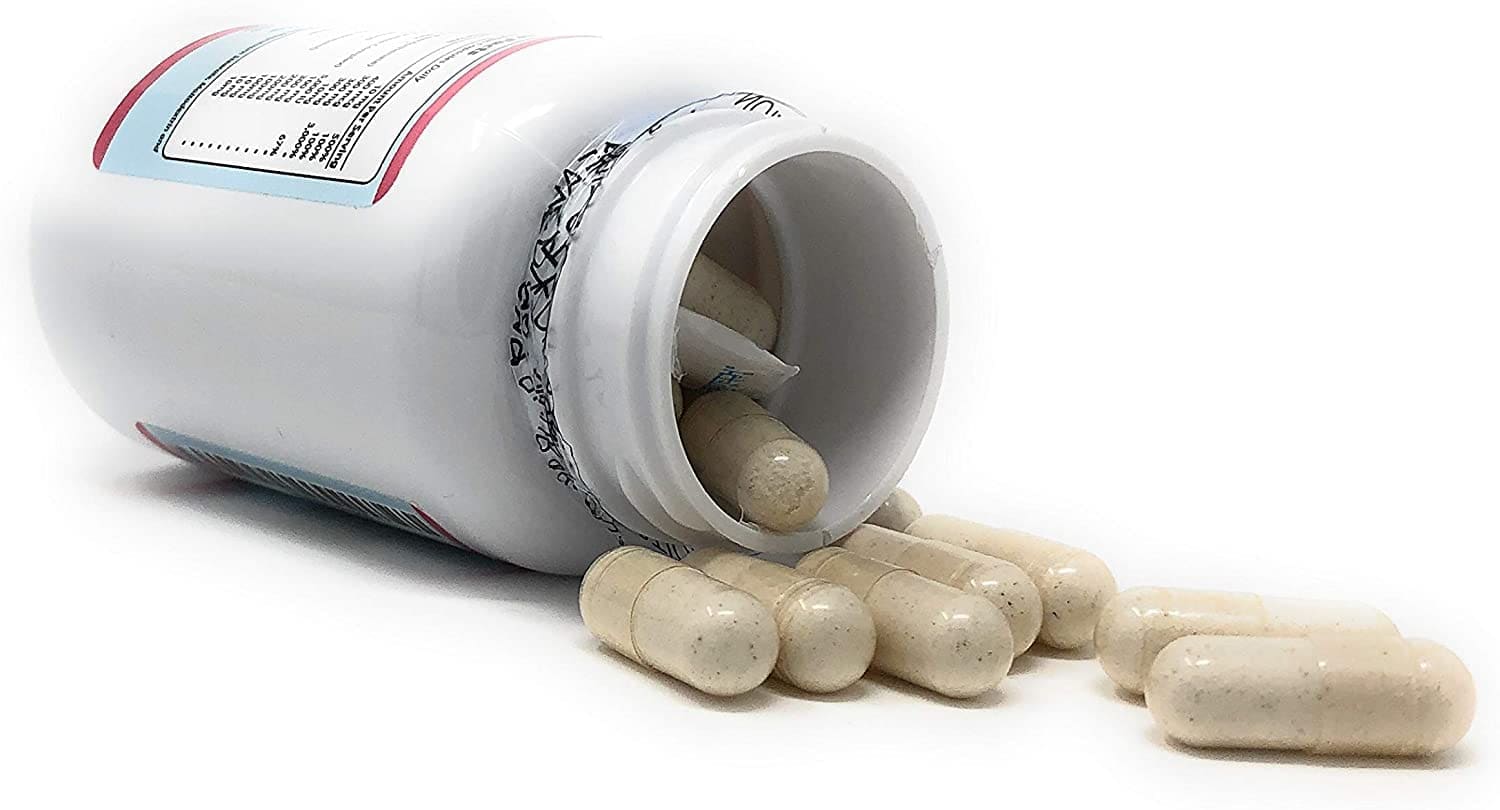
Peptide therapy is one label for several different things in hair loss: cosmetic serums and shampoos containing peptides, most often copper peptides such as GHK-Cu; mixtures some clinics inject into the scalp or apply with microneedling; and unlicensed “research peptides” sold online. The word covers a lot, so it helps to be clear about which of these you mean.
The laboratory findings are consistent and encouraging, and peptides are increasingly used in clinical practice as a gentle, well-tolerated support alongside proven treatments. The human trials so far are smaller and shorter than the decades of large trials behind minoxidil and finasteride, so a 2026 evidence review called GHK-Cu promising but not yet fully proven — a reason to treat it as a supportive add-on, not to dismiss it. For how peptides sit next to the better-evidenced options, see the comparison below.
What does peptide therapy for hair loss actually mean?
Peptide therapy is not one treatment but a loose label spanning cosmetic peptide products, mixtures some clinics inject or apply with microneedling, and unlicensed “research peptides” sold online. Ingredient, strength and schedule are not standardised.
A peptide is a short chain of amino acids. Many licensed medicines are peptides — insulin is the familiar one — so the word alone says little about whether a product has been tested. In hair loss it is used three ways.
- Cosmetic products. Serums, sprays and shampoos listing a peptide among their ingredients. The best known are copper peptides, above all GHK-Cu, the copper-bound form of GHK, a naturally occurring three-amino-acid peptide (glycyl-L-histidyl-L-lysine). Other cosmetic peptides are different molecules, so two products can share the word and little else.
- Clinic-administered mixtures. Peptide mixtures a clinic injects into the scalp or applies after microneedling, choosing what goes in and how much. This overlaps with mesotherapy.
- Research peptides sold online. Vials labelled “for research use only”. They are not licensed medicines, and nothing guarantees they are made, tested or labelled to the standard required for people. This is the category with the clearest safety concern.
What is the thinking behind peptides for hair?
Peptides act as signals between cells, and laboratory work suggests some may influence the cells around the follicle, blood-vessel formation and tissue repair — which could, in theory, support follicles that are still present. It is a plausible mechanism, not a demonstrated treatment effect in people.
A miniaturising follicle in pattern hair loss is still there. If a signalling molecule improved its surroundings — the cells around it, its blood supply, its repair — it might work better. As with PRP, the aim is to support follicles that remain, not to create new ones.
For copper peptides the laboratory findings are consistent. A 2007 study found that a related copper peptide (AHK-Cu) stimulated the growth of human hair follicles in culture and the proliferation of dermal papilla cells at the base of the follicle. GHK-Cu has also been studied for tissue repair, inflammation and blood-vessel formation, and proponents note that GHK occurs naturally in the body and is reported to decline with age.
Where the argument gets thinner
- Cells in a dish are not a scalp. Findings in cultured cells and animals do not always carry over to people, and we found no human study showing this mechanism is what changes hair.
- Reaching the follicle is a problem of its own. A 2026 systematic review describes delivery through the skin as a key bottleneck for topical GHK-Cu.
What does the evidence actually show?
The laboratory findings are consistent and encouraging, and early clinical studies — including injected peptide-and-growth-factor mixtures — have reported good results. What is still missing is a large, independent trial testing a peptide product against or alongside minoxidil or finasteride, so a 2026 review called GHK-Cu promising and worth taking seriously as a supportive add-on rather than a proven standalone.
The published work sits at four levels:
- Cells and animals. Copper peptides show consistent laboratory effects — the strongest evidence, and the furthest from a patient.
- Topical products in small trials. A 2016 randomised, double-blind, placebo-controlled trial in 45 men tested a scalp spray combining 5-aminolevulinic acid with a GHK peptide for six months. Hair count rose in the treated groups, but hair length and thickness did not differ significantly between the three groups, and because the product combined two ingredients, the peptide's own contribution cannot be separated out. A 2020 randomised, triple-blind trial in 32 people compared a herbal-extract combination that included acetyl tetrapeptide-3 with a topical minoxidil solution for 24 weeks and found no significant difference in the rise in terminal hair count; without a placebo group, it cannot show the combination works, let alone that it matches minoxidil.
- Injected growth-factor and peptide mixtures. The best-studied injectable here is a single proprietary mixture of growth factors and biomimetic peptides. A 2020 randomised, single-blind comparison with PRP in two groups of 25 men, and a 2025 randomised, single-blind trial in 112 men that added the product around a hair transplant, both reported better results for the product than for the comparator. These are encouraging results for that product; most of its controlled studies so far come from the group that developed it, so independent replication is the natural next step. A 2026 retrospective study of 50 patients also reported improved hair measures after mesotherapy with biomimetic peptides, vitamins and micronutrients, but it was retrospective with no control group, which its authors list as a limitation.
- Reviews. A 2026 systematic review of injectable therapy for androgenetic alopecia found peptide formulations among the most frequently studied agents and concluded that standardised randomised trials are required before injectable therapy can be recommended as routine treatment. A 2026 review of GHK-Cu found the human evidence sparse, the few clinical studies small and cosmetic.
The signal is encouraging and consistent. What it does not yet have is the decades of large randomised trials that stand behind minoxidil and finasteride — which is why peptides make sense as a support to add, not as a proven standalone.
What is still to be proven?
What is not yet settled: a single standard product, dose and schedule; long-term follow-up; and a large, independent trial against or alongside minoxidil or finasteride. Like any non-surgical treatment, peptides support follicles that are still there and cannot bring back one that is already gone. This reflects a September 2026 literature check and will firm up as larger trials report.
Four gaps matter for anyone deciding:
- Definition and attribution. A 2026 evidence review of GHK-Cu noted that the literature often treats it as a single ingredient, although its chemical state, stability and toxicity depend on the formulation. Many studies also test a peptide alongside other actives, so a result cannot be credited to the peptide.
- Scale and independence. The controlled trials we found enrolled about 30 to 110 people, and the injectable data come largely from one proprietary product — enough for a signal, not to settle the question.
- Duration. Most outcomes were measured over months, not years; whether an effect persists or fades when use stops is not established.
- Comparison. No large, independent, double-blind trial against minoxidil or finasteride, or as an add-on to them.
What would change this assessment: large, independent, double-blind trials with a placebo or an established-treatment comparator, and follow-up long enough to show whether an effect lasts.
Are peptide products safe, and why are research peptides a particular concern?
Topical cosmetic peptide products caused no serious adverse events in the small trials we found, though any product can irritate the skin. Unlicensed “research peptides” sold online are not made or tested for use in people, so their identity, purity, strength and sterility cannot be assumed. The Danish Medicines Agency has warned that an unapproved peptide product can at best be ineffective and at worst harmful to health.
Topical cosmetic products
The topical trials above reported no adverse events for the peptide products, but small trials detect only common problems. Any product can irritate the scalp or trigger an allergic reaction; stop and see a doctor if the scalp becomes red, sore or itchy. Products made for intact skin are not necessarily made or tested for use after microneedling, and an isolated case report describes a granulomatous reaction after microneedling with a cosmetic serum.
Injected products and research peptides
- Identity, purity and contamination. A 2026 review in Cureus framed the central concern as consumers using products of uncertain identity, purity, potency, sterility and safety outside clinical supervision, unlike peptide medicine developed, manufactured and monitored through regulated pathways. A 2026 review in Missouri Medicine lists product contamination, manufacturing impurities and inaccurate dosing among the risks of unapproved injectable peptides sold without a prescription.
- The label is not a guarantee. “For research use only” is how the seller says the product may be used. It is not a quality standard for injecting into people.
- Regulators have warned. Commenting on unapproved performance and aesthetic peptides sold through social media in early 2026, the Danish Medicines Agency (Lægemiddelstyrelsen) said a product not approved by the authorities can at best be ineffective and at worst harmful to health. The legal status of individual peptides differs between countries and has been changing, so ask what applies where you are treated.
Nothing here is a reason to inject a product bought online. If a clinic offers an injectable peptide, ask for the product name, manufacturer, licence status where you are treated and batch documentation; the questions in what to ask before you pay apply.
How does peptide therapy compare with proven treatments?
Finasteride and minoxidil are the evidence-backed foundation; PRP and microneedling are well-established add-ons; peptides are a newer, well-tolerated add-on with encouraging but still-maturing evidence. No regulator has yet approved a peptide as a standalone hair-loss medicine, so they belong alongside the foundation rather than instead of it.
| Treatment | Type | Evidence | Role |
|---|---|---|---|
| Finasteride | Medical | Strong | Foundation |
| Minoxidil | Medical | Strong | Foundation |
| PRP | Medical | Reasonable but uneven | Add-on |
| Microneedling | Non-medical | Moderate | Add-on |
| Peptide products | Cosmetic, injected or unlicensed | Encouraging lab and early clinical data; larger trials awaited | Emerging, well-tolerated add-on |
| Hair transplant | Surgical | Does a different job: it moves follicles | When follicles are gone in an area |
The order is the point: start with the foundation. In a 2025 Canadian expert consensus, a panel of 11 physicians used a Delphi process to review 45 interventions for androgenetic alopecia and recommended seven: oral dutasteride, oral finasteride, topical finasteride, topical minoxidil, PRP, microneedling and oral minoxidil. Peptide products were not among them — they are newer than the interventions that panel reviewed, so the big trials are still catching up rather than having returned a negative verdict.
Whether a peptide adds measurable benefit on top of minoxidil or finasteride is still being studied. Used as a gentle extra alongside the foundation it is a low-risk option; if you want the most documented add-ons, PRP and microneedling are a step ahead.
Who might peptide products be relevant for?
A good fit is someone who still has thinning rather than absent hair, already has a proven treatment in place, and wants a gentle, well-tolerated extra. Peptides support existing hair rather than bald areas and work best alongside minoxidil or finasteride, not instead of them. Injected products and research chemicals bought online are not something to try on your own.
Where it can be reasonable to look into further
- You still have hair in the area. Whatever a peptide does, it targets follicles that are still there, not gone.
- The foundation is in place. The cause has been established and the proven options discussed with a doctor. See causes of hair loss.
- You want a low-risk extra. A topical product from a reputable seller, with a full ingredient list, is a different proposition from an injection. Judge it as any add-on: cheap, gentle, never instead of something that works.
Where it is rarely the answer
- Bald or shiny areas. A gone follicle does not return, whatever is applied or injected; here the question is transplantation.
- Sudden, patchy or scarring hair loss. This needs a diagnosis first, not a cosmetic product. See a doctor early, because some causes have a treatment window.
- As a substitute for medication. We found no study showing a peptide product can replace minoxidil or finasteride. If you cannot or would rather not use a standard treatment, discuss evidence-based alternatives with a doctor.
What can you realistically expect?
Expect a supportive effect rather than a dramatic one, and give it time: hair grows slowly, so any change takes months to show. Because no single peptide product yet has a precise, replicated effect size, honest providers avoid promising a fixed percentage — improvement during a course is encouraging, though not proof on its own.
We give no timeline or percentage, because that would presuppose a documented effect from a specific product, which we do not have. Three things can be said with confidence:
- Hair grows slowly. Even minoxidil typically shows an effect only after 3 to 6 months of daily use, so a product promising results within weeks deserves scepticism.
- Hair loss fluctuates. Temporary shedding after illness or stress usually resolves on its own, so improvement during a course is not in itself evidence that the course caused it.
- Standardised photographs are the fairest test. Take them at the start and along the way, in the same light and from the same angles.
Proven treatments need continuous use, and hair loss typically resumes within 6 to 12 months of stopping. We found no data showing a peptide product is an exception.
Do peptides help with a hair transplant?
The evidence for peptides around a transplant is limited to one 2025 randomised, single-blind trial of a proprietary peptide and growth-factor product, which reported better regrowth and density than transplant alone. A 2026 systematic review found the widespread use of GHK-Cu on transplant wounds unsupported by registered randomised trials. A transplant moves follicles and does not stop ongoing hair loss, and no peptide product changes that.
The two address different problems. A transplant moves follicles from where hair still grows to where it is missing; it does not stop loss in the hair you keep, which is why proven medication still matters afterwards. A peptide can at best support hair that is still there.
- The 2025 trial. 112 men were randomised to a conventional transplant or to one with the peptide and growth-factor product injected into the scalp before and after surgery and used in the graft storage solution. The product group had better regrowth, density and shaft diameter. It is one encouraging trial of one product — single-blind, and compared with a transplant without the product rather than a placebo — and most controlled studies of it so far come from the group that developed it, so wider independent data would strengthen the case.
- Copper peptides on transplant wounds. A 2026 systematic review described their use in transplant and other post-procedure care as widespread but not supported by registered randomised trials.
Some transplant packages include PRP and peptide treatments as part of aftercare, which many patients value. It is still worth asking before you travel, not on the day, what exactly is included: what the product is, who makes it, whether it is licensed for this use where you are treated, and whether it is priced separately. Growth after a transplant follows its own schedule (shedding around weeks 2 to 3, new growth from about months 3 to 4, the final result at about 12 months), so it is hard to credit any add-on for what you see.
What should you ask before you pay?
Ask what the product is, who makes it and whether it is licensed for this use where you are treated; what the specific claim rests on and whether it has been tested in people like you; what the whole course costs, in writing; and which proven treatments you were offered first. A provider who cannot answer these plainly is selling, not treating.
Ten questions worth asking:
- What exactly is the product, and who manufactures it?
- Is it a cosmetic, a licensed medicine or an unlicensed preparation, and what is its status where I am being treated?
- Is it applied to the skin, applied with microneedling or injected? If injected, who prepares it, and to what standard?
- What is this product based on: which published study, of what size and design, and was it independent of the maker?
- What is the peptide meant to do that minoxidil or finasteride would not?
- Which established treatments have I been offered first, and why is this being added?
- How many sessions or weeks of use are proposed, and on what basis?
- What does the whole course cost, separate from any package?
- How will the result be measured with standardised photographs, and when do we decide it has not worked?
- What are the side effects, and what happens if my skin reacts?
The question about established treatments is the most revealing: an honest answer explains what the peptide adds to them, not why it should replace them. If a product is called a “research peptide”, or the provider cannot tell you what it contains, do not go ahead.
Frequently asked questions about peptide therapy
What is peptide therapy for hair loss?
A loose label, not one treatment: cosmetic peptide products (often copper peptides such as GHK-Cu), mixtures some clinics inject into the scalp or apply with microneedling, and unlicensed research peptides sold online. Ingredients, strengths and schedules are not standardised.
Does peptide therapy work for hair loss?
No reliable proof yet. Laboratory findings are consistent, but the human trials we found are small, mostly short, and often test a peptide combined with other ingredients or a single proprietary product. A 2026 review concluded that GHK-Cu is promising but unproven.
What is GHK-Cu?
GHK-Cu is the copper-bound form of GHK (glycyl-L-histidyl-L-lysine), a tripeptide that occurs naturally in the body and is used in cosmetics. Its laboratory effects on tissue repair and follicle-related cells are studied; its effect on hair loss in people is not established.
Is copper peptide better than minoxidil?
No trial has shown that. Minoxidil has large randomised trials behind it, while copper peptides have mostly laboratory data and small human studies. Treat any marketing comparison with caution.
Can peptides regrow hair that has already fallen out?
Not from a follicle that is gone. At most, a peptide might support one still present and producing thinner hair. Where an area is bald rather than thinning, the question is transplantation, not a product.
Are research peptides sold online safe?
They carry real risk: unlicensed medicines with no guarantee of identity, purity, strength or sterility, which regulators warn can be ineffective or harmful. We do not recommend injecting them.
Is any peptide approved as a hair loss treatment?
We are not aware of any regulator-approved medicine for pattern hair loss whose active ingredient is a peptide. If a clinic injects a peptide mixture anyway, ask what it is, who makes it and its licence status where you are treated.
Can peptides be combined with minoxidil or finasteride?
Some people do, but we found no large, independent trial showing that adding a peptide product improves on either drug alone. Keep the proven treatments as the foundation, and discuss any addition with a doctor or pharmacist.
Do peptides help after a hair transplant?
The evidence is one 2025 randomised, single-blind trial of a proprietary peptide and growth-factor product; it does not show other peptide products help. Copper peptides are widely used on transplant wounds without registered randomised trials, and a transplant does not stop ongoing hair loss, so proven medication still matters.
How long does it take to see results?
That cannot be stated, because no peptide product has a replicated effect size in people. Hair grows slowly — even minoxidil typically takes 3 to 6 months — so be sceptical of any product that promises results within weeks.
Establish what is driving your hair loss first. Peptides can be a gentle, well-tolerated support alongside the treatments with the strongest evidence — not a replacement for them, and, like any non-surgical option, they cannot restore follicles that are already gone. A free hair analysis will show which treatments fit your situation before you spend anything.
Sidst opdateret: September 2026 · Redaktionelle standarder