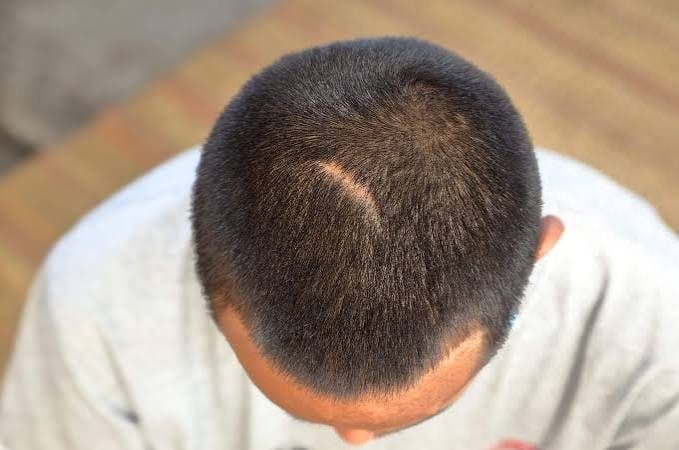
Using FUE to camouflage old scars
Grafts can be placed into scars from surgery, injury or burns to break up their appearance.
Grafts can be placed into scars from surgery, injury or burns to break up their appearance. Survival in scar tissue is lower than in normal scalp because the blood supply is compromised, so the realistic goal is reduced contrast rather than restored density.
Which types of scars can FUE grafts camouflage?
FUE can be used to camouflage strip scars from previous transplant surgery, surgical scars from other procedures, traumatic scars and lacerations, and burn scars, though the latter need more caution and lower expectations. Traction alopecia can also be treated once its cause has been removed and the area is stable.
- Strip scars from previous transplant surgery
- Surgical scars from other procedures
- Traumatic scars and lacerations
- Burn scars, with more caution and lower expectations
- Traction alopecia once the cause has been removed and the area is stable
Why is graft survival lower when FUE is used on scar tissue?
A graft depends on the recipient bed growing vessels into it, but mature scar tissue is fibrous and poorly vascularised, so that ingrowth is slower and less reliable than in normal scalp. Careful surgeons therefore plan conservatively, often placing a limited test number and reviewing growth at around a year before committing further donor supply.
How is FUE technique adjusted when treating scar tissue?
When treating scar tissue, surgeons typically use lower density than in normal scalp to avoid overloading a limited blood supply, shallower site depth since scar tissue is often thinner, and single-hair grafts along visible edges. Treatment is sometimes staged across two or more sessions and occasionally preceded by treatments meant to improve local vascularity.
- Lower density than in normal scalp, to avoid overloading a limited blood supply
- Shallower site depth, since scar tissue is often thinner
- Single-hair grafts along visible edges
- Sometimes staged across two or more sessions
- Occasionally preceded by treatments intended to improve local vascularity
Is scalp micropigmentation a better alternative to FUE for scar camouflage?
When scalp loss is still progressing, scalp micropigmentation is often a more predictable way to camouflage scar tissue than FUE grafting, and unlike FUE it costs no donor hair supply at all. For that reason, surgeons frequently combine the two approaches rather than treating them as separate options.
Our repair and correction guide covers the full set of options.
Sources
- Parsley WM, Perez-Meza D. Review of factors affecting the growth and survival of follicular grafts. Journal of Cutaneous and Aesthetic Surgery, 2010;3(2). jcasonline.com
This article summarises published research and standard clinical practice. It is general educational information, not medical advice, and it does not replace the instructions your own surgical team gives you. Where their guidance differs from anything here, follow theirs.
Get a no-obligation assessment against fixed criteria, directly on WhatsApp.