Low-level laser therapy devices: does it work
Low-level laser therapy delivers red or near-infrared light to the scalp.
Low-level laser therapy delivers red or near-infrared light to the scalp. Several devices hold regulatory clearance for androgenetic alopecia and there is a body of supporting evidence, but device output varies widely and the routine has to be kept up indefinitely.
What is low-level laser therapy (LLLT) for hair loss?
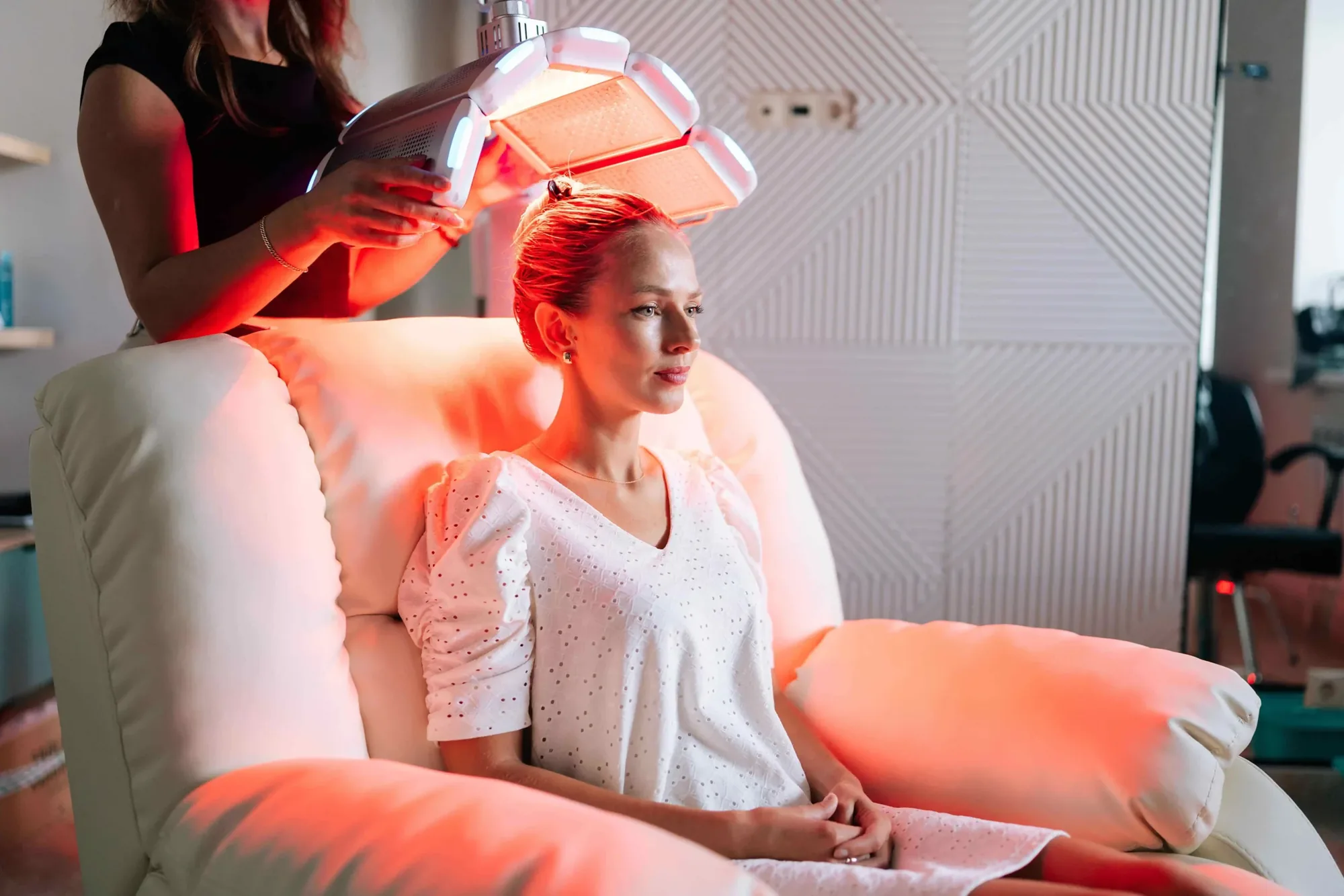
Low-level laser therapy uses devices that deliver low-intensity red or near-infrared light to the scalp via caps, helmets, combs or in-clinic panels, with a proposed mechanism in which light absorbed by chromophores in the follicle alters nitric oxide and reactive oxygen species signalling. It is non-invasive with a benign safety profile, a genuine point in its favour.
How strong is the evidence supporting LLLT devices?
There is a reasonable body of studies supporting LLLT in androgenetic alopecia, and several devices have gained regulatory clearance in some markets on that basis. The complication is heterogeneity: wavelength, power density, duration and frequency vary between devices, so evidence for one device does not automatically transfer to another, especially cheaper units.
Where does LLLT fit among hair loss treatment options?
LLLT is generally positioned as an adjunct rather than a primary treatment, since the evidence behind it is weaker than that behind established medical options and it is usually combined with them rather than substituted for them. For anyone who cannot tolerate or will not use medication, it remains a reasonable non-drug option with a favourable safety profile.
What are the practical drawbacks of using LLLT devices?
LLLT requires regular sustained use, often several sessions weekly and continuing indefinitely, which is a demanding routine to keep up. Upfront device cost is significant, and results, where they occur, are gradual and modest. Nothing should touch a healing hair transplant recipient area until your clinic clears it for use.
- Requires regular sustained use, often several sessions weekly indefinitely
- Keeping that routine up indefinitely is the hard part
- Upfront device cost is significant
- Results, where they occur, are gradual and modest
- Nothing should touch a healing recipient area until your clinic clears it
Our page on laser and light devices goes into the equipment itself.
Sources
- Lueangarun S, Visutjindaporn P, Parcharoen Y, Jamparuang P, Tempark T. A Systematic Review and Meta-analysis of Randomized Controlled Trials of United States Food and Drug Administration-Approved, Home-use, Low-Level Light/Laser Therapy Devices for Pattern Hair Loss: Device Design and Technology. The Journal of Clinical and Aesthetic Dermatology, 2021;14(11):E64-E75. pubmed.ncbi.nlm.nih.gov/34980962
- Mawu FO, Sondakh ORL, Kairupan TS, Christopher PM. Comparative efficacy and safety of low-level laser therapy and topical Minoxidil combination vs. topical Minoxidil monotherapy in androgenetic alopecia management: a systematic review and meta-analysis of randomized controlled trials. Lasers in Medical Science, 2025;40(1):338. pubmed.ncbi.nlm.nih.gov/40826200
- Gupta AK, Taylor D, Nouri K. Lasers for treatment of androgenetic alopecia: an in-depth analysis. Lasers in Medical Science, 2025;40(1):108. pubmed.ncbi.nlm.nih.gov/39979533
- Guo Y, Qu Q, Chen J, Miao Y, Hu Z. Proposed mechanisms of low-level light therapy in the treatment of androgenetic alopecia. Lasers in Medical Science, 2021;36(4):703-713. pubmed.ncbi.nlm.nih.gov/33111207
- Vanaria RJ, Chaudry A, Nestor MS. The Use of Light-Based Therapies in the Treatment of Alopecia. Journal of Cosmetic Dermatology, 2025;24(9):e70434. pubmed.ncbi.nlm.nih.gov/40878907
This article summarises published research. It is general educational information, not medical advice, and it is not a recommendation to start, stop or change any medication. Prescription drugs carry contraindications and interactions; discuss them with a doctor who knows your medical history.
Get a no-obligation assessment against fixed criteria, directly on WhatsApp.