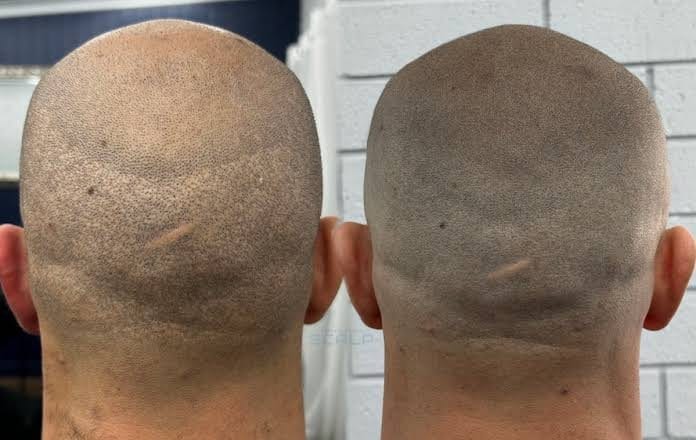
Scalp micropigmentation to camouflage healing scars
Scalp micropigmentation deposits pigment in the scalp to mimic the appearance of shaved stubble, and it is genuinely effective at reducing the contrast that makes a donor scar visible.
Scalp micropigmentation deposits pigment in the scalp to mimic the appearance of shaved stubble, and it is genuinely effective at reducing the contrast that makes a donor scar visible. It must wait until healing is complete, typically many months after surgery.
What does scalp micropigmentation do for hair transplant scars?
Scalp micropigmentation is a tattooing technique that places small pigment deposits in the scalp to imitate closely cropped hair, adding no hair and changing no follicle. It works by reducing contrast: a pale, hairless strip scar stands out against darker surrounding hair, and pigment makes that difference much harder to pick out.
What conditions does scalp micropigmentation work well on?
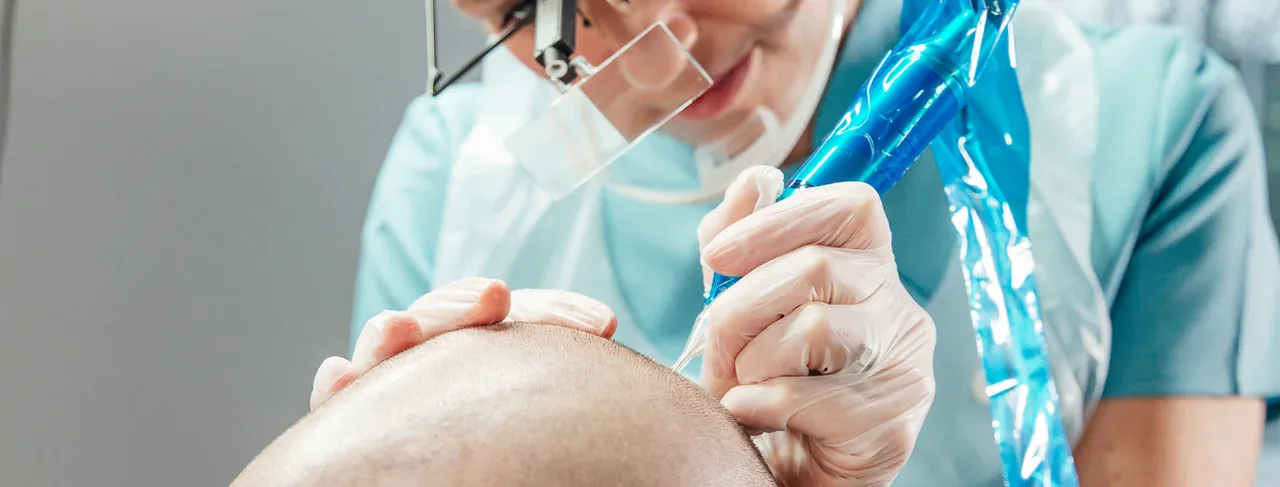
Scalp micropigmentation works especially well on strip scars, the classic indication, and on FUE donor depletion where scattered punch sites have thinned the area. It also helps camouflage older, poorly executed work alongside surgical repair, and creates a general density illusion by placing pigment between existing hairs to reduce scalp show-through.
- Strip scars, the classic indication
- FUE donor depletion, where scattered punch sites have thinned the area
- Older, poorly executed work, alongside surgical repair
- General density illusion, where pigment between existing hairs reduces scalp show-through
When should scalp micropigmentation be done after a hair transplant?
Pigment should not go into skin that is still remodelling, since scar tissue changes colour, texture and thickness for many months after surgery, and pigment placed too early can shift or be held unevenly. Practitioners commonly advise waiting a substantial period, generally many months, and coordinating with your surgeon: surgery first, pigment second.
What are the limitations of scalp micropigmentation?
Scalp micropigmentation looks like stubble, so it works best with hair kept short, and the pigment fades over years and needs maintenance. Results depend heavily on the practitioner since it is a skill-dependent procedure, colour-matching greying hair is difficult, and on a raised or textured scar it reduces contrast without changing the texture.
- It looks like stubble, so it works best with hair kept short
- Pigment fades over years and needs maintenance
- Results depend heavily on the practitioner; this is a skill-dependent procedure
- Colour matching greying hair is difficult
- On a raised or textured scar it reduces contrast but does not change the texture
Our page on scalp micropigmentation explains the technique itself in more detail.
Sources
- Bernstein RM, Rassman WR. Graft Anchoring in Hair Transplantation. Dermatologic Surgery, 2006;32(2):198-204. pubmed.ncbi.nlm.nih.gov/16442039
This article summarises published research and standard clinical practice. It is general educational information, not medical advice, and it does not replace the instructions your own surgical team gives you. Where their guidance differs from anything here, follow theirs.
Get a no-obligation assessment against fixed criteria, directly on WhatsApp.