

None of the new hair loss treatments on this page is approved for hair loss as of October 2026. They are all experimental drugs at different stages, and several of the figures you see mentioned elsewhere online are company-reported and not yet confirmed in independent, peer-reviewed studies. This page collects what is actually documented and what is still unknown, so you can follow developments without being sold anything.
We are an editorial site, not a clinic and not an authority. We do not sell medicine and do not recommend that you obtain experimental drugs on your own. For each treatment we describe the mechanism (what the substance is intended to do) separately from the effect (what the trials have actually shown), and we date the status, because the field changes quickly.
Important: This page is general information about research, not medical advice. Always talk to your own doctor before making decisions about treatment. We also cooperate with a hair transplant clinic and may receive a fee when we put patients in contact with it — this does not affect what we write about the research here.
- Only two treatments are approved and well documented today for hereditary hair loss: minoxidil and finasteride.
- The most talked-about new treatments — pyrilutamide (KX-826), PP405, clascoterone and VDPHL01 (oral minoxidil) — are experimental drugs. None is approved for hair loss yet.
- Verteporfin is approved as an eye drug, but its use against scarring is experimental and so far studied only in animal studies. Its use in the donor area during a hair transplant has not been studied in humans.
- Reported effect figures often come from small or company-reported studies. A promising mechanism is not the same as proven effect.
- You cannot legally buy these treatments for hair loss yet, and products sold online may be counterfeit or of unknown content.
Which new hair loss treatments are on the way, and are any approved?
None of the new treatments is approved for hair loss as of October 2026. The most talked about — pyrilutamide (KX-826), PP405 (suvomipic), clascoterone, verteporfin and VDPHL01 (oral minoxidil) — are at the experimental stage, ranging from early clinical trials to a few phase 3 results that have not yet been peer-reviewed. Only minoxidil and finasteride are approved and well documented today.
The table summarises the status of the treatments most often described as “next generation”. It is dated because it changes as new trial results arrive. “Approved for hair loss” means approved by a medicines authority for precisely that use — not that the substance exists, or that it is approved for something else.
| Treatment | Type / action | Stage (Oct. 2026) | Approved for hair loss? |
|---|---|---|---|
| Minoxidil | Stimulates growth | In use | Yes (well documented) |
| Finasteride | Lowers DHT | In use | Yes (well documented) |
| Pyrilutamide (KX-826) | Topical anti-androgen | Phase 3 | No |
| PP405 (suvomipic) | Wakes hair follicle stem cells | Phase 2 completed; phase 2/3 under way | No |
| Clascoterone (Breezula) | Topical anti-androgen | Phase 3 (positive) | No for hair loss* |
| Verteporfin | Inhibits scarring (YAP) | Animal studies only (no human trials for hair loss) | No (approved as an eye drug) |
| VDPHL01 (oral minoxidil) | Stimulates growth (sustained-release tablet) | Phase 3 (positive) | No** |
*Clascoterone is approved as a cream for acne (under the name Winlevi), but not for hair loss; a stronger version for the scalp is still experimental.
**VDPHL01 is a sustained-release tablet of minoxidil — a known substance already in use. An oral version is not approved for hair loss; what is new is the attempt to have precisely that approved.
Below we go through each treatment in turn: what it is intended to do, what the trials have actually shown, and how far along it is. If you want to know what works today, start with the section on the approved treatments.
What is approved for hair loss today?
For hereditary hair loss, only two treatments are approved and well documented: minoxidil (stimulates growth) and finasteride (lowers DHT, which is the cause). They are well documented and are often used both on their own and as support for a lasting hair transplant result. Finasteride is prescription-only and must be prescribed by a doctor. Everything else on this page is still experimental.
Before you look at experimental treatments at all, it is worth knowing the baseline. In hereditary hair loss (androgenetic alopecia), the two documented treatments are:
- Finasteride (prescription-only) — lowers the hormone DHT, which miniaturises genetically sensitive hair follicles. It therefore slows the cause.
- Minoxidil — stimulates growth locally. Available as a topical, and low-dose oral minoxidil is also used off-label on a doctor's prescription.
Supplementary treatments such as PRP and microneedling can give extra support, but do not replace the two above. Read the full review in our guide to slowing hair loss without surgery, and see the documented status of minoxidil and finasteride. The new treatments below try either to hit the same target (DHT) in a new way, or to do something entirely different — wake dormant hair follicles or reduce scarring.
Pyrilutamide (KX-826): does it work, and is it approved?

Pyrilutamide (KX-826) is not approved for hair loss in any country as of October 2026. It is a topical anti-androgen in phase 3 from the company Kintor. The company has reported positive phase 3 results from China, but they are company-reported and not yet peer-reviewed, and an earlier US trial gave mixed results.
What it does (mechanism): pyrilutamide is intended to block the androgen receptor locally in the scalp, so that DHT cannot miniaturise the hair follicle — the same biological target as finasteride, but applied topically and without affecting hormones throughout the body.
What the trials have shown (effect): Kintor has reported that a Chinese phase 3 trial met its primary endpoint, with a difference on the order of roughly 10 hairs per cm² versus placebo for the strongest strength. These figures are company-reported and have not been published in a peer-reviewed journal, and an earlier US programme gave more mixed results. It is therefore too early to say how well the treatment works in practice.
An important distinction: a “KX-826 cosmetic” is sold online. It is not the same as an approved drug, and a cosmetic product has neither been tested nor regulated as medicine. Also do not confuse pyrilutamide with VDPHL01, which is something else entirely (a sustained-release version of oral minoxidil under development).
PP405 (suvomipic): can it wake hair follicle stem cells?
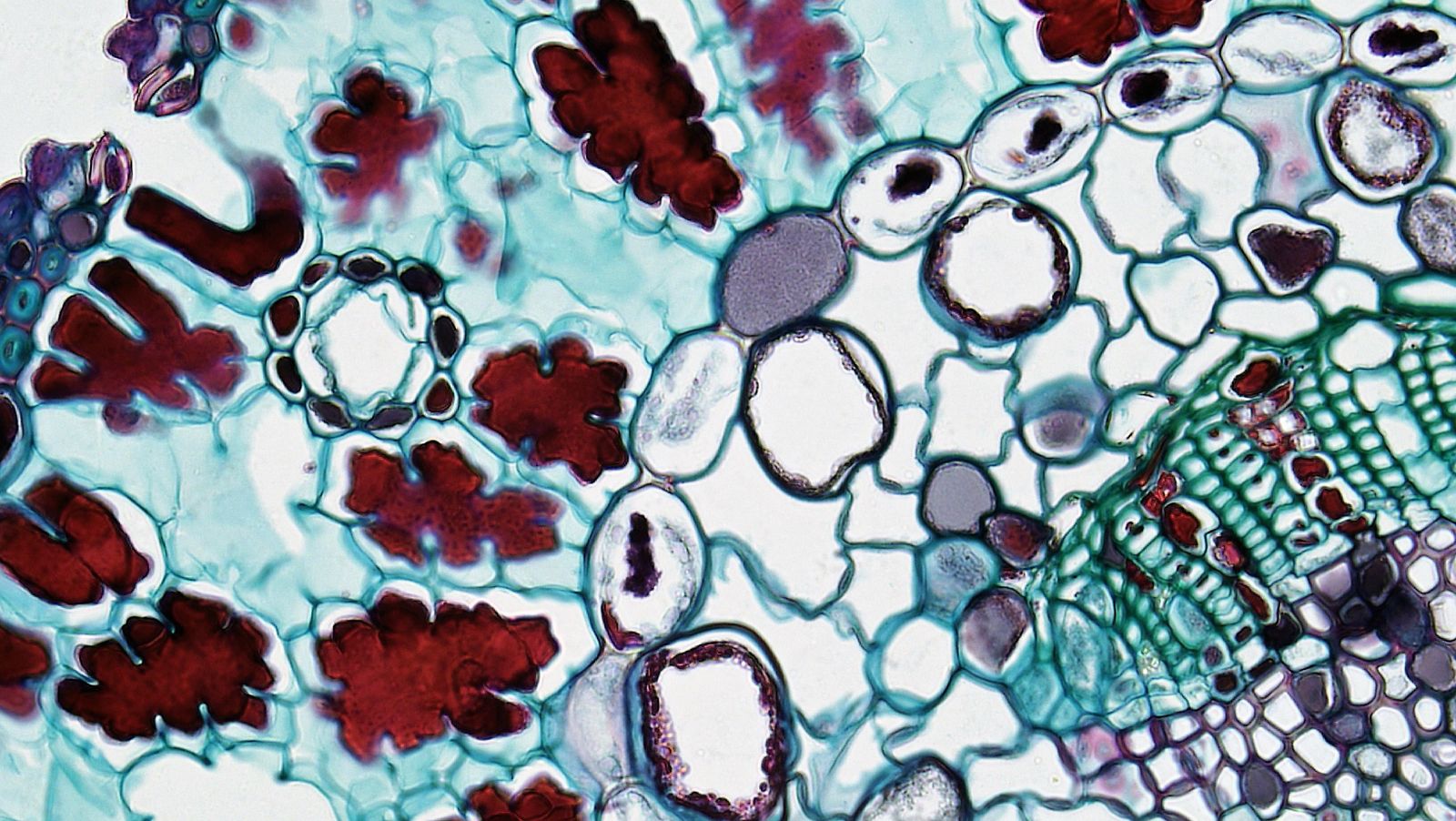
PP405 is not approved for hair loss as of October 2026 and is still experimental. It is a topical treatment from Pelage that is intended to wake dormant hair follicles by changing their metabolism. A phase 2 trial has been completed (safety/absorption studied), and a larger phase 2/3 trial began dosing patients in autumn 2026. Actual hair growth has not yet been shown in a large trial.
What it does (mechanism): PP405 inhibits a transporter in the cell's energy metabolism (the so-called MPC) and is intended to “wake” dormant hair follicle stem cells, so that a follicle that still exists but is not producing hair can resume growing. It is a different approach from finasteride and minoxidil.
What the trials have shown (effect): a smaller phase 2 trial (completed in 2025) showed that the treatment was tolerable and was not absorbed to any notable extent into the body — but actual hair growth (effect) has not been established. A larger phase 2/3 trial began dosing participants in autumn 2026. The density figures (e.g. “31%”) circulating online come from a small, early trial focused on safety and are not evidence that the treatment restores hair.
A naming confusion worth knowing about: PP405 is also referred to as suvomipic, and a few sources equate it with an experimental substance called JXL069. The company has not unambiguously confirmed that this is exactly the same substance, so we describe it as reported, not as established. Whatever the name, the treatment is not for sale for hair loss.
Clascoterone (Breezula): how far along is it?

Clascoterone is not approved for hair loss as of October 2026. A stronger scalp version (development name Breezula) is a topical anti-androgen that has shown positive phase 3 results (company-reported topline). The manufacturer has announced that an application for approval in the US is planned, at the earliest in 2027 — and a positive phase 3 is not the same as an approval. A weaker version is already approved as an acne cream (Winlevi), but that is not an approval for hair loss.
What it does (mechanism): like pyrilutamide, clascoterone blocks the androgen receptor locally in the skin, so that DHT cannot miniaturise the hair follicle. The advantage of a topical anti-androgen is that it works locally without affecting the body's hormones broadly, as a tablet does.
What the trials have shown (effect): the scalp version has reported positive 12-month phase 3 data (company-reported), and the manufacturer has stated that an application for approval in the US is expected to be submitted at the earliest in 2027, with a European application later. An approval in Denmark and the EU would, if it happens, come after that — and a positive phase 3 is not the same as an approval.
An important distinction: clascoterone already exists as an approved cream for acne (Winlevi). That does not mean it is approved or documented for hair loss — it is a different strength, a different use and a different documentation requirement.
Verteporfin: can an eye drug give scarless healing in the donor area?

Verteporfin is approved as an eye drug (for a form of wet age-related macular degeneration), but it is not approved for scars or hair loss. The interest for hair transplantation stems from the fact that in animal studies the substance has reduced scarring and even let skin heal with new hair follicles. In humans, its use in the donor area is experimental, and there is still no peer-reviewed study in hair transplantation.
What it does (mechanism): verteporfin inhibits a protein (YAP) that helps drive scarring when skin heals. The idea is that a wound that would otherwise form a scar might instead heal more like undamaged skin — and in animal studies, regeneration of hair follicles and glands has even been seen in the healed area.
What the trials have shown (effect): the documentation so far consists of preclinical animal studies (mice and, most recently, a pig model, which resembles human skin more closely). In humans, only one trial has been announced so far: a Danish trial, SCARFREE-001, with Odense University Hospital as the responsible party, is to investigate verteporfin against scarring (in a different surgical wound, not the scalp) and had not yet opened for recruitment at our most recent check. There is no peer-reviewed study of verteporfin in a hair transplant, and the idea of a “scarless hair transplant” is therefore not proven in humans.
Why it is still relevant here: the donor area is exactly where an FUE leaves small scars. If scarring can be reduced, it could in time affect how densely grafts can be harvested and how the scars look. Until there are trials in humans, this belongs under research — not under what a clinic can offer. See what we know about scars in the donor area today.
VDPHL01 (oral minoxidil): how far along is it?

VDPHL01 is a sustained-release tablet of minoxidil, developed by Veradermics. Company-reported phase 3 trials in men were announced as positive in 2026, and the company is aiming for an application for approval in the US. It is not approved for hair loss, and minoxidil is not a new substance — what is new is the oral sustained-release version and the attempt to have it formally approved.
What it does (mechanism): minoxidil stimulates hair growth and is already widely used — typically as a liquid or foam on the scalp, and in a low dose also as a tablet off-label. VDPHL01 is a sustained-release tablet in which minoxidil is released slowly, so that it can be taken once daily. The substance is therefore known; what is new is the oral sustained-release formulation.
What the trials have shown (effect): Veradermics has reported that a phase 3 trial in men met its endpoints, with an increase in hair count in the target area of around 29 hairs per cm² (once daily) and 36 hairs per cm² (twice daily) after six months, versus about 7 for placebo. The figures are company-reported topline data and not yet fully peer-reviewed, and a positive phase 3 is not the same as an approval.
An important distinction: because the active substance is ordinary minoxidil, “what is new” is above all an oral sustained-release tablet and having an oral version formally approved for hair loss. Oral minoxidil is prescription-only and carries, among other things, cardiovascular cautions; use it only in consultation with a doctor.
When can the new treatments reach the market at the earliest?
That is unknown, and all dates are uncertain. Even a treatment with positive phase 3 data must go through a regulatory approval, which takes time, and an approval in Denmark and the EU typically comes after the US or China. For the treatments still in phase 2, actual hair growth has not yet been established at all. Realistically we are talking years, not months, and some of the treatments will never make it.
It is tempting to put years on it, but the track record in hair loss medicine specifically shows that treatments often fail late or are delayed — pyrilutamide's mixed US trials are one example. The years you see elsewhere (e.g. “2028”) are at best educated guesses, not promises.
Two things are worth remembering: first, an experimental treatment must both show effect and clear a regulatory approval before it can be prescribed. Second, an approval in Denmark and the EU typically comes after an approval in the US or China. We update the status on this page when new, documented results arrive.
Can I buy the new treatments now?
No. None of the treatments is approved for hair loss, and they cannot legally be prescribed for that use yet. Products sold online as “PP405”, “KX-826” or “JXL069” are not approved medicine: content, purity and safety are unknown, and some are outright counterfeits. Never buy unregulated substances to apply to your scalp.
We understand the temptation to get ahead of the development, but there are real reasons not to:
- Unknown content. A powder or liquid sold online as an experimental treatment has not been manufactured or controlled as medicine. You do not know what is in it.
- No documented dose or safety. Even for the treatments in trials, dose and safety are still being determined. There is no “right” home dose.
- No follow-up. Real trials follow participants closely. An online purchase does not.
If you want to do something now, stick to what is approved and documented, in consultation with a doctor — and treat the experimental treatments as something you follow, not something you obtain.
Should I wait for new medicine before having a hair transplant?
For most people, no. Hereditary hair loss progresses while you wait, and the new treatments are — if they arrive — mostly intended as a supplement, not a replacement for what has been lost. A hair transplant moves follicles you still have; medicine, new or old, protects and supports the hair you have left. The two do not exclude each other.
It is a very good idea to know your options, but “waiting for something better” is rarely a plan in hereditary hair loss, for two reasons:
First, the hair loss progresses while you wait, and none of the new treatments can restore a follicle that is already completely gone. Second, even in the best case, the new treatments are growth or maintenance treatments, not a way of restoring lost areas. If one of them is ever approved, it will most likely be used together with a transplant and the existing medicine — not instead of them.
The best thing you can do now is to understand your own situation: how much donor hair you have, how stable your hair loss is, and what a realistic plan looks like. Get a free hair analysis, so you have a concrete basis for decisions — whatever the research brings.
Frequently asked questions
Is pyrilutamide (KX-826) approved for hair loss?
No. Pyrilutamide is not approved for hair loss in any country as of October 2026. It is a topical anti-androgen in phase 3. The company Kintor has reported positive phase 3 results from China, but they are company-reported and not peer-reviewed. A “KX-826 cosmetic” sold online is not an approved drug.
Does PP405 work, and when is it coming?
PP405 (suvomipic) is experimental and not approved. A phase 2 trial showed that the treatment was tolerable, but actual hair growth has not been established. A larger phase 2/3 trial began dosing patients in autumn 2026. Any year for a possible launch is uncertain; we are talking years, not months.
Is verteporfin a scarless hair transplant?
No. Verteporfin is approved as an eye drug, not for scars or hair loss. In animal studies it has reduced scarring, but there is no peer-reviewed study in a hair transplant in humans. “Scarless hair transplant” is still a research hope, not a documented treatment.
What is clascoterone (Breezula)?
A topical anti-androgen that blocks the androgen receptor locally in the skin so that DHT cannot affect the hair follicle. The scalp version has shown positive phase 3 results, and an application for approval in the US has been announced as coming, but it is not approved for hair loss yet. A weaker version is approved as an acne cream (Winlevi), which is not an approval for hair loss.
Can I buy the new treatments now?
No. None of them is approved for hair loss, and products sold online as PP405, KX-826 or JXL069 are not approved medicine. Content and safety are unknown, and some are counterfeit. Stick to approved treatments in consultation with a doctor.
Should I wait for new treatments before having a hair transplant?
For most people, no. Hair loss progresses while you wait, and the new treatments are — if they arrive — mostly intended as a supplement, not a replacement for what has been lost. A transplant and medicine do not exclude each other.
How do I follow the developments?
The most reliable sources are public trial registries (e.g. ClinicalTrials.gov and the EU register) and the authorities' approval lists, not clinic blogs or forums. We update this page when new, documented results arrive, and the date is shown at the top.
New treatments are exciting, but your best decision today is made on a concrete basis: your hair loss pattern, the amount of donor hair and a realistic plan. Get a free hair analysis, or read the documented status of what works now in our guide to slowing hair loss without surgery. You can also follow our research library, where we go into depth on the individual treatments.
Last updated: October 2026 · Editorial standards