
Body hair FUE: realistic outcomes
Body hair can supplement scalp donor supply when it is exhausted, but it grows for a shorter period, reaches shorter lengths and yields less predictably than scalp hair.
Body hair can supplement scalp donor supply when it is exhausted, but it grows for a shorter period, reaches shorter lengths and yields less predictably than scalp hair. It is a supplement for difficult cases, not an equivalent source.
Which body areas provide donor hair for body hair FUE?
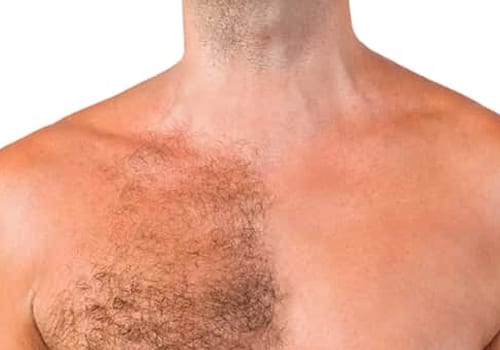
Body hair for FUE is taken from the chest, back, shoulders, abdomen and limbs, and in practice it is reserved for people with extensive loss and depleted scalp donor, often after previous surgery. Beard hair is generally preferred over body hair where both are available, being coarser and more reliable.
Why does body hair behave differently from scalp hair when transplanted?
Body hair behaves differently because it has a shorter growth phase that cycles faster and never reaches scalp hair length, plus a different calibre and curl that is often finer or more curved. It also yields lower and less predictably than scalp grafts, and its asynchronous cycling can make coverage look uneven.
- Shorter growth phase. Body hair cycles faster and does not achieve scalp hair length.
- Different calibre and curl, often finer or more curved.
- Lower and less predictable yield than scalp grafts.
- Asynchronous cycling, which can make coverage look uneven.
- Variable retention of donor-site characteristics after transplantation.
What can body hair FUE realistically achieve?
Body hair FUE can add bulk and reduce scalp show-through in areas where no other donor source is available, and blended among existing hair it can improve the impression of density. It is poorly suited to hairlines, however, where length and consistency matter most.
Should body hair FUE be treated as equivalent to scalp donor hair?
For the right patient, body hair FUE adds usable coverage that would otherwise be impossible, which is worthwhile, though it will not match scalp hair for length, uniformity or yield. Anyone offered body hair as a primary source should ask why scalp donor is insufficient and seek a second opinion before proceeding.
Scalp donor remains the primary reserve, and its limits are set out under donor supply.
Sources
- Parsley WM, Perez-Meza D. Review of factors affecting the growth and survival of follicular grafts. Journal of Cutaneous and Aesthetic Surgery, 2010;3(2). jcasonline.com
This article summarises published research and standard clinical practice. It is general educational information, not medical advice, and it does not replace the instructions your own surgical team gives you. Where their guidance differs from anything here, follow theirs.
Get a no-obligation assessment against fixed criteria, directly on WhatsApp.