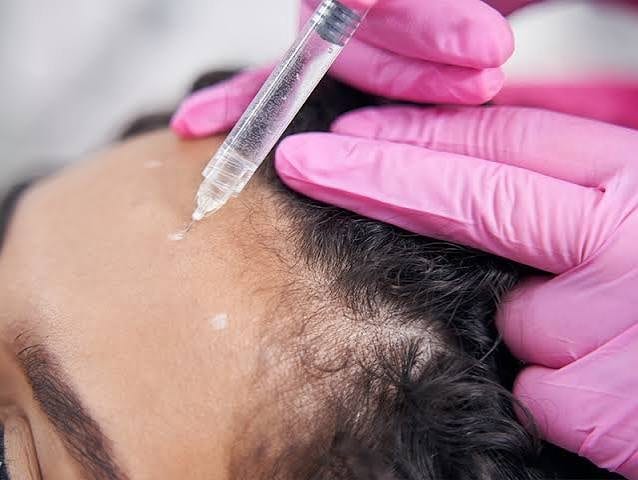
Combining FUE with PRP
Platelet-rich plasma is offered alongside transplantation on the reasoning that concentrated growth factors support graft survival and native hair.
Platelet-rich plasma is offered alongside transplantation on the reasoning that concentrated growth factors support graft survival and native hair. It is widely used and plausible, but the evidence for adding it to surgery specifically is weaker than the marketing implies.
What is PRP and how is it prepared for hair transplants?
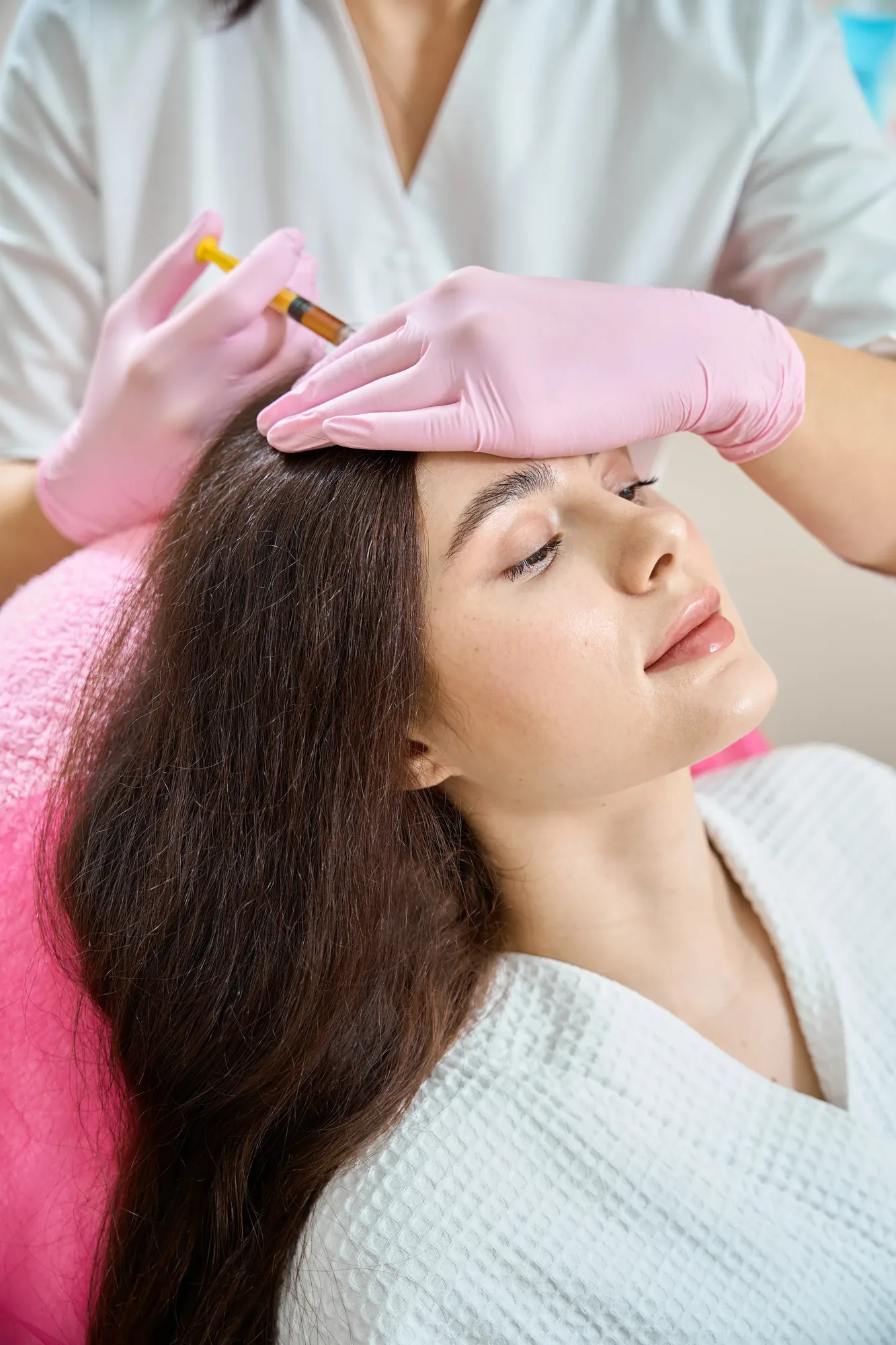
PRP is prepared by drawing blood, spinning it in a centrifuge to concentrate platelets, then injecting the resulting plasma into the scalp; platelets carry growth factors involved in tissue repair, which is the biological rationale. Preparation methods vary widely between clinics, and that variation is one reason the evidence base is inconsistent.
How strong is the evidence that PRP improves hair transplant outcomes?
PRP has reasonable evidence as a medical treatment for androgenetic alopecia, though differing clinic protocols make pooling results difficult. Evidence for transplant outcomes specifically is weaker: published data associate PRP combined with FUE with about 18.7 percent higher density than FUE alone, though from studies of varying quality rather than a definitive trial.
PRP has a reasonable body of evidence in androgenetic alopecia as a medical treatment, though protocols differ so much that pooling results is difficult.
Its use specifically to improve transplant outcomes, whether graft survival, growth speed or final density, is less well established. Our statistics page records PRP combined with FUE being associated with around 18.7 percent higher hair density than FUE alone, and notes that the figure comes from published industry and study data of varying quality rather than a definitive trial.
How is PRP typically administered around hair transplant surgery?
PRP is typically injected into the recipient area at the time of surgery, and grafts are sometimes bathed in PRP before placement. Sessions are often repeated at intervals over the following months, and the treatment is frequently bundled into package pricing.
- Injected into the recipient area at the time of surgery
- Grafts sometimes bathed in PRP before placement
- Sessions repeated at intervals over the following months
- Often bundled into package pricing
What should patients ask before paying extra for PRP?
Ask what preparation protocol and platelet concentration the clinic uses, how many sessions are included and over what period, and what specific outcome it is meant to change. PRP is not dangerous and may help, but it should be treated as a reasonable adjunct with imperfect evidence, not a decisive factor.
- What preparation protocol do you use, and what platelet concentration does it achieve?
- How many sessions are included and over what period?
- What specific outcome do you expect it to change?
- Is it included or an add-on, and what is the incremental cost?
PRP is not dangerous and may help. It should be presented as a reasonable adjunct with imperfect evidence, not as a decisive factor.
Sources
- Parsley WM, Perez-Meza D. Review of factors affecting the growth and survival of follicular grafts. Journal of Cutaneous and Aesthetic Surgery, 2010;3(2). jcasonline.com
This article summarises published research and standard clinical practice. It is general educational information, not medical advice, and it does not replace the instructions your own surgical team gives you. Where their guidance differs from anything here, follow theirs.
Get a no-obligation assessment against fixed criteria, directly on WhatsApp.