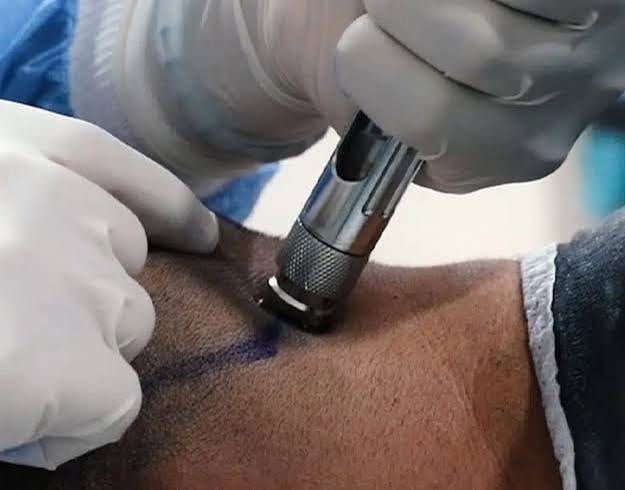
Anesthesia options during FUE
FUE is performed under local anaesthetic, with the injections at the start being the most uncomfortable part of the day.
FUE is performed under local anaesthetic, with the injections at the start being the most uncomfortable part of the day. Sedation is sometimes offered in addition; general anaesthesia is not standard and its routine use should raise questions.
How does local anaesthesia work during FUE?
Local anaesthetic is injected around the donor area and later the recipient area, producing a ring of numbness that lasts for hours and is topped up as needed, usually with adrenaline included to limit bleeding. Once established, most patients feel pressure and movement but not pain, and can talk, eat and use a phone throughout.
How do clinics manage discomfort during the anaesthetic injections?
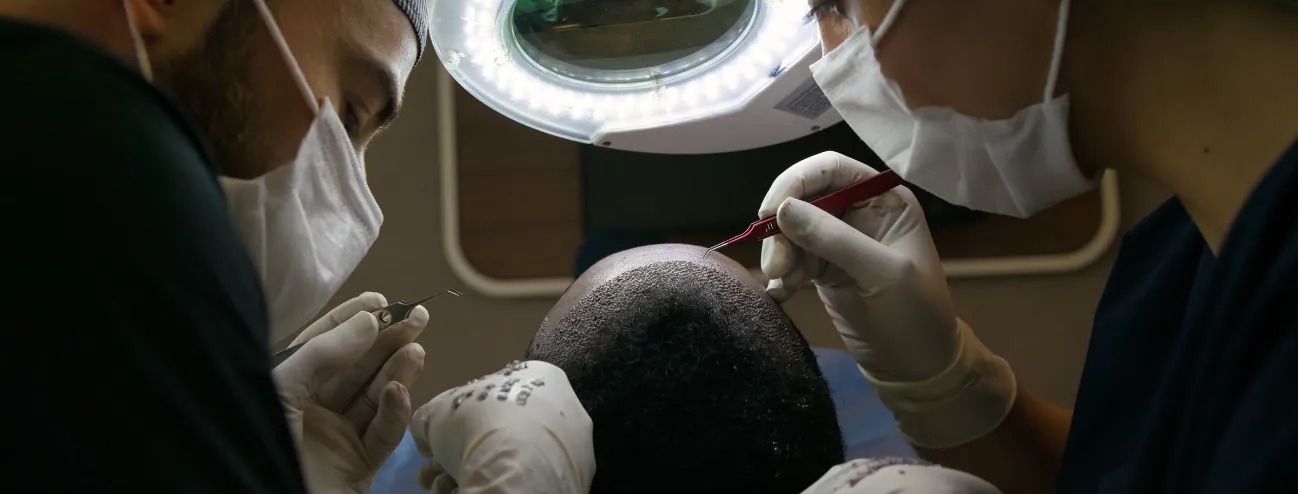
Clinics reduce injection discomfort with vibration devices and cooling used alongside injection, very fine needles, slow rather than fast injection, buffered anaesthetic to reduce stinging, and sometimes a mild oral sedative beforehand. This phase typically lasts minutes rather than hours, and clinics differ noticeably in how much trouble they take over it.
- Vibration devices and cooling used alongside injection to reduce sensation
- Very fine needles
- Slow injection, which hurts less than fast injection
- Buffering the anaesthetic to reduce stinging
- Sometimes a mild oral sedative beforehand
This phase typically lasts minutes rather than hours, and clinics differ noticeably in how much trouble they take over it. It is a fair thing to ask about.
What should you know about sedation options during FUE?
Some clinics offer oral or intravenous sedation for anxious patients, which raises the monitoring requirement: sedation needs appropriate staffing and equipment, and someone qualified to manage it. If sedation is offered, ask who administers and monitors it, and what their qualification is.
Is general anaesthesia standard for hair transplantation?
No: general anaesthesia is not standard for hair transplantation. The procedure does not require it, and general anaesthesia carries risks that a local-anaesthetic cosmetic procedure does not justify routinely. A clinic proposing general anaesthesia for a routine case should be asked why, with a specific answer expected.
Anaesthetic practice is a fair thing to ask about, alongside the questions in our guide to choosing a clinic.
Sources
- Parsley WM, Perez-Meza D. Review of factors affecting the growth and survival of follicular grafts. Journal of Cutaneous and Aesthetic Surgery, 2010;3(2). jcasonline.com
This article summarises published research and standard clinical practice. It is general educational information, not medical advice, and it does not replace the instructions your own surgical team gives you. Where their guidance differs from anything here, follow theirs.
Get a no-obligation assessment against fixed criteria, directly on WhatsApp.