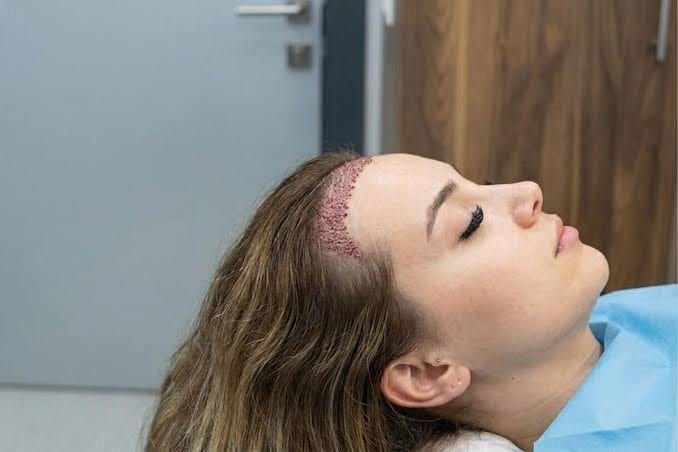
FUE in patients with tight scalps
Scalp laxity matters far less for FUE than for strip surgery, because nothing is closed under tension.
Scalp laxity matters far less for FUE than for strip surgery, because nothing is closed under tension. A tight scalp is a serious constraint on FUT and a minor technical consideration in FUE, which is one reason FUE suits these patients better.
Why does scalp laxity matter for strip surgery but not for FUE?
Strip surgery closes a removed band of scalp under tension: low laxity worsens that tension, causing discomfort, slower healing and wider scars, so surgeons measure laxity to set strip width. FUE removes tissue in tiny separate cylinders and closes nothing, so there is no closure tension and laxity is not the limiting factor.
What does a tight scalp affect during FUE?
A tight scalp mainly affects technique rather than outcome: extraction can need slightly more force, recipient sites may be marginally harder to create at the intended depth, post-operative tightness from swelling may feel more pronounced, and anaesthetic distribution can behave slightly differently. These are technical adjustments, not contraindications.
- Extraction can require slightly more force, and technique may need adapting
- Recipient sites may be marginally harder to create at the intended depth
- Post-operative tightness from swelling may feel more pronounced
- Anaesthetic distribution can behave slightly differently
These are technical adjustments rather than contraindications.
What should a patient with low scalp laxity do in practice?
For a patient with genuinely low scalp laxity, FUE is usually the more sensible choice than strip surgery, and a surgeon recommending strip surgery should explain that reasoning clearly. Scalp-stretching exercises can improve laxity before strip surgery, but they follow a specific protocol and should only be done on a clinician's instruction.
What should you ask your surgeon about scalp laxity before choosing FUE or FUT?
Ask your surgeon three things: whether they have assessed your scalp laxity and what they found, whether that changes their recommendation between FUE and FUT, and whether low laxity affects the number of grafts they can safely take from your donor area.
- Have you assessed my scalp laxity, and what did you find?
- Does it change your recommendation between FUE and FUT?
- Does it affect the graft numbers you can safely take?
Laxity matters most for strip surgery, where the donor is closed under tension.
Sources
- Parsley WM, Perez-Meza D. Review of factors affecting the growth and survival of follicular grafts. Journal of Cutaneous and Aesthetic Surgery, 2010;3(2). jcasonline.com
This article summarises published research and standard clinical practice. It is general educational information, not medical advice, and it does not replace the instructions your own surgical team gives you. Where their guidance differs from anything here, follow theirs.
Get a no-obligation assessment against fixed criteria, directly on WhatsApp.