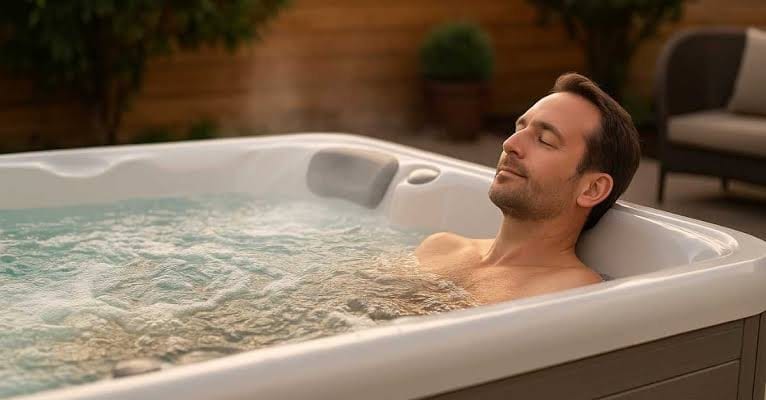
Hot tubs and healing risk
Hot tubs combine every individual risk factor: heat, immersion, chemicals and shared warm water.
Hot tubs combine every individual risk factor: heat, immersion, chemicals and shared warm water. They are usually the last water activity cleared, and hot tub folliculitis is a recognised infection risk even in healthy skin.
Why is a hot tub the worst combination of risks while healing?
A hot tub combines five risks at once: warm water at body temperature is a favourable growth environment for organisms, shared use means exposure to whatever other bathers introduce, domestic chemical balance is often less reliable than in commercial pools, heat dilates vessels and drives sweating, and immersion softens healing skin and any remaining crusts.
- Warm water at body temperature is a favourable growth environment
- Shared use means whatever other bathers introduce
- Chemical balance in domestic tubs is often less reliable than in commercial pools
- Heat dilates vessels and drives sweating on top of immersion
- Immersion softens healing skin and any remaining crusts
What is hot tub folliculitis and why does it matter after a transplant?
Hot tub folliculitis, from inadequately treated warm water, is a recognised condition even in people who never had surgery, presenting as itchy red bumps often within a day or two of exposure. A recipient area in the weeks after a transplant is more vulnerable than intact skin, making folliculitis there more consequential.
When can you use a hot tub again after a hair transplant?
Most clinics place hot tubs after pools and saunas in the sequence, meaning a month at minimum and often longer. A private, well-maintained tub lowers the risk somewhat, but the heat and immersion arguments still apply, and this timing reflects conventional clinical caution rather than a specific trial finding.
How can you use a hot tub more safely while healing?
Use a hot tub more safely by keeping the head entirely out of the water, keeping sessions short and the temperature moderate, rinsing the scalp with clean water afterward, and watching for itchy red bumps over the following two days, reporting any to your clinic.
- Keep the head entirely out of the water
- Keep sessions short and the temperature moderate
- Rinse the scalp with clean water afterwards
- Watch for itchy red bumps over the following two days and report them
Treat this as part of the wider heat and water guidance in our aftercare guide.
Sources
- Bernstein RM, Rassman WR. Graft Anchoring in Hair Transplantation. Dermatologic Surgery, 2006;32(2):198-204. pubmed.ncbi.nlm.nih.gov/16442039
This article summarises published research and standard clinical practice. It is general educational information, not medical advice, and it does not replace the instructions your own surgical team gives you. Where their guidance differs from anything here, follow theirs.
Get a no-obligation assessment against fixed criteria, directly on WhatsApp.