
Cardio vs weightlifting: different healing risks
The two carry different risks.
The two carry different risks. Cardio mainly threatens the recipient area through sustained sweating; weightlifting mainly threatens the donor closure through straining and raised blood pressure, which is why strip patients are held back from lifting longer than from running.
Why is sweat the main risk with cardio during recovery?
Running, cycling and similar cardio produce sustained sweating, and salt and moisture on a healing recipient area soften the skin and create conditions where folliculitis develops more readily. Exertion itself stops being the issue after the first week; heat and duration are, so a cool, short session differs from an hour in a hot studio.
Why does weightlifting pose a different risk than cardio while healing?
Heavy lifting involves bracing, which sharply raises blood pressure inside the chest and abdomen and transmits to the scalp, worsening swelling and oozing early on. For strip patients it also tensions an already-tensioned closure, a known driver of scar stretching, which is why heavy lifting waits longer after FUT than after FUE.
What is the practical week-by-week sequence for cardio and weights?
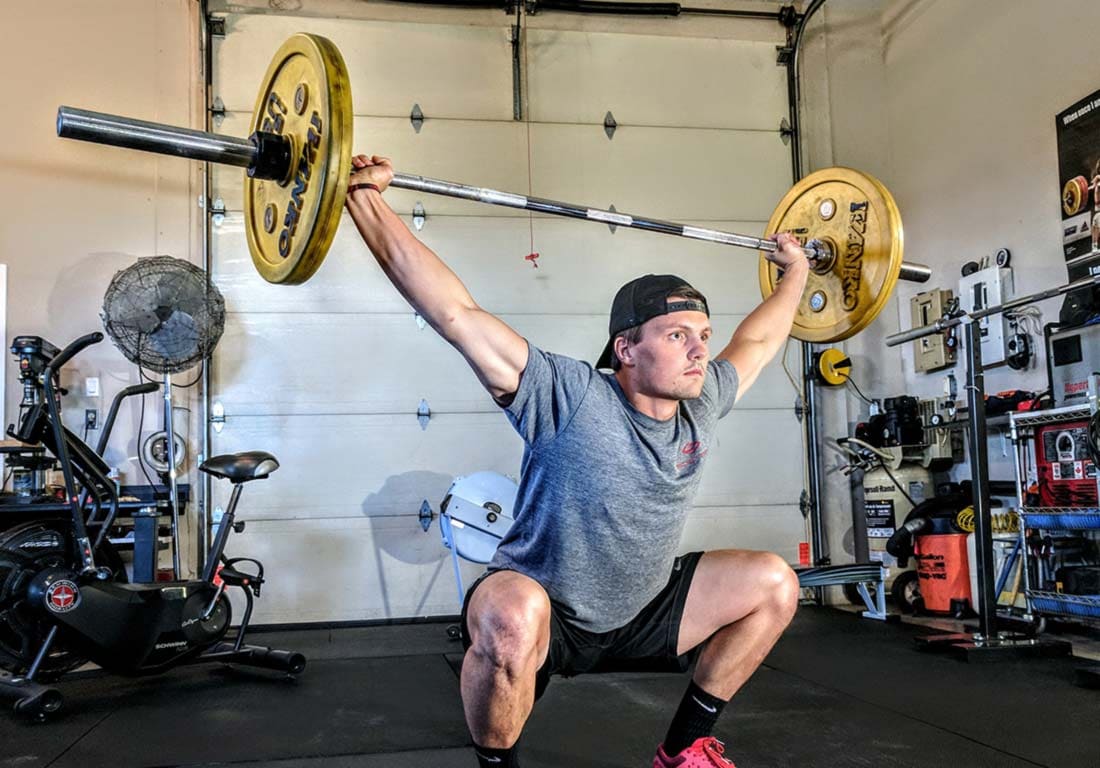
The practical sequence for returning to exercise is walking from the first days, light cardio kept cool and short around week two, full cardio and light resistance in weeks three to four, and heavy compound lifting from around week four for FUE, with FUT patients waiting longer on clinic advice.
- Walking: from the first days
- Light cardio: around week two, kept cool and short
- Full cardio: weeks three to four
- Light resistance: weeks three to four
- Heavy compound lifting: from around week four for FUE, longer for FUT on clinic advice
What details about cardio and weights do people often miss?
People often miss that pulling a training top over the head is frequently riskier than the exercise itself, that headbands and caps trap sweat exactly where it should not sit, that swimming pools mean chemical exposure and not just cardio, and that hot yoga combines every one of these risk factors at once.
- Pulling a training top over the head is often riskier than the exercise
- Headbands and caps trap sweat exactly where you do not want it
- Swimming pools are chemical exposure, not just cardio
- Hot yoga and similar combine every risk factor at once
Both belong to the staged return to exercise described in our aftercare guide.
Sources
- Bernstein RM, Rassman WR. Graft Anchoring in Hair Transplantation. Dermatologic Surgery, 2006;32(2):198-204. pubmed.ncbi.nlm.nih.gov/16442039
This article summarises published research and standard clinical practice. It is general educational information, not medical advice, and it does not replace the instructions your own surgical team gives you. Where their guidance differs from anything here, follow theirs.
Get a no-obligation assessment against fixed criteria, directly on WhatsApp.