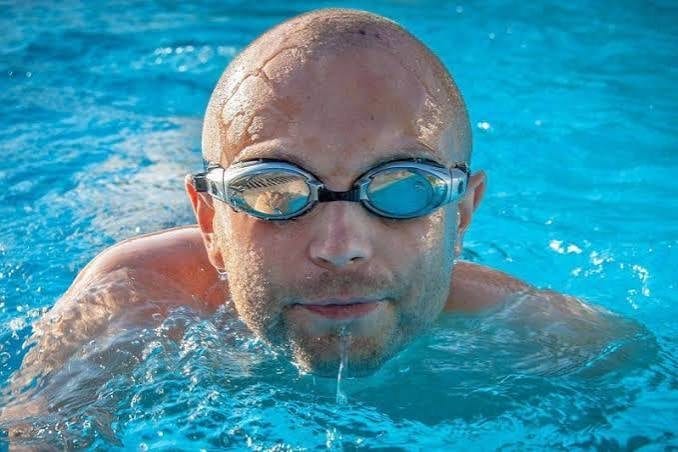
Swimming pools after hair transplant
Pools combine prolonged water immersion with chlorine and shared water, none of which suits a healing scalp.
Pools combine prolonged water immersion with chlorine and shared water, none of which suits a healing scalp. Most clinics advise waiting around a month, and longer for sea or lake water where the microbiological risk is less controlled.
Why do swimming pools come later than the gym in recovery?
Pools come later because immersion softens crusts and healing skin in an uncontrolled way, chlorine and bromine irritate a barrier that is not yet restored, shared water carries organisms healing wounds are more vulnerable to, caps and goggle straps add friction, and outdoor pools add direct sun exposure to a scalp that burns easily.
- Immersion softens crusts and healing skin in an uncontrolled way
- Chlorine and bromine irritate skin whose barrier is not yet restored
- Shared water carries organisms that healing wounds are more vulnerable to
- Mechanics such as caps, goggles straps and towel drying add friction
- Sun, because outdoor pools mean direct exposure to a scalp that burns easily
What are typical timelines for returning to different types of water?
Typical timelines are around four weeks for a chlorinated indoor or outdoor pool with sun protection, four weeks or more for the sea since salt water is not sterile, longer still for lakes and rivers, and hot tubs later again; these reflect common clinical practice rather than trial-derived figures, so your clinic's instruction takes precedence.
- Chlorinated indoor pool: commonly around four weeks
- Outdoor pool: the same, plus sun protection
- Sea: often four weeks or more; salt water is not sterile
- Lakes and rivers: longest, and some clinics advise well beyond a month
- Hot tubs: a separate case, generally later still
These are common practice rather than trial-derived numbers, and your clinic's instruction takes precedence.
How should you ease back into swimming after a hair transplant?
Ease back by rinsing with clean water before and after swimming, keeping early sessions short, avoiding diving and anything that drives water forcefully at the scalp, choosing a loose silicone cap over a tight latex one once caps are permitted, and watching for redness or spots afterward.
- Rinse with clean water before and after swimming
- Keep early sessions short
- Avoid diving and anything that drives water forcefully at the scalp
- A loose silicone cap is gentler than a tight latex one, once caps are permitted
- Watch for redness or spots afterwards
What should competitive swimmers do about surgery timing?
Competitive swimmers need to plan the timing at consultation, because a month out of the water is a significant interruption to training. It is far better to schedule surgery around a season deliberately than to discover the restriction only after the fact.
Water exposure is one of the timed restrictions listed in the aftercare guide.
Sources
- Bernstein RM, Rassman WR. Graft Anchoring in Hair Transplantation. Dermatologic Surgery, 2006;32(2):198-204. pubmed.ncbi.nlm.nih.gov/16442039
This article summarises published research and standard clinical practice. It is general educational information, not medical advice, and it does not replace the instructions your own surgical team gives you. Where their guidance differs from anything here, follow theirs.
Get a no-obligation assessment against fixed criteria, directly on WhatsApp.