Recipient site creation techniques
Recipient sites determine angle, direction, depth and density, which between them decide whether the result looks natural.
Recipient sites determine angle, direction, depth and density, which between them decide whether the result looks natural. The site is made before the graft goes in, and once made it cannot be changed.
What is a recipient site in a hair transplant?
A recipient site is a small scalp incision that receives one graft. Its angle sets hair growth direction, its depth determines how the graft sits, and its position relative to neighbours sets density. Sites are made with a blade, needle, or an implanter pen in DHI, which places the graft in the same action.
What variables determine how a recipient site is made?
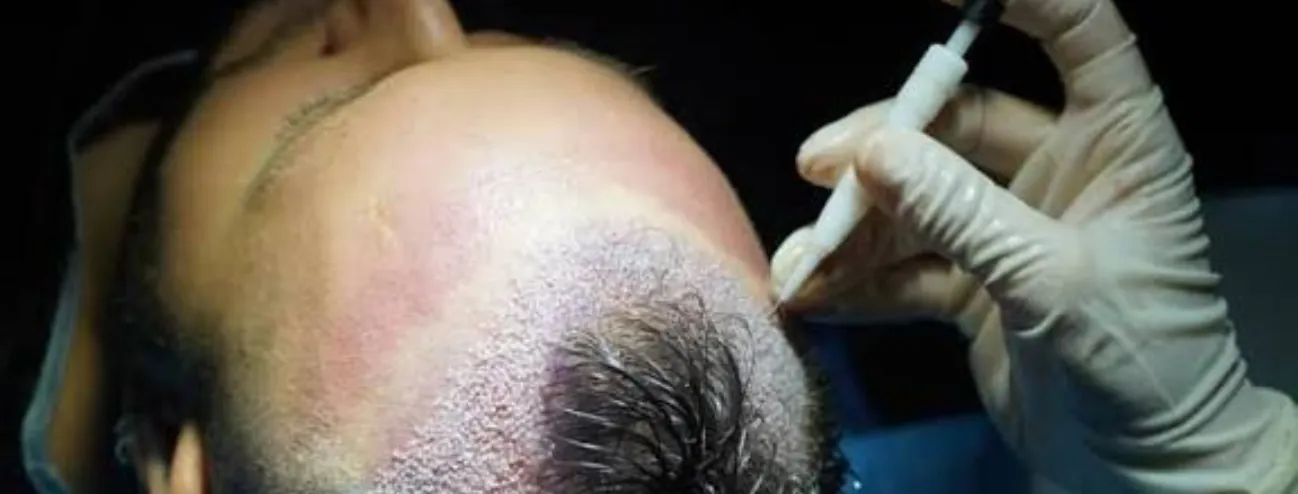
Recipient site variables include angle and direction following the region's natural pattern; depth, since too shallow leaves the graft proud and too deep risks burying it, causing cysts and pitting; size matched to the graft so it holds without crushing; density and spacing balanced against blood supply; and the instrument, a blade, needle or pen.
- Angle and direction, which must follow the natural pattern of the region
- Depth, too shallow and the graft sits proud, too deep and it can be buried, risking cysts and pitting
- Size, matched to the graft so it holds without crushing
- Density and spacing, balancing coverage against the blood supply available
- Instrument, blade, needle or pen
How does blood supply limit recipient site density?
Recipient sites packed too closely compete for a finite blood supply; review literature associates planting densities of roughly 61 to 100 follicular units per cm² with survival of 90 to 98 percent when technique is appropriate. Beyond what the bed can support, density produces a lower survival rate and a thinner result, not denser.
Why is recipient site creation usually the surgeon's own job?
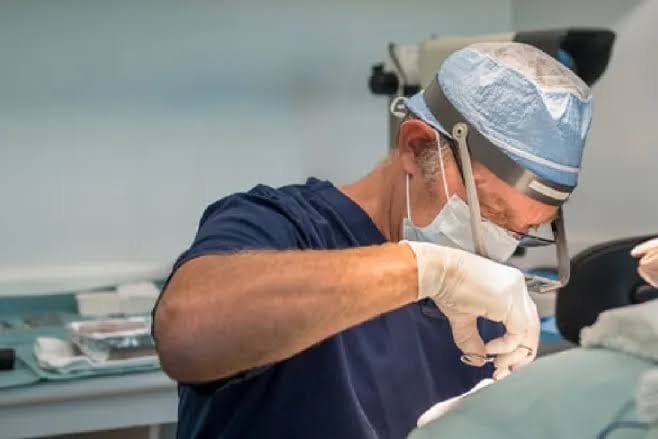
Recipient site creation is where the design becomes physical, so it is the step most commonly retained by the surgeon personally, even in clinics where technicians handle extraction and placement. If a clinic cannot tell you who actually makes the recipient sites, that gap is worth pursuing before booking.
Site creation is where the methods differ most, as our guide to transplant methods explains.
Sources
- Parsley WM, Perez-Meza D. Review of factors affecting the growth and survival of follicular grafts. Journal of Cutaneous and Aesthetic Surgery, 2010;3(2). jcasonline.com
This article summarises published research and standard clinical practice. It is general educational information, not medical advice, and it does not replace the instructions your own surgical team gives you. Where their guidance differs from anything here, follow theirs.
Get a no-obligation assessment against fixed criteria, directly on WhatsApp.