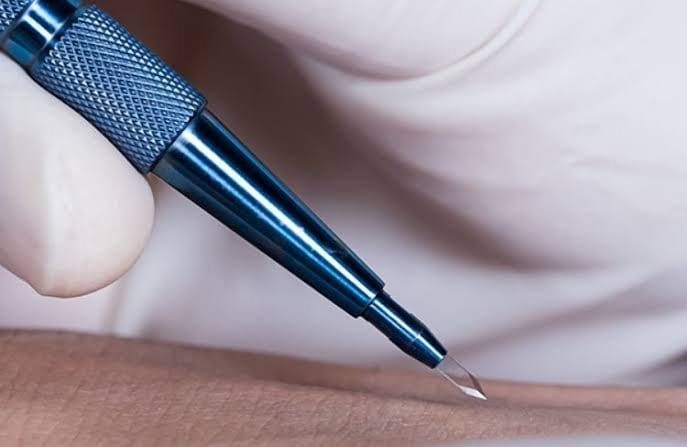
Sapphire FUE explained
Sapphire FUE is standard FUE in which recipient sites are made with sapphire-tipped blades instead of steel.
Sapphire FUE is standard FUE in which recipient sites are made with sapphire-tipped blades instead of steel. It changes one step of the procedure, not the extraction, and the evidence that it changes the final result is limited.
What is actually sapphire in Sapphire FUE?
Sapphire refers only to the blades used to create recipient sites; it is a hard crystalline material ground to a very fine, smooth edge that holds well. Extraction, the grafts, and placement are all unchanged. Sapphire FUE changes one instrument in one step of the procedure, nothing else.
What are the claimed advantages of Sapphire FUE?
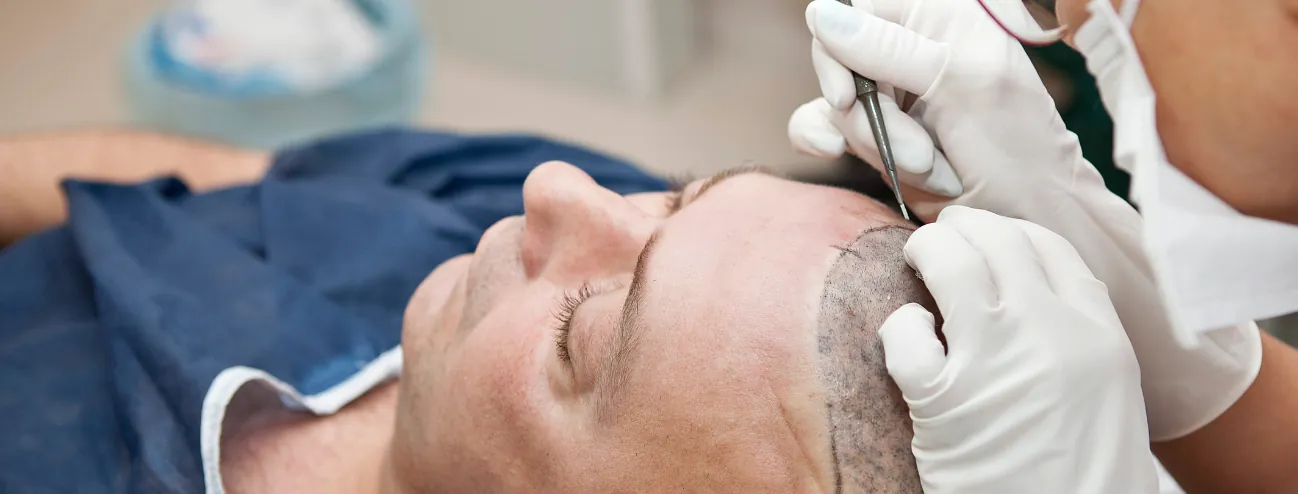
Sapphire FUE is claimed to give smoother incisions with less tissue trauma, potentially denser packing since sites can be made small and precise, possibly faster healing of the recipient area, and reduced crusting. These are mechanically plausible, and research does confirm that recipient site technique genuinely influences graft survival.
- Smoother incisions with less tissue trauma
- Potentially denser packing because sites can be made small and precise
- Possibly faster healing of the recipient area
- Reduced crusting
These are plausible mechanically. A finer, sharper instrument making a cleaner incision is a reasonable thing to want, and the review literature does establish that recipient site technique influences survival.
Is Sapphire FUE actually better than standard steel FUE?
No strong comparative trial evidence shows sapphire blades produce measurably better final density or graft survival than well-executed steel. Sapphire FUE is marketed heavily, especially in high-volume markets, as though it were a distinct, superior operation, but it is not, and a skilled surgeon using steel will comfortably beat an unskilled one using sapphire.
What actually matters when comparing clinics on Sapphire FUE?
Treat sapphire as a neutral detail, not a selling point, when comparing clinics. What actually predicts your result is who performs the extraction, the transection rate, how long grafts spend outside the body, and how many people are placing them, not which blade material was used.
Our sapphire FUE guide covers it further, and clinic red flags covers what over-marketing of technique usually signals.
Sources
- Parsley WM, Perez-Meza D. Review of factors affecting the growth and survival of follicular grafts. Journal of Cutaneous and Aesthetic Surgery, 2010;3(2). jcasonline.com
This article summarises published research and standard clinical practice. It is general educational information, not medical advice, and it does not replace the instructions your own surgical team gives you. Where their guidance differs from anything here, follow theirs.
Get a no-obligation assessment against fixed criteria, directly on WhatsApp.