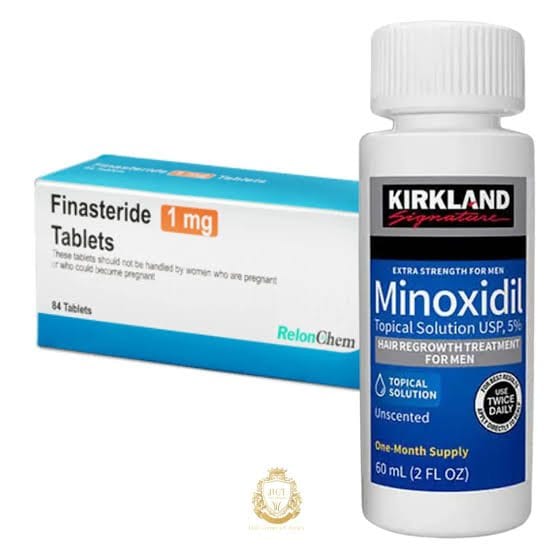
Combining FUE with Finasteride or Minoxidil
Surgery moves hair; medication protects the hair you still have.
Surgery moves hair; medication protects the hair you still have. Because a transplant does not stop pattern loss in untreated areas, combining the two is the standard approach for keeping a result looking coherent over years.
Why is combining FUE with medication considered standard practice?

A transplant redistributes DHT-resistant hair into an area that has lost hair but does nothing for the native, susceptible hair around and between the grafts. If that native hair keeps thinning, the transplanted hair stays while everything around it recedes, so the result can look isolated even though the grafts are performing perfectly.
What does each medication do when combined with FUE?
Finasteride reduces DHT to slow or partly reverse miniaturisation and is not prescribed to women. Minoxidil, topical or low-dose oral, acts on the hair growth cycle, though oral use is off-label. Neither drug replaces surgery, and neither can restore hair to an area that is genuinely bare.
- Finasteride reduces DHT and is aimed at slowing or partly reversing miniaturisation. It is not prescribed to women.
- Minoxidil, topical or low-dose oral, acts on the growth cycle. Oral use is off-label.
- Neither replaces surgery. Neither restores hair from a genuinely bare area.
Our reviews of low-dose oral Minoxidil and the non-surgical options cover the evidence.
How should medication timing be planned around FUE surgery?
Starting medication well before surgery lets any initial shedding phase resolve first, whereas starting shortly before surgery risks drug-related shedding overlapping post-operative shock loss, making both hard to interpret. Some surgeons pause topical Minoxidil around the procedure to avoid irritating healing skin, and every medication belongs on the consultation form since Minoxidil is a vasodilator.
- Starting medication well before surgery lets any initial shedding phase resolve first
- Starting shortly before surgery risks drug-related shedding overlapping post-operative shock loss, making both hard to interpret
- Some surgeons pause topical Minoxidil around the procedure to avoid irritating healing skin
- Every medication and supplement belongs on your consultation form; Minoxidil is a vasodilator and your surgeon needs to know
What happens if a patient stops medication after a hair transplant?
Gains from hair-loss medication generally depend on continued use, so someone who stops after surgery returns to the loss trajectory they were on — the exact outcome the combination was meant to prevent. That decision is worth making before surgery rather than after, because it affects how conservatively the hairline should be designed.
Sources
- Parsley WM, Perez-Meza D. Review of factors affecting the growth and survival of follicular grafts. Journal of Cutaneous and Aesthetic Surgery, 2010;3(2). jcasonline.com
This article summarises published research and standard clinical practice. It is general educational information, not medical advice, and it does not replace the instructions your own surgical team gives you. Where their guidance differs from anything here, follow theirs.
Get a no-obligation assessment against fixed criteria, directly on WhatsApp.